

Women's Day

Eight Years After Olympic Struggle, Women Look to Become Wrestling's Next Generation of Leaders

By United World Wrestling Press

CORSIER-SUR-VEVEY, Switzerland (March 8) — When Nenad Lalovic was appointed interim president of the international federation for wrestling in 2013 the sport faced an uphill battle for Olympic reinstatement and lacked wide-reaching respect among those in the global sports community.  

Behind the scenes, the federation was suffering from a number of issues, primary among them an ineffective outreach to female athletes and leaders. Few opportunities existed for women interested in taking the mats and even fewer were available for those interested in positions of leadership.  

On the mats women only had four Olympic weight categories while their male counterparts in freestyle enjoyed seven. There were few female bureau members, no commissions aimed at increasing diversity, and an overall dearth of experienced women in place to change the future.

“We knew that we needed to change,” said Lalovic. “Re-branding and changing the rules were important, but as a federation it was vital we make efforts to diversify and include more women. We wanted to find a way to promote their activities and give them opportunities to succeed and gain experience.”
 

The 2016 Games in Rio saw male and female freestyle wrestlers compete in the same number of weight categories for the first time ever.

The first change was increasing the number of competed Olympic opportunities to ensure that men’s and women’s freestyle were equal with six categories a piece. Having an equal playing field, meant having more gold medal opportunities. The media splash from that move was well-documented, but behind the scenes a larger – and arguably more important mission -- was made clear: equalize the opportunities for women to participate in the organization and to take leadership positions within their own NF’s.

Eight years later Lalovic and the worldwide wrestling family are witnessing an era of unparalleled opportunity for women. With an eye on total gender equality, wrestling implemented a vision where wrestling would be 50-50 male/female participation at the 2022 Youth Olympic Games in Dakar (now postponed to 2026). The sport of women’s wrestling has also garnered an incredible online following with the top social media moments in four of the last five years belonging to women.  

The most-watched match on the United World Wrestling YouTube page features female wrestlers Vinesh Phogat (IND) and Victoria Anthony (USA).
 

“I’m very pleased with the performance of our women,” said Lalovic. “When I look around an arena and see the crowds growing, I’m grateful but also not that surprised. We have the toughest women in the world, and they train as hard as anyone else. I’m happy for their continued success.”

But the triumph of wrestling’s eight years promoting women’s wrestling isn’t contained to the mats. Scroll past the action posts and you’ll find that women are also being provided opportunities to take leadership opportunities off-the-mat – a powerful option to create a sport that is stronger and more diverse than previous to 2013.  

“We aren’t reinventing the wheel,” said United World Wrestling development director Deqa Niamkey. “We have fantastic existing programs with room to accommodate our gender and diversity goals. Our national federations have responded well and have been using quotas for men and women.”  

The programming works, and with more attention to quotas and educating the national federations on the benefits of sending female leaders on educational and professional development programs, the opportunities for women have flourished. Niamkey herself was named as a member of ASOIF’s Gender Equality and Diversity Committee. 

Participants at one of the very succesful Women's Global Wrestling Forums.

“Professional opportunities equal to that of men are important because it allows the women to be promoted on merit throughout their national federations and to take leaderships positions within our commissions and committees,” said Niamkey. “They now can attain the same qualifications and that’s the key.” 

In addition to the existing programming, there has been an effort to create conversation and collaboration via initiatives like the Women's Global Wrestling Forum, which began three years ago in Mexico. The second conference included female wrestling leaders from each continent and more than 20 nations across five days of unique programming, networking, and educational seminars in Istanbul. The forum was last hosted in 2019 and will be held again this November at a location to be determined. 

Aline Silva was the 2018 winner of the Women's Prize Award.

Since 2015 wrestling has also recognize powerful leaders in the women’s wrestling community through the “Women’s Prize Award” a certificate noting the individual's unique work in the space and a generous $10,000 award to support their initiatives to promote women's wrestling from the grassroots level to the elite.  

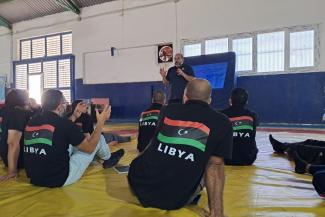
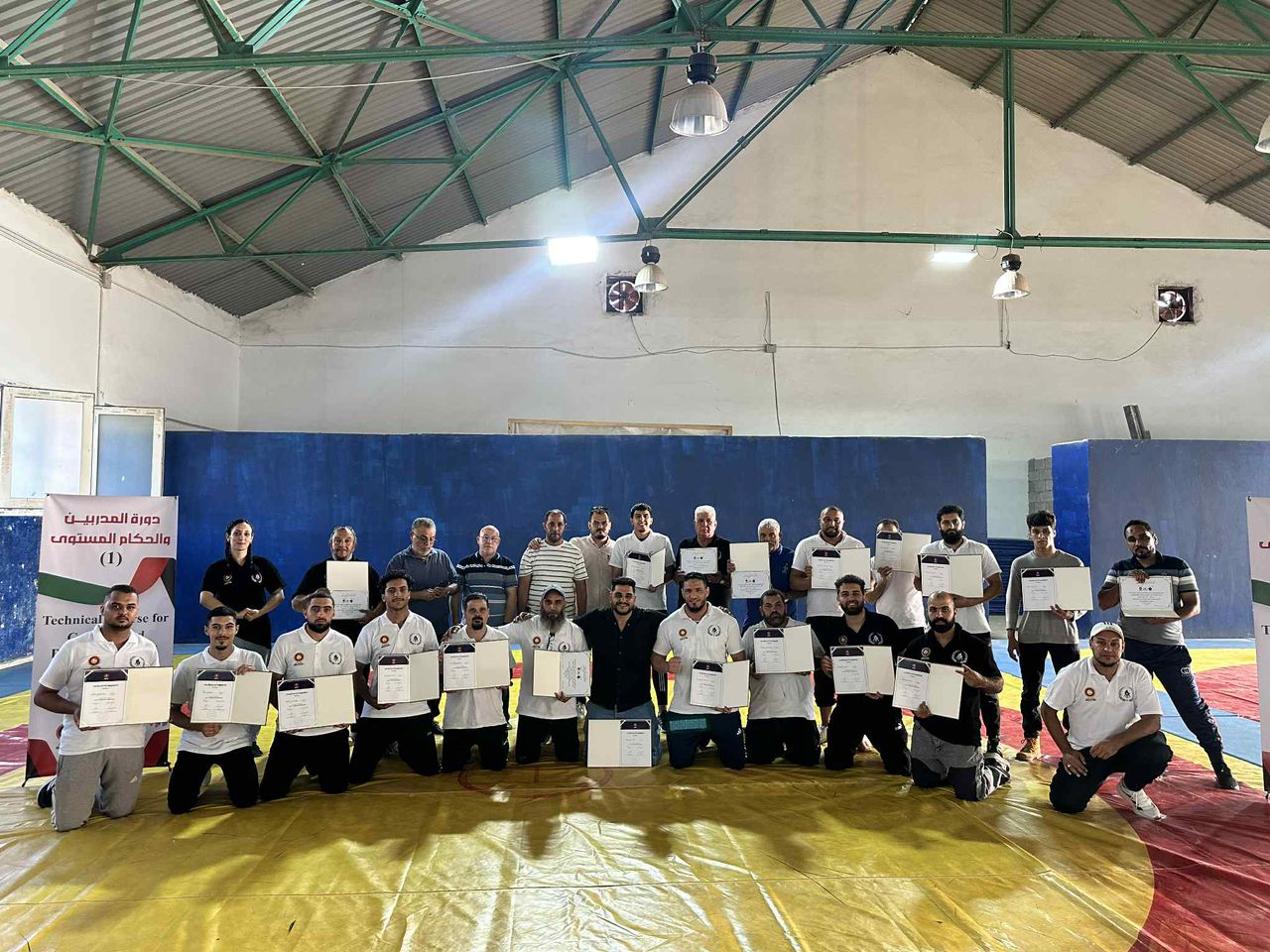
The development department has also added women referee’s educational courses, coaching courses, and created women’s wrestling training camps to respond to the needs of the national federations. 

“We are on a path to long term success,” said Niamkey. “These opportunities will help create a new, diverse class of leaders which will be the backbone for the next generation of wrestling.”
#WrestleBudapest

Takahashi marks return from injury with Ranking Series gold

By Vinay Siwach

BUDAPEST, Hungary (July 18) -- The last memories of Kota TAKHASHI (JPN) on the mat were painful. He had a heavily strapped right knee and was wrestling at the Non-Olympic World Championships in Tirana last year. He was torn.

A surgery and nine months later, Takahashi returned to international wrestling at the Budapest Ranking Series on Friday and captured the 74kg gold medal.

The world U23 champion was the third gold medalist from Japan in Budapest after Takara SUDA (JPN) and Yoshinosuke AOYAGI (JPN) won at 61kg and 70kg, respectively.

In the other two weight classes that were in action on Friday, Arsenii DZHIOEV (AZE) and Trent HIDLAY (USA) captured the gold medal at 86kg and 92kg as Freestyle came to a close at the Ranking Series.

Takahashi, who won the Asian Championships gold in 2024, made himself a gold-medal threat for the World Championships in Zagreb with an impressive performance that saw him score wins over Tajmuraz SALKAZANOV (SVK) and David CARR (USA).

"This was my first international competition since my right knee surgery, and I wanted to show my true abilities," Takahashi said. "I'm very happy that I was able to win by thoroughly executing my tackles and aggressive wrestling style."

Takahashi was up against Salkazanov in his first match and began by blasting two double-leg attacks to race to a 4-0 lead. But the second period was not the same as he was put on the activity clock and Salkazanov cut the lead with a takedown during that.

Just when it seemed that Salkazanov can take the lead, Takahashi hit a low leg-attack and converted it into takedown to make the gap 6-3. Salkazanov did not let it go and scored a stepout with nine seconds left.

Takahashi was happy to not engage in those nine seconds, and happily gave a stepout and a caution. He won 6-6 and set up a quarterfinal against Murad KURAMAGOMEDOV (HUN). He did not need any of those attacks as he managed a 3-0 win.

The semifinal against Carr was a challenging one as Takahashi struggled to keep his conditioning for six minutes. He opened with a stepout and Carr was called for fleeing. As Carr used a chest wrap to stop Takahashi's double-leg attack, he fell on his back with hand opens. Only Takahashi was awarded two points which made his lead 4-0. Two stepouts later, it was 6-0.

Carr got going in the final two minutes as he scored two takedowns inside 20 seconds to make it 6-4. So far, Takahashi had remained low in his stance and cancelled Carr's long reach. However, his defense began to break up.

As Carr tried to turn Takahashi after the second takedown, Takahashi blocked the turn and got two points. Carr scored a reversal to make it 8-5. He then made it 8-7 with 10 seconds remaining but that was the final scoring action of the bout.

"Car is very aggressive, and I am also good at aggressive wrestling, but in the second half, my opponent's attacks were superior to mine. I ended up conceding points," he said. "I think that was my mistake. In the second period, I tried to attack, but the opponent kept attacking repeatedly. I ended up just defending, and that was the reason I lost points. I need to be more aggressive and attack more."

Takahashi's aggressive wrestling was once again on show in the final against another former world U23 champion Magomed KHANIEV (AZE). He scored two takedowns and defending so well that Khaniev was not able to score a point and Takahashi won gold medal, 4-0.

But the Japanese accepted the chinks in his armor and has decided to work on them before the World Championships where he knows that the competition will be even tougher.

"Similar story against Salkazanov. I want to review my stamina to maintain an aggressive attack throughout the six minutes without breaking my stance, and keep solid stance," he said. "In the second half, my desire to attack weakened, and I ended up being attacked by the opponent, leading to them scoring points. I need to improve on that."

Carr returned for the bronze medal bout and defeated Salkazanov 4-4, avenging his previous to the Slovak from Zagreb.

Trent HIDLAY (USA)Trent HIDLAY (USA) defeated Miriani MAISURADZE (GEO) 7-2 in the 92kg final. (Photo: United World Wrestling / Kadir Caliskan)

Trent HIDLAY (USA), a 86kg silver medalist last year in Budapest, upgraded to gold medal after beating world silver medalist Miriani MAISURADZE (GEO), 7-4, in the 92kg final.

Hidlay was in red-hot form the whole day as he began with a win over Abubakr ABAKAROV (AZE)  and then posted a 10-0 win over Krizstian ANGYAL (HUN) in the quarterfinal. He began the semifinal against Dauren KURUGLIEV (GRE) with a powerful double-leg takedown.

As Kurugliev fell, he landed on his knee and suffered an injury so bad that he was unable to walk off the mat. Hidlay reached the final after the injury forced Kurugliev to stop.

It was Maisuradze who opened the scoring in the final with a snapdown to takedown for two points but Hidlay answered with two stepouts and the Georgian led 2-2 on criteria at the break.

Hidlay opened the second period with a takedown to take a 4-2 lead and then continued to put pressure on Maisuradze. It paid off as he scored another takedown on the edge to lead 6-2. Georgia challenged that both wrestlers were already out of the zone and it should be one point. But the challenge was lost, making it 7-2 for Hidlay with 1:47 left on the clock.

That was all in the bout as Hidlay captured the gold and put his name in contention for the gold medal at the upcoming World Championships.

At 86kg, Arsenii DZHIOEV (AZE) was the gold medalist after European silver medalist Mahamedkhabib KADZIMAHAMEDAU (UWW) pulled out of the final injured.

Kadzimahamedau suffered a knee injury in the semifinal against Ali SAVADKOUHI (IRI) as the Iranian did not let go off his knee despite it turning more than 90 degrees.

RESULTS

74kg
GOLD: Kota TAKAHASHI (JPN) df. Magomed KHANIEV (AZE), 4-0

BRONZE: David CARR (USA) df. Taimuraz SALKAZANOV (SVK), 4-4
BRONZE: Magomedrasul ASLUEV (BRN) df. Yeldos KUANYSHBAY (KAZ), 8-2

86kg
GOLD:  Arsenii DZHIOEV (AZE) df. Mahamedkhabib KADZIMAHAMEDAU (UWW), via inj. def.

BRONZE: Osman GOCEN (TUR) df. Boris MAKOEV (SVK), 3-2
BRONZE: Ali SAVADKOUHI (IRI) df. Nurzhan ISSAGALIYEV (KAZ), 3-0 

92kg
GOLD: Trent HIDLAY (USA) df. Miriani MAISURADZE (GEO), 7-4

BRONZE: Benjamin HONIS (ITA) df. Musza ARSUNKAEV (HUN), via fall (5-5)
BRONZE: Abubakr ABAKAROV (AZE) df. Dauren KURUGLIEV (GRE), via inj. def.