

Irie Stuns Susaki En Route to 50kg Title; Fumita Falls to Greco Rival Ota
Saturday, December 23, 2017 - 18:17 By Ken Marantz

TOKYO (Dec. 23) - After her potential showdown with Olympic champion Eri TOSAKA was scuttled, world champion Yui SUSAKI turned her focus on securing a second straight national title. Yuki IRIE had other ideas.
Irie pulled off the biggest shock of the All Japan national championships, ousting Susaki with a surprisingly one-sided technical fall in the semifinals of the women's 50kg class, then edged Miho IGARASHI, 6-5.
"Without being concerned about winning or losing, I thought that if I did what I needed to do, the result would come," Irie said of her victory over teen star Susaki. "I stayed focused on that."
On the final day of the four-day tournament at Tokyo's Komazawa Gym, the 25-year-old Irie, using an effective low single-leg attack while fending off Susaki's takedowns, led 4-0 going into the final minute.
At that point, Susaki started making desperate attempts to rally. But Irie resisted Susaki's front headlock and put her on her back to go up 6-0 with :50 left, then added a 4-point pancake to end the match 10-0 at 5:48.
It was the same result as their encounter two years ago in the 48kg final, when Susaki was still an up-and-coming 16-year-old and Irie won her first title. In the ensuing two years, Susuki charged to the top of the world.

"I didn't train hard enough," Susaki said in tears. "I believed I could win, but she was better than me. I couldn't do my style of wrestling. It was the same way that I lost two years ago."
The ever-candid Susaki boldly declared her intention to avenge the loss the next time they meet, which could come at the national invitational championships in the spring. That tournament will be the final domestic qualifier for the team to the world championships in Budapest.
"Next time I'll definitely beat her," said Susaki, who is ranked No. 1 by the UWW. "In order to win, I have to start over from the beginning."
In the final, Irie scored four points with an early takedown and roll, and led 6-2 with a minute to go. Igarashi, the world under-23 champion at 53kg, fought back with a takedown and a step-out, but was left one point short.
"I had intended to stay on the attack up to the end, but at times I got defensive, and it put me in a dangerous situation," Irie said.
The pre-tournament hype had focused on the possible clash between Tosaka and Susaki for supremacy in the lightest weight class.
But that ended when Tosaka, who had only returned to competition in September after undergoing foot surgery, withdrew after winning her quarterfinal match. Her coach Kazuhito SAKAE opted to play it safe as she is still nursing recent injuries to her left knee and ankle.

While missing out on that showdown, fans were treated to the latest clash in the long-running Greco-Roman duel between world 60kg champion Kenjiro FUMITA and Rio 2016 silver medalist Shinobu OTA.
While Fumita has prevailed in big matches over the past year or so, it was Ota's turn this time to get the best of his training partner and rival, squeezing out a 5-4 victory on a late 2-point throw.
"It took a long time to get back here," said Ota, who regained the title he won for the first time in 2015. "Over these two years, there were a lot of tough memories. From now, I can consider the 60kg weight class mine and I'll work hard to keep it."
Fumita's win over Ota at the All Japan last year put him on the path to the world championships, where he became the first Japanese to win a Greco-Roman gold since 1983.
In a final that was touch-and-go throughout, there were passivity points, a penalty and mutual near-falls that left Fumita leading 4-3 in the final minute. But not to be denied, Ota worked in for a body lock and executed a throw with :20 left that, while not putting Fumita on his back, was good enough for 2 points and the win.
"I can't really point to one thing [that gave me the win], but I was confident," Ota said. "I believed in myself, and decided the best thing was to go for a front headlock roll, and that it led to the winning points."

Japan's other male world champion, Yuki TAKAHASHI, put on his trademark late surge to successfully defend his freestyle 57kg title by defeating collegiate champion Toshihiro HASEGAWA, 12-4.
Takahashi, whose gold in Paris was Japan's first in freestyle at a world championships since 1981, spotted Hasegawa four points in the first period. But he stormed back in the second with four takedowns and successive ankle rolls.
"There was still three minutes, so there was no reason to panic," Takahashi said of giving up the early lead. "I thought just build up points one at at time, and I felt I had some leeway."
Takahashi added it might be time to change his come-from-behind style.
"I always give up points first, early in the first period. But when I fall behind, it relaxes me. My coach and others around me keep telling me the matches will be easier if I fix this. I'd like to change."
The three other women's world champions in action -- Sara DOSHO, Risako KAWAI and Haruna OKUNO -- avoided the fate that befell Susaki, putting them closer to defending their world titles in Budapest with further eyes on Tokyo 2020.
Dosho extended her streak of national titles to seven in a row by taking the 68kg crown with a fall in 1:44 over Mai HAYAKAWA. Dosho had built up a 10-0 lead, but completed the final scoring move to record the fall.
So dominant has Dosho been that the weight class drew just four entries, and Hayakawa made the final when her opponent defaulted in the semifinals.
Kawai made it three national titles in a row, all in different weight classes, when she took the 62kg gold with a 10-0 technical fall in 3:47 over Yurika ITO. It was Kawai's only match as her semifinal opponent also defaulted.
"I only had one match, so I don't feel like I gave everything, but I feel I did well," said Kawai, who won the Rio 2016 gold at 63kg and Paris 2017 title at 60kg.
The victory, paired with younger sister Yukako's title at 59kg on Thursday, made the Kawai sisters the first to win national titles at the same All Japan tournament since Chiharu and Kaori ICHO did it in 2007.
"She [Yukako] had always said let's win titles together," Kawai said. "She won hers first, and I had to follow. I was a bit nervous, but I'm glad I could follow up."
There was also celebrating in another household, as Daichi TAKATANI joined older brother Sosuke as a freestyle champion for the first time.
After close calls and comebacks in his preliminary matches, Daichi Takatani saved his best for last with a solid 11-2 victory over Kei YONEZAWA in the 65kg final.
Combined with Sosuke's title at 79kg, the two are the first brothers to reach the top of the podium together since 2011, when Ryutaro MATSUMOTO won a Greco-Roman title and older brother Atsushi became a freestyle champ.
Sosuke Takatani joined his brother at the post-match press conference and, while telling of how often Daichi had become discouraged due to injuries and lack of results, the two broke down in tears.
"It's strange, because I never cry after my own matches," Sosuke said.
In the other Greco-Roman finals, Shohei YABIKU (77kg) and Yuya MAETA (82kg) both won their third straight titles.
Yabiku scored a 4-0 win in the final over Takeshi IZUMI, while Maeta defeated Yuya OKAJIMA, 6-1.
Collegiate champion Shota SHIRAI denied Masao MATSUSAKA a second straight title, and earned a first for himself, with a 7-1 win in the freestyle 86kg final.
Results of Day 4 Semifinals and Finals
Freestyle
57kg (23 entries)
Final: Yuki TAKAHASHI def. Toshihiro HASEGAWA, 12-4
Bronze Medals: Kaiki YAMAGUCHI and Yasuhiro MORITA
Semifinal: Takahashi def. Yamaguchi, 4-0
Semifinal: Hasegawa def. Morita by Fall, 1:19
65kg (22 entries)
Final: Daichi TAKATANI def. Kei YONEZAWA, 11-2
Bronze Medals: Shoya SHIMAE and Kiryu KINJO
Semifinal: Takatani def. Shimae by Fall, 2:31
Semifinal: Yonezawa def. Kinjo by TF, 10-0, 3:29
86kg (8 entries)
Final: Shota SHIRAI def. Masao MATSUSAKA, 7-1
Bronze Medals: Taisei MATSUYUKI and Takahiro MURAYAMA
Semifinal: Matsusaka def. Matsuyuki, 7-0
Semifinal: Shirai def. Murayama, 5-2
Greco-Roman
60kg (11 entries)
Final: Shinobu OTA def. Kenichiro FUMITA, 5-4
Bronze Medals: Kiyoshi KAWAGUCHI and Hayanobu SHIMIZU
Semifinal: Fumita def. Kawaguchi by TF, 11-0, 1:49
Semifinal: Ota def. Shimizu, 5-2
77kg (15 entries)
Final: Shohei YABIKU def. Takeshi IZUMI, 4-0
Bronze Medals: Kenryu KUZUYA and Ryosho KAMEI
Semifinal: Yabiku def. Kuzuya by TF, 10-2, 1:17
Semifinal: Izumi def. Kamei by TF, 8-0, 2:30
82kg (16 entries)
Final: Yuya MAETA def. Yuya OKAJIMA, 6-1
Bronze Medals: Tatsuya FUJII and Nobuaki TESHIGAWARA
Semifinal: Maeta def. Fujii by TF, 12-3, 5:40
Semifinal: Okajima def. Teshigawara, 4-0
Women
50kg (13 entries)
Final: Yuki IRIE def. Miho IGARASHI, 6-5
Bronze Medals: Yui SUSAKI and Eri TOSAKA
Semifinal: Irie def. Susaki by TF, 10-0, 5:48
Semifinal: Igarashi def. Tosaka by DEF
53kg (8 entries)
Final: Haruna OKUNO def. Yu MIYAHARA, 2-0
Bronze Medals: Kana HIGASHIKAWA and Yuka YAGO
Semifinal: Okuno def. Higashikawa by TF, 10-0, 4:10
Semifinal: Miyahara def. Yago by TF, 11-1, 4:30
62kg (7 entries)
Final: Risako KAWAI def. Yurika ITO by TF, 10-0, 3:47
Bronze Medals: Honoka IMAGAWA and Aika YAGO
Semifinal: Kawai def. Imagawa by DEF
Semifinal: Ito def. Yago by Fall, 1:26
68kg (4 entries)
Final: Sara DOSHO def. Mai HAYAKAWA by Fall, 1:44
Bronze Medals: Umi FUKUSHIMA and Chiaki IIJIMA
Semifinal: Dosho def. Fukushima by TF, 10-0, 4:32
Semifinal: Hayakawa def. Iijima by DEF
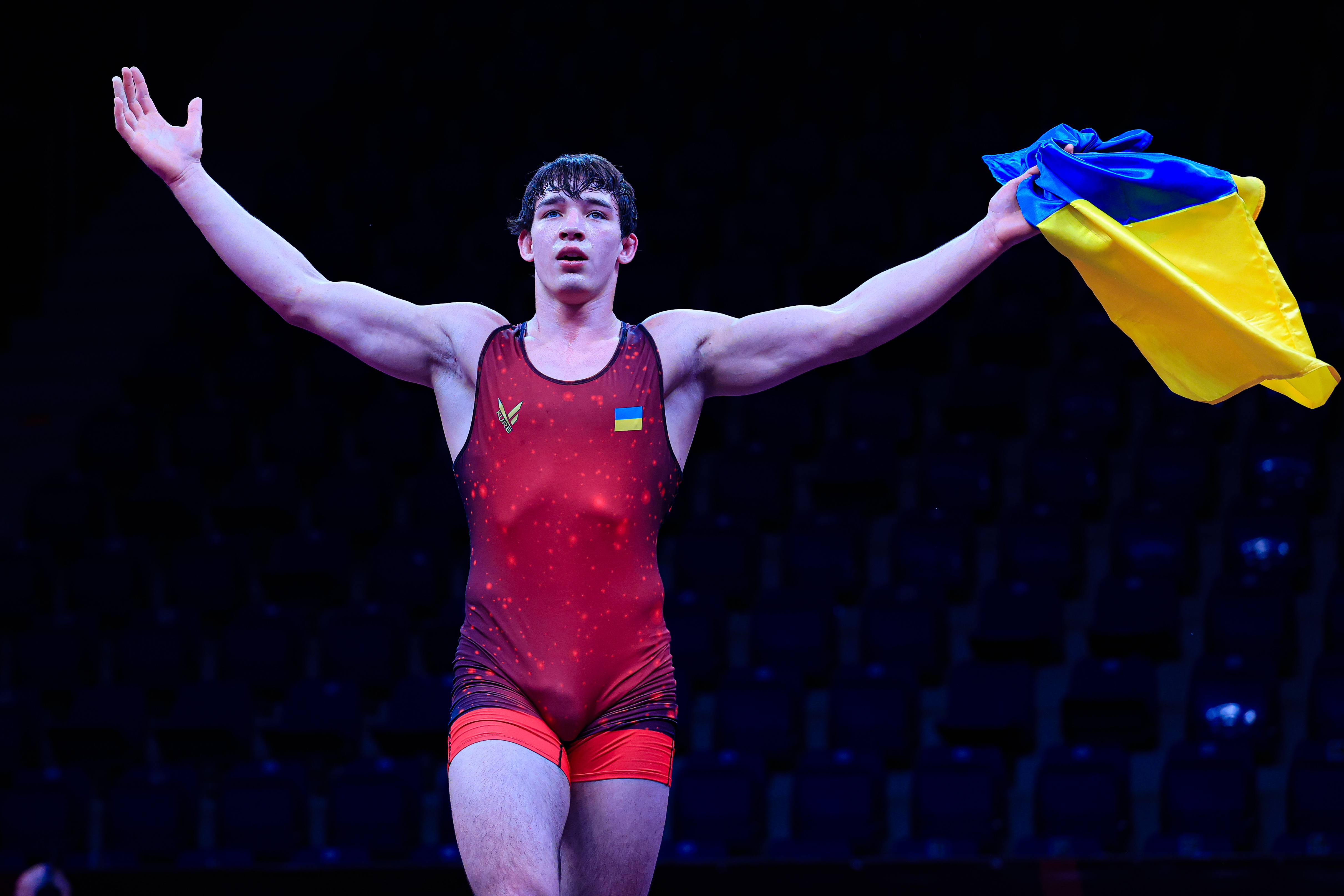 Yehor YAKUSHENKO (UKR) will be chasing his third U20 world title in Greco-Roman 97kg. (Photo: United World Wrestling / Kostadin Andonov)
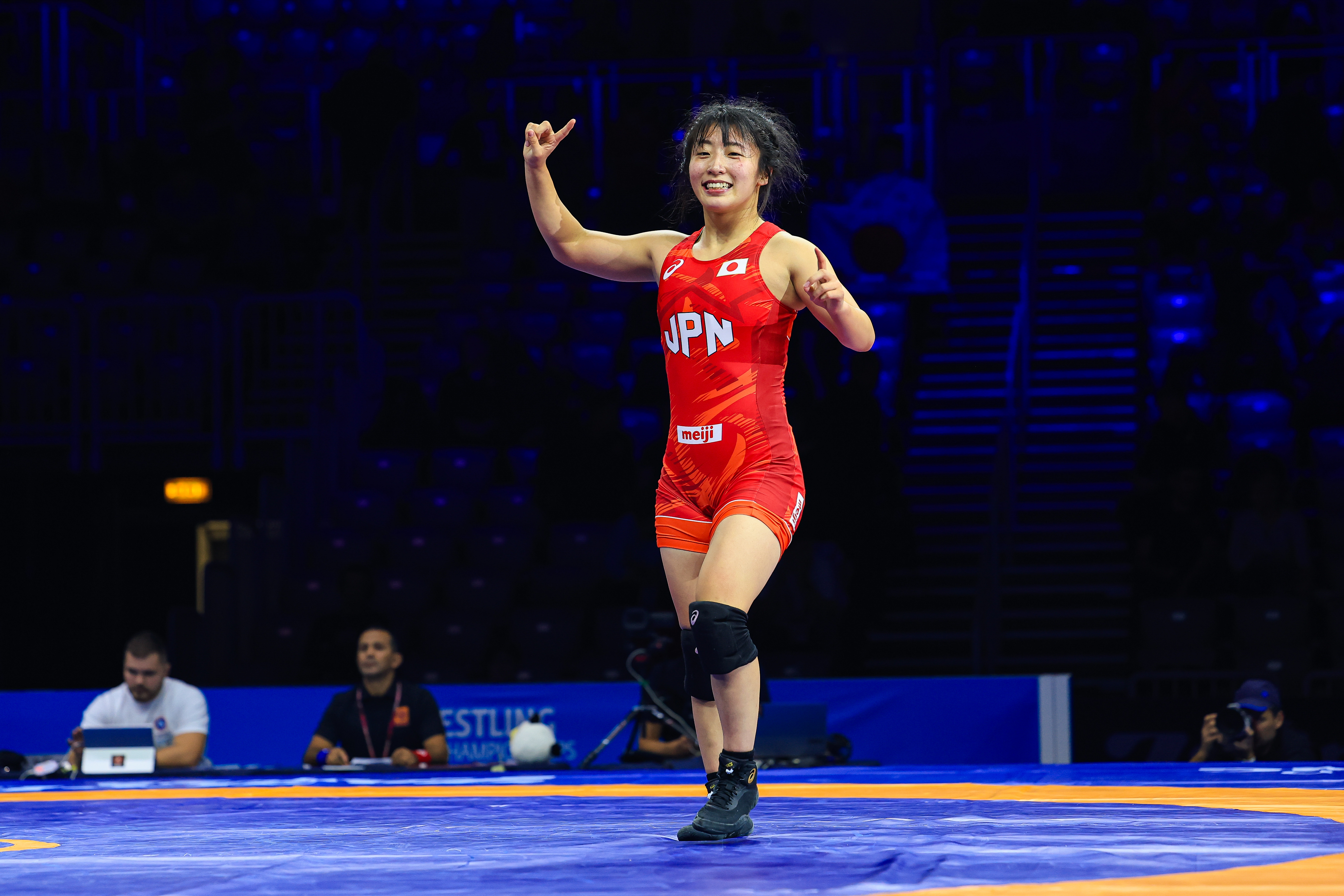 Sakura ONISHI (JPN) is a two-time U20 world champion. (Photo: United World Wrestling / Kadir Caliskan)
Share your thoughts.
Comments