

Kinjo earns shot at 4th world title, but it won't be part of sister act
Wednesday, May 29, 2024 - 12:07 By Ken Marantz

TOKYO, Japan (May 26) -- It may not be Paris, but given what it took for Risako KINJO to get there, the Albanian capital of Tirana will do just fine.
Already denied a chance at winning a third Olympic gold medal, Kinjo created her own chance for some consolation by earning a shot at a fourth career world title by qualifying for Japan's team to this fall's Non-Olympic Weight Class World Championships.
The only downside for Kinjo is that younger sister Yukako TSUNEMURA won't be accompanying her as a competitor, meaning there would be no repeat of their sibling double at the 2021 Tokyo Olympics where they won golds together under their maiden name of KAWAI.
Kinjo needed a dramatic, last-second victory in a playoff over 18-year-old Sakura ONISHI to secure a ticket at women's 59kg to the non-Olympic worlds to be held October 28-31 in Tirana.
 Risako KINJO celebrates her victory in the 59kg playoff over teenager Sakura ONISHI. (Takeo Yabuki / Japan Wrestling Federation)
That win avenged a loss earlier in the day to 2023 world U17 champion Onishi during the Meiji Cup All-Japan Championships -- the second of two domestic qualifiers for Tirana held May 23-26 in Tokyo -- to set up the playoff.
"My desire to go to the World Championships was so strong," Kinjo said. "If I didn't do it, I would be regretting it for the next year. It was a desperate situation."
Tsunemura, whose marriage on New Year's Day got off to an ominous start when a devastating earthquake struck her home prefecture hours later, saw her bid at 65kg end with a quarterfinal loss to Miwa MORIKAWA, who went on to win the title and a playoff to get the chance to regain the world gold she won in 2022.
Japan will also have strong representation in the two other women's weight classes, with newly crowned Asian champion Moe KIYOOKA at 55kg and 2022 world 68kg silver medalist Ami ISHII at 72kg -- teammates at Ikuei University -- also making it through the playoff route.
The former Kawai sisters have been through hard times since their dual triumph in Tokyo, where Risako captured the 57kg gold and Yukako triumphed at 62kg.
Both took time off after the Olympics, with Risako getting married, then giving birth to a daughter in May 2022. By the time both returned to the mat, formidable newcomers had emerged in the race to the Paris Olympics.
Both fell in the qualifying process -- Kinjo to world 57kg champion Tsugumi SAKURAI and Tsunemura to world 62kg bronze medalist Sakura MOTOKI (notably also Ikuei wrestlers). Tsunemura also made a long-shot attempt at 68kg, but came up short there as well.
"After the Tokyo Olympics, I couldn't win for awhile," Kinjo said. "It made me realize just what a big deal it is to win at the Olympics."
After giving birth, Kinjo returned to the mat in late 2022 at 59kg in preparation for a run to Paris at 57kg. She won the title at the Emperor's Cup All-Japan Championships that year, but her bid for Paris ended at the 2023 Meiji Cup. She also lost a playoff at 59kg for the 2023 World Championships.
In December last year, Kinjo retained her 59kg title at the Emperor's Cup, which earned her a ticket to the Asian Championships last April in Bishkek. She would take home a bronze after being dealt a tough 1-1 loss by world champion Qi ZHANG (CHN) in a quarterfinal limited to activity points.
As Emperor's Cup champion, Kinjo would have automatically clinched a place on the team to the non-Olympic worlds with a victory at the Meiji Cup. But Kinjo was dealt an 8-4 loss in the semifinals by Onishi, in which she gave up a 4-point front body lock throw. When Onishi won the title, it set up a rematch in the playoff.
Kinjo was emboldened by recalling the grueling qualifying process that she went through to get to the Tokyo Olympics when she had to endure classic battles with four-time Olympic champion Kaori ICHO to earn the spot.
"Before the playoff, I thought, 'The qualifying for the Tokyo Olympics was a hundred times tougher. To have gone through that, nothing seems difficult."
 Risako KINJO fights off a takedown attempt by Sakura ONISHI in the 59kg playoff. (Takeo Yabuki / Japan Wrestling Federation)
Onishi, currently a freshman at Nippon Sports Science University where Icho is among her coaches, made it as hard as she could, jumping out to a 5-0 lead in the first period with a pair of takedowns, the second off a nice ankle pick, and a penalty point for an illegal knee hold.
Onishi added a stepout to start the second period before Kinjo finally made her presence known, going behind for a takedown and adding a 2-point exposure to cut the lead to 6-4. From there, experience kicked in for the 29-year-old who captured back-to-back golds at the 2016 Rio and 2021 Tokyo Olympics.
"With a minute left, I thought that even if I was the aggressor, it would be to my disadvantage against an opponent who is a student and very lively," Kinjo said. "When 30 seconds, 20 seconds left, I put it all on the line for going to the World Championships."
With :15 on the clock, Kinjo got in on a single and managed to lift up the leg and expose Onishi's back with 8 seconds left, putting her ahead 6-6 on criteria. But Onishi squirmed back to her feet and with a mighty charge, went for a double-leg takedown that forced Kinjo out just as time expired. The referee gave her 1 for a stepout, but after an agonizing wait for the challenge review, it was nullified as Kinjo's foot was just centimeters from the edge when the clock hit all zeroes.
"I didn't have a strategy," Kinjo said. "Having wrestled for over 20 years, at my age, more than what move should I use, or how should I attack, the most important thing is being mentally ready."
 Miwa MORIKAWA, right, keeps the pressure on Yukako TSUNEMURA in the 65kg playoff. (Takeo Yabuki / Japan Wrestling Federation)
Two days earlier, her sister pulled off a similar miracle to start her bid at 65kg, but couldn't make the magic last.
Tsunemura avenged a loss at the Emperor's Cup to Miyu YOSHIKAWA when, like Kinjo, she scored an exposure off a single leg in the final seconds for a 5-4 victory, after having given up a go-ahead takedown with :45 remaining.
But Tsumemura said she heard her knee pop in the match, and the subsequent pain hampered her in a 5-1 quarterfinal loss to Morikawa, who scored three stepouts in the first period and stopped a late front headlock roll attempt for a 2-point exposure. Morikawa went on to win the title, then defeated Emperor's Cup and Asian champion Mahiro YOSHITAKE 8-0 in the world playoff.
"Of course I wanted to go the World Championships, but this tournament was more about erasing the disappointing memories from the last year," Tsunemura said.
New Year of celebration, calamity
Like families throughout Japan, the Kawai clan had gathered for the New Year's holidays at the family home in Kanazawa, Ishikawa Prefecture, on the snowy northern coast of Japan.
On January 1, Yukako and mixed martial arts fighter Toshinori TSUNEMURA went to the municipal office in the nearby city of Tsubata and registered their marriage.
Four hours later, the ground began to shake violently.
The major earthquake that measured 7 on the Japanese intensity scale left over 200 dead and caused massive damage to homes, buildings and infrastructure, exacerbated by a tsunami and fires. Even now, thousands remain in temporary shelters.
"I'm not going to be so flippant as to say to people, 'I'm fighting hard, so please keep fighting,'" Kinjo said. "Their hardship is completely different. Many homes were destroyed and they can't go back. Someone near us had just finished construction of their house and it was damaged.
"But if [my winning] can give them some good news and it warms their hearts even a little, that would be good."
Tsunemura also was hoping to boost the spirits of her hometown.
"The big earthquake hit in January, but there are many people who suffered much more than me," she said. "Even if I lose, I think there are people who are heartened by seeing me give my best."
The sisters, who both went to then-powerhouse Shigakkan University in central Japan, currently reside in Tokyo. They train at Nihon University, where they are taking online graduate school classes.
Tsunemura said that in her studies of sports psychology, she uses her own notes on her mindset that she kept up to and during the Tokyo Olympics. She also said the program is giving her a broader outlook on life.
"Of course, I credit Shigakkan for making me strong in wrestling," she said. "But the daily schedule at Nihon University allows me to grow as a person. It has widened my view of the world.
"Wrestling is only something you can do when you're young, and the day is going to come when you call it quits. Your life after retirement will be longer. With that in mind, it makes me think that little by little I have to start looking ahead."
For now, the question of when -- or if -- she will return to competition remains unanswered.
"I don't know when I will enter a tournament," Tsunemura said. "After the Olympics, I had come to despise wrestling, but I really like it. I don't intend to stop any time soon. I will let the injury heal and get back to practice, and if I want to compete again, I'll do it. I don't know whether I will have a match again, but I still like wrestling."
Kinjo, of course, has her dance card filled for October, when she will attempt to win her first world title since winning three straight from 2017 to 2019. (She also has a silver from 2015.)
Her appearance at the Asian Championships in April marked her first international match since the Tokyo Olympics, and as fate would have it, she was paired with China's Zhang right off the bat. The closeness of the loss reassured her that she could still be competitive.
"In the first round, I met the world champion from last year," Kinjo said. "Even though I lost, it was my first international tournament in three years since the Olympics, and it may be rude to say it, but I think it went better than expected. It made me think that I can still do it."
In hindsight, the defeat may have been a blessing in disguise, which was reinforced by her mother Hatsue, a member of Japan's team at the 1989 World Championships.
"Truthfully, if I had won the Asian title, it would have been a good way to go out. But I lost. I talked it over with my mother, and she said, 'You're going to keep going, right?' I felt that way, too."
Japan Wrestling Federation President Hideaki TOMIYAMA, a gold medalist at the 1984 Los Angeles Olympics, surmises that while motherhood may be an added burden for Kinjo, it is indirectly keeping her in the sport.
"It's likely that she wants her child to be able to see her mother during her career," Tomiyama said. "The Olympics was before she was born. Probably she wants to give the child something to remember. She can see with her own eyes and remember 'Mama was strong.' I think that's what keeps her going."
From the federation's perspective, having a past Olympic champion remain active is always a positive thing.
"Of course, her [making the national team] draws the attention for wrestling from the mass media," Tomiyama said. "Wrestling doesn't usually make the news. Becoming a topic of conversation is important. We're really happy to see her fighting on, and it will help in the spread of wrestling."
 Moe KIYOOKA, right, works for a takedown in the 55kg playoff against world champion Haruna MURAYAMA. (Takeo Yabuki / Japan Wrestling Federation)
Kiyooka inspired by Paris-bound brother
Like Kinjo, Kiyooka went into the tournament as the Emperor's Cup champion, only to lose her opening match -- also to a high schooler -- and have her fate decided in a playoff. One big difference was the level of her opponent.
Having bounced back from an 11-9 loss to 17-year-old Sowaka UCHIDA, Kiyooka proceeded to defeat reigning world champion Haruna MURAYAMA (nee OKUNO) 3-2 in the playoff, thanks to a second-period takedown.
Kiyooka's win over Murayama was a repeat of the Emperor's Cup final in December and allowed her to join Ikuei teammate Ishii on the plane to Tirana.
In Albania, Kiyooka will get a chance to join the small group of wrestlers who have won world titles on all four age levels. She won the U17 gold in 2019, and then captured both the U20 and U23 titles in 2022.
Kiyooka, a winner at the Zagreb Open in 2023, made her major senior debut at the Asian Championships, where her gold-medal performance came a week before brother Kotaro won the Asian Olympic qualifier at freestyle 65kg at the same venue in Bishkek.
"Recently, my brother's accomplishments have been a source of inspiration for me," Kiyooka said. "I believe that if I keep fighting to the end, I know I can definitely win."
Ishii was coming off a heartbreaking, last-second playoff loss in January to Nonoka OZAKI for the 68kg spot in Paris -- which she herself had won for Japan by placing fifth at the 2023 World Championships.
Ishii swept to the Meiji Cup gold at 72kg with a 10-0 victory in the final over former world champion Masako FURUICHI. That gave her the ticket to Tirana as there was no playoff because Emperor's Cup champion Ayano MORO did not enter.
 High schooler Taizo YOSHIDA, top, tries to turn Yuji OKAJIMA in the Greco 82kg final of the Meiji Cup. (Takeo Yabuki / Japan Wrestling Federation)
Most noteworthy in the men's styles was the victory at Greco 82kg by 18-year-old Taizo YOSHIDA, who followed up his historic gold-medal run at the Asian Championships by becoming just the third male high school champion in Meiji Cup history.
One year removed from winning the world U17 gold, Yoshida defeated three-time former champion Yuji OKAJIMA 8-0 in the final, then earned the place at the non-Olympic worlds when Hayato TAKAOKA -- who beat Yoshida in the Emperor's Cup final -- defaulted the playoff.
Yoshida will be 18 years and 10 months old when the non-Olympic worlds starts, making it possible for him to eclipse Tokyo Olympic gold medalist Takuto OTOGURO as Japan's youngest-ever male world champion. Otoguro was 19 years and 10 months old when he won the freestyle 65kg gold in 2018.
"At the World Championships, I will give everything I have and aim for a medal," said Yoshida, who will precede that by also appearing at the world U20 in September. "I will be a senior in college at the time of the Los Angeles Olympics. I feel like the fight has just begun."
Three Asian medalists in freestyle also made the cut -- Masanosuke ONO, a bronze medalist at 65kg, earned the spot at 61kg; Yoshinosuke AOYAGI will go at 70kg, where he was the silver medalist in Bishkek; and 74kg champion Kota TAKAHASHI will aim to strike gold at 79kg.
Takahashi will be heading to Tirana early, as he will also compete at 74kg at the world U23 to be held there the previous week.

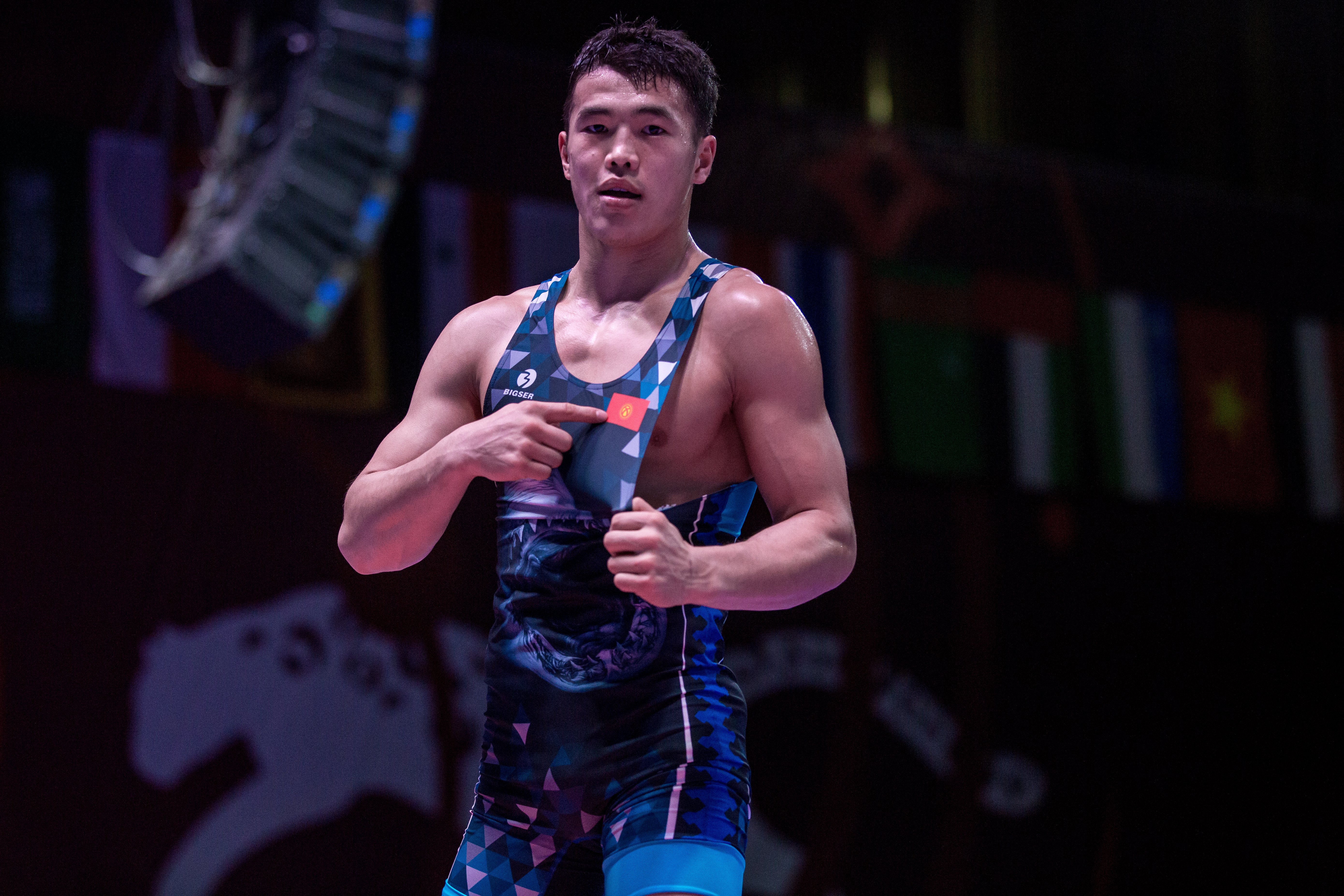 Akzhol MAKHMUDOV (KGZ) after winning his first Asian title in Bishkek in 2018. (Photo: United World Wrestling / Max Rose-Fyne)
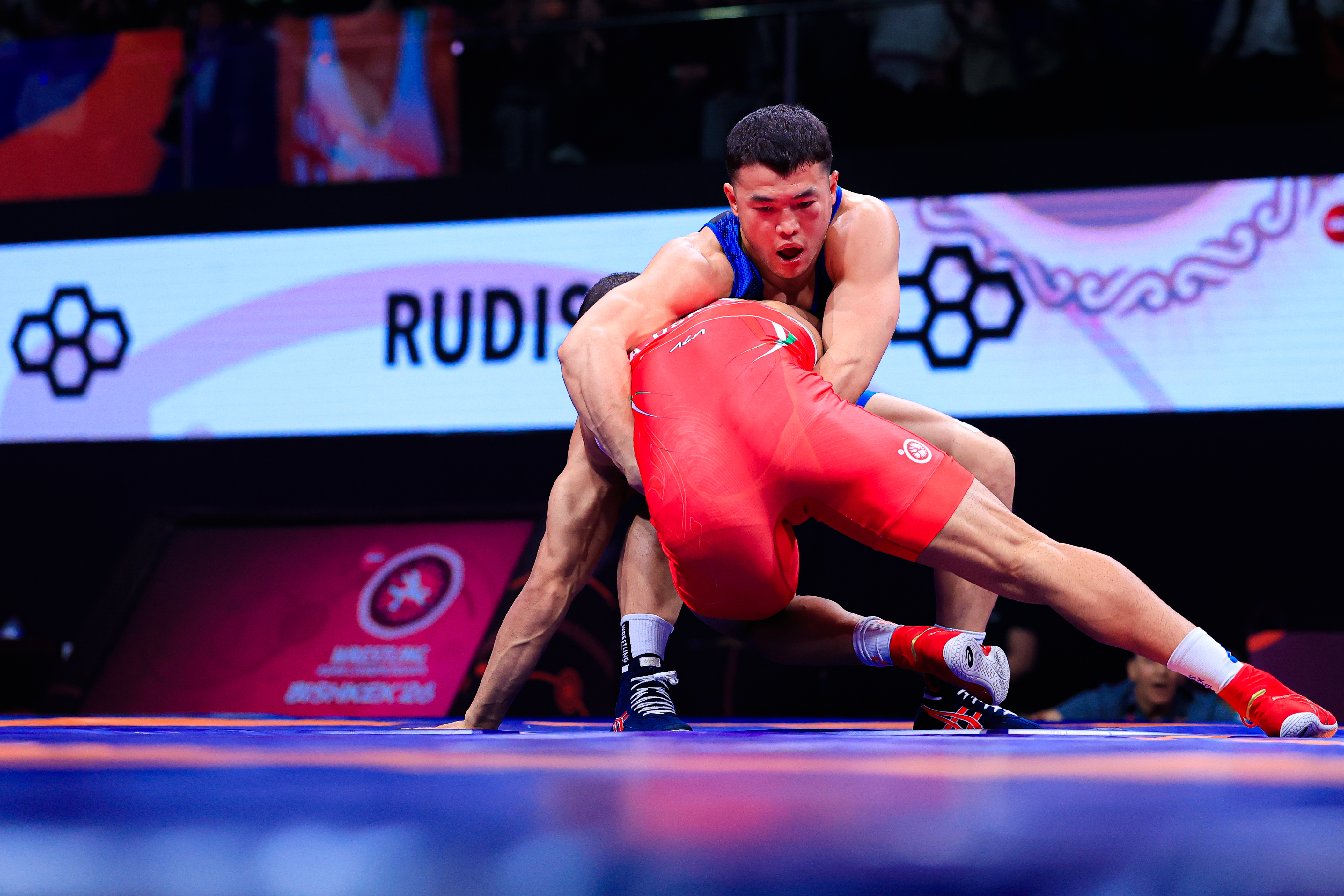 Akzhol MAKHMUDOV (KGZ) sets up a throw against Ali OSKOU (IRI) during the 77kg final at the Asian Championships. (Photo: United World Wrestling / Kostadin Andonov)
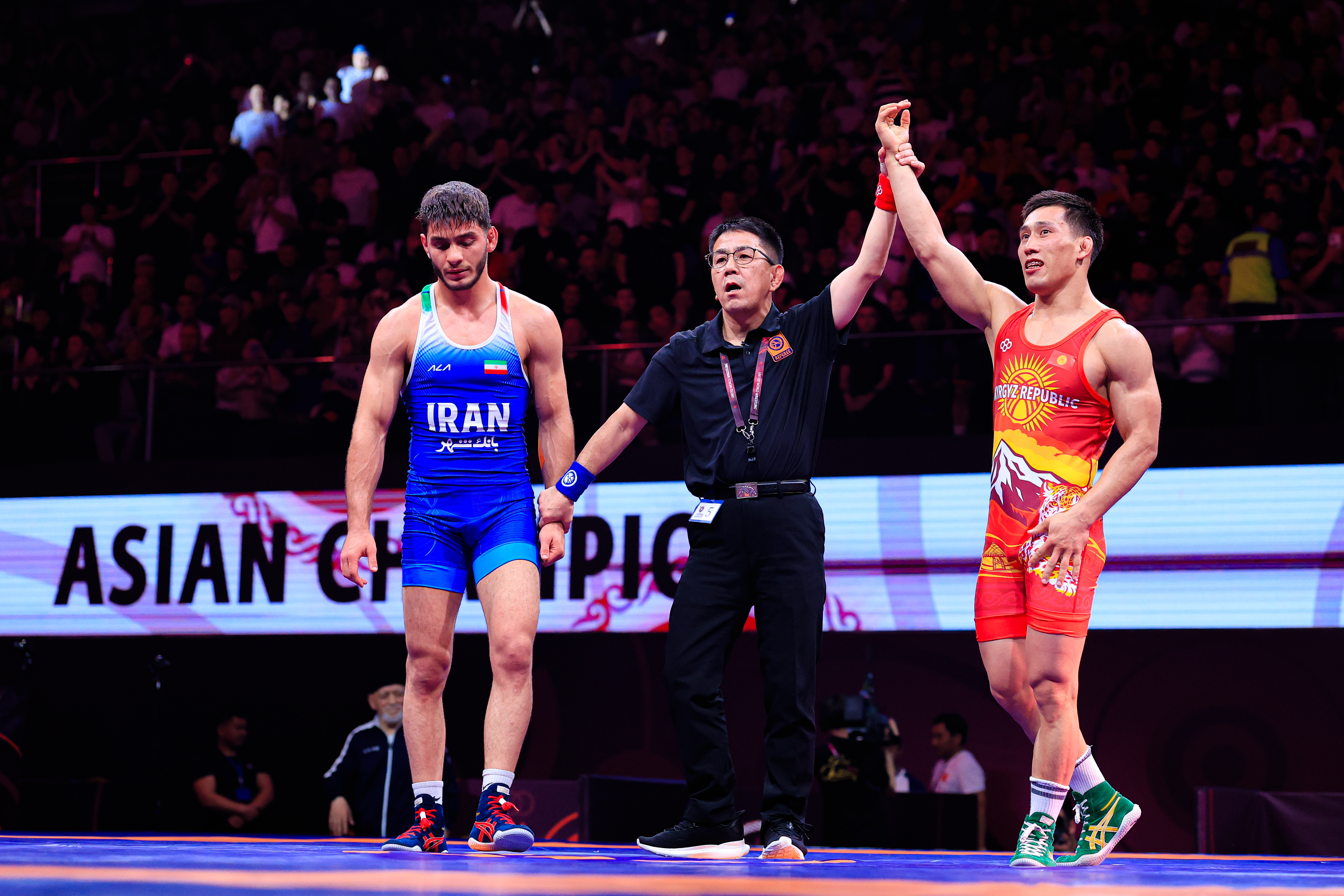 Aftandil TAALAIBEK UULU (KGZ) scored a 7-2 victory over Erfan JARKANI (IRI) in the 63kg final. (Photo: United World Wrestling / Kostadin Andonov)
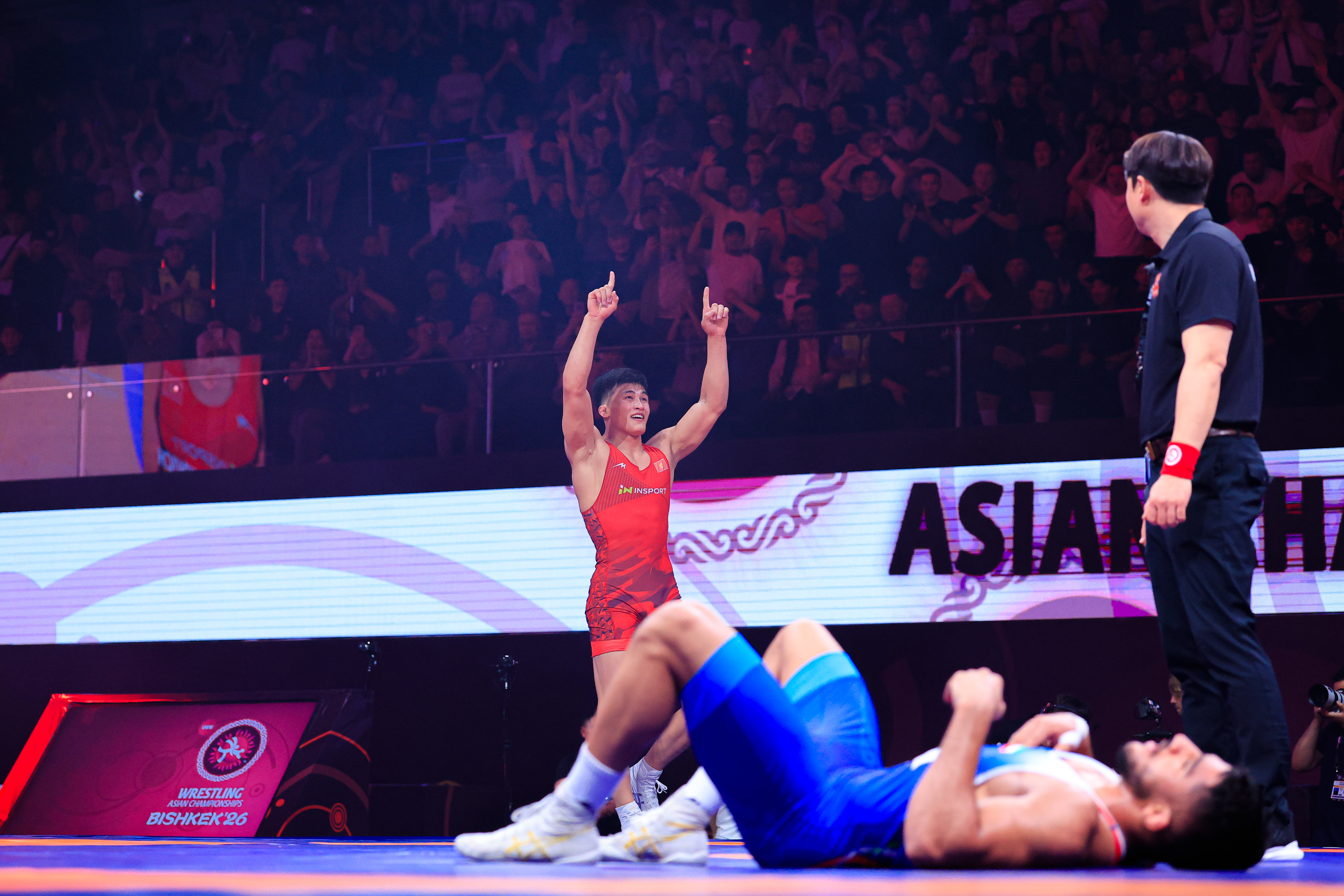 Asan ZHANYSHOV (KGZ) celebrates after beating world champion Gholamreza FAROKHI (IRI) in the 87kg final. (Photo: United World Wrestling / Kostadin Andonov)
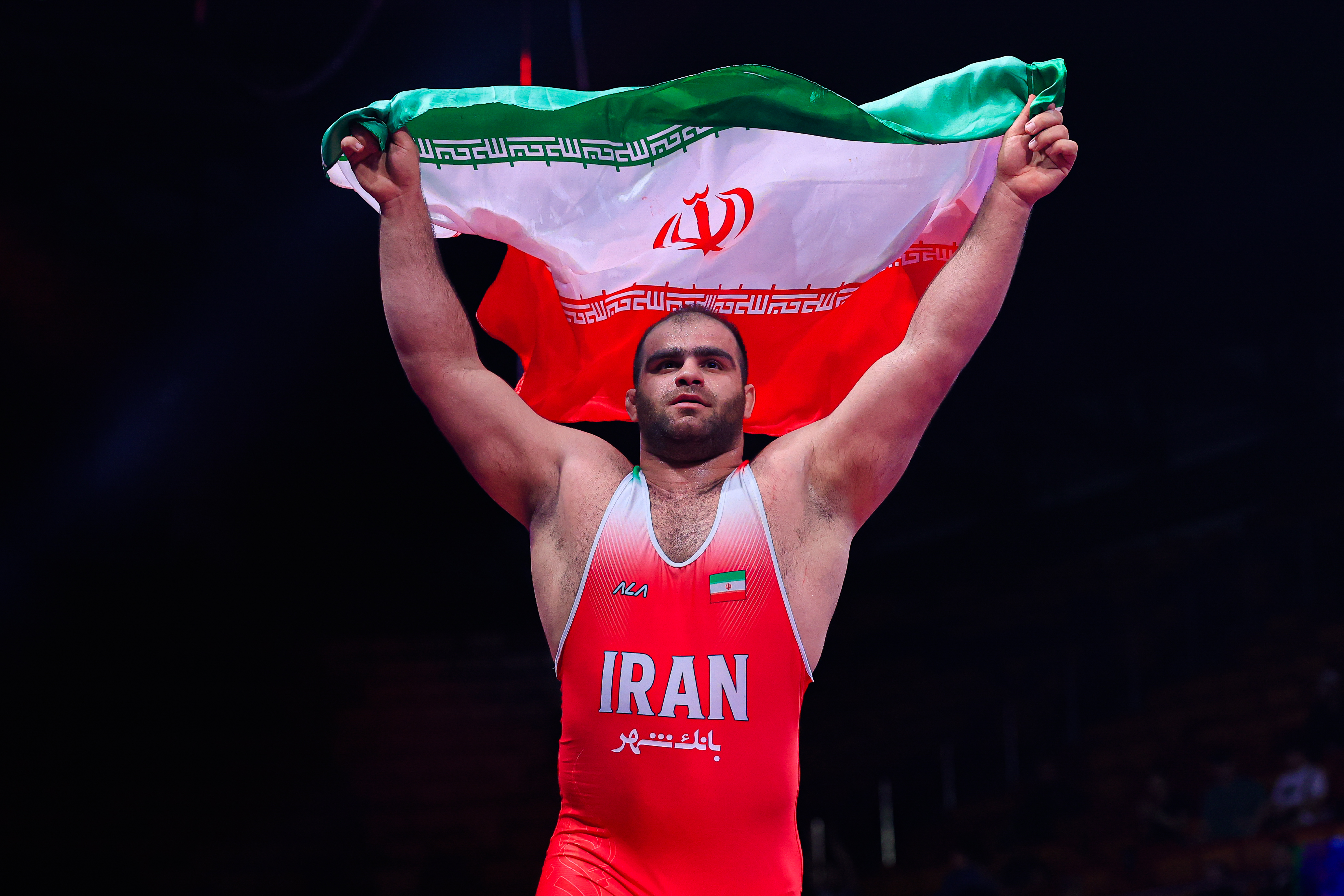 Amin MIRZAZADEH (IRI) captured his fourth Asian title at 130kg. (Photo: United World Wrestling / Kostadin Andonov)
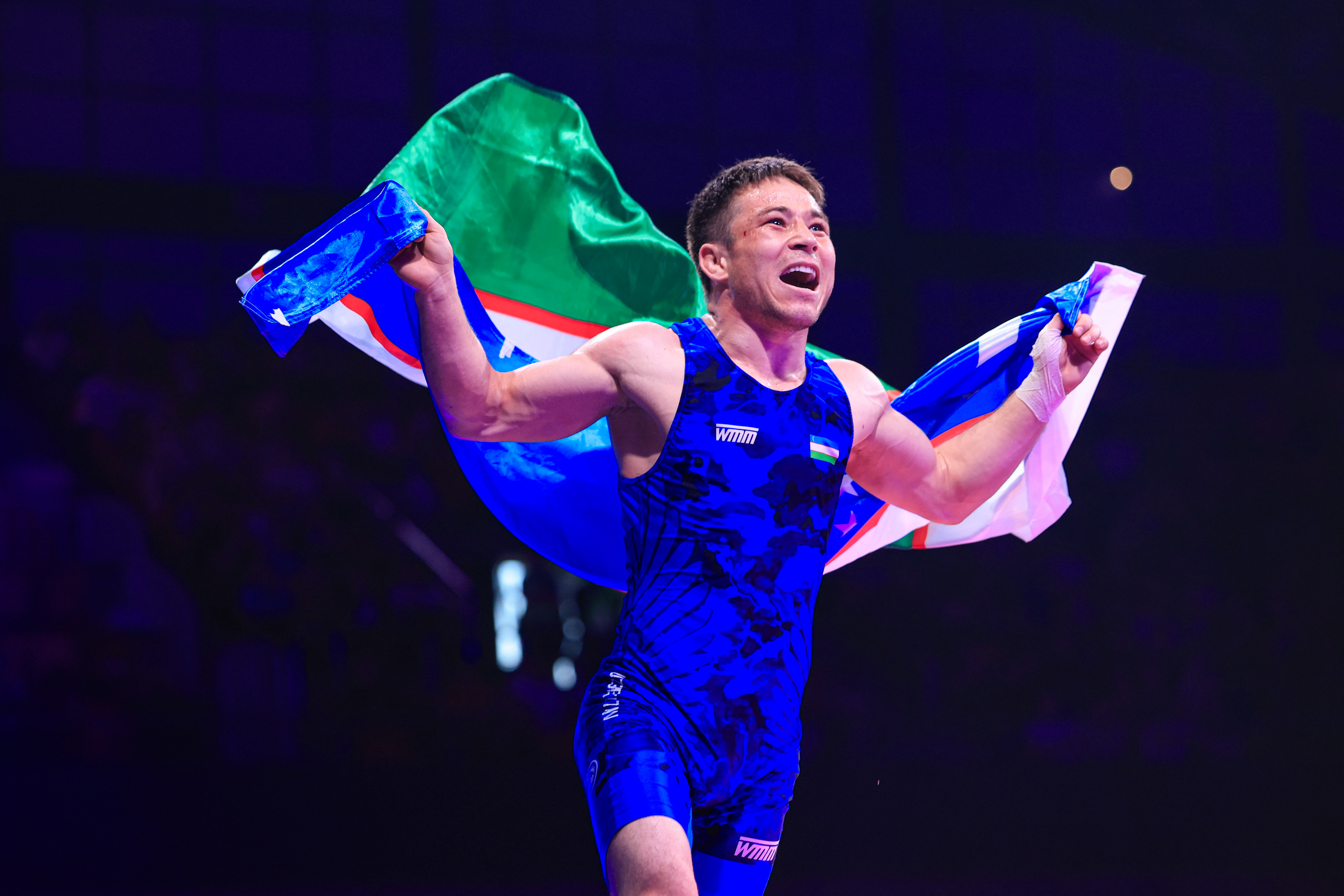 Ikhtiyor BOTIROV (UZB) celebrates after winning his first Asian title. (Photo: United World Wrestling / Amirreza Aliasgari)
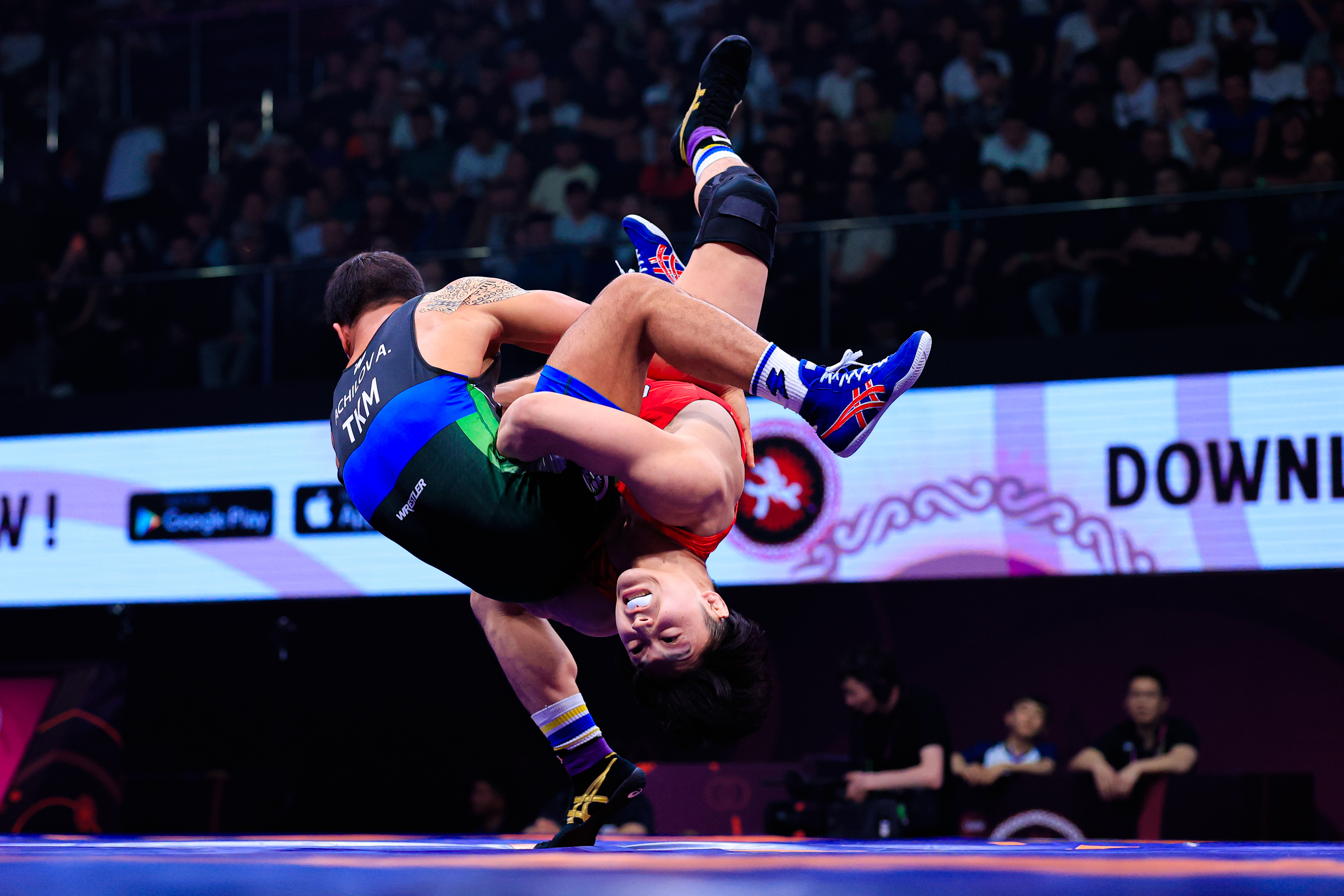 Kaisei TANABE (JPN), Freestyle 65kg Asian champion last year, won a Greco bronze this year. (Photo: United World Wrestling / Kostadin Andonov)
Share your thoughts.
Comments