Asian Games

Rio Champ Dosho to Miss Asian Games Due to Shoulder Injury

By Ken Marantz

World and Olympic champion Sara DOSHO (JPN) will miss the Asian Games in Jakarta this summer due to a left shoulder injury suffered at the recent Women's World Cup, the Japan Wrestling Federation has announced on its website.

Dosho's reign as a world champion is also in doubt, as she will almost surely to be forced to skip the Japan Invitational Championships (Meiji Cup) in June, which is serving as the final domestic qualifying tournament for Japan's team to the world championships in Budapest in October.

Sara DOSHO (JPN) df. Aline FOCKEN (GER) by 3-0 to win the gold medal at the 2017 World Championship. Photo by Martin Gabor.

Dosho suffered the injury, which has necessitated surgery, during her 68kg match against Danielle LAPPAGE (CAN) on the opening day of the World Cup in Takasaki, Japan. Dosho took a 2-1 lead early, then held on to win by that score as Japan beat Canada 8-2.

The four-time world medalist skipped the gold-medal match the following day against China, which Japan won 6-4 for its fourth straight title. As team captain, she joined the celebrations on the mat.

Dosho, a product of powerhouse Shigakkan University who won a seventh consecutive national title last December, captured gold medals at 69kg at the 2016 Rio Olympics and 2017 Paris world championships.

Dosho has not lost since the 2015 world championships in Las Vegas, where she fell in the third round 11-7 to FENG Zhou (CHN). She came back to win the bronze medal.

Ironically, Dosho and Feng were in line for a rematch in the final at the Women's World Cup, but Dosho's injury scuttled the clash.
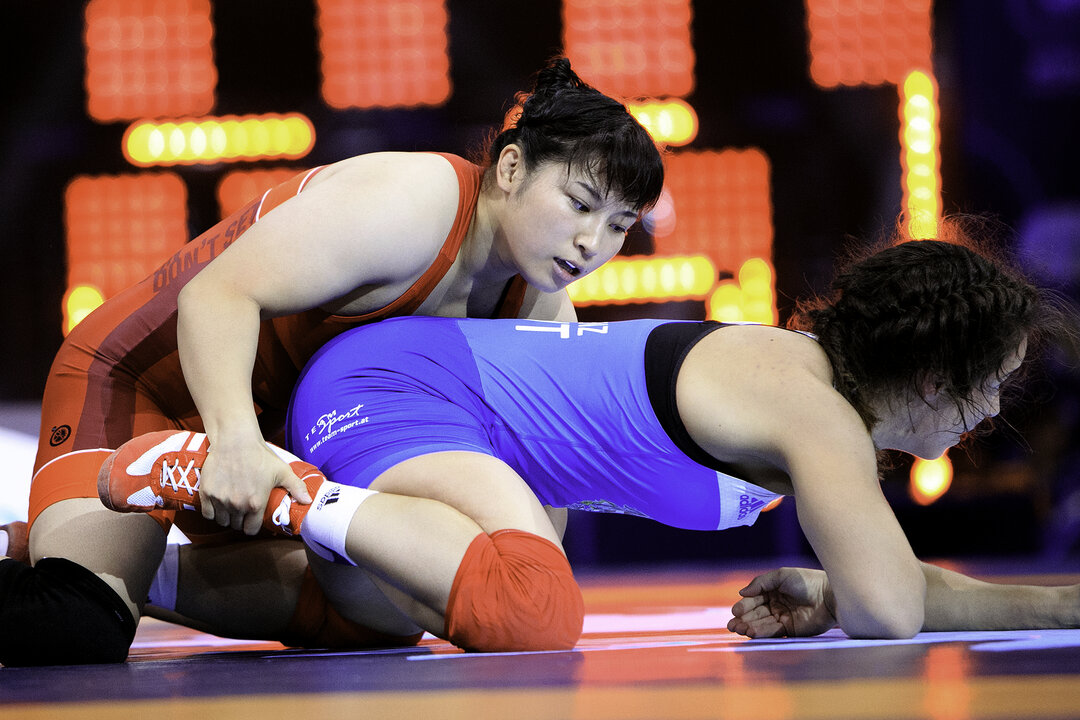

Sara DOSHO (JPN) df. Martina KUENZ (AUT), 6-0 to seal her spot in the 2017 world finals. Photo by Martin Gabor. 

Dosho's place at the Asian Games will be taken in a three-way wrestle-off between Ayana GEMPEI, Miwa MORIKAWA, and Naruha MATSUYUKI on April 22 at the Ajinomoto National Training Center in Tokyo.

Gempei and Morikawa finished 1-2 at 65kg at the national championships, while Matsuyuki was the 72kg champion. All three were members of the Japan team in Takasaki.

At the Asian Games, wrestling will be held Aug. 19-22, with six weight classes in each style.

As entries must be finalized by the end of May, the Japan federation cannot use the results of the Meiji Cup to determine its team. As such, in principle, the winners of the respective weight classes at the national championships will fill the team spots, according to the website.
Obituary

Abdullah Movahed: Iranian Legend Who Elevated Wrestling to Art Form

By United World Wrestling Press

CORSIER-SUR-VEVEY, Switzerland, (May 1) -- Abdullah MOVAHED (IRI), one of the all-time greats of world wrestling and a dominant force in Freestyle during the 1960s, passed away in the United States on Thursday, April 30, after suffering a heart stroke. The Iranian legend was 86.

A member of the United World Wrestling Hall of Fame, Movahed’s name became synonymous with technical brilliance and relentless discipline. A five-time world champion, an Olympic gold medalist and twice Asian Games winner, Movahed was at the forefront of an era of Iranian excellence on the global stage. Competing in the 68kg and 70kg Freestyle weight classes, Movahed achieved a level of sustained dominance rarely seen in the sport.

Born in March 1940 in Babolsar, in Iran’s Mazandaran province, Movahed was introduced to volleyball as a young boy and was known locally for his exploits as a spiker. However, he quit the sport as he felt he wasn’t tall enough and didn’t believe he was suited for it. Ultimately, it was on the wrestling mat that he would carve out his legacy. 

He went on to join the Tehran Javan Sports Club, and as a youngster, Movahed didn’t have it easy. He frequently lost to established wrestlers like Mohammad SANATGARAN (IRI). However, he persevered, and coaches recognized his rare blend of agility, intelligence, and composure under pressure. These traits would define his career.

Movahed emerged during a time when Iranian wrestling was rich in talent. He shared the stage with wrestling legends such as Gholamreza TAKHTI (IRI), Mansour MEHDIZADEH (IRI), Ebrahim SEYFPOUR (IRI), and Emamali HABIBI (IRI). In such a company, greatness was neither guaranteed nor easily attained, but Movahed’s rise was swift.

His breakthrough came in 1962, when the erstwhile Soviet Union’s Freestyle champions travelled to Iran for a series of friendly bouts. His win over Zarbag BERYASHVILI made him an overnight sensation in Iran, and the following year, Movahed made his debut for the Iranian national team at the World Championships in Sofia, Bulgaria.

As a 23-year-old rookie, Movahed didn’t make much of an impact -- he shared sixth place with well-known Bulgarian wrestler Enyu VALCHEV (BUL). At the 1964 Olympics in Tokyo, he showed signs of improvement and finished fourth. A year later, at the World Championships in Manchester, he claimed his first world title, beginning an extraordinary run.

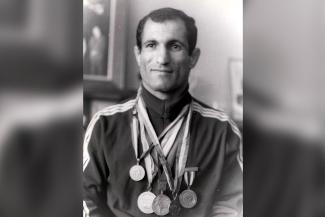
Abdullah MOVAHED (IRI)

From 1965 to 1970, Movahed was virtually untouchable. He won six consecutive major global titles at 68kg and 70kg, including World Championships in 1965, 1966, 1967, 1969, and 1970, along with Olympic gold at the 1968 Summer Olympics. That 1968 triumph, often cited as the pinnacle of his career, showcased his tactical mastery and unyielding determination. He also won the gold medal at the 1966 and 1970 Asian Games.

He returned for the 1972 Summer Olympics, but an unfortunate shoulder injury cut his campaign short, preventing a final chapter that might have further illuminated his already illustrious record. After the Games, Movahed, who had a master’s degree, moved to the USA, where he pursued a PhD at George Washington University. He continued to live there after earning his doctorate and worked as a mechanic.

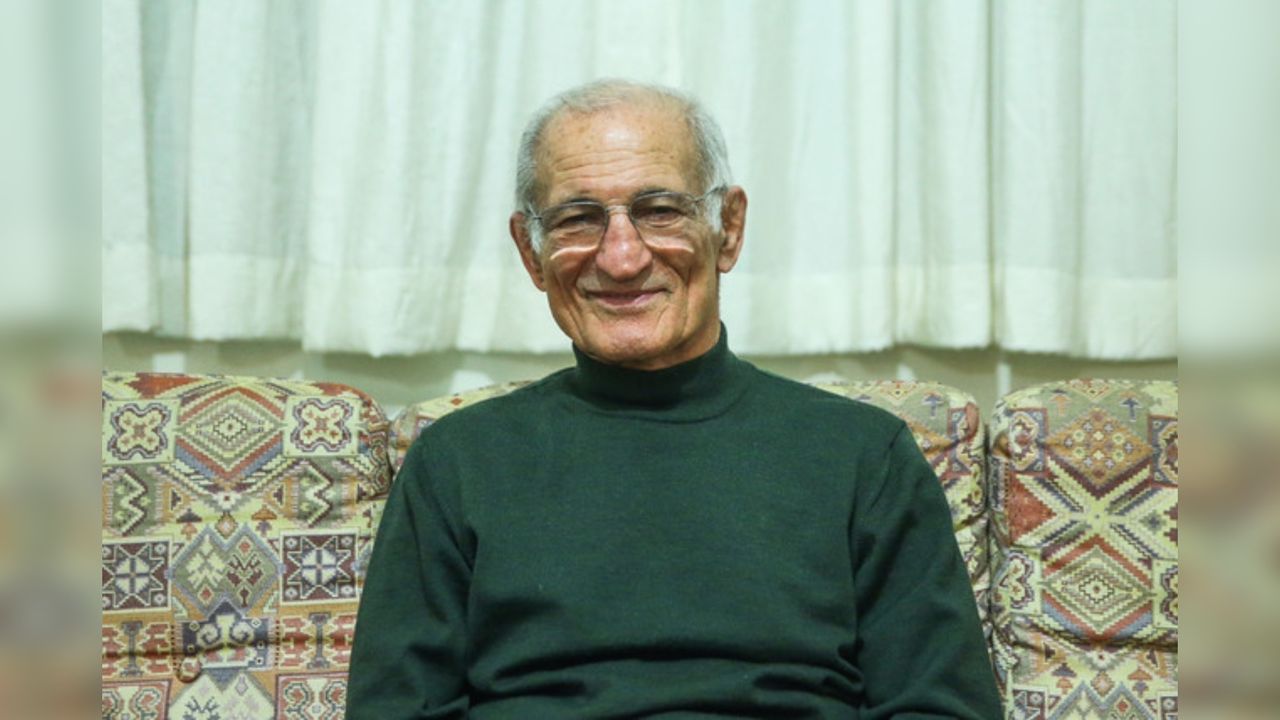
Abdullah MOVAHED (IRI)

Beyond his medals, Movahed’s legacy lies in the standard he set. He helped define a golden generation of Iranian wrestling and inspired countless athletes who followed in his footsteps. His induction into the United World Wrestling's Hall of Fame secured his place among the all-time greats.

In mourning his passing, the wrestling world remembers not just a champion, but a craftsman whose sustained excellence elevated freestyle wrestling to an art form.