NOVI SAD, Serbia (October 16) -- The eighth edition of the U23 World Championships will kick off in Novi Sad, Serbia on October 20 with 700 wrestlers competing in the eighth-day tournament.
Over the years, the U23 World Championships has grown into one of the most competitive tournaments for United World Wrestling. The Novi Sad edition will be no different.
DOWNLOAD THE FULL PREVIEW HERE
Two Paris Olympic champions, multiple Zagreb World Championships medalists and a hosts of age-group world champions are headed to the Serbian city with an aim to win at the final World Championships of the 2025 season.
Women's Wrestling
The women's spotlight in Novi Sad, Serbia, will shine brightest on two of Japan's Paris Olympic gold medalists, who have different objectives besides just adding another title to their long list of laurels.
For Akari FUJINAMI (JPN), the tournament will mark her international debut and first major test at 57kg after making the move up from 53kg, where she won senior world titles in 2021 and 2023. Compatriot Sakura MOTOKI (JPN) will be aiming for a victory at 62kg that would earn her a place in one of wrestling's most unique groups.
Motoki is the lone champion and one of four medalists from last month's senior worlds in Zagreb, Croatia, who will be taking the mat in Novi Sad. With a victory, she would join Yui SUSAKI (JPN) and Amit ELOR (USA) as the lone members of the “Golden Grand Slam” club for those with gold medals on the Olympic, senior world and all three world age-group levels.
The other medalists from Zagreb are Nesrin BAS (TUR), who finished second at 72kg but has moved down to 68kg, and bronze medalists Nurzat NURTAEVA (KGZ) at 72kg and Kylie WELKER (USA) at 76kg.
Bas will also be aiming to improve on the silver medal that she took home from last year's U23 worlds in Tirana, Albania. A total of 12 medalists are returning, including reigning 62kg champion Irina BONDAR (UKR) and Welker, who won the 72kg title in 2024.
Here's a look at the ones to watch in each weight class:
50kg: With nemesis Umi ITO (JPN) sitting out, Audrey JIMENEZ (USA) looks primed to finally make it to the top of the podium after finishing second four times on the age-group level, most recently at the World U20 Championships two months ago in Samokov, Bulgaria.
Jimenez lost to Ito in the finals at both the 2023 world U23 and 2022 world U20. She also finished second at the world U20 in 2023.
Japan will be represented by Minoriho YONEHARA (JPN), a recent Shigakkan University graduate and relatively global newcomer who finished second to Ito at the Japan Queen’s Cup, the Japanese qualifier for Novi Sad.
Others to watch will be European U23 champion and last year’s silver medalist Natalia PUDOVA (UWW); and Munkhgerel MUNKHBAT (MGL), who already has two world age-group medals.
53kg: European champion Elnura MAMMADOVA (AZE), a bronze medalist two years ago at 50kg, and returning silver medalist Serena DI BENEDETTO (CAN) head a wide-open field in this division.
Haruna MORIKAWA (JPN), the 2024 world U20 silver medalist, won out at the Japan Queen's Cup that saw the fall of defending world U23 champion Yu SAKAMOTO (JPN) and can’t be overlooked.
Zeinep BAYANOVA (KAZ) won Asian bronze medals this year on both the senior and U23 levels, and will be aiming for her first world medal in 11 appearances on all levels. Her best finish was fifth at the 2023 U23 worlds.
Also expected to be in the mix are Nataliia KLIVCHUTSKA (UKR), a bronze medalist last year at 50kg; two-time European U23 bronze medalist Viktoriya VOLK (UWW); and European U23 silver medalist Ekaterina KARPUSHKINA (UWW).
55kg: Moe KIYOOKA (JPN) may still be feeling the sting of missing out on the senior worlds after losing out at 53kg to Haruna MURAYAMA (JPN), who went on to win the gold. So expect little mercy for her opponents as she aims for a second career world U23 gold.
Last year, Kiyooka joined the basic Grand Slam club by winning the senior gold at 55kg, to go with her U17 (2019) and U20 and U23 (2022) titles. She has looked vulnerable of late, having lost in the senior Asian final to Hyongyong CHOE (PRK), but should not encounter too much trouble at this level.
The main opposition should come from European U23 champion Tuba DEMIR (TUR), who has a pair of world U20 bronzes to her credit from 2022 and 2024; Asian U23 silver medalist Aruuke KADYRBEK KYZY (KGZ), a senior Asian bronze medalist in 2024; and 2024 world U20 champion Cristelle RODRIGUEZ (USA).
57kg: Can anyone stop the Fujinami juggernaut? The best of the rest appears to be Oleksandra KHOMENETS (UKR) and Neha SHARMA (IND).
Khomenets has won the majority of her laurels at 55kg, where she took a bronze medal at the European Championships this year and was the 2022 silver medalist and 2021 bronze medalist at the senior worlds. She also was a world U23 and U20 bronze medalist last year.
Sharma, this year's Asian U20 champion and U23 silver medalist, was a bronze medalist at last year's U23 worlds, a year after taking the silver at 55kg. She also finished fifth in 2023 at 55kg at the senior worlds.
Nilufar RAIMOVA (KAZ), a bronze medalist at this year's Budapest Ranking Series, won bronzes at both the senior Asian and Asian U23 in 2023, and was the world U20 champion in 2021. She holds the distinction of being the lone entry to have already faced Fujinami. They clashed in the second round at the 2018 U17 Asians, which Fujinami won by fall in 1:09.
59kg: Ruka NATAMI (JPN), who already has world U17 and U20 titles under her belt, will be aiming to add the U23 crown after having to settle for the silver last year at 57kg.
Natami can hold her own on the senior level, as she showed by winning at the Bucharest tournament in August, but just can't seem to break through and make the Japan squad to the big events. She relies on a power game that makes her dangerous in any situation, regardless of the score.
The field includes this year's U20 World Championships bronze medalist Hiunai HURBANOVA (AZE) who also won both the European U20 and U23 golds this year, as well as the Zagreb Ranking Series.
Also expected to make a challenge are 2023 senior world and European bronze medalist Othelie HOEIE (NOR); and two-time Asian U23 bronze medalist Laylokhon SOBIROVA (UZB), who also has senior bronze medals from both the Asian Games and Asian Championships in 2023 at 57kg.
62kg: Motoki can expect to face legitimate threats in her historic quest for glory from reigning champion Bondar and young phenom SAVITA (IND).
Bondar, who also won the world U20 gold last year, captured both the senior and U23 European titles this year. She will be aiming to medal for the fourth straight year in Novi Sad, having also won silver medals in 2022 and 2023.
Savita is returning to the international stage after a two-year absence, where she hopes to restart a remarkable run of success. After winning both the world and Asian U17 titles in 2022, she repeated the feats in 2023 -- and added both the world and Asian U20 golds for good measure.
Others to watch are two-time world U23 bronze medalist Esther KOLAWOLE (NGR); and world U20 bronze medalist Nigina SABIROVA (UZB), who also won her third straight Asian U20 bronze this year.
Kolawole faced Motoki in the quarterfinals at the senior worlds, with the Japanese coming away with a victory by fall. The Nigerian went on to place fifth.
65kg: Representing Japan in a thin field will be Nana IKEHATA (JPN), whose international resume may be slim but sports only gold -- the world U20 title last year to go with past triumphs at Asian U15 and U20.
Among the top challengers are Elizaveta PETLIAKOVA (UWW), the 2023 world U20 silver medalist at 68kg who placed third in two Ranking Series events this year, and European U20 champion Beyza AKKUS (TUR), who might be relishing a chance to avenge her loss to Ikehata from the 2024 world U20 final.
Ruzanna MAMMADOVA (AZE), this year's world U20 silver medalist and European U20 champion, could also make waves, as well as Eniko ELEKES (HUN), this year's European U23 silver medalist and the 2023 world U20 champion at 62kg, and PULKIT (IND), the 2024 world U17 champion.
68kg: Bas will be aiming to regain the title that she won twice before, in 2022 and 2023, prior to losing in last year's final to Ami ISHII (JPN). Ishii, the world champion in Zagreb, will not be returning to defend her title, although she earned the right by winning the Japan qualifier.
Bas won the European U23 gold earlier this year, then moved up to 72kg and placed second at both the senior European and World Championships. She also has two world U20 bronzes from 2021 and 2022, and qualified for and competed at the Paris Olympics at 62kg.
Looking to deny the Turk will be world U20 silver medalist and SRISHTI (IND), who finished second at the U20 worlds at 68kg, adding to a bronze from 2024.
Also expected to be competitive are Alina SHEVCHENKO (UWW), the 2024 world and European U20 champion; two-time former world U23 bronze medalist Manola SKOBELSKA (UKR); and Viktoriya RADZKOVA (UWW), a world U23 bronze medalist a year ago at 72kg.
In Ishii's absence, Japan will send one of its most inexperienced competitors in Seia MOCHINAGA (JPN), who placed ninth at last year's U20 Worlds.
72kg: Last year's champion Welker has moved up to 76kg, opening the door for a potential showdown between senior world bronze medalist Nurzat NURTAEVA (KGZ) and 2024 senior Asian 65kg gold medalist Mahiro YOSHITAKE (JPN).
Nurtaeva, the 2022 world U20 silver medalist at 68kg, won a second straight Asian U23 title this year, and also has a silver medal from the 2023 Asian Games. For Yoshitake, this will be her first international foray at 72kg. She was the 2022 world U20 champion at 65kg.
Others to watch are Vianne ROULEAU (CAN), the losing finalist to Welker last year; Kristina BRATCHINKOVA (UWW), a bronze medalist at this year's U20 worlds; 2024 world U20 champion Jasmine ROBINSON (USA); and Yuqi LIU (CHN), who won a second straight world U20 silver this year, as well as a senior Asian silver.
76kg: Welker appears to be the one to beat in this division, although PRIYA (IND) and Elmira YASIN (TUR) can be expected to give her a run for her money.
Welker's list of laurels include winning a second straight senior world bronze in Zagreb as she moved back up to 76kg after spending most of 2024 at 72kg. She also won a first Pan Am gold in May. In 2021, she won the world U20 gold and a world U23 bronze.
Priya, the 2023 world U20 gold medalist and two-time world U17 champion, has had a busy year, highlighted by a silver medal at the U20 worlds. She also won the Asian U23 title, placed second at the Budapest Ranking Series, and finished fifth at the Zagreb senior worlds.
Yasin, a 2023 world U17 and 2024 world U20 bronze medalist, won the European U23 gold this year, although she relinquished the European U20 title that she won in 2024 and had to settle for a bronze.
Valeriia TRIFONOVA (UWW), a returning bronze medalist who took the silver at the Zagreb Ranking Series, will be a big test as well.
Freestyle
There is no dearth of big names in Freestyle as well. World champion Aoyagi will be making his 74kg debut internationally, just a month after winning 70kg gold in Zagreb. He will be joined by a few other world medalists in Levi HAINES (USA) at 79kg, Umidjon JALOLOV (UZB) at 65kg and Arash YOSHIDA (JPN) at 97kg.
Aoyagi will be hoping to get good results before he challenges the strong domestic field in the weight class at the All-Japan Championships in December.
Here's a look at the storylines in all the 10 weight classes:
57kg: Luke LILLEDAHL (USA) will begin as the favorite with wrestlers from Iran, India and UWW as his main challengers. The U.S. wrestler has age-group world titles to his names but will be at his first U23 Worlds and is part of the formidable Penn State group heading to Novi Sad.
Lilledahl's quick attacks have troubled his opponents in the past but it will be a question of if he can break the defense of some experienced wrestlers.
Recent U20 world silver medalist Sumit MALIK (IND) will try to win a second straight medal at a World Championships. Malik's pace on the mat makes him stand out in the competition. Iran will be sending Asian silver medalist Milad VALIZADEH (IRI) who will try to win his first world medal. Aiandai ONDAR (UWW) and Yuta KIKUCHI (JPN) will be the dark horses of this weight class.
61kg: He was agonizingly close to winning a medal at the senior World Championships but Jax FORREST (USA) was denied in Zagreb. He will try to make up for that loss with a run in Novi Sad. The high-schooler has a bronze at U20 Worlds but after his performance in Zagreb, a medal in Novi Sad seems highly likely.
While gold will be in Forrest's sights, there will challenges from former U17 world champion Fedor BALTUEV (UWW) who is returning to international competition after four years, U23 Asian silver medalist Merey BAZARBAYEV (KAZ) and 2024 U17 world champion Omurbek ASAN UULU (KGZ).
65kg: In one of the toughest weight classes at the U23 level, world bronze medalist Umidjon JALOLOV (UZB), two-time world U20 champion Yuto NISHIUCHI (JPN), world U20 champion Marcus BLAZE (USA), two-time world U23 champion Bashir MAGOMEDOV (UWW), returning medalist Bilol SHARIP UULU (KGZ) and senior continental medalists Khamzat ARSAMERZOUEV (FRA) and SUJEET (IND) are in the field.
Jalolov, who struggled with form since 2022, has tried his luck at the U23 World Championships before but without any success. However, if he can replicate his run from Zagreb, Jalolov has the chance to change that. He managed to beat two-time U23 world champion Ibragim IBRAGIMOV (UWW) in the bronze medal bout.
There are several names which can stop Jalolov. Nishuchi will be one of them as he returns to the international scene after two years and first time at 65kg. He has titles at 57kg and 61kg and this will be a big test for him. Another wrestler moving up to 65kg is Magomedov who won his titles at 61kg. He will be trying to win another gold medal in a tougher weight class.
Blaze, who has only lost one bout in international career, will be among the favorites as well. He will be coming off his incredible performance at the U20 Worlds in which he won gold at 61kg. Sujeet impressed at his senior World Championships debut but failed to return with a medal.
70kg: PJ DUKE (USA) will look to complete the U20 and U23 world double as well. He had a good run in Zagreb before running out of steam. He will face competition from former U20 world champion Kanan HEYBATOV (AZE), talented Iran wrestler Sina KHALILI (IRI), Alexandr GAIDARLI (MDA), who Duke defeated in the final at the U20 Worlds.
While he seems ahead of everyone else in the field, Heybatov can trouble him with his crafty wrestling. Khalili will try to get those underhooks going while Gaidarli will look to avenge that loss from Samakov.
74kg: Can Aoyagi impress at international level in a new weight class? The question will soon be answered. Aoyagi's strength and stamina will be tested as he moves up from 70kg to 74kg.
There are established names like U23 world champion Magomed KHANIEV (AZE) who is also moving up to 74kg. U20 European champion Manuel WAGIN (GER), former U20 world champions Reza SHAKERI (IRI), Mitchell MESENBRINK (USA) and Magomed BAITUKAEV (UWW).
Khaniev won gold at 70kg but added a silver in Budapest at 74kg, losing to the now world champion Kota TAKAHASHI (JPN) in the final. There is no doubt he will be favorite again along with Aoyagi.
Baitukaev will be strongly tested at the new weight classes in which he is yet to perform internationally. He has silver and bronze medals at the U20 Worlds from 2023 and 2024 respectively.
Another star will be Mesenbrink, who lost to Kota TAKAHASHI (JPN) last year, with hopes of winning a world title again. Mesenbrink has all the skills to make the run to the title but will be tested by the strong bracket.
79kg: Levi HAINES (USA) surprised most with a silver medalist finish in Zagreb but there will be no surprise if he wins gold in Novi Sad. His main competitor will be U20 world champion Mahdi YOUSEFI (IRI). While Haines is a solid wrestler, Yousefi can counter and score points when needed to keep the upper hand. If the two don't meet before the final, both Haines and Yousefi will leave it all on the mat to win the title.
Farid JABBAROV (AZE) and CHANDERMOHAN (IND) will look to finish on the podium as well.
86kg: An injury to his knee in Zagreb meant that Rakhim MAGAMADOV (FRA) would return home without a medal. But the former U20 world champion will be going for his fourth U23 World Championships. He has never won a medal previously at this tournament but has the skills to finish on top.
World U20 silver medalist Abolfazl RAHMANI (IRI) will be one of the biggest names to stop him. If Rahmani can work on his conditioning, the Iranian can land a gold medal for his country. The U.S. is sending Rocco WELSH (USA) while Arsen BALAIAN (UWW) and Ali TCOKAEV (AZE) will look to stop the two in Novi Sad.
92kg: Sherzod POYONOV (UZB) gave Uzbekistan a gold medal at the U20 World Championships in Samokov but the U23 level will be a little more challenging. The likes of Mobin AZIMI (IRI), Joshua BARR (USA) and Mukhamed KHANIEV (UWW) are all skilled enough to claim the gold medal.
Azimi is one of the most talented wrestlers out there and after a brief stint at 97kg, Azimi will look to win another world title at 92kg. Barr is one of the strongest wrestlers at this weight class while U23 European champion Khaniev will look to add a world title to his name.
97kg: Two young stars Arash YOSHIDA (JPN) and Rizabek AITMUKHAN (KAZ) will lock horns at 97kg for a chance to win gold. Aitmukhan, a senior world champion at 92kg, did not win a medal in Zagreb but Yoshida, an Asian champion, won bronze. However, the two are equally matched and a thriller is on the cards if the two meet in Novi Sad.
Yoshida's conditioning may just give him an upper hand if he meets Aitmukhan on the mat. A medal in this weight class will be historic for Japan as the highest weight class it has won a medal at U23 Worlds history is at 86kg.
VICKY (IND), Abolfazl BABALOO (IRI) and Soslan DZHAGAEV (UWW) can finish on the podium as well but upsetting either of Yoshida or Aitmukhan will be an uphill task.
125kg: For the last five years, Iran has dominated this weight class especially with Amirreza MASOUMI (IRI). But with Masoumi not entered anymore, the competition has been thrown wide open. U20 world silver medalist Abolfazl MOHAMMAD NEZHAD (IRI) will be a big favorite to win but so will be Khetag KARSANOV (AZE), U23 European champion Georgi IVANOV (BUL) and Khabib DAVUDGADZHIEV (UWW).
Greco-Roman
As if Fardin HEYDAYATI (IRI) dominance at the age-group level was not enough, Iran will be bringing senior world champion Gholamreza FAROKHI (IRI) to the U23 World Championships.
Iran has been on an incredible run this year, winning team titles at U17, U20 and senior World Championships. Now, it will be the favorite to win the team title at the U23 Worlds as well.
But there will be names which can threaten to deny Iran in all weight classes. Here's a look at the 10 weight categories in Novi Sad:
55kg: Iran's young star and U17 world champion Armin SHAMSIPOUR (IRI), 18, will be leading the charge but how he adjusts to wrestlers who are way senior to him will be challenging. U23 Asian champion Yerassyl MAMYRBEKOV (KAZ) and U23 European champion Alibek AMIROV (UWW) will start as favorites in this weight class.
It also includes Zagreb Open champion and age-group world medalist Elmir ALIYEV (AZE) and experienced Denis MIHAI (ROU), who will be looking to add to his collection of medals.
60kg: Both the European and Asian U23 champions are entered at 60kg. Dimitri KHACHIDZE (GEO) won the European title while Iskhar KURBAYEV (KAZ) won in Asia. Both will look to add world medals to their names but it won't be easy. Former U20 world champion Suren AGHAJANYAN (ARM) and U23 European silver medalist Melkamu FETENE (ISR) are entered among others.
Japan's impressive wrestler Koto GOMI (JPN) and another of Uzbekistan's prodigy Mehroj BAKHRAMOV (UZB) will be the dark horses of the competition.
63kg: World bronze medalist and U23 European champion Vitalie ERIOMENCO (MDA) will be looking for an U23 world medal to close out his incredible 2025 season. Given his stunning performance at the senior Worlds, he will start as the favorite in this weight class.
Silver to Eriomenco in U23 Euros and former champion Ziya BABASHOV (AZE) will be the Moldovan's big test at 63kg. Dordzhi SHUNGURTSIKOV (UWW), 2024 U20 European silver medalist, and U23 Asian silver medalist Khusniddin OLIMBOEV (UZB) will also be tough matches for any wrestler.
67kg: A phenom at the age-group World Championships, former U20 world champion Ahmadreza MOHSEN NEZHAD (IRI) will be a favorite at U23 level as well. He also made his senior debut this year at Zagreb Open but finished fifth.
He will face stiff competition from senior world bronze medalist Daniial AGAEV (UWW) who was impressive in Zagreb, an experience he will be keen to use in Novi Sad.
Other challengers include U20 World bronze medalist Faraim MUSTAFAYEV (AZE), U23 European champion Anri KHOZREVANIDZE (GEO) and U23 Asian champion Bagdat SABAZ (KAZ).
72kg: U20 world champion Gaspar TERTERYAN (ARM) will be making his U23 debut at the World Championships which will be a different kind of challenge. Ruslan NURULLAYEV (AZE), European U23 champion, will be one of the biggest challengers along with U20 European champion Nika BROLADZE (GEO) and former Asian champion Iman MOHAMMADI (IRI).
77kg: European 72kg champion Levente LEVAI (HUN) has risen quickly through the ranks, winning the Zagreb Open gold along with the European gold. But he moved up to 77kg Budapest and won the bronze medal. He will continue his journey at 77kg in Novi Sad and look to win the title for Hungary.
Trying to stop him will be U20 Asian champion Ahoura BOUVEIRI PIANI (IRI) and also European bronze medalist Alexandru SOLOVEI (MDA), who is also a two-time finalist at the U20 World Championships.
82kg: Former U23 world champion Alexandrin GUTU (MDA) will be making another run for the gold medal, this year at 82kg. He failed to win a medal at the senior World Championships in Zagreb at 77kg. However, the 82kg weight class will present its own challenges.
Age-group star and former European champion Alperen BERBER (TUR) will be returning from injury and look to win his first U23 world title. Berber has won the U17 and U20 world titles but has silver at the U23 level.
Returning silver medalist Beka MELELASHVILI (USA) will also be in the mix and so will Gamzat GADZHIEV (UWW) and Samandar BOBONAZAROV (UZB).
87kg: World champion at 82kg Gholamreza FAROKHI (IRI) moves up to 87kg as Iran continues to churn out top level Greco wrestlers. Can Farokhi adjust to the new weight class? That will be a big question in a weight class that also has former age-group world champion Achiko BOLKVADZE (GEO) and Deni NAKAEV (GER), U23 European silver medalist Vladimeri KARCHAIDZE ((FRA) and U23 Asian champion Maksat SAILAU (KAZ).
97kg: Two-time U20 world champion Yehor YAKUSHENKO (UKR) will be going for his first world title at U23 level. He will have his nemesis Darius KIEFER (GER) in Novi Sad along with Hadi SEYDI AVENDI (IRI), who Yakushenko defeated in the final at the U20 Worlds.
Former U20 world champion and world bronze medalist Abubakar KHASLAKHANAU (UWW) finished with a silver medal last year but will look to disturb the aforementioned trio to win gold.
Nurmanbet RAIMALY UULU (KGZ) has made the U23 Asian gold his own, winning it three times but has no medals at the Worlds. He will look to add one to his name and so would Iussuf MATSIYEV (KAZ), a senior Asian silver medalist.
130kg: Defending champion Fardin HEDAYATI (IRI) is well clear of the field which has been made competitive with the entries of Laszlo DARABOS (HUN), a U20 world champion, age-group world champion Cemal BAKIR (TUR), former U20 world champ Mykhailo VYSHNYVETSKYI (UKR), who won that gold in 2022 by beating Hedayati in the final.



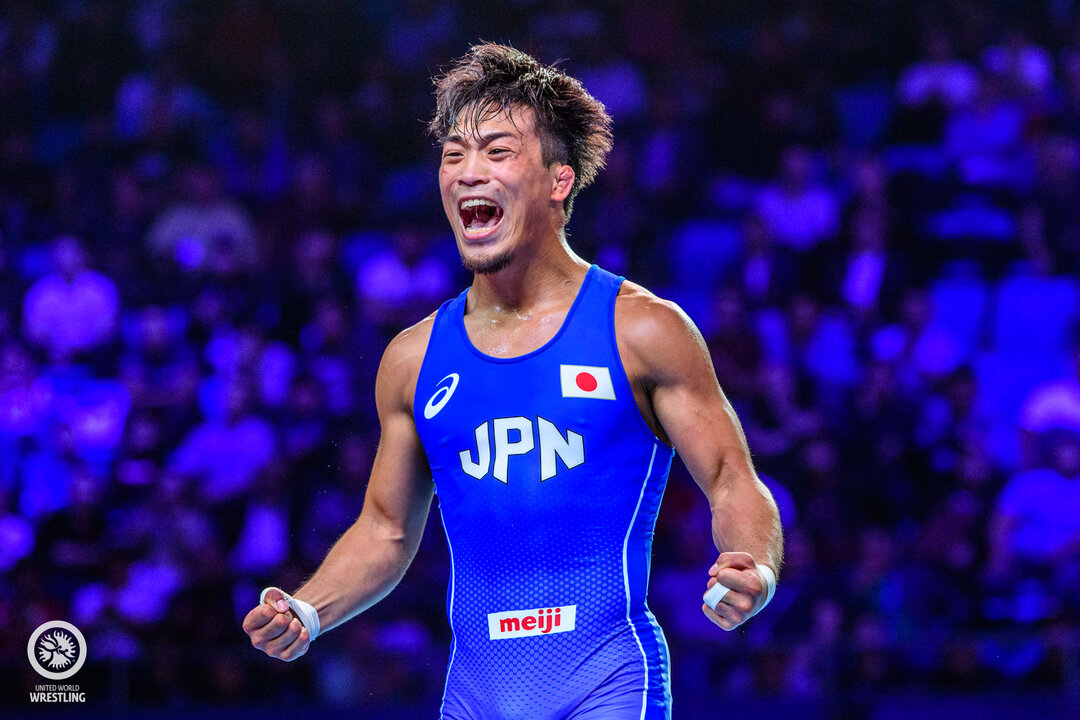 Shinobu OTA, the reigning 63kg world champion, will be moving up to 67kg with hopes of improving his silver medal from the 2016 Rio Olympic Games. (Photo: Tony Rotundo)
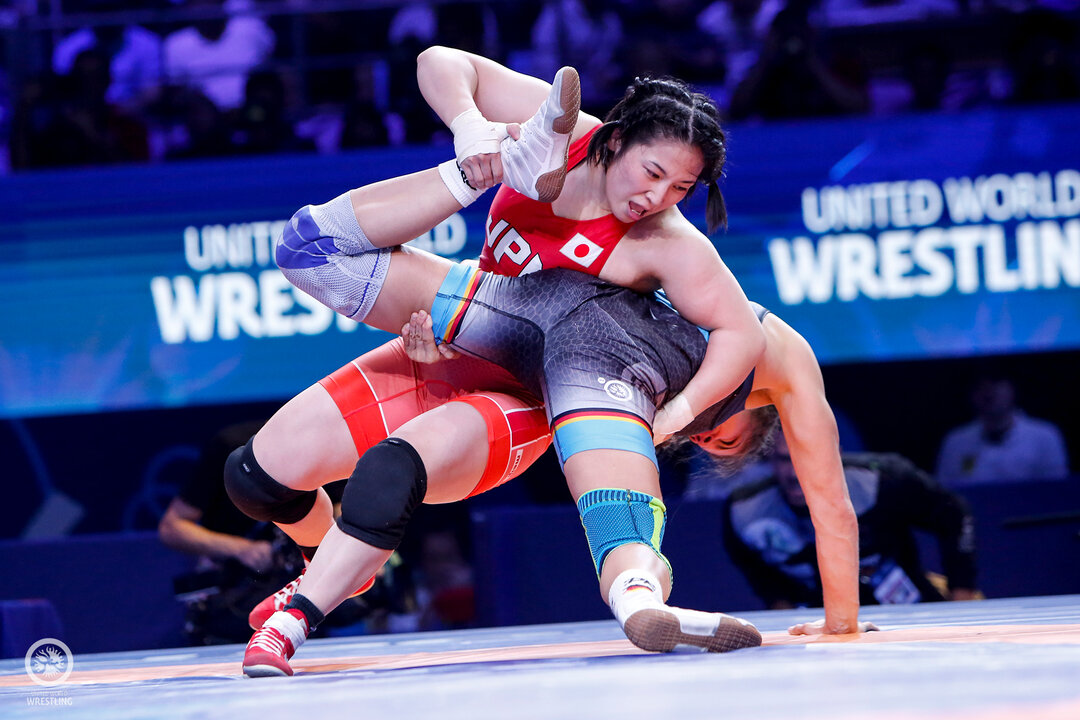 Rio Olympic champion Sara DOSHO will be challenged by U23 world champions Masako FURUICHI and Yuka KAGAMI at 68kg. (Photo: Gabor Martin)
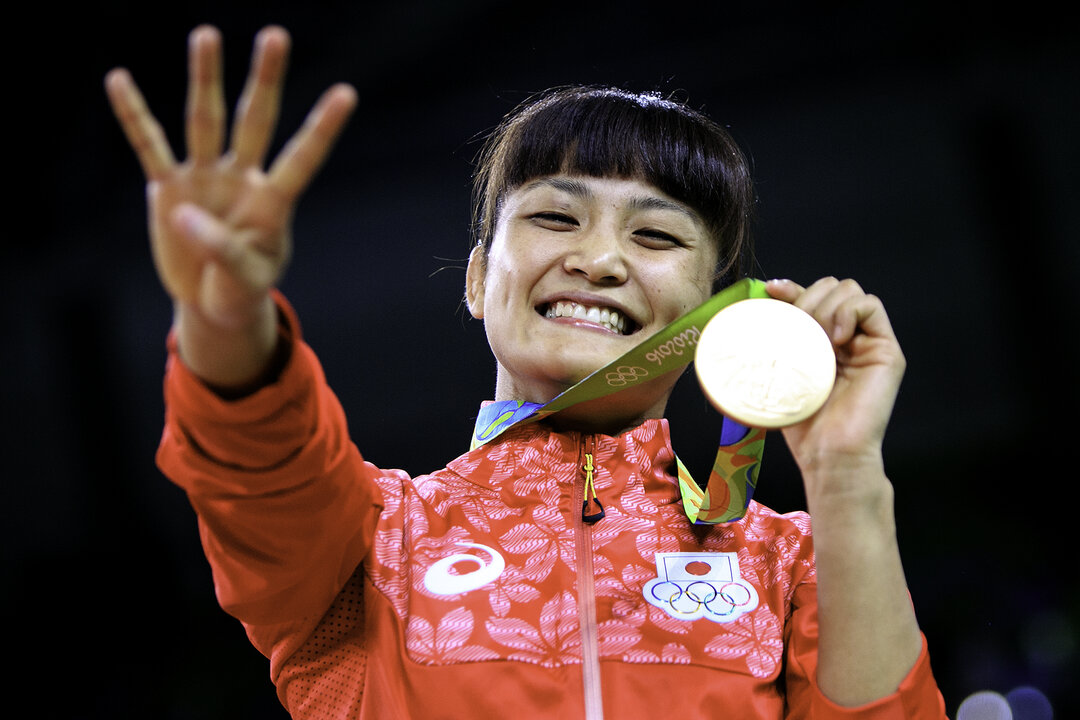 Kaori ICHO did not enter the All Japan Championships, which ends her quest for a fifth consecutive Olympic gold medal. (Photo: Tony Rotundo)
Share your thoughts.
Comments