

Women's Day: 10 moments that shaped women's wrestling
Tuesday, March 7, 2023 - 21:53 By Taylor GREGORIO

CROSIER-SUR-VEVEY, Switzerland (March 8) -- Throughout wrestling history, efforts have been made to make the sport more inclusive. Women's wrestling emerged as the top priority for United World Wrestling.
Over the years, the organization has taken various steps to uplift and improve the standard of women's wrestling around the world. Here are ten moments that changed women's wrestling.
1987 – First women’s wrestling World Championships
While Greco-Roman and Freestyle have a long history of World Championships, women got their first shot at world titles in 1987 when the first women's World Championships was held. The inaugural tournament took place in Lorenskog, Norway with nine weights.
A total of 48 female wrestlers participated in this World Championships.
The champions at the inaugural edition were Brigitte WEIGERT (BEL) at 44kg, Anne HOLTEN (NOR) at 47kg, Anne HALVORSEN (NOR) at 50kg, Sylvie VAN GUCHT (FRA) at 53kg, Isabelle DOURTHE (FRA) at 57kg, Ine BARLIE (NOR) at 65kg, Georgette JEAN (FRA) at 70kg and Patricia ROSSIGNOL (FRA) at 75 kg.
1989 – First combined World Championships
Two years after its world debut, women’s wrestling shared the stage with the other two styles. A combined World Championships was held in Martigny, Switzerland.
Apart from most European countries in the participation, wrestlers from Japan, China, Chinese Taipei, Venezuela and the USA were also part of this competition.
53 wrestlers took part in this competition and the champions included Shoko YOSHIMURA (JPN) and Ming-Hsiu CHEN (TPE).
Since then, women's wrestling World Championships has been held every year barring 2004 -- the year of the Athens Olympics.
2004 – Women’s wrestling makes Olympic debut in Athens
With momentum building around the sport, women’s wrestling was showcased on the world’s biggest stage at the 2004 Athens Olympics. With four weight classes, 11 different countries were represented in the Games, and seven of those won medals, including gold medals for Japan, Ukraine and China.
2013 - Increase from four to six weight classes at Olympics
In 2013, wrestling received devasting news that it was in danger of being dropped from the Olympic program. UWW responded quickly, making necessary changes to the sport, which included gender equity and increasing the women’s weights from four to six. It ultimately helped secure wrestling’s place as an Olympic core sport.
The change was implemented in the 2016 Rio Games, where Greco-Roman, Freestyle and women each had six weight classes. Previously, Greco-Roman and Freestyle each had six weights, while women had four.
2015 – Yoshida wins 13th World title
At the 2015 World Championships in Las Vegas, USA, Saori YOSHIDA (JPN) set a bar that is yet to be broken. She won her 13th straight World title, spanning from 2002 to 2015 with 11 of those coming at 55kg and the last two at 53kg.
In World Championship action, Yoshida was undefeated. In addition to an outstanding number of World titles, Yoshida also has three Olympic golds in four attempts.
2016 -- Icho first woman to win four Olympic golds
At the 2016 Rio Olympic Games, Kaori ICHO (JPN) earned legendary status, becoming the first female athlete to win four Olympic gold medals. For the historic win, Icho defeated Valeriia KOBLOVA (RWF), 3-2, in the 58kg final.
Icho’s first Olympic gold came over Sara MC MANN (USA) at 63kg at the 2004 Olympics. After winning her second Olympic title at the 2008 Beijing Games over Alena KATACHOVA (RUS) at 63kg, Icho considered retiring but pressed on for two more Olympic Games, which included a 2012 win over Rui Xue JING (CHN), again at 63kg. Overall, Icho went undefeated internationally from 2003 to 2016 with a forfeit in 2007.
2016 -- Amri becomes first African to win Olympic medal
The Rio Olympics witnessed another significant moment when Marwa AMRI (TUN) became the first female wrestler from Africa to win an Olympic medal. She claimed the bronze medal in the 58kg weight class.
In the bronze medal bout, Amri defeated Yuliya Ratkevich (AZE), 6-3, after executing a four-pointer with 10 seconds remaining in the bout.
A year later, Amri became the first African to reach the 2017 World Championships final in Paris. On the same day, Odunayo ADEKUOROYE (NGR) achieved the same feat as she reached the final at 55kg.
2018 - Youth Olympic Games achieve gender balance
In an effort to become more gender equitable, wrestling increased the number of female participants in Buenos Aires to 50, up from 32 participants in Singapore 2010 and Nanjing 2014. With that number, the participants in women's wrestling was equal to freestyle and Greco-Roman.
The adjustment was part of a larger effort by the International Olympic Committee to meet its goal to make the 2018 Youth Olympic Games the first-ever gender-equal Games.
2021 -- Mensah Stock becomes first Black female to win Olympic gold
After a 2019 World title run, Tamyra MENSAH STOCK (USA) was a favorite to take the crown at 68kg at the Tokyo Olympic Games. Expectedly, she reached the final in Tokyo against Blessing OBORUDUDU (NGR).
The match held a lot of significance as it was the first Olympic final in wrestling’s history to feature two Black women and ensured that for the first time, a Black woman would stand atop the Olympic podium. Ultimately, it was Mensah Stock who emerged with a 4-1 win, an Olympic title and a groundbreaking moment for the sport.
 For the first time in wrestling's history, the 2022 Commonwealth Games were officiated by majority women. The 16 female referees who participated in Birmingham post for a photo after the competition. (Photo: Helena Curtis)
2022 -- CWG becomes the first major tournament to be officiated by a majority of females
In an initiative to achieve gender parity, UWW launched a program to help educate, train and bring up more female referees within the sport. As a part of its strategic plan, UWW, along with the Commonwealth Games Federation, agreed to include a majority of women officials at the 2022 Commonwealth Games in Birmingham, England.
Of the 21 referees assigned to the event, 15 were women for a total of 70 percent female representation. Additionally, one of the Referee Delegate positions and other official positions were held by women.

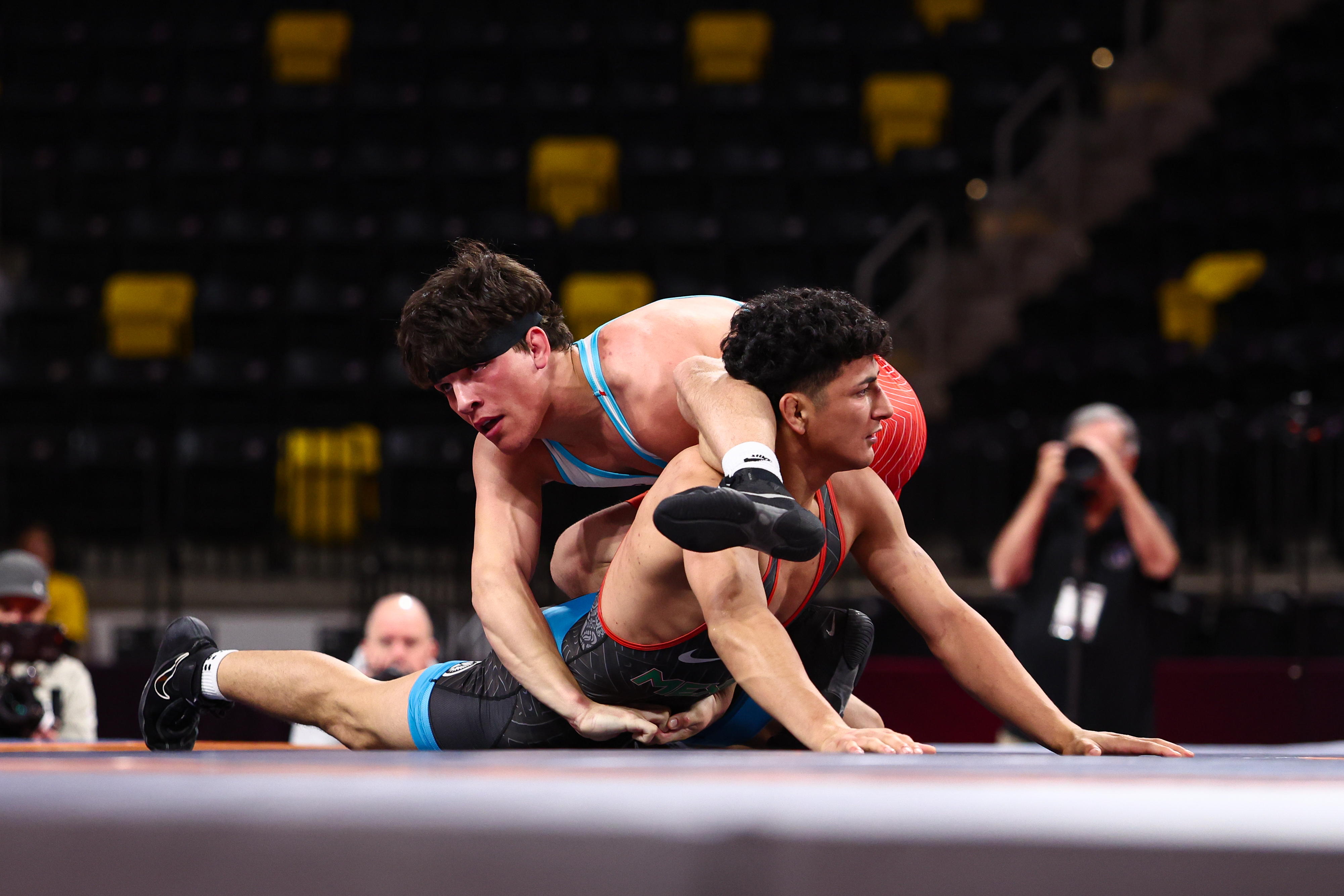 Landon DRURY (USA) tries to score on Angel SEGURA (MEX) during their 63kg bout. (Photo: United World Wrestling / Jake Kirkman)
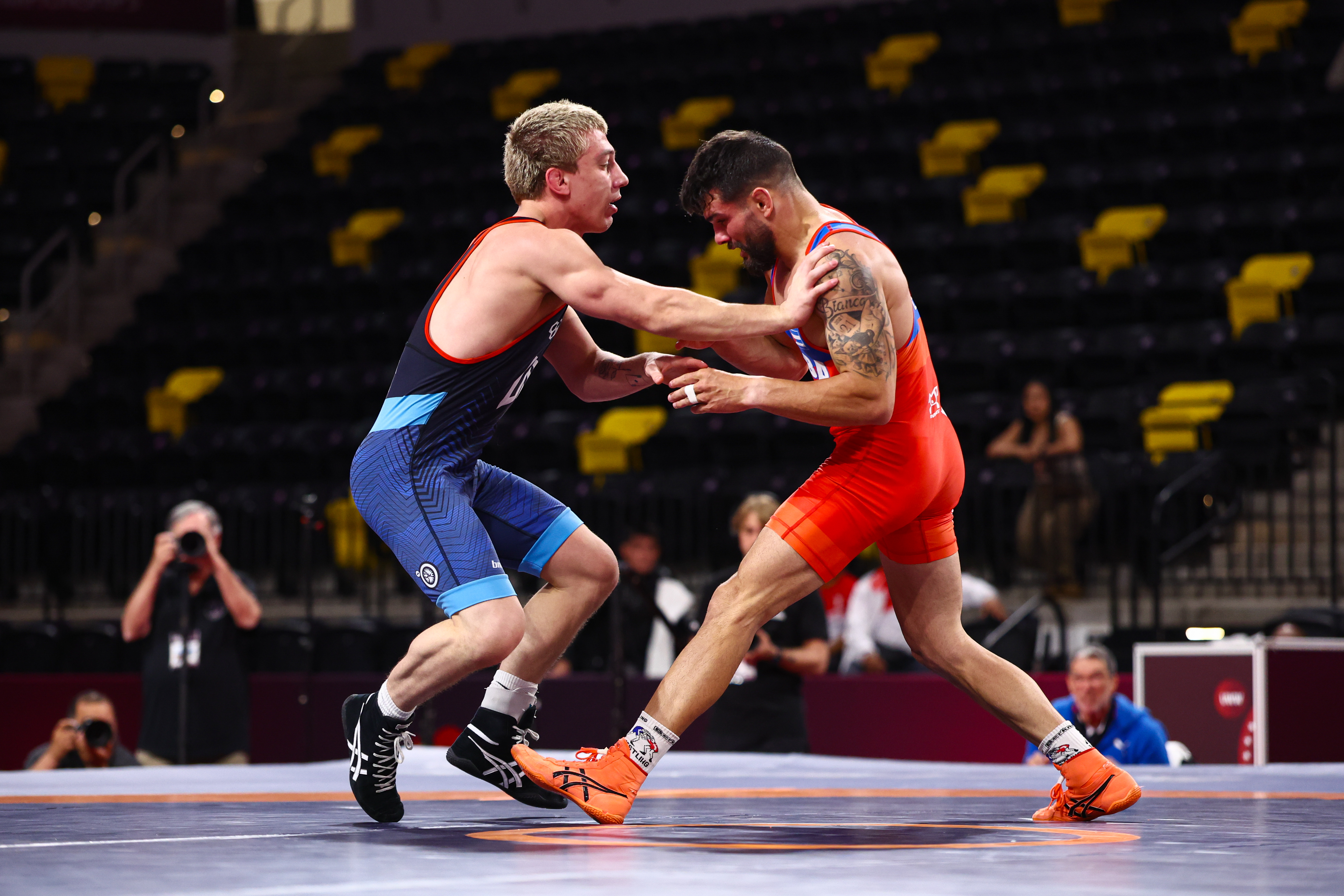 Luis ORTA (CUB), red, wrestles Otto BLACK (USA) during the 67kg final. (Photo: United World Wrestling / Jake Kirkman)
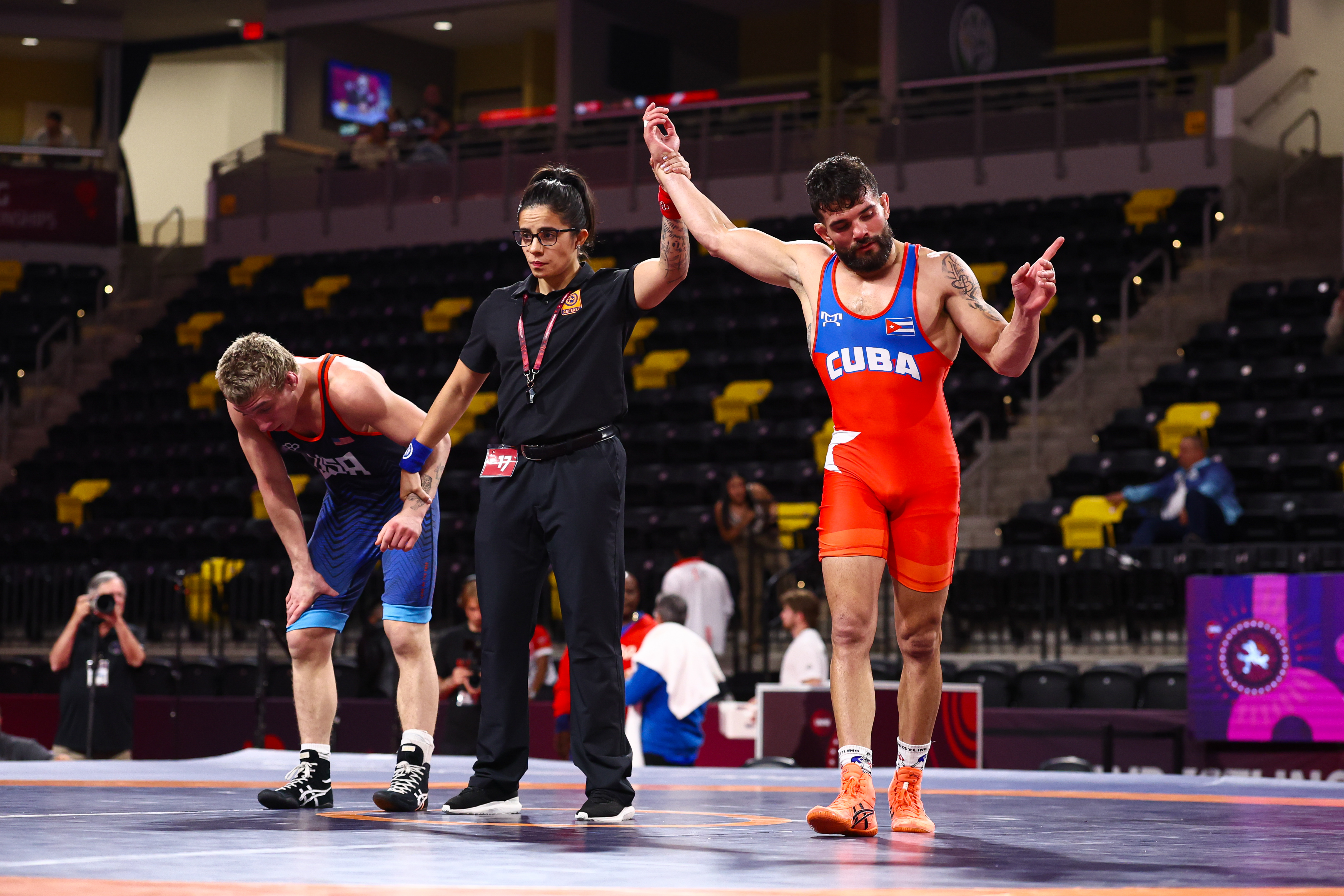 Luis ORTA (CUB) won his fifth Pan-American gold medal on Thursday. (Photo: United World Wrestling / Jake Kirkman)
Share your thoughts.
Comments