

World champs Fujinami, Sakurai capture Asian Games golds
Friday, October 6, 2023 - 02:57 By Vinay Siwach

LIN'AN, Hangzhou, China (October 5) -- It rarely matters who Akari FUJINAMI (JPN) faces on the mat. But Thursday was a little special for Fujinami as she faced a Chinese wrestler, Qianyu PANG (CHN), for the first time in her career.
Fujinami has been expecting to wrestle a Chinese wrestler for a long time now but has somehow avoided meeting one at the international tournaments she has wrestled.
While Pang could have brought a few new challenges for Fujinami, the result of the bout was rather expected. Fujinami rolled to a 10-0 technical superiority win in the 53kg final to win her first gold medal at the Asian Games.
Despite it being a one-sided affair, Fujinami doesn't play down the final against Pang, the silver medalist in the Tokyo Olympic Games. Fujinami scored the final of the five takedowns in the match with one minute and 24 seconds left on the clock.
"The Chinese opponent [Pang], made it to the final at the Tokyo Olympics, and I had seen live broadcasts of her at global events," Fujinami said. "She was an opponent who I wanted to face. I'm glad I had a chance to wrestle her."
 Akari FUJINAMI (JPN) pins ANTIM during the 53kg quarterfinal. (Photo: UWW / Sachiko Hotaka)
The win was more special as Fujinami not only extended her unbeaten run in wrestling to 130 bouts but has now beaten all four Tokyo Olympic medalists with Pang being the final wrestler among the four.
Fujinami had defeated bronze medalist Bortulya BAT OCHIR (MGL) in February at the Zagreb Open Ranking Series. Four months later, she won against Tokyo champion Mayu MUKAIDA (now SHIDOCHI) in the Meiji Cup and defeated the second bronze medalist from Tokyo Vanesa KALADINSKAYA (AIN) two weeks ago en route to her second world title in Belgrade. While Mukaida did score points on Fujinami, the three others failed to do so.
"At the World Championships, the defense was my weak point. So I had to fix this at these Games. I competed with a goal of not letting my opponents touch my legs and the score reflected that."
The Asian Games gold medal is another addition to her two world titles and as many Asian Championships gold medals for Fujinami. But the teenager considers these a stepping stone towards reaching her ultimate goal of winning the gold medal in Paris.
"I'm happy right now to win the title at the Asian Games," she said. "But my ultimate goal is to win at the Paris Olympics. To that end, I want to further raise my wrestling skills."
The 19-year-old will wrestle in Paris after she qualified Japan for the Olympics at 53kg by winning the world title. According to Japan Wrestling Federation rules, a wrestler winning the quota with a medal will be the automatic choice for Paris. Fujinami secured that in Belgrade.
Pang, who still is carrying the hope of winning the Olympic gold, failed to earn the Paris quota for China in Belgrade and will have to travel to Bishkek for the Asian Olympic Qualifiers to earn a spot.
"I still want to win the gold medal," Pang said. "This is the first time competing against each other. I did not perform at my best level and my opponent was very strong. I just thought about how to defend. I need to learn from my opponent."
Fujinami too expressed her gratitude towards Pang for wrestling and said that she was exceeding her own expectations.
"Although I have never competed against her before, I spoke to her and felt that she has a good character," she said. "I really wanted to win this match. I was performing better than I thought in this match too."
That despite the turnaround time from the grueling World Championships being less than two weeks.
"It was only a short time, and there was the difficulty of cutting weight," she said. "But this is a multi-sports event held only once every four years. I entered this tournament wanting it to be a good step toward the Olympics."
 An emotional Remina YOSHIMOTO (JPN) after winning the 50kg gold medal at the Asian Games. (Photo: UWW / Sachiko Hotaka)
While there was calmness about Fujinami and her wins, chaos took over the mat on either side of Fujinami's gold-medal bout.
Remina YOSHIMOTO (JPN) was in tears and confusion as her hand was raised after the 50kg final while Tsugumi SAKURAI (JPN) needed a stepout and caution in the final few seconds to win at 57kg.
With the three gold medals, Japan has ended the wait for an Asian Games gold in Women's Wrestling as it failed to win any at the 2018 Games in Jakarta.
Yoshimoto opened the gold account, but not before a heart-in-mouth moment against returning bronze medalist Son Hyang KIM (PRK) in the final seconds.
Kim, trailing 3-2, used a counter lift to expose Yoshimoto who was holding to Kim's left leg. Both Kim and Yoshimoto were awarded two points each and Kim was given one more point for the reverse at the buzzer. But Japan challenged the call. On review, it was confirmed that the time had expired before the reversal was confirmed, giving Yoshimoto a 5-4 win.
"It was my first time facing a DPR Korea wrestler," Yoshimoto said. "If I don't win in Japan, I can't go to overseas tournaments. The next time I face a DPR Korea wrestler, I will reflect on what happened here and use that to my advantage. This time I got in on several tackles, and if I could have solidly gotten the takedowns, the match would have gone easier for me. I will practice hard to improve in this aspect."
Yoshimoto shot numerous times and got to Kim's right leg many times however she did not manage to finish all. She scored the first takedown during Kim's activity period and led 3-0. Kim answered with a double-leg in the second period to close the gap to just one point.
But like most bouts between Japan and DPR Korean wrestlers, there was a twist in the tale. Yoshimoto shot for the single leg and Kim used all her reverse to get the lift. As the challenge decision was announced, Kim began celebrating her win leaving Yoshimoto stunned. It was later when she saw the scoreboard she realized that she won 5-4.
"Up to now, when DPR Korea wrestlers faced the Japanese, they have been able to come back and win matches at the very end," Yoshimoto said. "If I became defensive, it would be the same pattern. So I went on the attack. I got in on a tackle, but I couldn't finish it off. Anyway, it was the right move to attack."
Yoshimoto, a trainee at the Shigakkan University, lost to Yui SUSAKI (JPN) in the Meiji Cup in the final seconds of the 50kg final, leaving her frustrated. Thursday was another example of Yoshimoto failing to finish the last attempt.
"Half of me is relieved, and half is anguish," Yoshimoto said in the post-match interview with tears still rolling down from her eyes. "From the time I lost in June [to Susaki], I worked the whole time on finishing off tackles. This time, the same thing happened and I'm still lagging. That's very frustrating.
"This summer, I was able to train at Shigakkan, but there was no air conditioning. That's pretty rare, but I worked on stamina training. In the final, the DPR Koreans started getting particularly tired, and I thought that put us on the same level and I could outlast her on strength. It was a dangerous match, but I think the result came [from my preparations]."
 Tsugumi SAKURAI (JPN), blue, survived this fall position for over a minute against In Sun JONG (PRK). (Photo: UWW / Sachiko Hotaka)
The 57kg final was a bout of two halves, World champion Sakurai managed to beat In Sun JONG (PRK) after mounting a comeback from 6-0 down. Jong, who was impressive in her defense using the split, was clearly the better wrestler for five minutes of the bout.
Sakurai's every attempt to score was easily foiled by Jong before she began to get tired. A stepout opened the scoring for Sakurai and the trend would continue with Jong receiving an activity warning and two stepouts with one caution. Sakurai now trailed 6-5 with 20 seconds on the clock. She could go behind Jong who literally walked out of off the mat, receiving another caution, giving up her lead to Sakurai 7-6.
"It's heavy [the medal].," Sakurai said. "It's the heaviest of the gold medals I've received. There's really a difference between winning and second place."
Talking about the final bout, Sakurai said that she believed that she would be able to win despite trailing 6-0 at the break because of the close wins she has managed domestically.
"Mentally, I wasn't beaten and that allowed me to get the win," she said. "I was behind the whole match and I came back in the final minute. In Japan, there are matches where I didn't give up to the very end and I was able t to win at the last second. Because of that, I could win today when my back was to the wall."
Sakurai has dished out wins from the jaws of defeat including her Meiji Cup final win against Sae NANJO (JPN). She used a buzzer-beating headpinch to make the Japan team for the World Championships.
"No matter who the opponent is, no matter how strong, I am mentally strong when I go out on the mat," she said. "Generally, I'm not the strong-minded type, but when I'm on the mat, I stay determined to the end."
Uzbekistan opens account
In the bronze medal bouts, Uzbekistan captured two, their first-ever medals in women's wrestling at the Asian Games.
Aktenge KEUNIMJAEVA (UZB) was the first bronze medalist at 50kg as she defeated Pooja GEHLOT 9-2. Both wrestlers lost to Yoshimoto in the earlier rounds.
Soon, Asian silver medalist Laylokhon SOBIROVA (UZB) pinned MANSI in the 57kg bronze-medal bout to claim the second medal for Uzbekistan.
"This the first medal for Uzbekistan in Asian Games," Sobirova said. "So the bronze medal is worth the gold medal."
China claimed the other bronze medals at 50kg and 57kg. The second bronze medal at 50kg was won by Jiang ZHU (CHN) who pinned Miran CHEON (KOR) while Kexin HONG (CHN) rolled to a 10-0 win over Davaachimeg ERKHEMBAYAR (MGL).
At 53kg, ANTIM saw off Tokyo bronze medalist Bat Ochir to add a bronze medal to her World Championships bronze medal. A takedown was the difference as she defeated the Mongolian 3-1. The second bronze medal was won by Hyogyong CHOE (PRK) as she beat Thi My Trang NGUYEN (VIE).
RESULTS
50kg
GOLD: Remina YOSHIMOTO (JPN) df. Son Hyang KIM (PRK) 5-4
BRONZE: Jiang ZHU (CHN) df. Miran CHEON (KOR), via fall
BRONZE: Aktenge KEUNIMJAEVA (UZB) df. Pooja GEHLOT, 9-2
53kg
GOLD: Akari FUJINAMI (JPN) df. Qianyu PANG (CHN), 10-0
BRONZE: ANTIM df. Bolortuya BAT OCHIR (MGL), 3-1
BRONZE: Hyogyong CHOE (PRK) df. Thi My Trang NGUYEN (VIE), 11-0
57kg
GOLD: Tsugumi SAKURAI (JPN) df. In Sun JONG (PRK), 7-6
BRONZE: Kexin HONG (CHN) df. Davaachimeg ERKHEMBAYAR (MGL), 10-0
BRONZE: Laylokhon SOBIROVA (UZB) df. MANSI, via fall
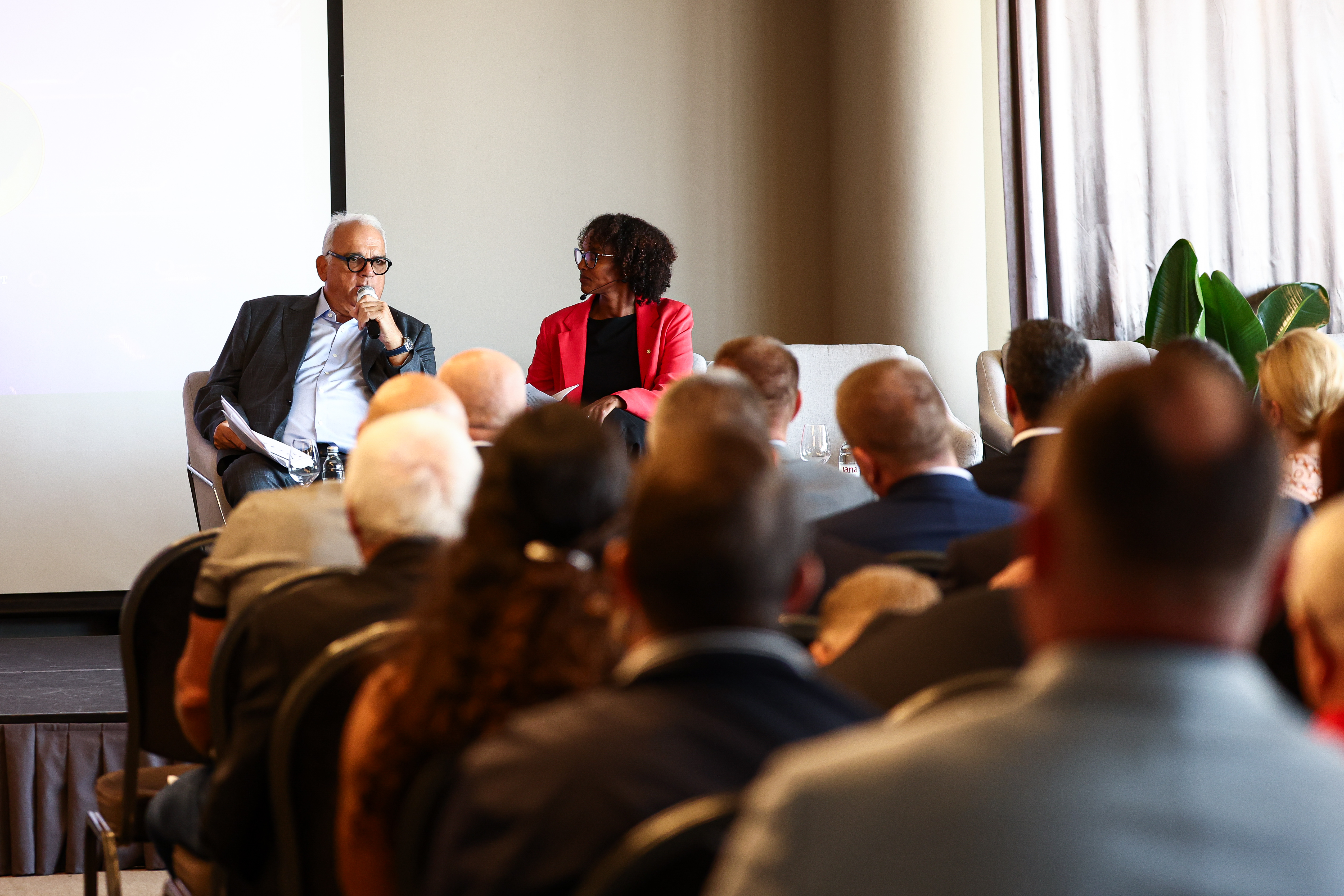 United World Wrestling President Nenad LALOVIC at the World Conference. (Photo: United World Wrestling / Jake Kirkman)
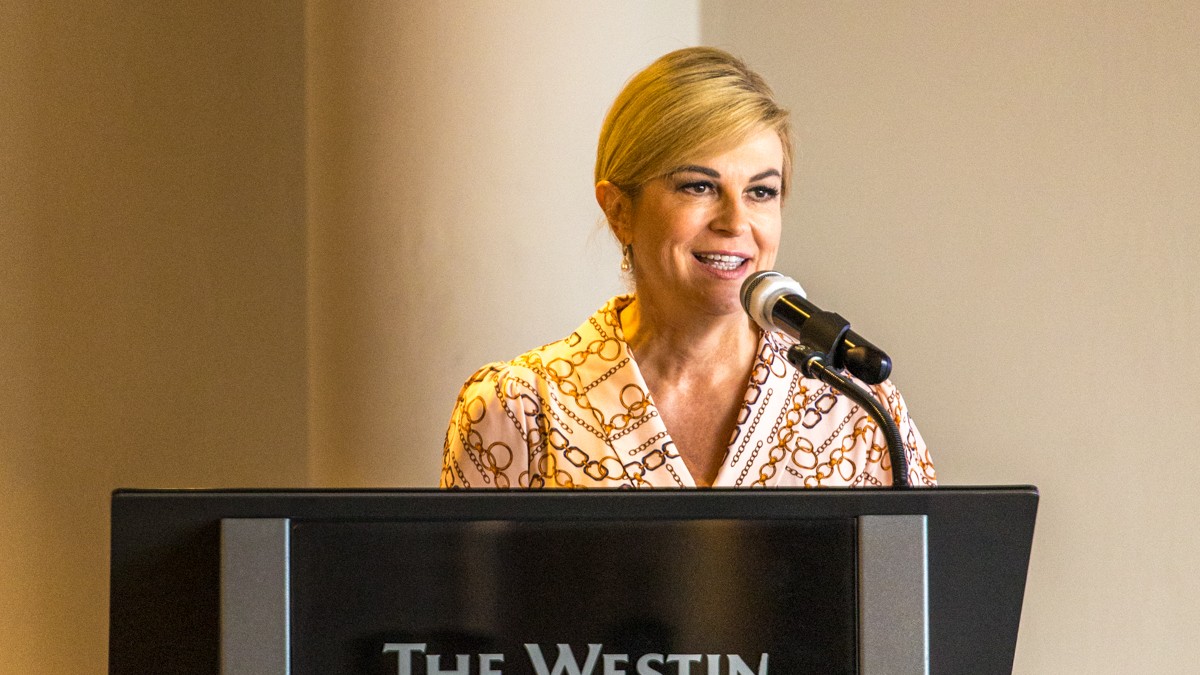 International Olympic Committee member and former President of Croatia Kolinda GRABAR-KITAROVIC.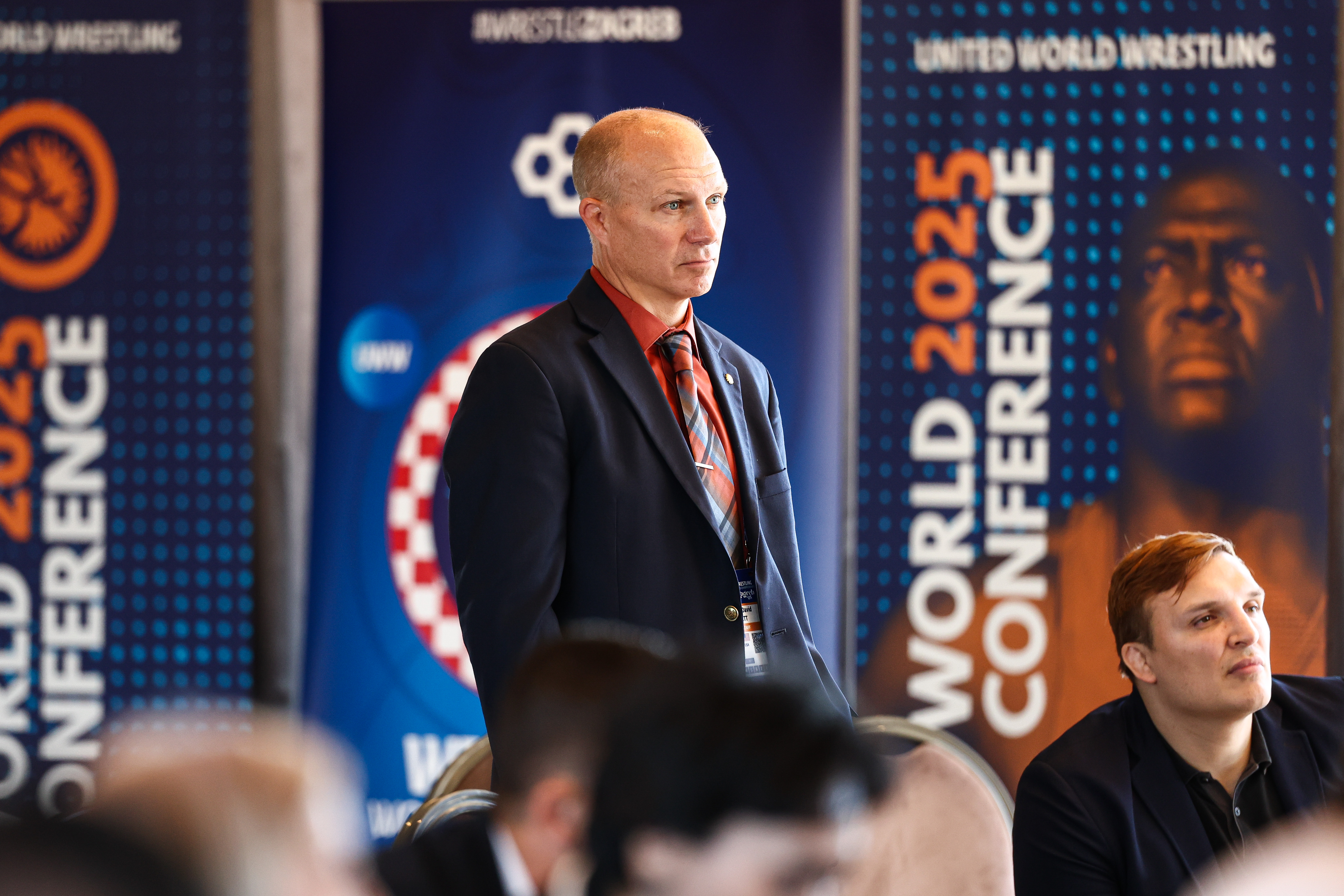
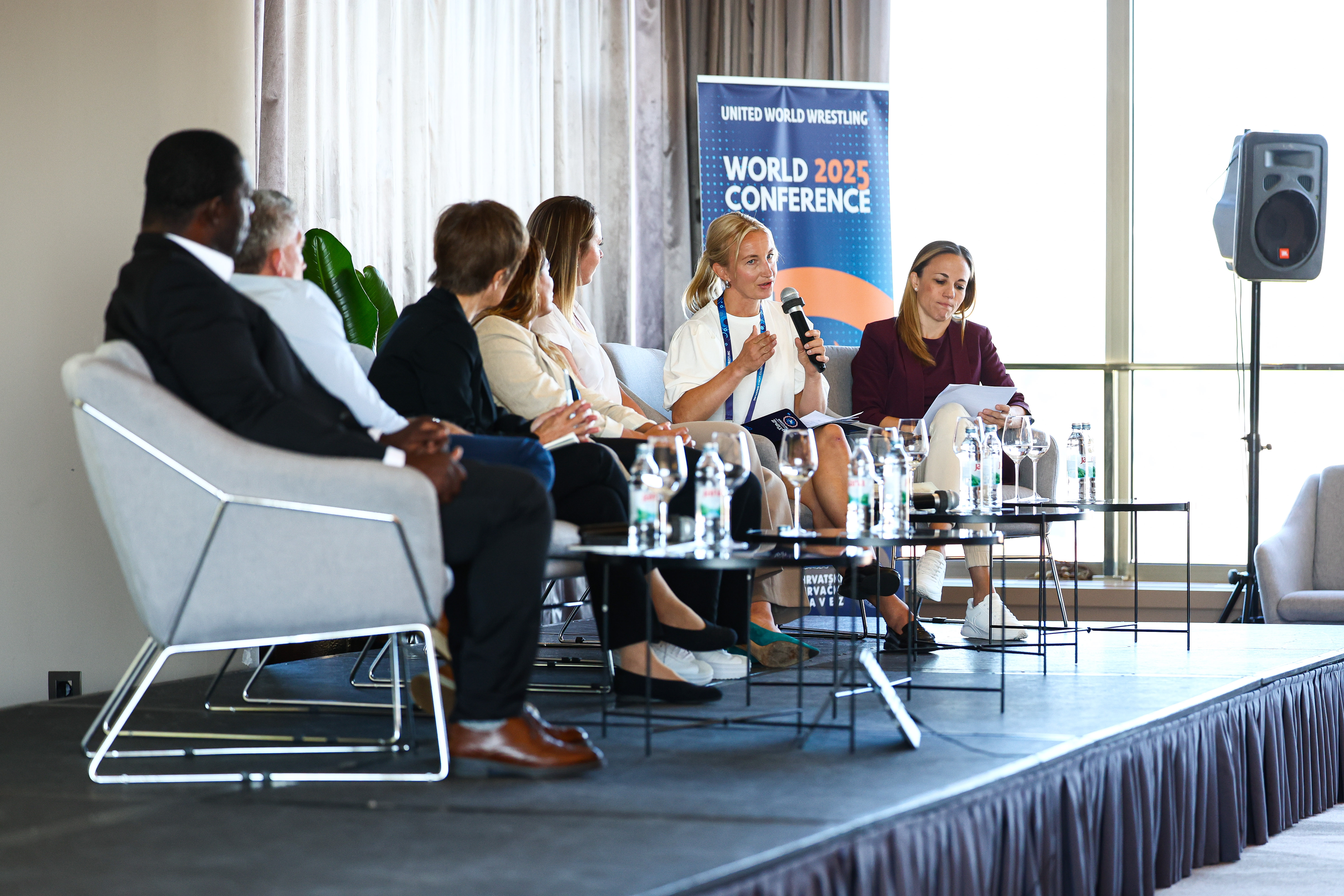
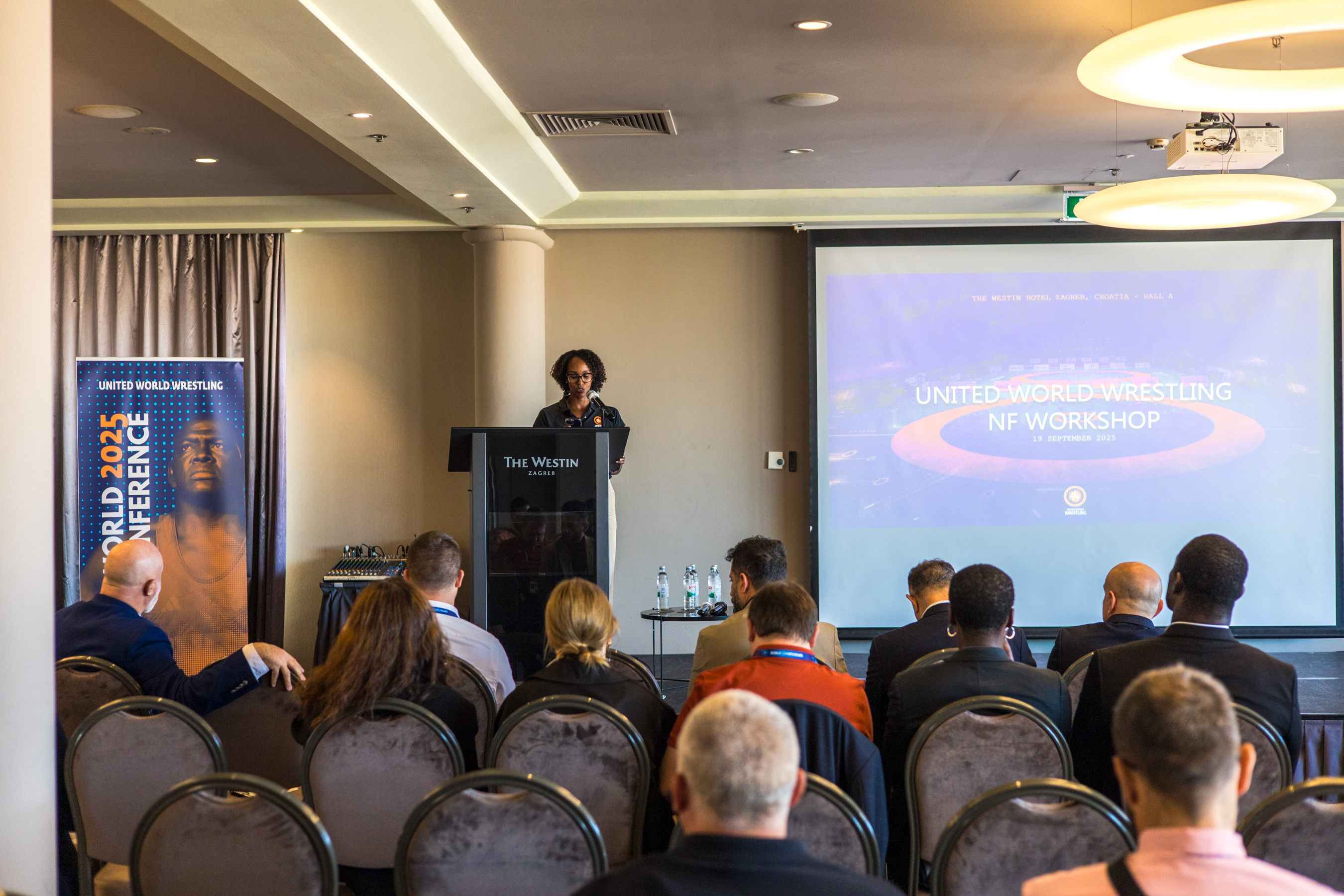 A national federation workshop organized by United World Wrestling in Zagreb.
Share your thoughts.
Comments