

Host Cities

Wrestling Launches New Online Tools for National Federations and Event Organizers 

By United World Wrestling Press

CORSIER-SUR-VEVEY, Switzerland (January 29) -- The United World Wrestling Sport Department, in collaboration with Megaphone Live, has created a comprehensive guide for those looking to organize wrestling events.  

Over the past several years, as the professionalization of the international wrestling has increased and viewership boomed, stakeholders and organizers have requested consistent and clear guidelines for the Field of Play. The updated handbook is packaged to easily identify the location of everything from scoreboards, to furniture, and positions for television. The documents also provide you the exact measurements for items such as the award podium, tables for the technical delegate, and the boxes used by coaching staffs. 

“We are very proud to offer this new tool to all our National Wrestling Federations but also to every Wrestling Organizer. With such precise documents, the preparation of the event will be managed smoothly, and the respect of our requirements will be easier to follow,” said UWW Sport Director Jean-Daniel REY. 

Readers interested in the details of the plans can access them, for free, here. (You will need a ‘Sketchup’ viewer to access the 3D model.) 

“We have invested heavily in Wrestling’s sport presentation over the past six years and a fundamental part are details around the field of play and venue layouts,” said United World Wrestling president Nenad LALOVIC. “These documents are integral for us to deliver competitions seamlessly and we wanted to make this available to all our member federations. As UWW improves, the whole wrestling community should benefit.” 
#development

Road to Dakar 2026 Continues with Successful Central Africa Programme in Brazzaville

By United World Wrestling Press

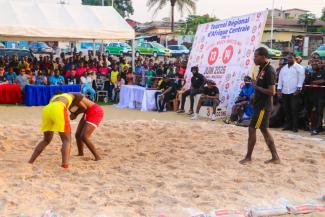
BRAZZAVILLE, Republic of Congo (June 21) -- The second stop of the United World Wrestling (UWW) Africa Regional Educational Development Programme, Road to Dakar 2026, concluded successfully in Brazzaville after a week combining athlete preparation, education, technical development and competition in Olympic and Beach Wrestling.

Held from June 8 to 14 in the Republic of Congo, the Central Africa phase brought together National Olympic Committees and National Federations from across the region under a unified objective: strengthening wrestling ecosystems and creating more accessible pathways toward the Youth Olympic Games Dakar 2026.

As the second of four regional tournaments scheduled within the continental Road to Dakar programme, the event represented another important milestone on the road to the first Olympic event to be hosted on African soil.

Africa REDT

The UWW Africa Regional Educational Development Programme was designed as a comprehensive and sustainable model that extends beyond competition. The initiative combines athlete development camps, coach and referee education, and practical competition opportunities.

By decentralising activities across regions and consolidating training and competition into one structure, the programme aims to reduce financial barriers for national federations and increase opportunities for athletes and technical officials.

Throughout the week, athletes participated in intensive daily training sessions, as coaches attended the UWW Technical Course - Level 2, focused on improving technical knowledge, athlete development methodologies and long-term performance planning.

Africa REDT

Simultaneously, referees took part in dedicated education sessions covering Beach Wrestling and introductory officiating pathways, preparing them for selection to undertake the International Category III referee examination in the future.

The programme concluded with the Regional Tournament, followed by the Beach Wrestling Regional Tournament, giving participants the opportunity to apply lessons learned during the educational phase directly into competition conditions.

The programme specifically prioritised youth development, with participating athletes largely drawn from the U17 age group and encouraging the involvement of emerging coaches across Central Africa. Support mechanisms jointly delivered by UWW and Olympic Solidarity helped facilitate participation through travel, accommodation, training access and tournament organisation.

Africa REDT

More than just a standalone event, Brazzaville demonstrated the long-term vision behind Road to Dakar 2026 by building stronger national structures, expanding participation and creating sustainable development opportunities well before the final qualification stages for the Youth Olympic Games.