#development

Bulgaria hosts OLYMP to increase media literacy

By United World Wrestling Press

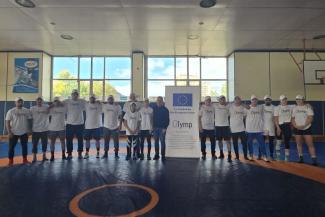
BULGARIA (October 15) -- Bulgaria hosted a seminar on the OLYMP project, funded by the European Union's Citizens, Equality, Rights and Values (CERV) Programme, at Diana National Wrestling Hall on October 9. The project aims to improve the media literacy of athletes, coaches, and sports managers.

The seminar was led by Georgi BANOV, one of the doyens of Bulgarian sports journalism, who has covered 14 Olympic Games in winter and summer sports, as well as a number of world and European Championships in wrestling, weightlifting, athletics, biathlon, and more.

The seminar was organized for the athletes of the national wrestling teams. The event was hosted by Belcho GORANOV, Chairman of the Ethics and Legal Commission of the United World Wrestling (UWW) and project manager on behalf of the Bulgarian Olympic Committee (BOC).


A post shared by bgolympic (@bgolympic)

The team emphasized that the seminar is part of a six-month cycle of informal training under the OLYMP project, which covers a total of 110 young athletes. The program includes weekly sessions in small groups focusing on media and information literacy, critical thinking and analytical skills, as well as developing the participants' confidence and ability to defend their positions with reasoned arguments.

The weekly classes will include readings and discussions on biographies, novels, sports magazines, as well as topics related to sports management and economics. Additional informal activities -- meetings with prominent athletes and film screenings -- will be held twice a month, with each event featuring moderated debates and practical challenges for “fact checking” and ethical behavior on social media.

Banov drew the athletes' attention to how to verify the information they receive through social media and other sources, how to recognize fake news, how to search for reliable information, and how to use social networks correctly, avoiding hate speech.

At the end of the media literacy program, a combined (formal and informal) assessment is planned – short tests and case studies, observation of group work, participant portfolios, and satisfaction surveys—to report on the specific results of the training and its impact on the engagement of young athletes in public life.

Read more on BOC website

#development

ASDEC Chair Niamkey Leads Workshop on Sports Development

By United World Wrestling Press

LAUSANNE, Switzerland (May 9) -- Collaboration, innovation and open exchange was at the heart of a two-day workshop, organised by the ASOIF Sport Development and Education Commission (ASDEC) on May 5 and 6 in Lausanne, Switzerland. The meeting brought together more than 60 participants from 30 International Federations (IFs) for two days of peer exchange and practical discussion on key issues shaping the future of sport development.

Held in a collaborative and informal setting, the workshop focused on topics including coach development, officiating, National Federation support, and the evolving delivery of sport development programme.

During the workshop, Olympic Solidarity hosted roundtable discussions giving participants an opportunity to exchange feedback, ideas and perspectives on existing programmes and future collaboration opportunities.

Participant feedback strongly highlighted the value of the workshop as a trusted environment for open discussion, practical learning and networking across International Federations. Many participants - particularly first-time attendees, but also experienced delegates who had attended numerous workshops - emphasised the importance of having a collaborative and non-political space in which to share challenges, ideas and experiences openly.

ASDEC Chair Deqa NIAMKEY, Development Director at United World Wrestling, highlighted after the workshop:

"The ASDEC Workshop 2026 was a great success, offering International Federations a wide range of relevant topics, including updates on the current trends and landscape of sports business industry, participation programmes, and strategies for entering new markets," Niamkey said.

"The workshop also fostered meaningful discussions with key partners focused on the development and growth of our sports. It continues to serve as an important platform for networking, exchanging ideas, sharing best practices, and transferring knowledge, all in line with ASOIF’s broader good governance strategy."

The workshop concept is fully aligned with the third strategic pillar of the ASOIF Strategy 2026–2032, which focuses, among other priorities, on developing and modernising platforms for shared learning and adding value by addressing member priorities and sector developments.

Read More: From AI to Officiating, ASOIF Workshop Explores Future of Sport Development