

Burundi Begins the Development Process of its National Sports System
Wednesday, December 8, 2021 - 15:16 By United World Wrestling Press

Following the agreement of Olympic Solidarity to grant the program of development of the structure to the Burundian wrestling federation. United World wrestling, through its development department headed by Madame Deqa Niamkey, has dispatched Vincent AKA, development officer, to carry out this program. This program will run for one year and will be carried out in three stages:
The first phase, taking place from November 31 to 8, 2021 made it possible to assess the situation of the fight in Burundi. The entire first phase also made it possible to train young coaches and to launch the phase of structuring wrestling clubs. Burundian level 1 coaches trained in 2019 by educator Juan Maren Delis were thus able to be contacted for the launch of this program.
Following this phase, the expert gave recommendations for the next step.
This first phase ended on a positive note because the expert was able to meet the President of the Burundian NOC and IOC member, Ms. NSEKERA Lydia, who is committed to supporting the wrestling development project in Burundi. The president also showed her willingness to help women's wrestling.
The second phase of the DNSS (from April 1 to 10, 2022): Intermediate evaluation regarding the recommendations and directives of the first phase, training of national technical officials. The training of these national technical officials will be based on an Olympic wrestling competition. At the end of this phase, the expert will also make recommendations for the third phase.
Phase 3 of the DNSS (1st to 10th November 2022): Final evaluation and Complete ‘Establishment of wrestling academies (Wrestle for fun, Beach Wrestling and Olympic value). In this phase will be organize the seminar for club presidents, general secretary, and treasurer. This final evaluation will also be followed by recommendations with regard to the terminal phase in order to allow sustainable development.


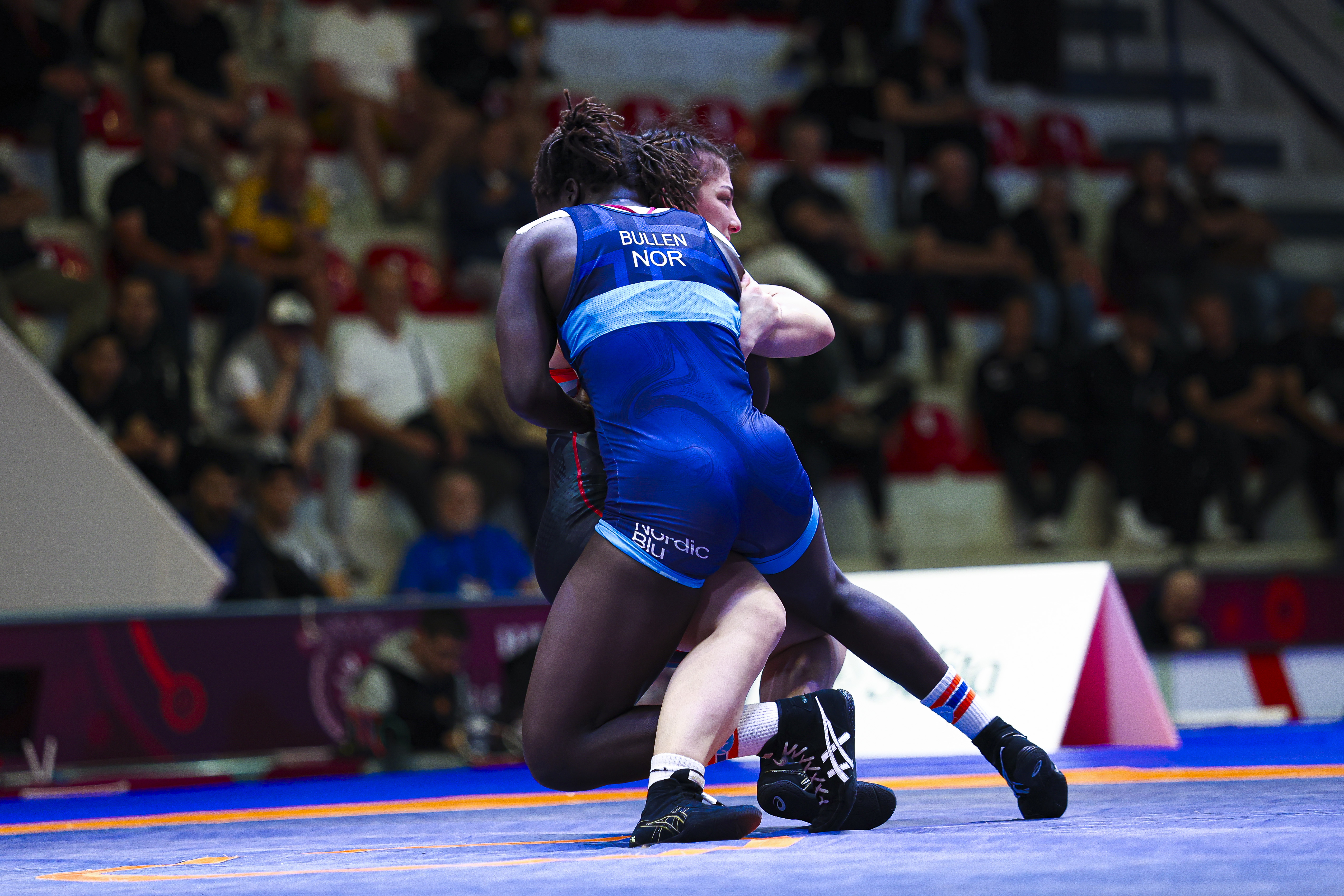 Grace BULLEN (NOR) performs the outside trip against Amina TANDELOVA (RUS) during the 62kg final at the European Championships. (Photo: United World Wrestling / Kadir Caliskan)
Share your thoughts.
Comments