

Cadet European Championship Preview
Sunday, June 16, 2019 - 13:31 By Eric Olanowski
FAENZA, Italy (June 16) – The entry list for the Cadet European Championships boasts over 515 athletes from 37 countries, but five wrestlers in particular head to Faenza, Italy, looking to repeat as cadet European champion.
There will be five wrestlers looking to defend their titles from last year’s Skopje Cadet European Championships. Freestyle wrestling lacks a returning champion, but Greco-Roman features four 2018 champs, while women’s wrestling has one wrestler looking to repeat.
Stepan STARODUBTSEV (RUS), who’ll compete at 71kg, will have the toughest road to repeat as continental champion. Last year, Starodubtsev defeated Moldova’s Alexandrin GUTU in the finals to win his first continental title. This year, he’ll likely have to do the same to repeat as a European champion. Since that loss to Starodubtsev in last year’s European finals, Gutu went undefeated and won golds at the Balkans, the cadet world championships then capped his year off with a title-winning performance at the Youth Olympic Games in Buenos Aires, Argentina, where he avenged his loss against Starodubtsev in the gold-medal bout.
The pair begin their run to a European title on Tuesday and close out the Greco-Roman portion of the tournament on Wednesday.
Greco-Roman’s also has three other returning champions. They are Edmond Armen NAZARYAN (BUL), Dimitri KHACHIDZE (GEO), Mukhammad EVLOEV (RUS). They’ll wrestle at 51kg, 55kg, and 92kg, respectively.
Women’s wrestling's returning champion, Anastasiya YANOTAVA (BLR), is set to wrestle at 49kg. She’s the only returning medalist in her weight and is expected to repeat as European champions.
Starting Monday, the Pala Cattani Arena will be the host site for this year’s Cadet European Championships. The seven-day tournament beings on Monday morning and will last until Sunday. You can follow all the action live on www.unitedworldwrestling.org.
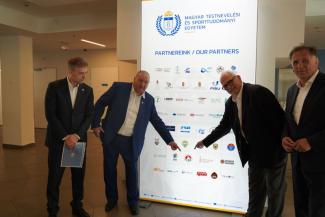
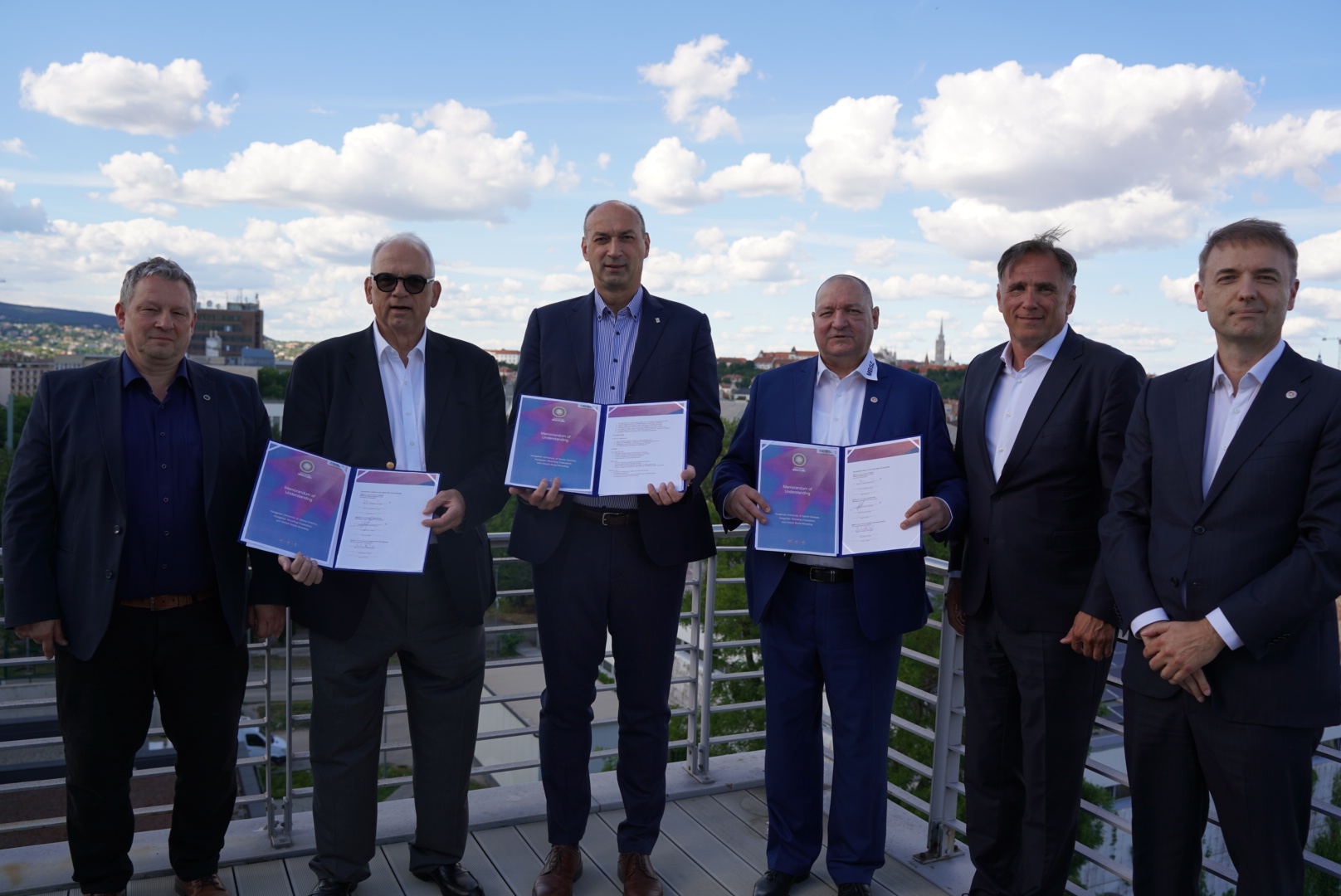 From left to right: HUSS Vice Rector Dr. Csaba OKROS, UWW President Nenad LALOVIC, President of MBSZ Nemeth SZILARD, HUSS Rector Dr. Tamas STERBENZ, UWW Bureau Member Peter BACSA and KIMBA Head of Trustee Laszlo SULE.
Share your thoughts.
Comments