

#WrestleParis

Coach Amri on road to Paris 2024 through WISH

By United World Wrestling Press

PARIS (March 29) -- Beyond reaching gender parity for athletes competing at the Olympic Games Paris 2024, the International Olympic Committee (IOC) is also aiming to increase the number of female coaches through its Women in Sport High-Performance (WISH) pathway. With six participants of the programme already confirmed as coaches in Paris, Elizabeth PIKE, WISH Project Director, explains how the programme is breaking down barriers to fix the system. Only 13 percent of coaches at the Olympic Games Tokyo 2020 were women.

At the past four editions of the Olympic Games, Marwa AMRI (TUN) represented Tunisia in the women's freestyle wrestling competition, clinching a bronze medal in the 58kg event at Rio 2016. At Paris 2024, she will be bringing all her expertise to Tunisia’s wrestling team as a coach. Although Amri may be outnumbered by her male counterparts at these Games, her very presence indicates a growing number of female coaches.

There are a number of other female coaches still pushing to achieve their Olympic dream, such as Federica TONON, who is currently working with Vanuatu’s beach volleyball team.

Amri and Tonon have something in common – they are both participants of the WISH programme, which is funded by the IOC’s Olympic Solidarity programme, managed and hosted by the University of Hertfordshire and led by Pike.

The programme got underway in May 2022 after a successful pilot from 2019 to 2021. All four cohorts have now embarked on the 21-month programme, a mix of online learning, group tasks, dual mentoring and a residential, with the first cohort already having graduated in January this year. In total, the WISH programme will equip a total of 123 female coaches from 22 sports and 60 countries with the tools needed to take on roles at the highest level of their sport.

Read the full article on olympics.com.
Development

More Than Medals Americas wraps up in Rio de Janeiro

By United World Wrestling Press

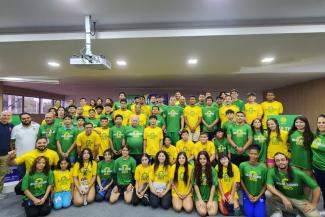
RIO DE JANEIRO, Brazil (July 8) — With young athletes at the center of United World Wrestling’s development strategy, the 2025 edition of *More Than Medals Americas* was held in Rio de Janeiro, Brazil, from June 23rd to 29th, following the U17 Pan-American Championships.

Over the course of seven days, 46 wrestlers and 10 coaches from 11 countries came together for a full program of training sessions, educational workshops, cultural excursions, and recreational activities making this a comprehensive experience beyond the mat.

Held at the state-of-the-art facilities of CEFAN (Centro de Educação Física Almirante Adalberto Nunes), the camp kicked off with a vibrant opening ceremony, attended by Brazilian Wrestling Federation President Flavio Cabral and UWW Education Director Zach Erret. The schedule included three daily meals, on-site accommodation, and seamless logistics that contributed to the event's success.

Among the educational highlights were sessions on safe sport, mental health, injury prevention, and anti-doping each delivered by expert facilitators in a format designed to foster active participation from the athletes. These workshops aimed to equip young wrestlers not only with athletic tools but with life skills as well.

The technical sessions were held on four official mats, strength training, and physical conditioning. Coaches collaborated in a joint planning meeting to create an integrated training environment, where athletes learned from each other’s styles and backgrounds.

Outside the gym, participants explored the iconic city of Rio de Janeiro. They visited Sugarloaf Mountain, Christ the Redeemer, and the historic Maracanã Stadium. An ecological outing to Copacabana Beach was also part of the program, emphasizing environmental awareness—even if a planned cleanup was rendered unnecessary thanks to local conservation efforts.

This edition of *More Than Medals* once again demonstrated the transformative power of sport. Participants described the experience as “great,” and organizers emphasized that the success of the program lies in its ability to holistically nurture the next generation of wrestlers not just as athletes, but as global citizens.