

Coles, Canada's first U17 world champ, wants to be an inspiration
Tuesday, December 17, 2024 - 15:38 By Vinay Siwach

CANADA (December 16) -- "I am not a natural athlete." That's how Kaura COLES (CAN) describes herself.
The 17-year-old seems to have as much clarity describing herself as she does wrestling on the mat.
She may not be the be a "natural", but she is the best in the world. At the U17 World Championships in Amman, Jordan, Coles became the first Canadian wrestler to win a gold medal. She won gold in the 53kg women's wrestling weight class.
But the odds did not favor Coles. No Canadian wrestler had reached the final at the U17 Worlds, forget winning gold. The last time Canada had a U20 or U17 world champ was in 2013. Coming into the tournament, Coles had a silver medal from the 2022 U17 Pan-Am Championships and a fifth-place finish at the Spain Grand Prix.
So Coles wasn't favored to win a medal. Nor were the other seven Canadians entered. However, Coles did it. She was so precise in her wrestling, that her opponents were shocked to see her counter from negative positions.
Coles' win was one of the highlights of international wrestling in 2024 and a big boost for Canada and its wrestling after its medalless Olympics in Paris.
"I did not expect to do as well as I did,” she said later. “I can't predict the outcome of the match. The only thing I know for sure is that I'm going to work as hard as I possibly can every match."
In Amman, Coles began with two pins over Madkhiya USMANOV (KAZ) and Chloe BREWIS (RSA). She then went on to upset MUSKAN (IND) 12-3 in the quarterfinals, Isabelle GONZALES (USA) 8-3 in the semifinals and securing a fall in the finals against Nana KOZUKA (JPN), undeterred by names or a Japanese opponent.
Coles began wrestling when she was 11 years old when her father, Cory, took her to the gym because he did not want her to just sit around all day. Kaura is one of the 11 Coles siblings from Winnipeg. She is number six with five younger siblings and she coaches them as well.
"If you had watched me wrestling four years ago, you would have never thought I could have achieved anything. Worst wrestler by far," Coles told FloWrestling. "But I knew how to do a 2-on-1. So every match, every practice, I would be grabbing a 2-on-1. For six years I have been doing that and just developed and became very good from that position. [I do well] Tying up with people. I don't do well from space since I am a slow wrestler. I want to get an underhook or a 2-on-1."
She worked hard. Having wrestler siblings around her improved her as she had to keep up with the sibling rivalries growing in the house.
"I have to be a tough wrestler just to survive every day [with my brother]," she said. "But they all wrestled, my sisters wrestle too. Everyone works hard and it makes it a lot easier"
But in the beginning, Coles did not like the sport or working hard to be better at it.
“I did not like it at first because it’s a very hard sport," Coles told The Free Press. "Back then, I didn’t really like hard work because it’s hard to like that. But over time, I saw the benefits of putting in the hard work and seeing where it can get you."
 Kaura COLES (CAN) defeated Nana KOZUKA (JPN) in the final. (Photo: United World Wrestling / Kostadin Andonov)
So far, wrestling has made Coles a three-time national wrestling champion, U17 Pan-American silver medalist, North American Indigenous Games (NAIG) champion and of course, world champion.
But Coles wants to do more. As a Métis herself, she wants to inspire, coach, and promote Indigenous groups.
"I want to be an inspiration for the other Indigenous and Métis warriors in Canada," Coles said after winning the gold. "I don't wrestle for myself."
Coles' mother Michelle is a Métis, an Indigenous group in Canada, and has kept their culture in the house including learning French. Coles wore her Métis sash after the medal ceremony at the U17 Worlds.
"I wear my Métis sash whenever I can," she said. "I have other Indigenous people come up to me and tell me how I have inspired them. I'm so glad that I was able to represent."
Another one of Coles' is to be at the Olympics. Canada has won six medals at the Olympics in Women's Wrestling. But the last came in the 2016 Rio Olympics.
"My goal is to go to the next Olympics when I'm 21 years old and then I want to go to the Olympics after that," she said. "Then I will retire."
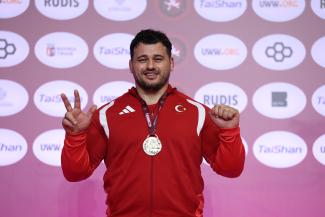
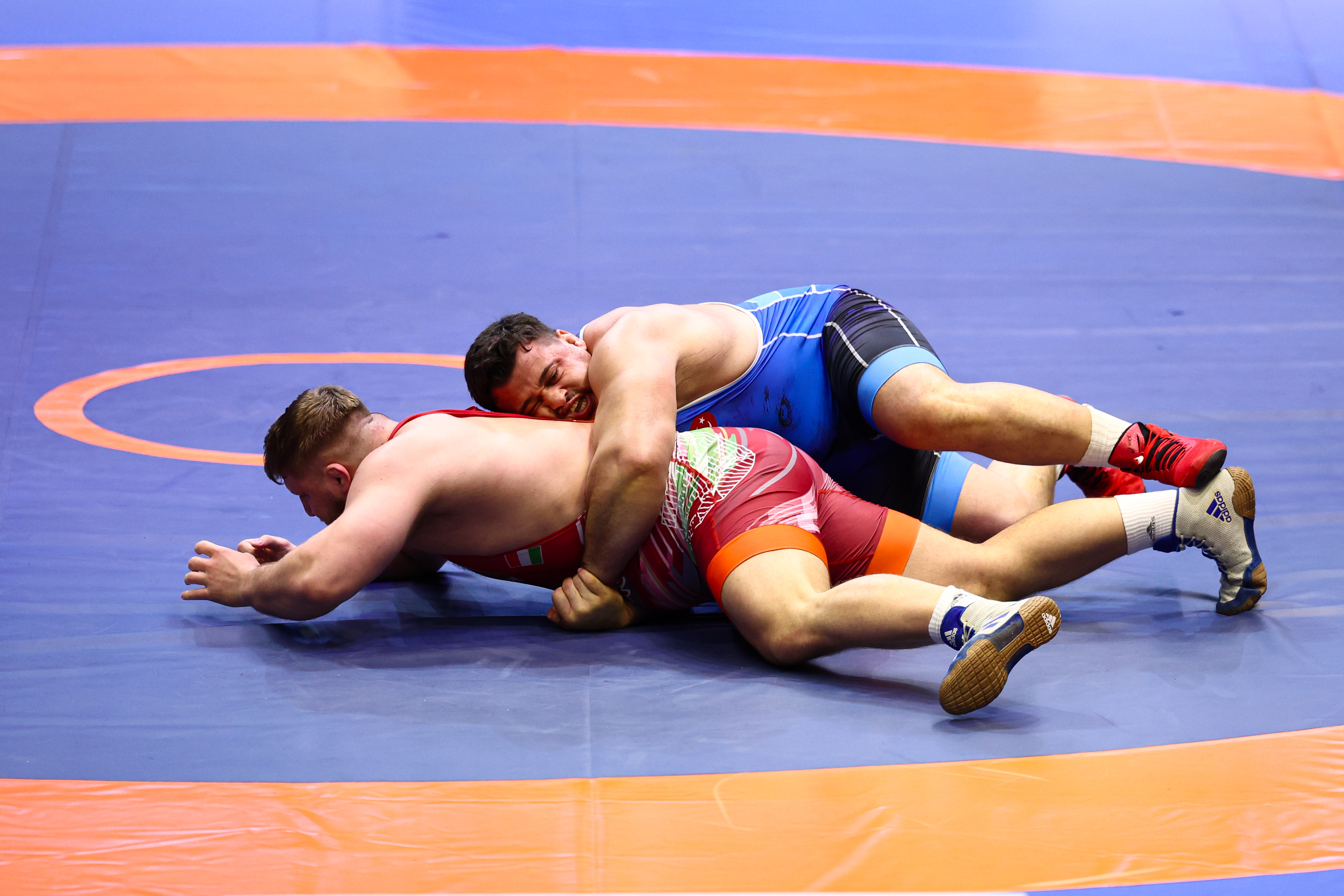 Riza KAYAALP (TUR) turns Darius VITEK (HUN) in the 130kg final. (Photo: United World Wrestling / Kadir Caliskan)
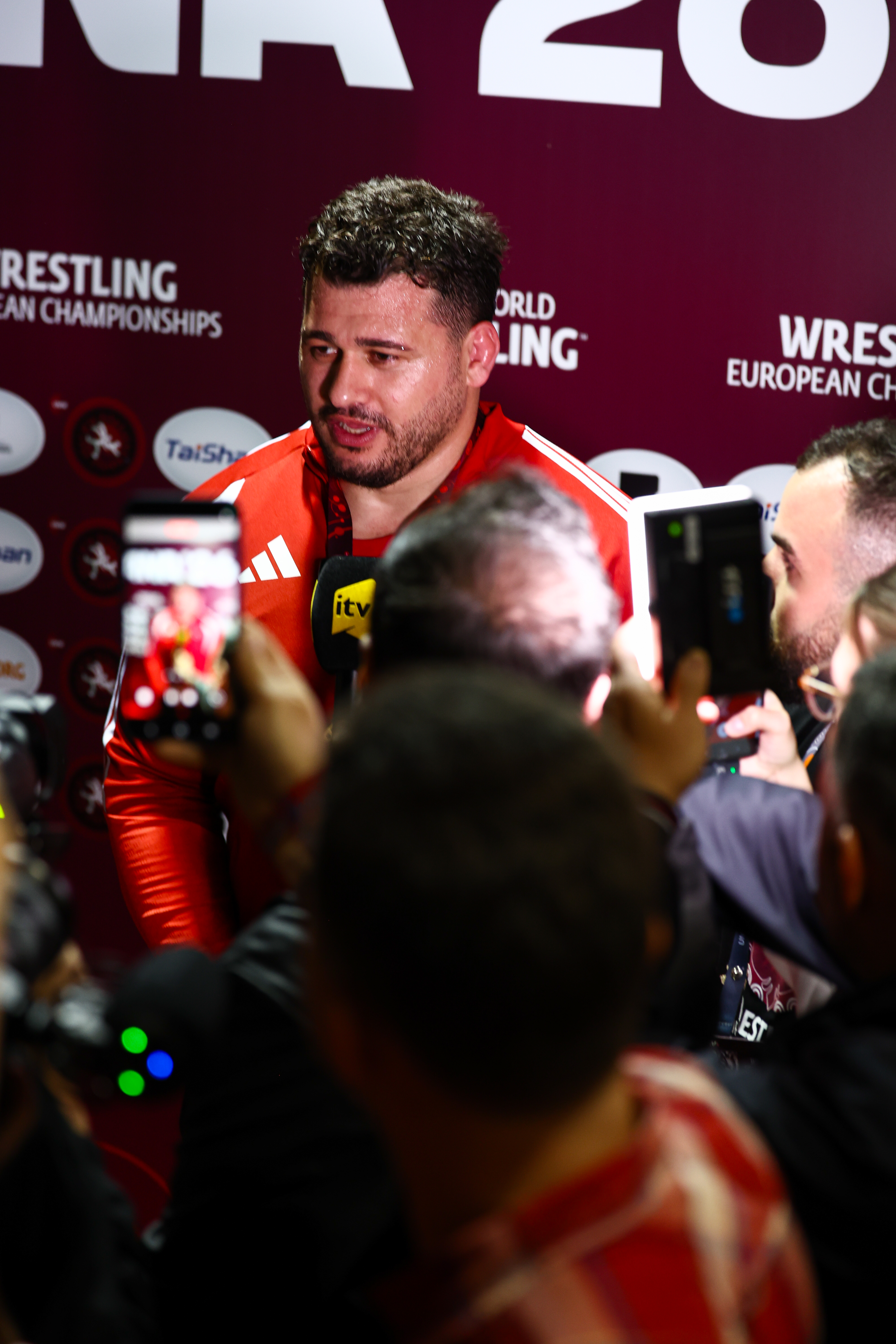 Riza KAYAALP (TUR) speaks to the media after winning the gold medal at the European Championships. (United World Wrestling / Jake Kirkman)
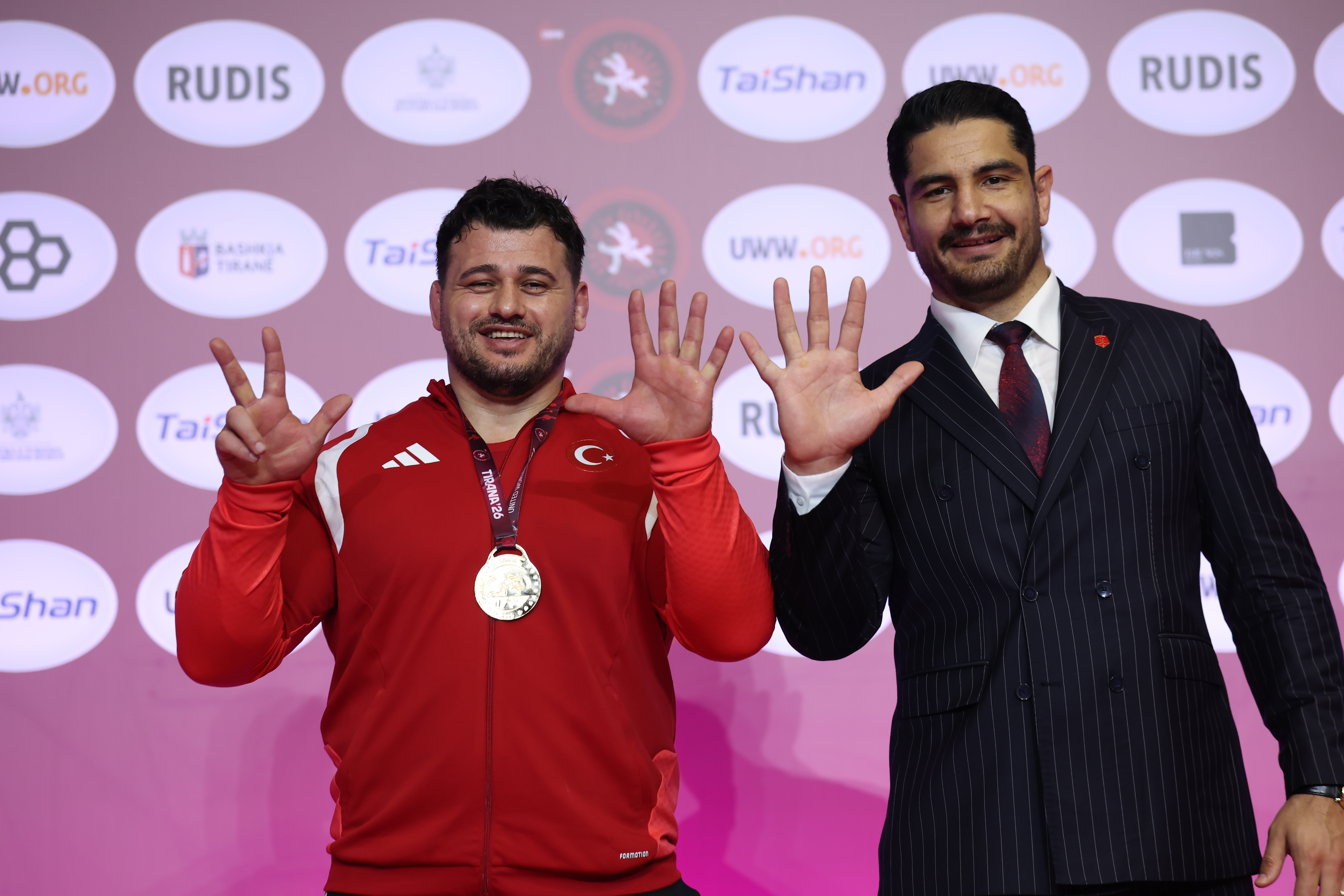 Riza KAYAALP (TUR) with Taha AKGUL (TUR) at the medal ceremony in Tirana. (Photo: United World Wrestling / Kadir Caliskan)
Share your thoughts.
Comments