

#WrestleBelgrade

Explainer: How do wrestlers qualify for the Paris Olympic Games?

By Eric Olanowski

BELGRADE, Serbia (September 4) --- The path to Paris for 288 athletes will be a three stage process to determine who will wrestle for Olympic glory.

The first phase will take place in Belgrade, Serbia, at the 2023 World Championships, September 16-24th, where five quotas for the each of the 18 Olympic categories—a total of 90 quotas—will be allocated.

Wrestlers who earn a gold, silver or bronze will earn a bid. Additionally, the losers of the bronze-medal matches will wrestle in true fifth match, determining the fifth allocation in Belgrade.

Phase two is the continental qualification phase where 144 quotas handed out at the:
- Pan American Olympic Qualifier (Acapulco, Mexico, March 1-3)
- African Olympic Qualifier (Alexandria, Egypt, March 22-24)
- European Olympic Qualifier (Baku, Azerbaijan, April 4-7)
- Asian Olympic Qualifier (Bishkek, Kyrgyzstan, April 19-21)

The first and second place finishers at the Continental Olympic Qualifier earn an automatic bid to the Paris Olympics for their nation. 

The final stage for the Paris Olympic qualifying process comes down to Istanbul, Türkiye, for the Last Chance Qualifier, where the final 54 tickets will be booked. The gold and silver medalists and the winner of a true third match will punch their ticket to the Olympics.

Follow all the action from the World Championships, Continental Olympic Qualifiers and the Last Chance Qualifier, live on UWW+ or on, “The Home Of Wrestling,” UWW’s app.

#development

South Africa completes phase one of UWW DNSS Program

By United World Wrestling Press

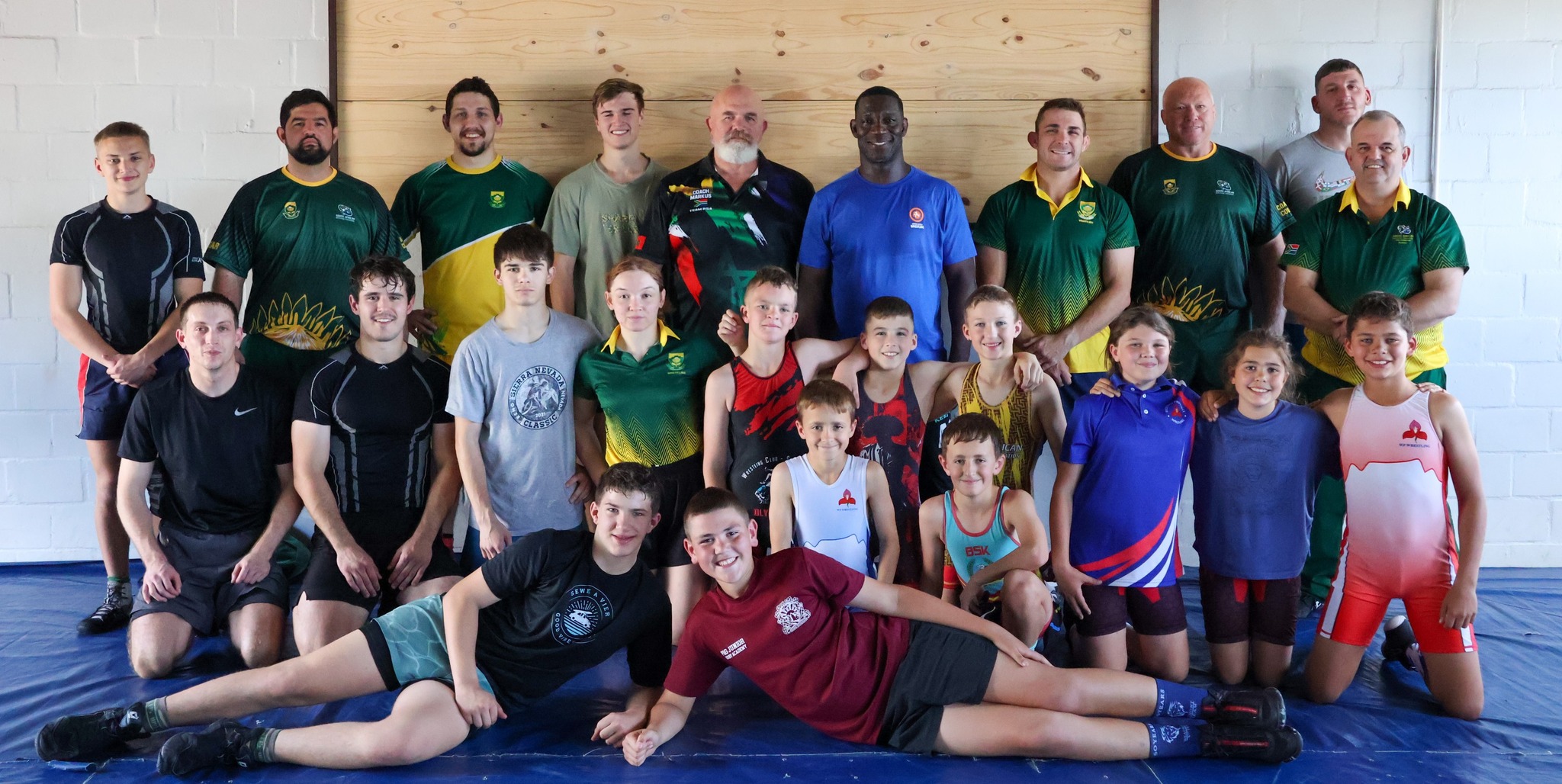
PRETORIA, South Africa (November 17) --  The South African Wrestling Federation successfully completed the first phase of the United World Wrestling National Development and Support Strategy (DNSS) from October 17 to 26.

Under the supervision of Vincent AKA, UWW International Development Officer for Africa, and the coordination of Markus DEKKER, member of the SAWF Coaches Council, a nationwide development mission was undertaken. The UWW-SAWF team visited provincial associations, conducting technical assessments, talent identification sessions, and workshops for coaches.

South Africa

Using the UWW National Federation Assessment Tool (NFAT), the mission provided a detailed overview of the current state of wrestling in South Africa -- from grassroots participation to elite athlete preparation.

The tour covered major provinces including Western Cape, Eastern Province, Free State, Northern Cape, Gauteng North, Limpopo, Mpumalanga, and North West, engaging hundreds of athletes, coaches, and local administrators.

The assessment revealed strong technical potential among the U15 and U17 categories, as well as a growing passion for wrestling across communities and schools.

The mission also identified the need for stronger governance structures and more consistent communication between SAWF, provinces, and clubs to unify efforts under a national development plan.

Both teams will continue to work towards second phase of the program which will include establishing two regional pilot centers [Pretoria and Western Cape] to act as training and coordination hubs, launch a "School Integration" program linking PE teachers, schools, and wrestling clubs, developing a national athlete database to monitor and support emerging talents.

It will also aim to organize governance and compliance workshops to reinforce management capacity, implementing UWW coaching courses nationwide, forming a National Technical Committee to coordinate DNSS implementation and introducing measurable evaluation indicators to ensure accountability and progress tracking.