

Gadzhiev wins U20 World gold; Iran defends team title
Wednesday, August 17, 2022 - 20:53 By Vinay Siwach

SOFIA, Bulgaria (August 17) -- When Dzhabrail GADZHIEV (AZE) lost the final at the U20 World Championships final, he wished he had attacked more in the final against Erfan ELAHI (IRI). The 6-5 scoreline pinched him for the next few months.
"I’ve been waiting for it for the whole year," Gadzhiev said. "I was expecting the Iran wrestler to reach the final."
Gadzhiev wanted to avenge his loss from Ufa against Elahi. But the U20 Asian champion lost his quarterfinal against Sagar JAGLAN (IND). Later, Ryunosuke KAMIYA (JPN) beat Jaglan in the semifinal.
While he did not get to settle scores with Elahi, Gadzhiev made sure he doesn't leave anything to chance this time.
Kamiya, who was wrestling in his first World Championships, initiated the first attack. After getting a hold of Gadzhiev's leg, Kamiya tried to lift but Gadzhiev managed to put the Japan wrestler's back on the mat and secured a fall.
Though his celebrations were subdued, Gadzhiev went berserk with his celebrations as he walked back to the warm-up hall. So much so that coach Jabrail HASANOV (AZE) had to calm his ward down.
"I am feeling great. This is a joint victory," he said. "Thanks a lot to all the coaches. It’s all about their hard work. Also, I want to send a huge thanks to all my family, Azerbaijan and to my fellow villagers."
 Dzhabrail GADZHIEV (AZE) controlling Ryunosuke KAMIYA (JPN) to seure the fall in the final. (Photo: UWW / Kadir Caliskan)
The 20-year-old's dream run in Sofia means Azerbaijan has a U20 world champion after four years and Gadzhiev now has two career world titles adding to his 2019 U17 gold which was, incidentally, won in Sofia.
"I was expecting another opponent, but the Japanese wrestler made it to the final," he said. "He is strong and you can see he attacked first.
"Anyways, we [Elahi and Gadzhiev] will wrestle each other in the future."
In the last year, Gadzhiev has won the U23 and U20 European titles and the Dan Kolov over teammate Turan BAYRAMOV (AZE). But he missed a chance to be on the senior team after suffering a loss to Bayramov at the Matteo Pellicone Ranking Series in June.
Gadzhiev reflected on that bout which had turned ugly in the final minute and hoped to be on the team next year.
"I have to work hard and listen to my coaches," he said.
 Yuto NISHIUCHI (JPN) celebrates after scoring a late takedown to win the 61kg gold medal. (Photo: UWW / Kadir Caliskan)
Despite Kamiya's loss, Japan had something to cheer about as former U17 world bronze medalist Yuto NISHIUCHI (JPN) won the 61kg over Armin HABIBZADEH (IRI), 5-3, in one of most clutch performances.
Nishiuchi, who is still in high school, trailed Habibzadeh 3-0 at the break but was undeterred by the scoreline. More so as he had to beat three college wrestlers out of his four wins at the Japan Junior Olympic Cup just to win the spot on the team.
"I wanted to get more points but the first period was hard," Nichiuchi said. "But my mind was under control and went to the second period and tried attacks and scored."
As the second period began Nishiuchi got the single leg but managed to score only a stepout. Habibzadeh was later called passive and during activity time, Nichiuchi scored another pushout. Habibzadeh led 3-3 on criteria but Nichiuchi got a takedown with just 15 seconds left and managed to keep it to win the gold.
"I practiced these situations during training," Nishiuchi said. "For example, if I fall behind in the first period, I trust the skills that I can score in the last 30 seconds or so."
While the final was a close affair, Nishiuchi's semifinal against Mohit KUMAR (IND) was a high-scoring bout that he won 16-8.
"In the semifinal, I was very tired," he said. "But in the last one minute, my body was moving automatically. I don't remember the exact moment how that happened."
Nishiuchi's gold kept Japan's record of winning at least one gold at U20 Worlds since 2018 when Hayato ISHIGURO (JPN) ended a 36-year drought for a U20 title.
 Amirhossein FIROUZPOUR (IRI) won his second U20 world title. (Photo: UWW / Kostadin Andonov)
Iran wins team title
Habibzadeh was one of the three finalists for Iran. While he lost, the two others dominated their way to gold medals.
Asian champion Amirhossein FIROUZPOUR (IRI) won the gold medal at 92kg, thus making it two in a row as he won the gold medal at 86kg in Ufa as well.
Andro MARGISHVILI (GEO) initiated all the attacks in the final but such was the defense from Firouzpour that he would end up countering them with exposure. he ultimately secured the gold medal with an 11-0 win.
Firouzpour is also a three-time age-group world champion with his U17 world title coming in Sofia in 2019.
 Amirreza MASOUMI (IRI) won the 125kg gold after beating Mahendra GAIKWAD (IND) 13-2 in the final. (Photo: UWW / Kostadin Andonov)
The second gold for Iran was won by Amirreza MASOUMI (IRI) as he defeated Mahendra GAIKWAD (IND) 13-2 in the 125kg final. For the second straight year, Masoumi has won a world title as he clinched the U17 gold in Budapest last year.
Masoumi, son of 2009 world silver medalist Fardin, unleashed his attacking style in Sofia and won all his bouts via technical superiority.
In the final, he opened with a huge lift before using a gut wrench to lead 6-0. Gaikwad tried a bear hug but managed only a takedown for two points. Masoumi hit a double leg for four before a stepout and takedown gave him the 13-2 win.
The gold medals for Iran helped it defend the team title won in Ufa. It finished with 159 points, 17 ahead of the USA which was the leader after the first day of the competition. India finished at the top for the first time in the history of U20 Worlds, claiming the third position with 112 points. It won seven medals with six bronze and one silver; the haul being the most for the nation in any edition.
Magamadov wins gold
He suffered a humiliating 10-0 loss to Firouzpour in the 86kg final in Ufa last year, but Rakhim MAGAMADOV (FRA) made sure he did not slip up this year. The France wrestler won the gold medal in Sofia after beating Bennett BERGE (USA), 9-5, in a high-paced final.
Magamadov's gold was the first for France since 2014 and only the second ever in U20 Worlds history.
Like others, Magamadov was also a medalist in 2019 in Sofia and the city proved to be lucky for the France wrestler for the second time.
 Rakhim MAGAMADOV (FRA) upgraded his 2021 silver to gold in Sofia. (Photo: UWW / Kadir Caliskan)
In the final, it seemed that Berge will stop Magamadov from winning the gold this year as he took a 4-1 lead at the break. But Magamadov hit a double and got the four points. He then scored exposure even though the attacks were initiated by Berge who struggled with his cardio in the second period.
"I love risks," Magamadov said. "I was attacking a lot, risking and it helped me to win the match."
Magamadov accepted that last year he was not at the level to win the gold but believed in himself to win the title this year.
"Last year I failed the final because I didn't have the necessary capabilities," he said. "But this time with continuous training and determination, I reached the final and won."
 Umi ITO (JPN) will wrestle for the 50kg gold medal. (Photo: UWW / Kostadin Andonov)
Japan sweeps semis
Japan marked its return to the U20 World Championships with total domination of the women's competition, sending all five wrestlers into the finals on day one of women's wrestling.
The first to make the final was 2017 U17 world champion Umi ITO (JPN) at 50kg as she defeated Priyanshi PRAJAPAT (IND) in the semifinal. Using the lethal leg lace, Ito scored a 10-0 win in just 43 seconds.
She will now face Audrey JIMENEZ (USA) in the final. The former U17 world bronze medalist made it past Natalia WALCZAK (POL) with a fall despite Walczak leading 4-0.
At 55kg, Moe KIYOOKA (JPN) used a double leg for four against Roza SZENTTAMASI (HUN) before using a cradle to make it 8-0 and trying a fall. But Szenttamasi got the exposure and two points before giving up one herself. Kiyooki finished the bout 12-2 with 4:07 remaining on the clock.
 Albina RILLIA (UKR) pinned MANJU (IND) despite trailing in the 55kg semifinal. (Photo: UWW / Kadir Caliskan)
Albina RILLIA (UKR) and MANJU (IND) traded stepouts with the latter leading 2-2 on criteria after two minutes. Manju added two more stepouts to lead 4-2 at the break. Another stepout in the second period saw her lead extend to 5-2. Rillia then hit a double leg for four points but gave two points for exposure before using an arm bar to pin Manju.
Ebru DAGBASI (TUR) had Sakura MOTOKI (JPN) in early trouble when she scored a go behind after Motoki let off the grip mistaking the whistle from the other mat as hers. She scored a takedown to lead 2-2 on criteria in the second period. For the final two minutes, Motoki held Dagbasi to that score to win 2-2.
 Viktoria BORSOS (HUN) scores the winning takedown against Madina AMAN (KAZ). (Photo: UWW / Kadir Caliskan)
In the other semifinal, Madina AMAN (KAZ) latched on the opportunity to score a takedown when Viktoria BORSOS (HUN) lost her balance. Aman led 2-1 at the break but Borsos began the second period with a takedown to reclaim the lead 3-2 before adding a counter to make it 5-2.
Aman managed to pull one back to cut the lead to 5-4 but both wrestlers were running out of breath as the final minute approached. Aman used that to score her takedown but Borsos used a takedown in the final three seconds to win 7-6.
 Ami ISHII (JPN) defeated Nesrin BAS (TUR) to reach the 68kg semifinal. (Photo: UWW / Kostadin Andonov)
Japan's senior world team member Ami ISHII (JPN) was the fourth wrestler to reach the final as she defeated Nesrin BAS (TUR) in a close semifinal. Bas was called passive in the first period which gave Ishii the 1-0 lead at the break.
Bas took the 1-1 criteria lead when Ishii was warned for passivity in the second period. With a minute left, it looked like Bas will manage to keep her lead but Ishii proved too clutch and won 3-1.
Ishii will now have to beat Nurzat NURTAEVA (KGZ) who defeated Sophia SCHAEFLE (GER) 6-3 in the other semifinal. Schaefle led 3-2 with over a minute left but Nurtaeva hit a four and secured the win.
 Ayano MORO (JPN) defeated Daniela TKACHUK (POL) in the 76kg semifinal. (Photo: UWW / Kostadin Andonov)
Ayano MORO (JPN) made it a clean sweep for Japan as she won by technical superiority over Daniela TKACHUK (POL). She built a 6-0 lead using a cradle and then used a takedown and lace to win 10-0.
Making the final from the other side of the bracket was two-time U17 world champion Priya MALIK (IND) as she used a late takedown to beat Veronika NYIKOS (HUN) 6-5.
Malik led 3-0 at the break but was called passive in the second period and when she tried to hit a double, Nyikos used a counter to hit a four. Malik finished the sequence with a reversal to make the score 5-4. With two points needed for the win, Malik got on a single and finished it with a takedown to lead 6-5 and defended it till the time expired.

RESULTS
Freestyle
61kg
GOLD: Yuto NISHIUCHI (JPN) df. Armin HABIBZADEH (IRI), 5-3
BRONZE: Mohit KUMAR (IND) df. Jeyhun ALLAHVERDIYEV (AZE), 7-0
BRONZE: Khamzat ARSAMERZOUEV (FRA) df. Mykyta ABRAMOV (UKR), 5-3
74kg
GOLD: Dzhabrail GADZHIEV (AZE) df. Ryunosuke KAMIYA (JPN), via fall
BRONZE: Sagar JAGLAN (IND) df. Iliyas YERBOLATOV (KAZ), 10-0
BRONZE: Jafar CHULIBOYEV (UZB) df. Luka CHKHITUNIDZE (GEO), 11-0
86kg
GOLD: Rakhim MAGAMADOV (FRA) df. Bennett BERGE (USA), 9-5
BRONZE: Aref RANJBARI (IRI) df. Sabuhi AMIRASLANOV (AZE), 3-1
BRONZE: Ismail KUCUKSOLAK (TUR) df. Nazar DOD (UKR), 11-1
92kg
GOLD: Amirhossein FIROUZPOUR (IRI) df. Andro MARGISHVILI (GEO), 11-0
BRONZE: Sergey SARGSYAN (ARM) df. Jaxon SMITH (USA), 12-2
BRONZE: Adlan VISKHANOV (FRA) df. Krisztian ANGYAL (HUN), 11-0
125kg
GOLD: Amirreza MASOUMI (IRI) df. Mahendra GAIKWAD (IND), 13-2
BRONZE: Adil MISIRCI (TUR) df. Namoz ABDURASHIDOV (UZB), 4-0
BRONZE: Merab SULEIMANASHVILI (GEO) df. Nicholas FELDMAN (USA), via fall (7-8)
 Iran won the freestyle team title with the USA second and India finishing third. (Photo: UWW / Kostadin Andonov)
WW Semifinals
50kg
GOLD: Umi ITO (JPN) vs. Audrey JIMENEZ (USA)
SF 1: Umi ITO (JPN) df. Priyanshi PRAJAPAT (IND), 10-0
SF 2: Audrey JIMENEZ (USA) df. Natalia WALCZAK (POL), via fall (2-4)
55kg
GOLD: Moe KIYOOKA (JPN) vs. Albina RILLIA (UKR)
SF 1: Moe KIYOOKA (JPN) df. Roza SZENTTAMASI (HUN), 12-2
SF 2: Albina RILLIA (UKR) df. MANJU (IND), via fall (6-7)
59kg
GOLD: Sakura MOTOKI (JPN) vs. Viktoria BORSOS (HUN)
SF 1: Sakura MOTOKI (JPN) df. Ebru DAGBASI (TUR), 2-2
SF 2: Viktoria BORSOS (HUN) df. Madina AMAN (KAZ), 7-6
68kg
GOLD: Ami ISHII (JPN) vs. Nurzat NURTAEVA (KGZ)
SF 1: Ami ISHII (JPN) df. Nesrin BAS (TUR), 3-1
SF 2: Nurzat NURTAEVA (KGZ) df. Sophia SCHAEFLE (GER), 6-3
76kg
GOLD: Priya MALIK (IND) vs. Ayano MORO (JPN)
SF 1: Priya MALIK (IND) vs. Veronika NYIKOS (HUN), 6-5
SF 2: Ayano MORO (JPN) df. Daniela TKACHUK (POL), 10-0
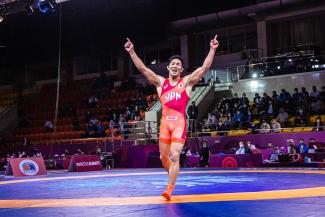
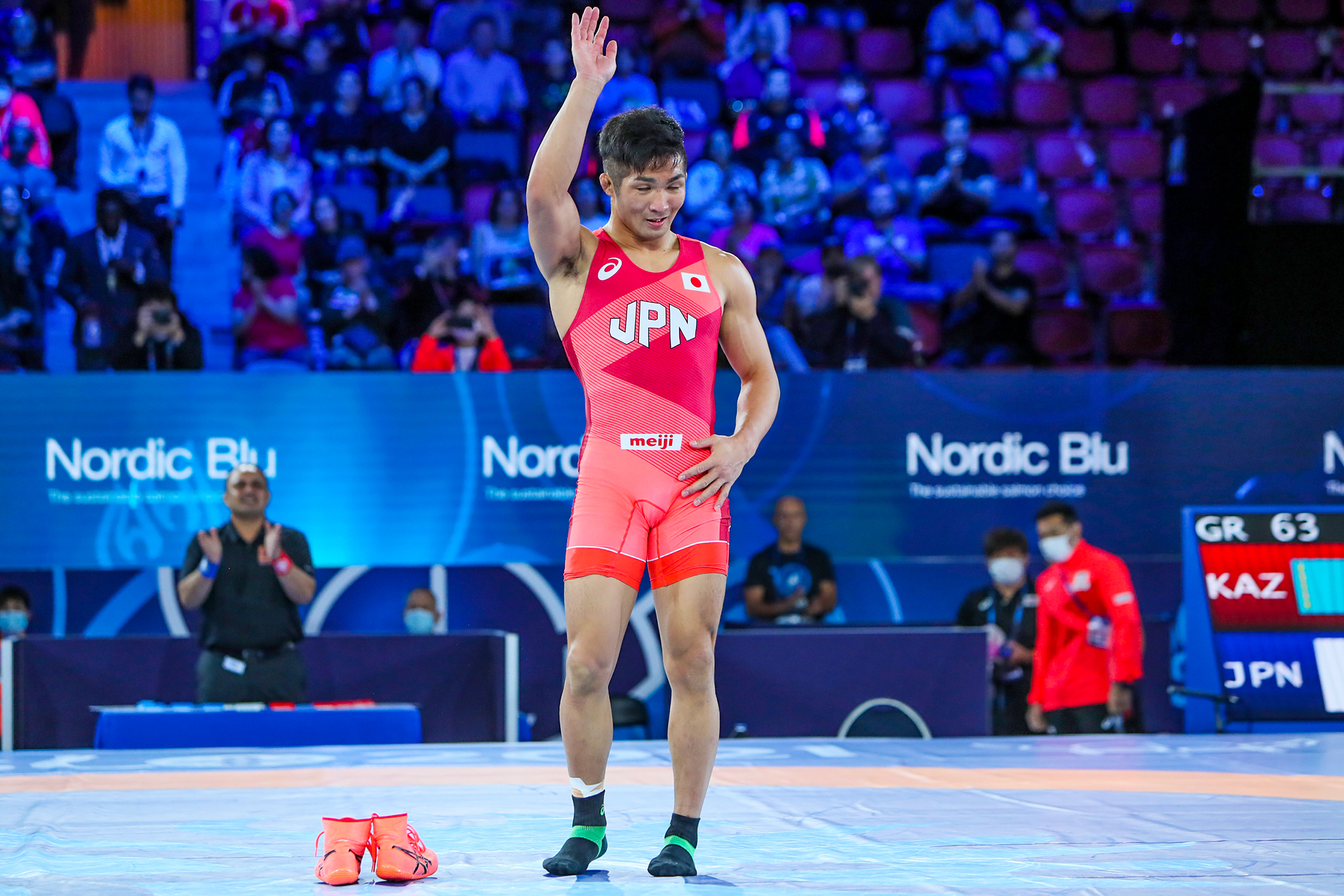 Tsuchika SHIMOYAMADA (AUS) had left his shoes on the mat during the 2021 World Championships to mark his retirement. (Photo: United World Wrestling / Martin Gabor)
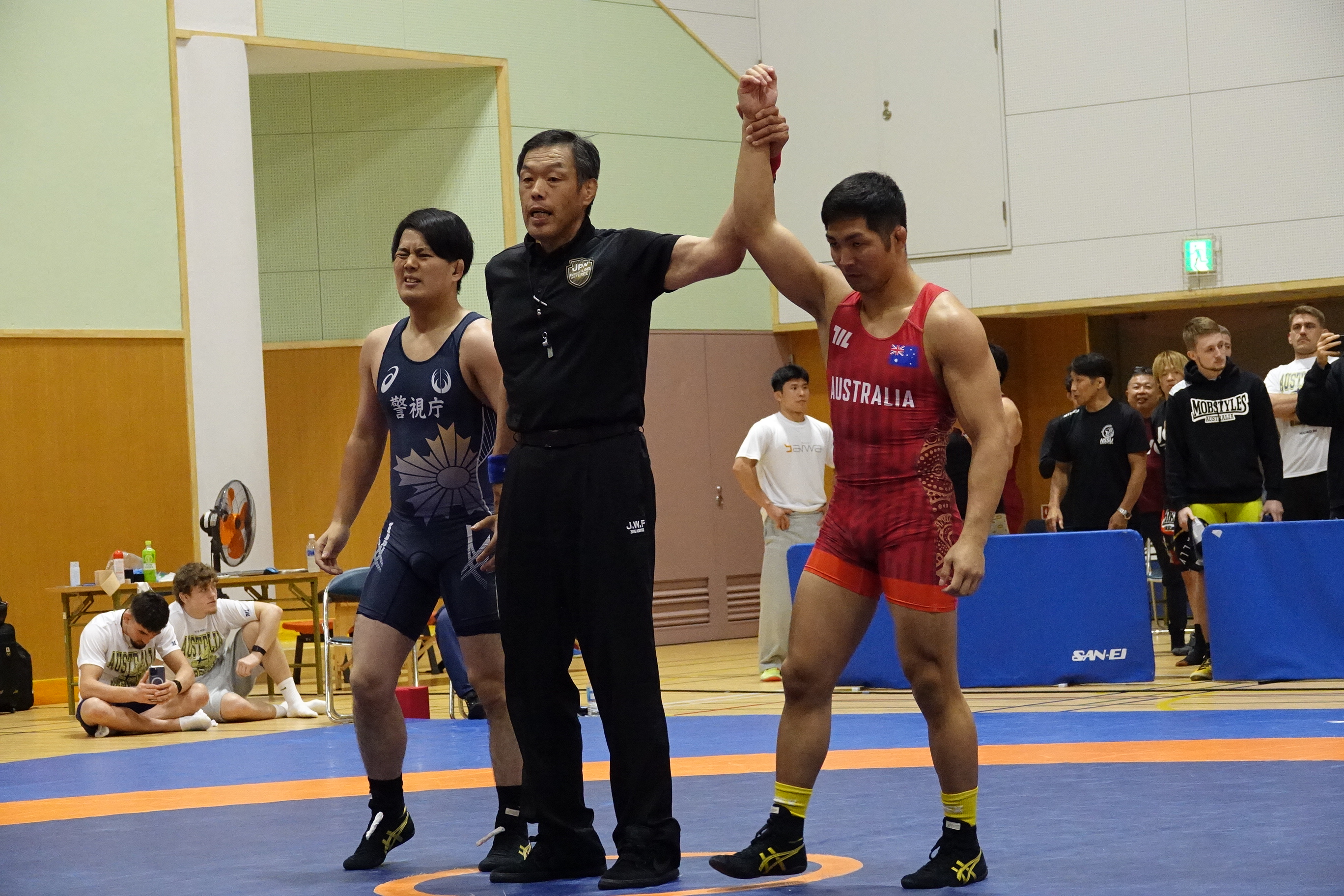 Tsuchika SHIMOYAMADA advances to the semifinals at the All-Japan Non-Student Championships in July with a 52-second win over Kokoro GOTO. (Photo: Koji Fuse / wrestling-spirits.jp)
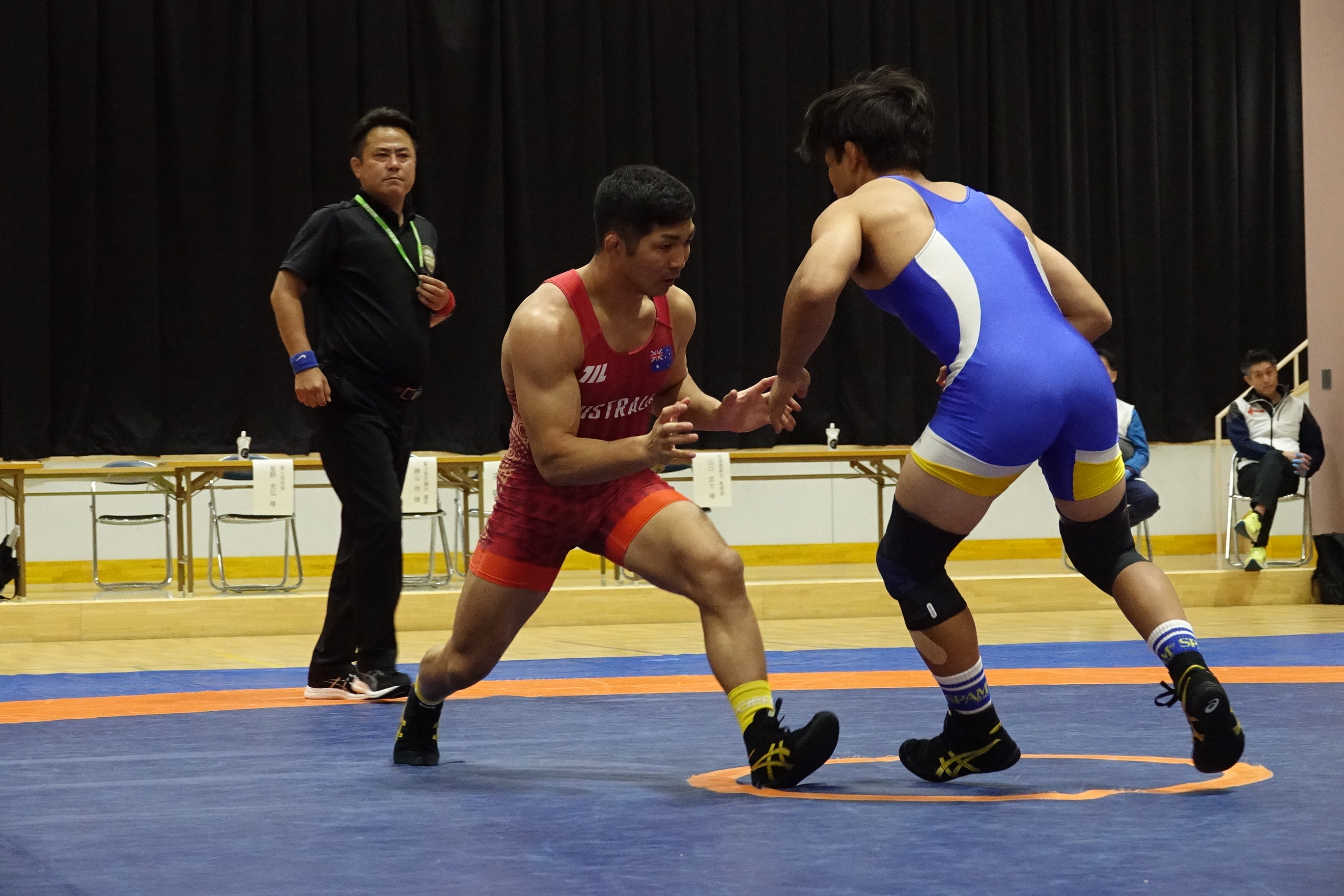 Tsuchika SHIMOYAMA faces Keitaro ONO in his opening match at the All-Japan Non-Student Championships in July. (Photo: Koji Fuse / wrestling-spirits.jp)
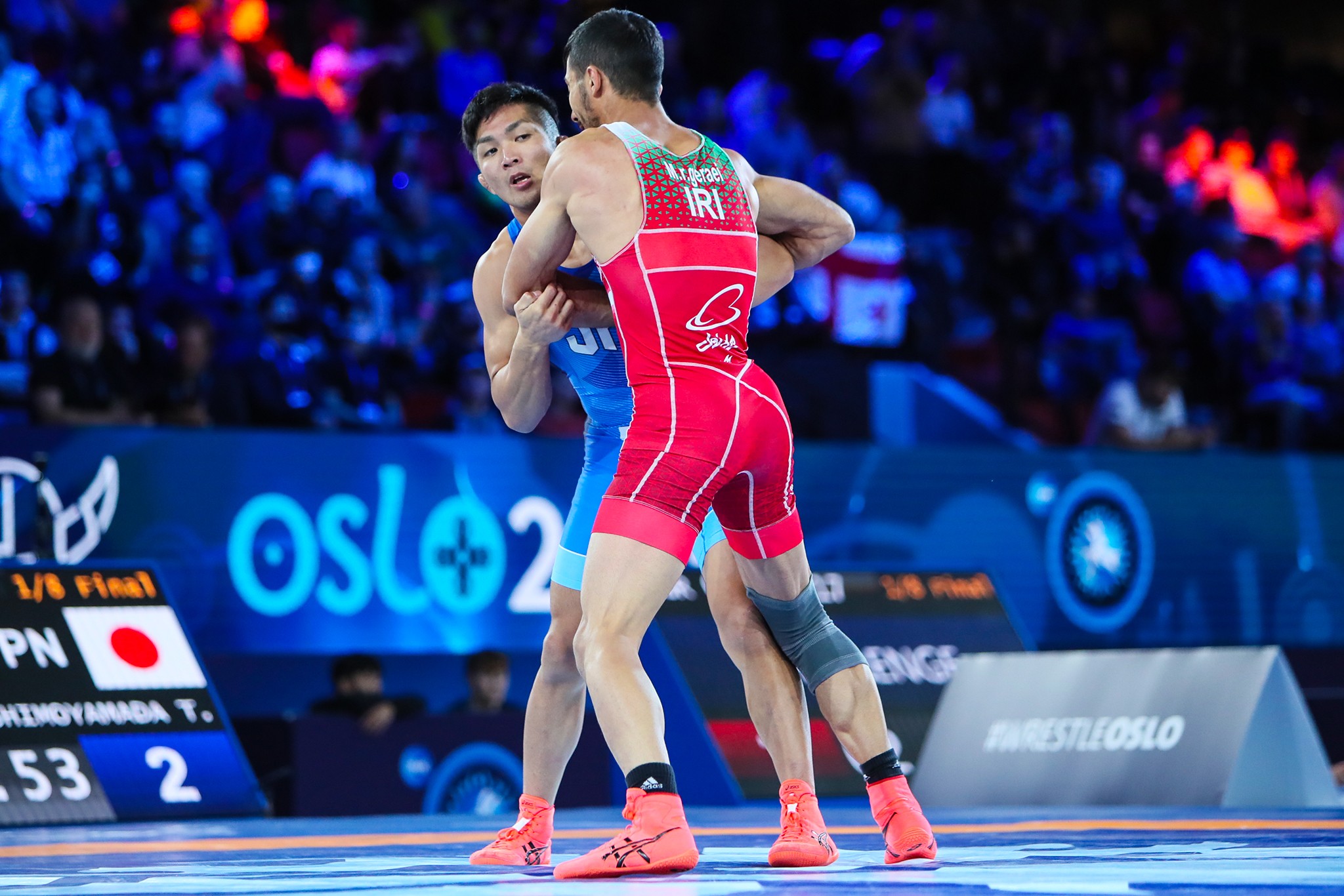 Tsuchika SHIMOYAMADA (AUS) was dominating Mohammadreza GERAEI (IRI) in their match at the 2021 World Championships before being pinned. (Photo: United World Wrestling / Martin Gabor)
Share your thoughts.
Comments