

Georgia Wins GR Title with Two Gold on Final Day at #WrestleDortmund
Sunday, July 4, 2021 - 20:01 By Vinay Siwach

DORTMUND, Germany (July 4) --- After having subdued day at the junior European Championships on Saturday, Russia came up with two gold medal winning performances on Sunday to regain some lost ground in Dortmund, Germany.
Winning the title at 82kg and 97kg, Russia managed to climb up to the second spot in the team title race with Georgia winning the title as it won three gold and two silver. Turkey, with one gold, silver and bronze each in Dortmund, finished third.
Amirkhan TSECHOEV (RUS) was the first gold medalist for Russia as he claimed the 82kg title by beating Mykyta ALIEKSIEIEV (UKR) in the final. This was the second title for Russia for the event after Pavel REKLIN (RUS) won gold at 55kg on Saturday.
Tsechoev took the momentum in the 82kg final and was awarded a point for Alieksieiev's passivity. From the par terre position, he got two points for a throw. He was awarded two more points for another throw but Ukraine challenged tha call. Ukraine won the challenge but Russia still led 4-0.
In rush of adrenaline, Alieksiesiev went for a body lock but Tsechoev used that momentum to convert it into a four point throw. In just one minute 49 seconds, the Russian captured the gold medal with a technical superiority win.
A historic moment was witnessed at 82kg as Marcel STERKENBURG (NED) became the first ever medalist for Netherlands at the junior European Championships. He defeated Mikhail KHACHATURAU (BLR) 9-3 in a tense bronze medal bout.
 Aleksei MILESHIN (RUS) won the 97kg title at junior European Championships in Dortmund. (Photo: UWW / Kadir Caliskan)
Aleksei MILESHIN (RUS) was the second Russian to win the gold medal on Sunday. He ended the hopes of local wrestler Anton VIEWEG (GER) by beating him 5-0 in the 97kg final.
Mileshin, a cadet World Championships silver medalist, got a point for Vieweg's passivity. He used a throw from par terre to increase the lead to 3-0. In the second period, he scored a takedown and hung on to the 5-0 lead to win the top medal.
Georgia also had two European champions on Sunday as Pridon ABULADZE (GEO) won the 60kg title while Giorgi CHKHIKVADZE (GEO) won the 72kg title.
In the 60kg final, Abuladze scored a come-from-behind victory over Dinislam BAMMATOV (RUS). Bammatov was leading 4-0 but Abuladze scored five unanswered points to win 5-4. A disappointed Russian expressed his displeasure at the end and even his coach showed a protest.
Bammatov used a chest wrap to gut wrench to lead 4-0. But it all changed in the second period, he was called for passivity and Abuladze scored a step out. Russia challenged the call but lost and the difference was reduced to 4-3.
After a warning, the referee cautioned Bammatov for using aggressive force on Abuladze's arm and the judges confirmed it which gave the Georgian a 5-4 lead. The clock expired at the same score.
But Abuladze's biggest win came in the semifinal when he defeated former senior European champion Edmond NAZARYAN (BUL) 3-2. The Bulgarian, a cadet world champion, was the favourite to win the title.
At 72kg, Chkhikvadze defeated Attila TOESMAGI (HUN) 4-1 in the final. The Youth Olympic Games champion led 1-0 after the Hungarian's inactivity. He added two more points with a throw from par terre.
Toesmagi, a bronze medalist at cadet Worlds, could not take advantage after the Georgian was called for inactivity. Toesmagi challenged for a leg foul but lost. The score changed to 4-1 but remained in Georgian's favour.
Azerbaijan won a gold medal on Sunday with Hasrat JAFAROV (AZE) defeating Serhat KIRIK (TUR) in just one minute and 39 seconds.
It only needed a passivity from Kirik as Jafarov pounced on the opportunity and combined a throw and gut to lead 4-0. It looked like Kirik would defend the next attack from the Azerbaijani but Jafarov's strength was unmatched.
He scored two more throws for four points and secured a 9-0 win in the 67kg final.
RESULTS GR
60kg
GOLD: Pridon ABULADZE (GEO) df Dinislam BAMMATOV (RUS), 5-4
BRONZE: Nihat MAMMADLI (AZE) df Hleb MAKARANKA (BLR), 4-0
BRONZE: Edmond NAZARYAN (BUL) df Arslanbek SALIMOV (POL), 12-7
67kg
GOLD: Hasrat JAFAROV (AZE) df Serhat KIRIK (TUR), 9-0
BRONZE: Shant KHACHATRYAN (ARM) df Vilius SAVICKAS (LTU), 10-1
BRONZE: Luka OCHIGAVA (GEO) df Adam POHILEC (HUN), 10-0
72kg
GOLD: Giorgi CHKHIKVADZE (GEO) df Attila TOESMAGI (HUN), 4-1
BRONZE: Khasay HASANLI (AZE) df Luka MALOBABIC (CRO), via fall
BRONZE: Samuel BELLSCHEIDT (GER) df Omer DOGAN (TUR), 8-3
82kg
GOLD: Amirkhan TSECHOEV (RUS) df Mykyta ALIEKSIEIEV (UKR), 8-0
BRONZE: Marcel STERKENBURG (NED) df Mikhail KHACHATURAU (BLR), 9-3
BRONZE: Samet YALDIRAN (TUR) df Kevin GREMM (GER), 8-3
97kg
GOLD: Aleksei MILESHIN (RUS) df Anton VIEWEG (GER), 5-0
BRONZE: Marcus WORREN (NOR) df Lasha TVILDIANI (GEO), via fall
BRONZE: Pavel HLINCHUK (BLR) df Antti HAANPAEAE (FIN), via fall
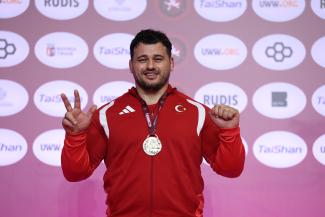
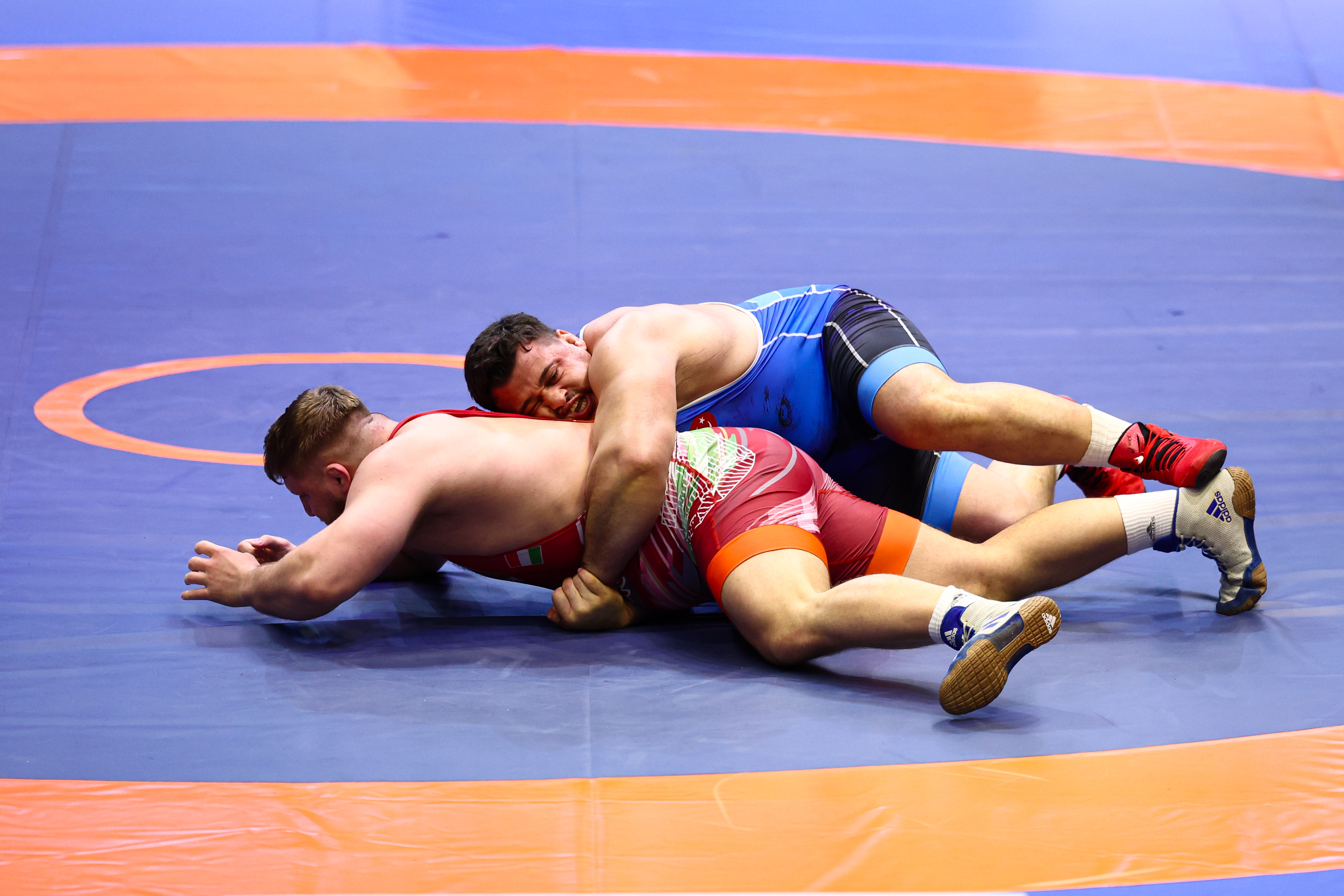 Riza KAYAALP (TUR) turns Darius VITEK (HUN) in the 130kg final. (Photo: United World Wrestling / Kadir Caliskan)
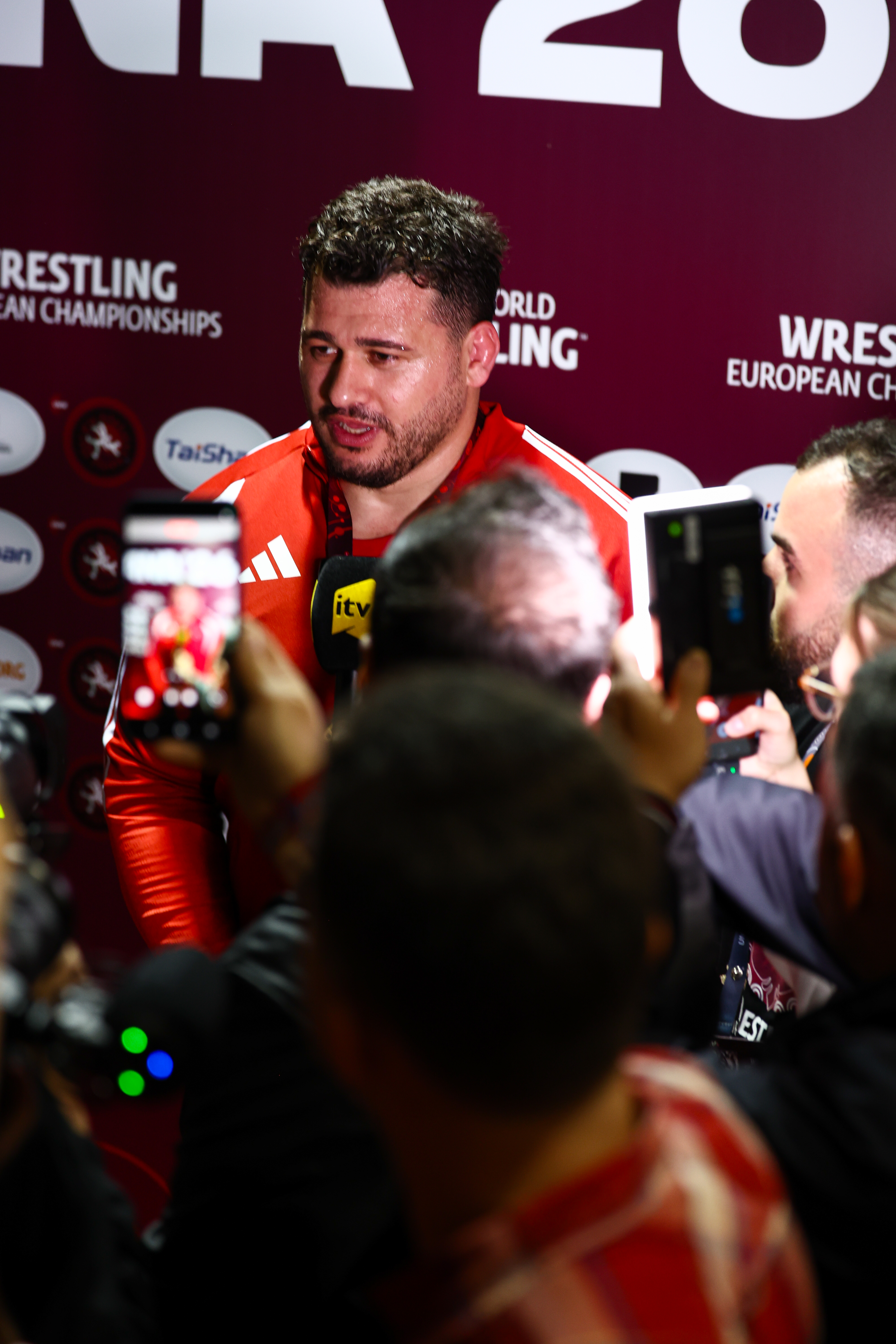 Riza KAYAALP (TUR) speaks to the media after winning the gold medal at the European Championships. (United World Wrestling / Jake Kirkman)
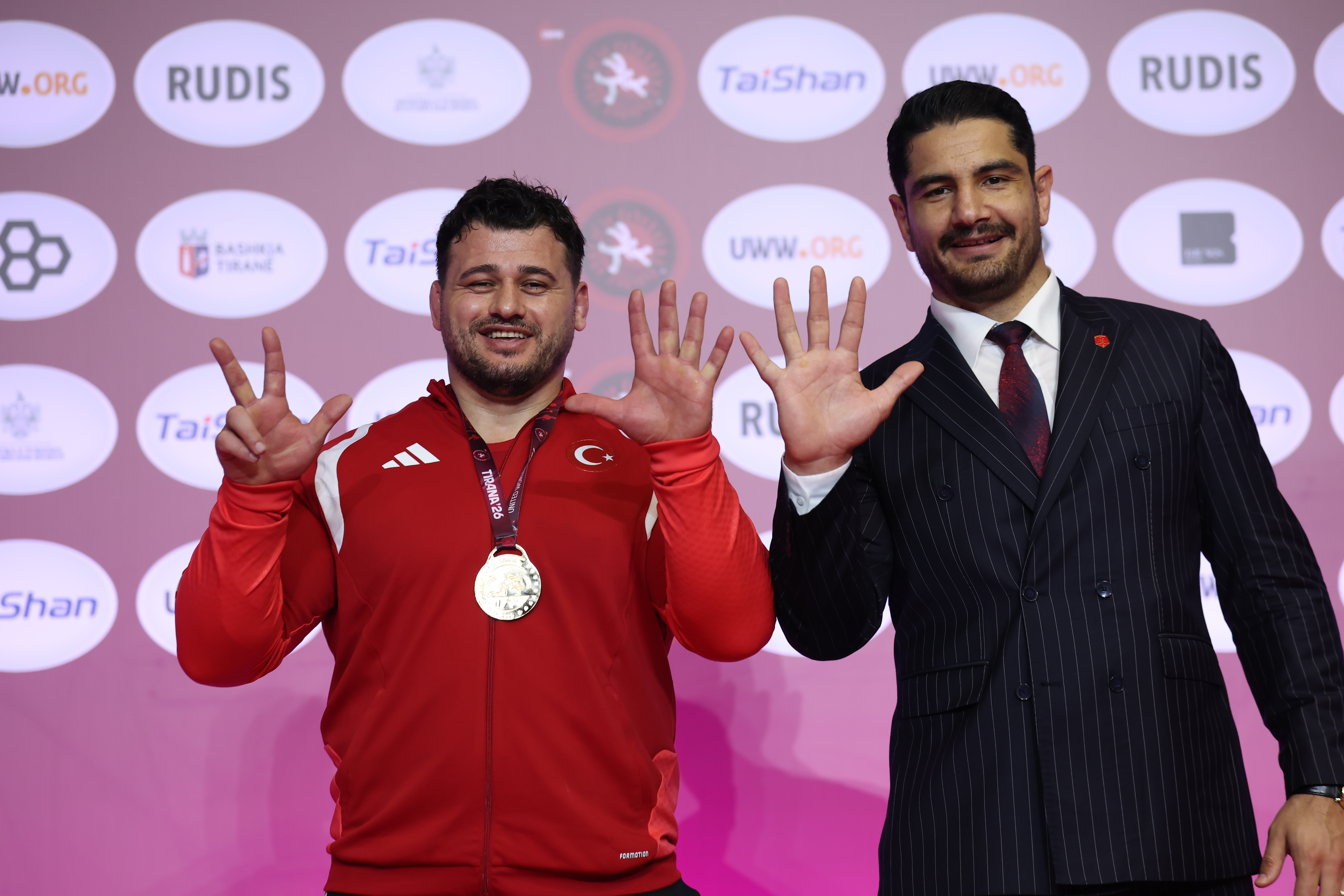 Riza KAYAALP (TUR) with Taha AKGUL (TUR) at the medal ceremony in Tirana. (Photo: United World Wrestling / Kadir Caliskan)
Share your thoughts.
Comments