

Helen Maroulis Makes History, Upends Saori Yoshida at Rio 2016
Thursday, December 26, 2019 - 14:19 By Ken Marantz

CORSIER-SUR-VEVEY, Switzerland (December 23) -- Helen MAROULIS (USA) went into the 53kg final at the Rio 2016 Olympics knowing about as much as one could about her opponent. Granted, it wasn't hard to be familiar with Saori YOSHIDA (JPN), given that with three Olympic and 13 world golds to her name, she was already among the most famous wrestlers on the planet. And the American had some first-hand knowledge, having lost to Yoshida by fall in two previous meetings.
But Maroulis knew that if she wanted to fulfill her dream of becoming the first American woman to win an Olympic wrestling gold, the path had to go through Yoshida, so she did extra homework on the superstar, including having videos interviews translated so she could better understand what made her tick.
"I knew the match would be more mental than anything else, because she's really smart," Maroulis said in a FloWrestling documentary after the match. "I don't think she likes when people attack her, and I don't think she's wrestled someone in over a decade who believed they could beat her, and I'm like, I have to show her that."
Maroulis, 24 at the time, took her own advice and took the fight to the 34-year-old Yoshida, and it paid off with one of the biggest upsets of the Olympic wrestling tournament. Maroulis scored a pair of second-period takedowns in a dramatic 4-1 victory before a raucous crowd at Rio's Carioca Arena.
For Maroulis, it was redemption for having failed to make the U.S. team four years earlier. For Yoshida--and Japan as a whole--it was a heartbreaking defeat that prevented her from matching the previous day achievement of compatriot Kaori ICHO (JPN), who became the first woman in any sport in Olympic history to win four consecutive Olympic golds.
In the first period, Yoshida got in deep on a single-leg, but Maroulis prevented her from finishing it off. A short time later, Yoshida received a point with Maroulis on the activity clock, and the period ended with Yoshida leading 1-0.
Early in the second period, Yoshida tried to shrug past Maroulis. Maroulis slipped to the side and as she started going behind, Yoshida reached back for a headlock, but Maroulis pulled her head out and gained control as the two tumbled to the mat for a 2-1 lead. With just over a minute left, Maroulis crossed over for an inner thigh hold and forced out Yoshida for what was originally ruled a 1-point stepout, but was revised to a 2-point takedown.
In the final 20 seconds, Yoshida again got in on a single, but just as she did earlier, Maroulis applied a whizzer and forced a non-scoring stalemate. When the buzzer sounded, both wrestlers flopped to the mat in tears, obviously experiencing vastly different emotions.
As a bewildered Maroulis finally got to her feet, her coach Valentin Kalika ran onto the mat and warmly embraced her. Her success can be directly linked to coming under the tutelage of the Russian. The two had worked together before he invited her to a training camp in 2014 in the Russian wrestling hotbed of Dagestan.
A suicide bombing in the volatile region had led USA Wrestling to advise her against taking the trip, and her father also strongly opposed. But the desire to become an Olympic gold won out and she went, although she did take the extreme precaution of changing out of her USA warmup jacket during a stopover at Moscow airport.
Kalika was awed by such dedication. "Man, this girl came to die [just] to win Olympics. Not many men would do that. She became my hero."
And, during the three-week camp -- which concluded without incident --- he officially became her coach. The results were tangible, as she won the world title in 2015 at 55kg, adding to her silver from 2012 and bronze in 2014. (She would add another gold in 2017.) Her biggest decision was which weight class to make her Rio challenge and, consulting a nutritionist and others, made the choice to go down to 53kg.
That put her on a collision course with Yoshida, who was on a mission of her own. Aside from the historic significance of a fourth Olympic gold, Yoshida wanted to dedicate the victory to her father, who had died suddenly at 61 five months before the Rio Games. Eikatsu YOSHIDA, a former national champion, had been a coach and confidante since she started the sport at age 3 (that's him on her shoulders during her victory lap at the London 2012 Olympics).
Her father taught her the attacking style that led to her unrivaled success, and she felt she had sullied his memory by failing to score a takedown in the Rio final. As she wept uncontrollably in her mother's arms after the match, she could be heard saying, "Father is angry with me." The tears continued on the medal podium, and in interviews on Japanese TV.
The loss to Maroulis would be Yoshida's only one in her career to a non-Japanese in an individual tournament, as her two other defeats came at World Cups. It would also be her last match, as she announced her retirement in January this year.

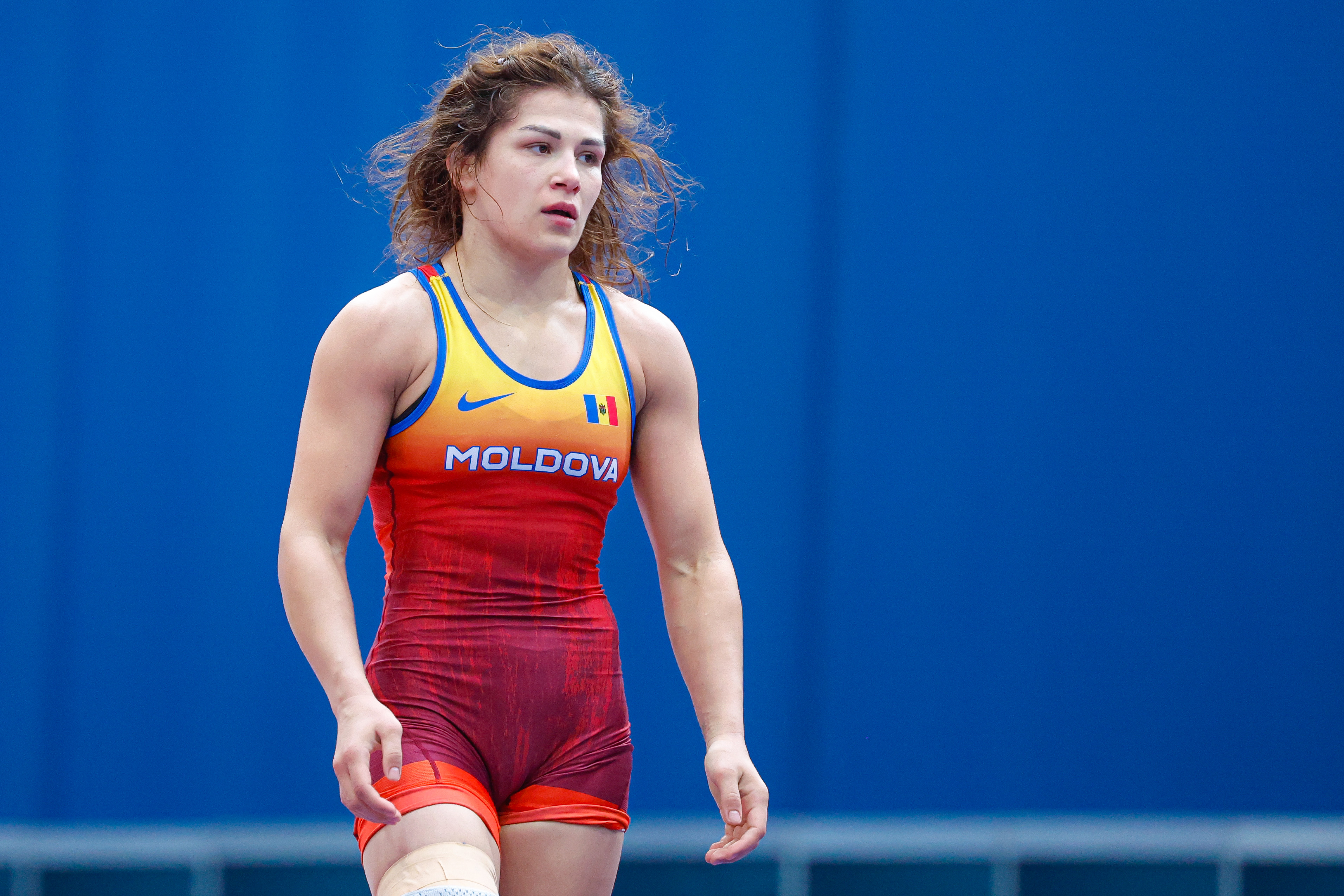 Anastasia NICHITA (MDA) marks her return to the mat in Budapest. (Photo: United World Wrestling / Kostadin Andonov)
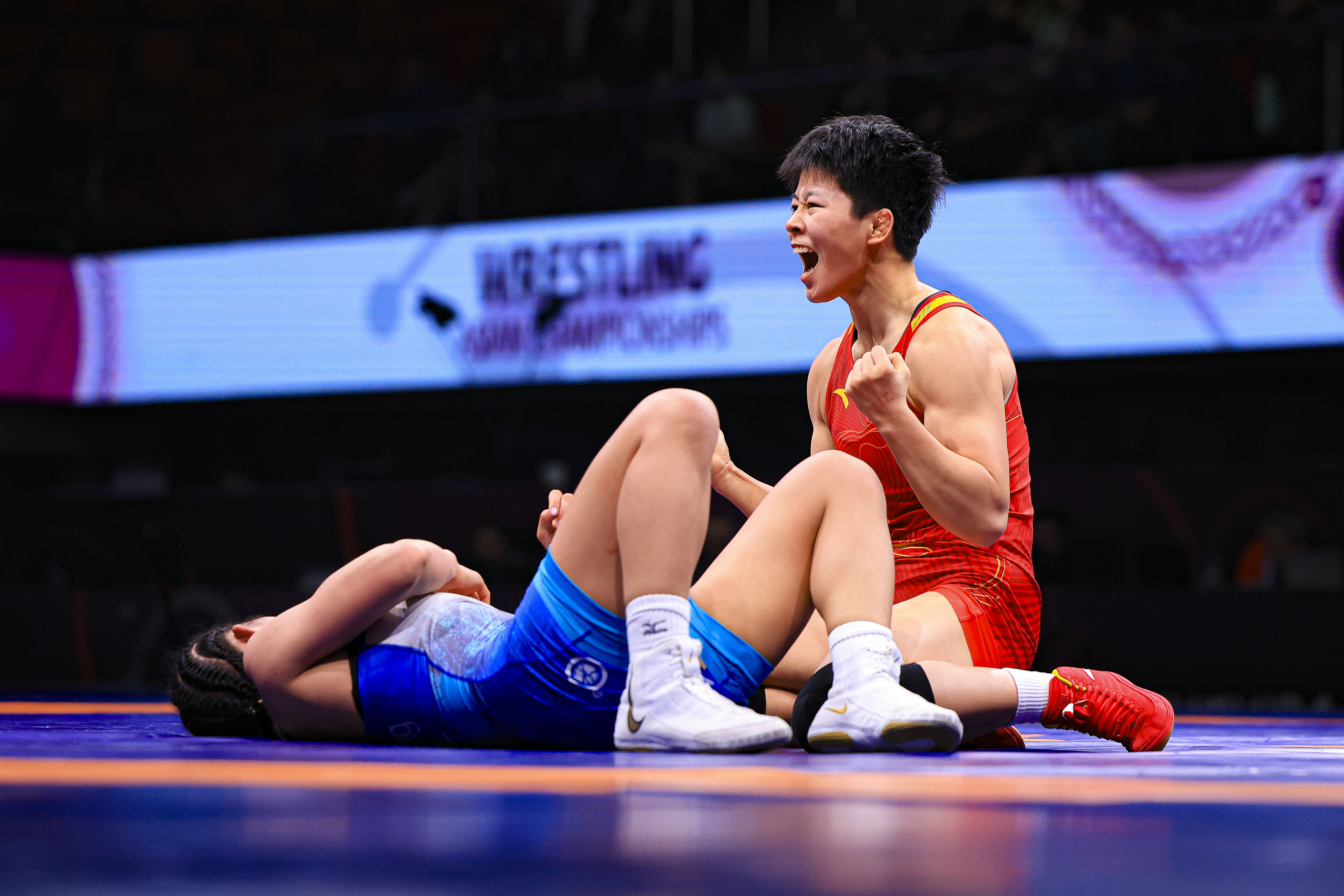 Kexin HONG (CHN) is the Asian champion at 57kg. (Photo: United World Wrestling / Kadir Caliskan)
Share your thoughts.
Comments