

Icho Aims to Reclaim Asian Gold in Next Stage of Comeback Eyeing Tokyo 2020
Monday, April 22, 2019 - 13:16 By Ken Marantz

XI'AN, China (April 22) - When Kaori ICHO (JPN) takes the mat at the Asian Championships, it will mark her first international competition in 32 months. The last one, of course, was the Rio 2016 Olympics, where she became the first four-time wrestling gold medalist in Olympic history.
Icho ended a long layoff last year to launch a bid for a fifth gold at Tokyo 2020, and while the tournament in Xi'an, China, starting Tuesday will have no direct bearing on her Olympic aspirations, it does not diminish her determination to emerge victorious.
"There's some uneasiness, but I'm also looking forward to it," Icho said at a recent national team practice open to the media in Tokyo. "To think of it as just a stepping stone [to the Olympics] would be taking it too lightly.
"Since Rio de Janeiro, the members [in the weight class] have completely changed. So there is not one wrestler that I've ever fought against or even know. This will be a measure of the current level in Asia."
The 34-year-old Icho can certainly be regarded as the favorite at women's 57kg as she aims for the sixth Asian title of her storied career, having won her first in 2004 in Tokyo and most recent in 2015 in Doha.
But the path will not be easy, as standing in the way will be rising star RONG Ningning (CHN), who has been wreaking havoc on the weight class in recent years. Rong, winner of both the Klippan Lady and Dan Kolov-Nikola Petrov tournaments this year, will be one of two current world champions in Xi'an, as well as one of 12 gold medalists from last year's Asian Championships in Bishkek.
"The world champion is a Chinese wrestler, and the venue is China," Icho said. "I think this a big event leading up to the Tokyo Olympics. I want to be properly prepared. It will likely be the first meeting with every opponent."
Those two will have formidable company in the form of Budapest 2018 world bronze medalist Pooja DHANDA (IND), the Dan Kolov-Nikola Petrov winner at 59kg; Tserenchimed SUKHEE (MGL), the world U23 bronze medalist and Ivan Yarygin Grand Prix winner; and JONG Myong-Suk (PRK), the Asian Games champion and a world bronze medalist at 55kg.
"I can watch videos [of opponents], but in wrestling, until you actually get out there, you never know," Icho said. "To say there is not some anxiety would be a lie. Part of me looks forward to testing myself, but I also firmly want to win. But above all, I'm happy to get the chance."
Regardless of who she faces, Icho can hardly have to clear a bigger hurdle that the one she did to get to Xi'an. At the Japan national championships last December, she defeated fellow Rio 2016 gold medalist Risako KAWAI, the world champion at 59kg who had dropped down to the Olympic weight. Another showdown looms in June at the national invitational championships, with a ticket to the Nul-Sultan world championships hanging in the balance.
The other reigning world champion in Xi'an will be Mayu MUKAIDA (JPN), the 55kg gold medalist in Budapest who has dropped to the Olympic division of 53kg. She was in line for a clash with the world champion in that weight class, Haruna OKUNO, at the Japan nationals, but Okuno withdrew due to a stomach virus.
Mukaida, the 2017 Asian champion at 53kg in New Delhi, has not lost since the final of that year's world championships in Paris. She also faces a potential clash with a highly regarded Chinese opponent in PANG Qianyu (CHN), a world bronze medalist and winner at both the Klippan Lady and Dan Kolov-Nikola Petrov.
Others expected to be in the mix are defending champion and Asian Games gold medalist PAK Yongmi (PRK) and Vinesh VINESH (IND), the Asian Games champion and Bishkek 2018 silver medalist at 50kg who was runner-up to Pang at the Dan Kolov-Nikola Petrov.
Here's a look at some other weight classes of particular interest:
Freestyle, April 23-24
A highly anticipated rematch of the UWW's Freestyle Match of the Year from 2018 between 65kg world champion Takuto OTOGURO (JPN) and Bajrang BAJRANG (IND) was put on hold after the Japanese pulled out of the tournament due to the onset of bursitis in his knee.
That makes Bajrang, who had to settle for third place last year in Bishkek, the prohibitive favorite to regain the Asian gold he won before a home crowd in 2017. He won the Asian Games gold last summer, beating Daichi TAKATANI (JPN) in the final to avenge a quarterfinal loss in Bishkek.
But Bajrang will have to contend with veteran Daulet NIYAZBEKOV (KAZ), the defending champion who will be aiming for his fourth Asian gold and seventh medal overall, as well as Asian Games bronze medalist Sirojiddin KHASANOV (UZB).
At 57kg, Budapest 2018 bronze medalist Yuki TAKAHASHI (JPN) will look to repeat his successful run in New Delhi in 2017, the year he also won the world title in Parix. Takahashi, who failed to make the Rio 2016 Olympics, is determined to be at Tokyo 2020, and noted the importance of the UWW ranking points available at the continental championship that can affect seedings at the worlds, where he can clinch an Olympic berth.
Takahashi knows he faces stiff competition, mainly from defending champion KANG Sumsong (PRK), who pulled off a stunning victory over the Japanese in the first round of the Asian Games en route to the silver medal. Also vying for gold will be Makhmudjon SHAVKATOV (UZB), the runner-up to Kang last year in Bishkek; Reza ATRINAGHARCHI (IRI), an Asian Games bronze medalist along with Takahashi; and world U23 medalists ZOU Wanhao (CHN) and Kumar RAVI (IND).
"Asia has many strong wrestlers at 57 [kg]," Takahashi said. "I feel the Asian Championships will give me an idea of where I stand."
The 92kg class features both world bronze medalists, Asian Games champion Alireza KARIMIMACHIANI (IRI) and Atsushi MATSUMOTO (JPN), along with Bishkek 2018 bronze medalist Azizbek SOLIEV (UZB). Matsumoto already has two Asian silver medals---but in different styles. He finished second at 86kg in freestyle in 2015, then again at 85kg in Greco-Roman in 2017.
Russian-born Adam BATIROV (BRN), coming off winning the world silver medal at 70kg, will aim for his first Asian title since 2016 when he takes the mat at 74kg. Also in the gold chase will be Yuhi FUJINAMI (JPN), an Asian Games bronze medalist who finished third at 70kg at Paris 2017, and Daniyar KAISANOV (KAZ), a Bishkek 2018 bronze medalist and Asian Games runner-up.
One intriguing wrestler to watch is Oleg BOLTIN (KAZ) at 125kg, who will be looking for his first major medal on the senior level. He was a four-time national collegiate champion in Japan at powerhouse Yamanashi Gakuin University from 2013-2016, and splits his time training in the two countries.
"Japan works more on stamina with a lot of sparring, while Kazakhstan works on techniques," said Boltin, the Asian junior silver medalist in 2013. "This allows me to do both."
Women's Wrestling, April 25-26
A year ago, Japan sent an understrength squad to Bishkek, preferring to save its top wrestlers for the Women's World Cup held less than a month later. World junior and U23 champion Saki IGARASHI (JPN) was the lone gold medalist from that team, but she will certainly have company this time if she can successfully defend her 55kg title.
In addition to Mukaida and Icho, the Japan team in Xi'an includes Budapest 2018 silver medalist and world U23 gold medalist Yukako KAWAI (JPN) at 62kg, and two-time world bronze medalist Hiroe MINAGAWA SUZUKI (JPN) at 76kg.
The one to watch, however, is Yuki IRIE (JPN) at 50kg. Irie is the only wrestler on the planet who can boast of having defeated two-time world champion Yui SUSAKI (JPN)---which she has done three times, including once in each of the past two years. But she has not been able to follow that up with sustained global success. Although the Asian champion in 2015, she finished third last year in Bishkek and second at the Asian Games.
"As long as I win, it doesn't matter how," Irie told the Japanese media.
With Vinesh moving up to 53kg, the battle for gold looks to be a two-way clash between Irie and the Chinese representative---either Budapest 2018 and Rio 2016 bronze medalist SUN Yanan, or Bishkek 2018 champion LEI Chun, according to the preliminary entry list.
Another major Japan-China battle appears to loom at 62kg between Kawai, the younger sister of Olympic champion Risako who will be making her continental debut, and PEI Xingru, the Bishkek 2018 champion at 57kg and world bronze medalist at 59kg. Pei placed second behind the Democratic People's Republic of Korea's Jong at 57kg at the Asian Games, and made the podium at both the Klippan Lady and Dan Kolov-Nikola Petrov tournaments this year.
Also in the field are Bishkek 2018 bronze medalist Sakshi MALIK (IND); Asian Games silver medalist Aisuluu TYNYBEKOVA (KGZ); Nabira ESENBAEVA (KAZ), the 2018 silver medalist at 59kg; and world U23 bronze medalist Gantuya ENKHBAT (MGL).
At 68kg, Rio 2016 gold medalist Sara DOSHO (JPN), who was unable to defend her world title in Budapest after undergoing shoulder surgery, will be gunning to add to the Asian titles she won in 2014, 2016 and 2017. Defending champion and Asian Games gold medalist Feng ZHOU (CHN) and the two Asian Games bronze medalists, Divya KAKRAN (IND) and Meerim ZHUMANAZAROVA (KGZ), will aim to prevent that.
Greco-Roman, April 27-28
Hossein NOURI (IRI), the 2017 world bronze medalist at 85kg, is the lone Iranian among the five in the two men's styles who will be back to defend his Asian title.
Nouri, the Asian Games champion, could face a rematch of the 87kg final in Bishkek with Masato SUMI (JPN), the runner-up at the Dan Kolov-Nikola Petrov tourney. Not to be counted out is Rustam ASSAKALOV (UZB), the 2018 champion at 97kg who finished second to Nouri at last summer's Asian Games in Jakarta.
Kenichiro FUMITA (JPN), the 2017 world and Asian champion at 59kg, won out in his latest duel with Rio 2016 silver medalist Shinobu OTA (JPN) at the national championships to earn his ticket to Xi'an at 60kg, and will look to make up for lost time and follow up on his world U23 gold medal.
Standing in his way will be Budapest 2018 bronze medalist WALIHAN Sailike (CHN), who finished second at Dan Kolov-Nikola Petrov, and Mehrdad MARDANI (IRI) and Mirambek AINAGULOV (KAZ), the bronze medalists at the Asian Games won by Ota. Ainagulov, who was third at Bishkek 2018 at 63kg, lost to Fumita in the Paris 2017 final.
Korea will send out a pair of current world and Asian Games bronze medalists in KIM Hyeonwoo (KOR) at 77kg and KIM Minseok (KOR) at 130kg, while former world champion RYU Han-Soo (KOR) looks to add to his medal collection at 67kg.
Ryu, who won his second straight Asian Games gold in Jakarta, will face challenges from Meiirzhan SHERMAKHANBET (KAZ), a Budapest 2018 bronze medalist; Mohammad Reza GERAEI (IRI), a bronze medalist at the Asian Games; and Mirzobek RAKHMATOV (UZB), a bronze medalist a year ago in Bishkek.
The other defending champion on the entry list is Elmurat TASMURADOV (UZB)at 63kg, who added the world silver medal in Budapest to an extensive resume that includes a Rio 2016 bronze medal and four Asian titles. He could face a rematch of the Bishkek 2018 final with Urmatbek AMATOV (KGZ).
At 77kg, Mohammad Ali GERAEI (IRI) will look to step up to the top of the medal podium after runner-up finishes in 2015 and 2018. The 2017 world bronze medalist at 71kg, he won the Asian Games gold ahead of Korea's Kim.
Iran's lone Greco medalist in Budapest, third-place finisher Mahdi ALIYARIFEIZABADI (IRI), leads a 97kg field that includes Asian Games silver medalist XIAO Di (CHN) and bronze medalist Uzur DZHUZUPBEKOV (KGZ).
Schedule
Monday, April 22
17:00 - Draw: FS 57, 65, 70, 79 & 97kg
Tuesday, April 23
9:30-10:00 - Medical Examination and Weigh-In: FS 57, 65, 70, 79 & 97kg
11:30-14:30 - Qualification Rounds & Repechage: FS 57, 65, 70, 79 & 97kg
14:45 - Draw: FS 61, 74, 86, 92 & 125kg
17:30-18:00 - Opening Ceremony
18:00-21:00 - Finals and Award Ceremonies: FS 57, 65, 70, 79 & 97kg
Wednesday, April 24
9:30-10:00 - Medical Examination and Weigh-In: FS 61, 74, 86, 92 & 125kg
11:30-14:30 - Qualification Rounds & Repechage: FS 61, 74, 86, 92 & 125kg
14:45 - Draw: WW 50, 55, 59, 68 & 76kg
18:00-21:00 - Finals and Award Ceremonies: FS 61, 74, 86, 92 & 125kg
Thursday, April 25
9:30-10:00 - Medical Examination and Weigh-In: WW 50, 55, 59, 68 & 76kg
11:30-14:30 - Qualification Rounds & Repechage: WW 50, 55, 59, 68 & 76kg
14:45 - Draw: WW 53, 57, 62, 65 & 72kg
18:00-21:00 - Finals and Award Ceremonies: WW 50, 55, 59, 68 & 76kg
Friday, April 26
9:30-10:00 - Medical Examination and Weigh-In: WW 53, 57, 62, 65 & 72kg
11:30-14:30 - Qualification Rounds & Repechage: WW 53, 57, 62, 65 & 72kg
14:45 - Draw: GR 55, 63, 77, 87 & 130kg
18:00-21:00 - Finals and Award Ceremonies: WW 53, 57, 62, 65 & 72kg
Saturday, April 27
9:30-10:00 - Medical Examination and Weigh-In: GR 55, 63, 77, 87 & 130kg
11:30-14:30 - Qualification Rounds & Repechage: GR 55, 63, 77, 87 & 130kg
14:45 - Draw: GR 60, 67, 72, 82 & 97kg
18:00-21:00 - Finals and Award Ceremonies: GR 55, 63, 77, 87 & 130kg
Sunday, April 28
9:30-10:00 - Medical Examination and Weigh-In: GR 60, 67, 72, 82 & 97kg
11:30-14:30 - Qualification Rounds & Repechage: GR 60, 67, 72, 82 & 97kg
18:00-21:30 - Finals and Award Ceremonies: GR 60, 67, 72, 82 & 97kg
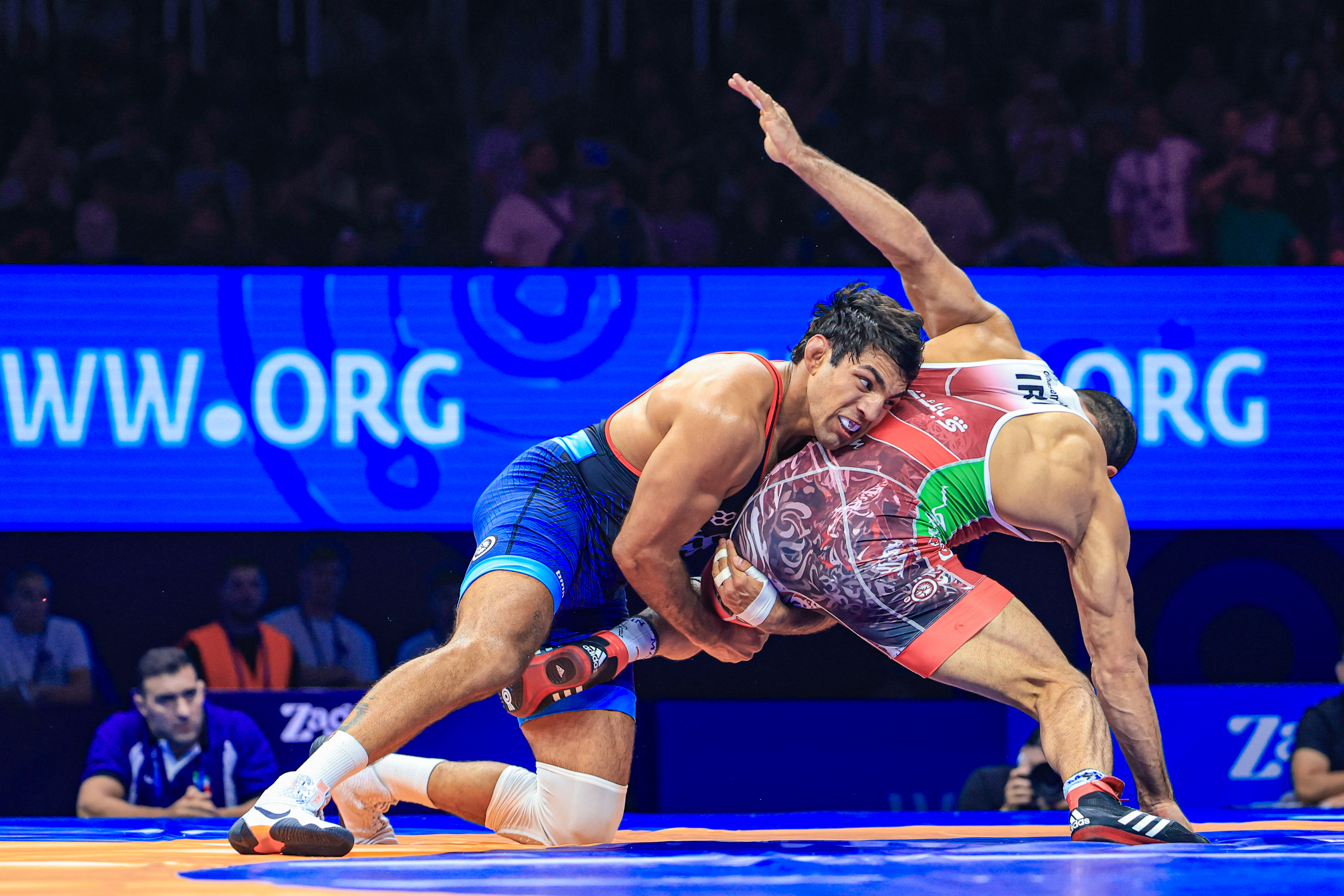 Zahid VALENCIA (USA) defeated Kamran GHASEMPOUR (IRI) 7-0 in the 86kg semifinals. (Photo: United World Wrestling / Amirreza Aliasgari)
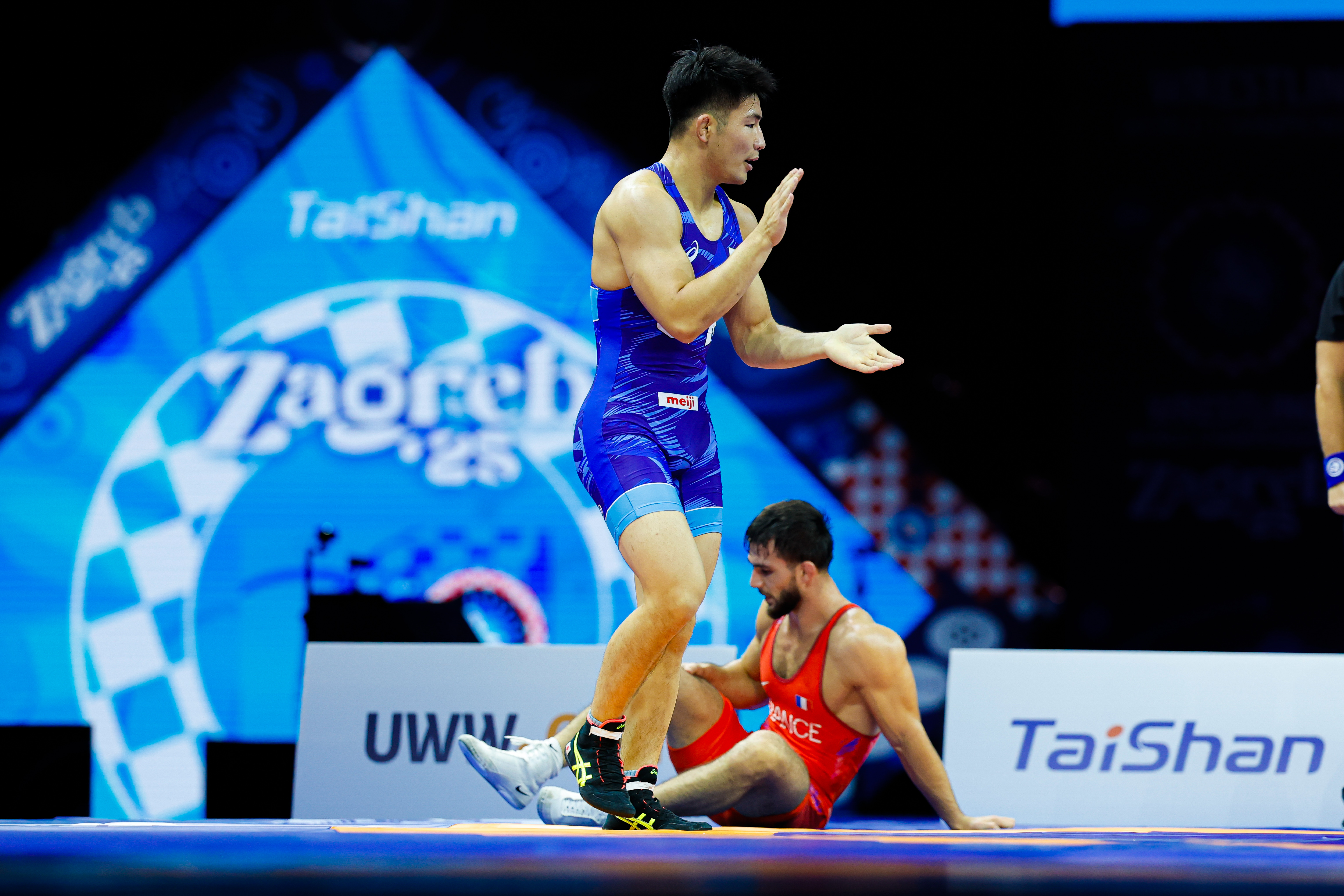 Hayato ISHIGURO (JPN) reached the 86kg final after beating Rakhim MAGAMADOV (FRA). (Photo: United World Wrestling / Kostadin Andonov)
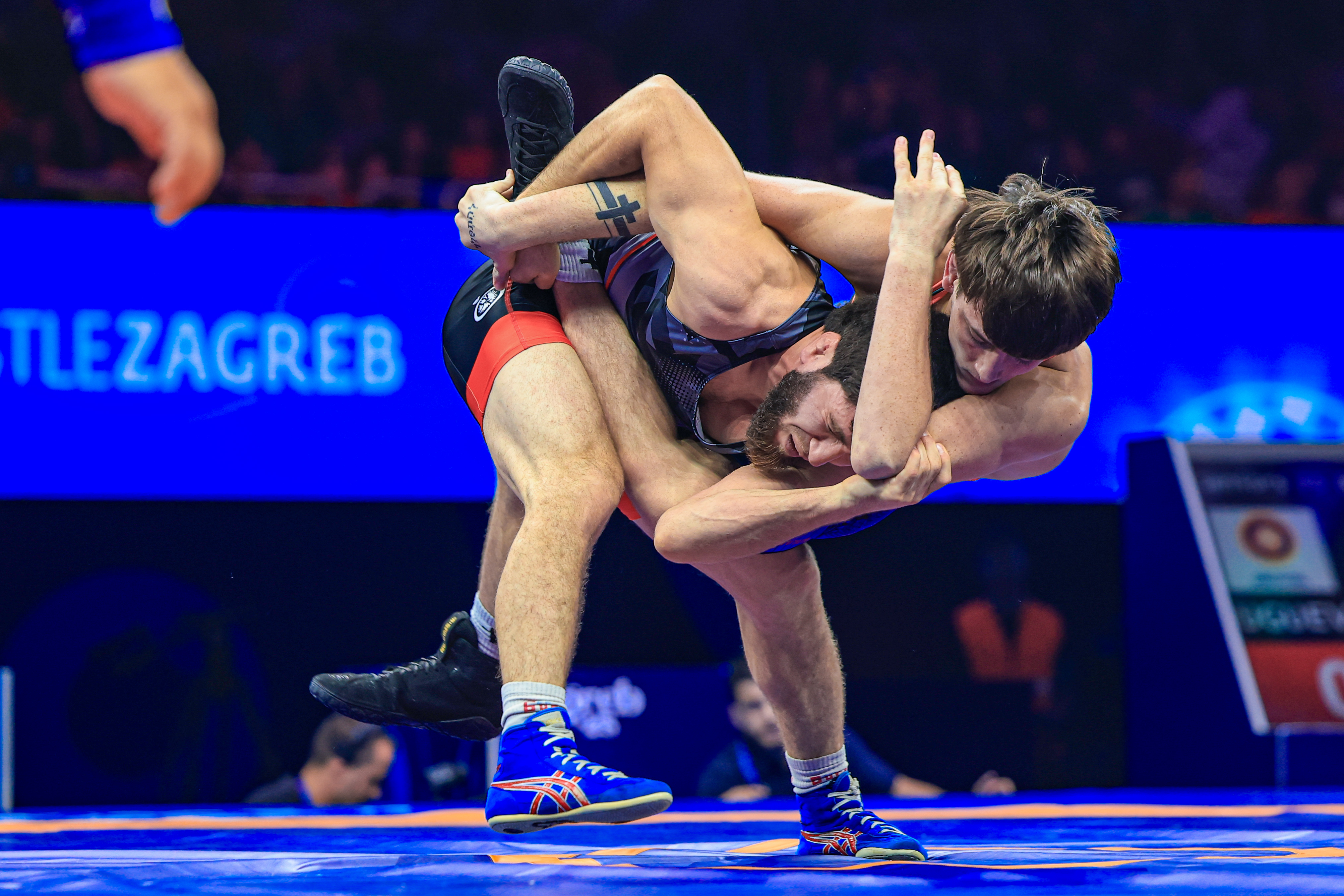 Zavur UGUEV (UWW) scores two points against Jaxen FORREST (USA) in the 61kg semifinals. (Photo: United World Wrestling / Amirreza Aliasgari)
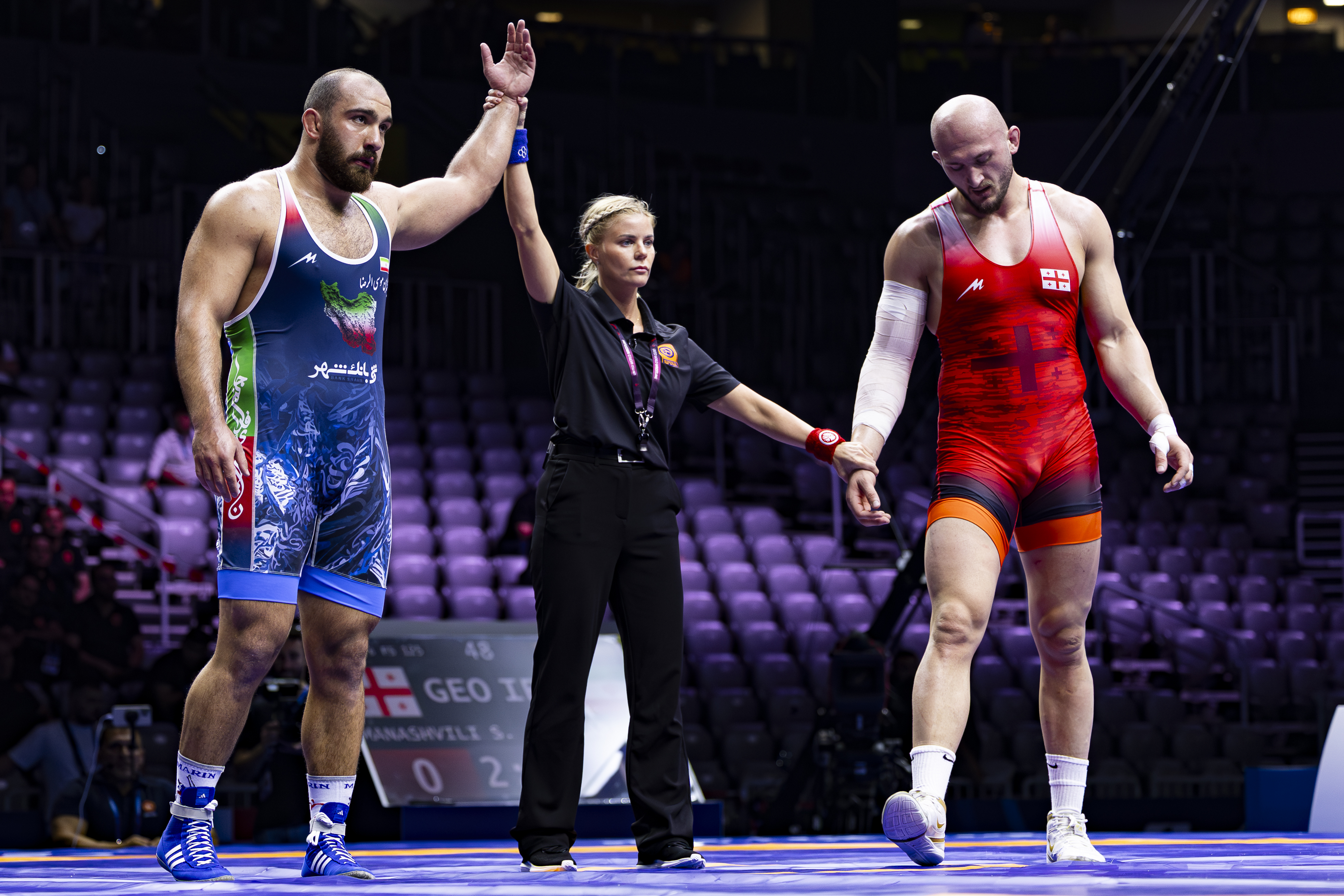 Amir Hossein ZARE (IRI) reached the final at 125kg. (Photo: United World Wrestling / Kostadin Andonov)
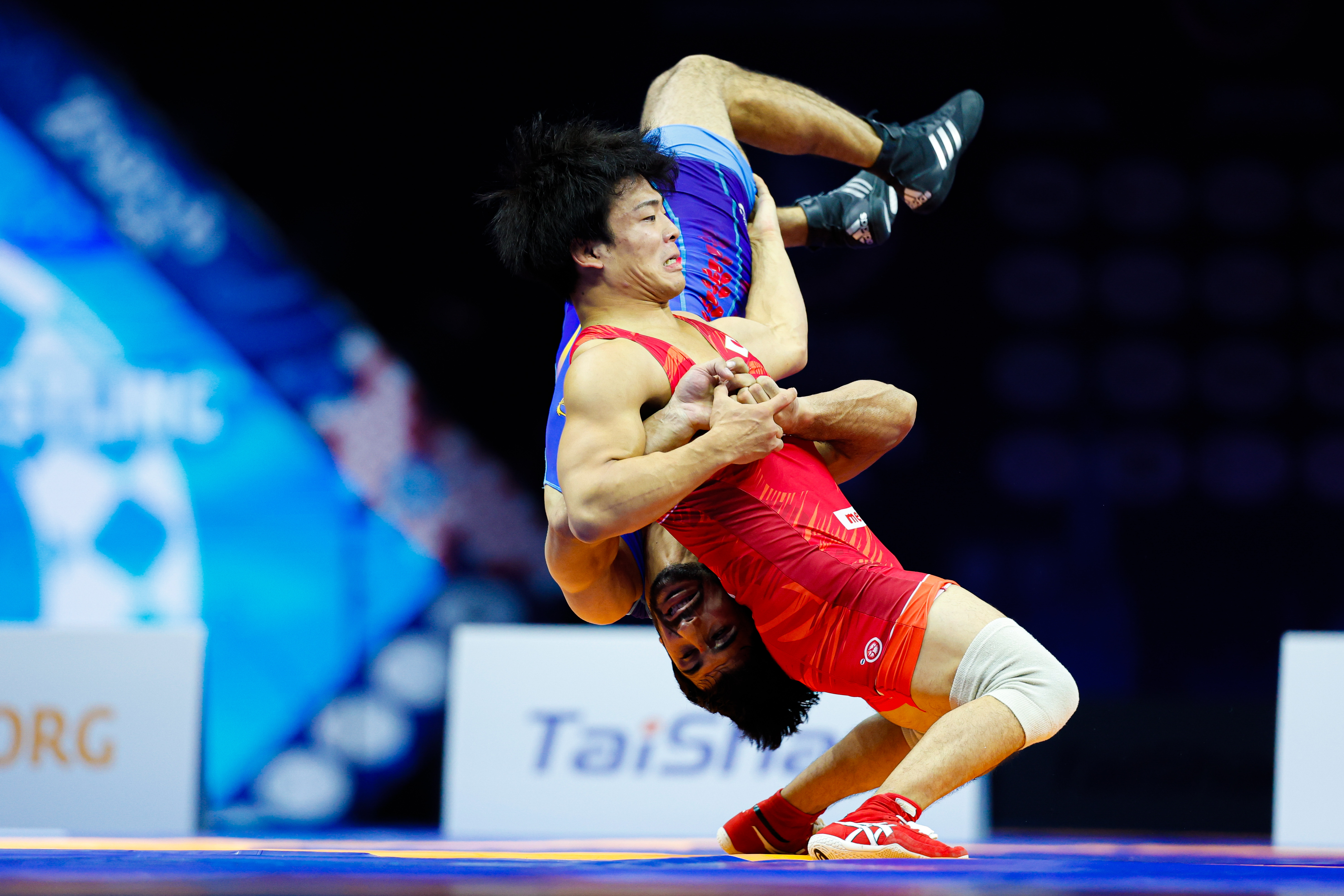 Returning silver medalist Yoshinosuke AOYAGI (JPN), red, reached the 70kg final for a second year in a row. (Photo: United World Wrestling / Kostadin Andonov)
Share your thoughts.
Comments