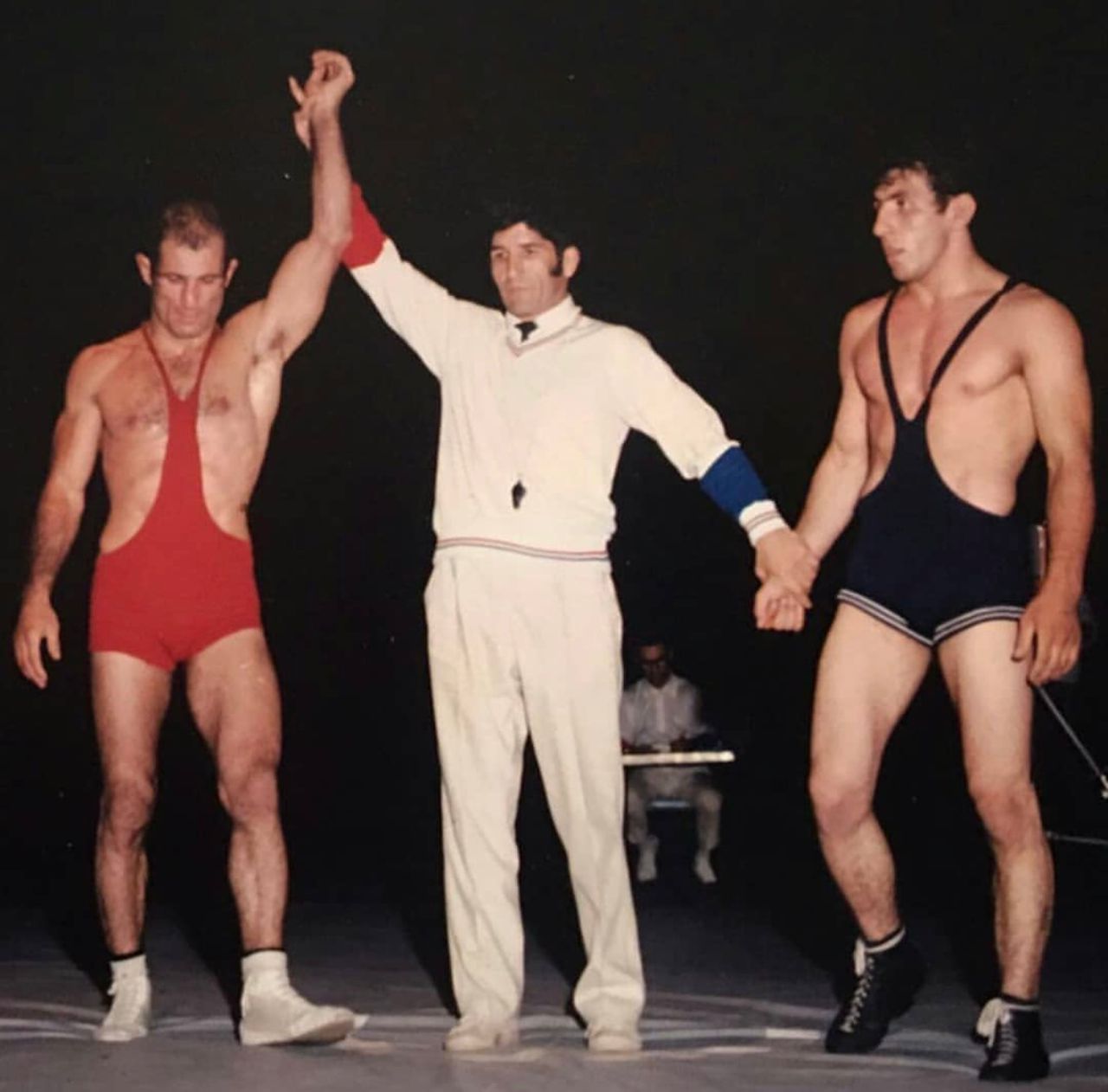
wiebe, erica, canada wrestling, Canada, Women's Wrestling, Olympic champion

RIO 2016 Champion Erica Wiebe Stays Committed to Olympic Dream

By United World Wrestling Press

“No other sport like it” for committed Olympic champ Erica Wiebe
Luke Norman, Special to United World Wrestling

In the 10 months since winning gold at the Rio 2016 Olympic Games, Canada’s Erica Wiebe has been mobbed “like The Beatles”, courted by the powerful world of WWE and challenged to endless eating competitions by her coach. But nothing has dimmed her focus on Tokyo 2020.

“I took some time, took a lot of the opportunities that were afforded me after I was successful in Rio. Now I am back. It is a huge challenge to do it again in Tokyo, but that is the goal,” said the Olympic 75kg champion.

“I really love wrestling.”

In early 2017, this passion, allied to an always independent and open mind, saw the Canadian embrace the kind of life-enhancing opportunity that comes with Olympic success. Drafted as captain of the women’s Mumbai Maharathi team, the 27-year-old took part in the Indian Pro Wrestling League.

“It was very different. There were lights, there was smoke, there was an announcer bellowing out my name, drums. I was recognised on the street, everywhere you went the Indian fans just went crazy,” Wiebe said of the three-week, city-state tournament.

Wrestling in front of thousands of passionate fans is something the Canadian lives for, but this took it to a new level. 


“After one particular match that we won, we did our media and then I had to have a guard of six security officers who were pushing all of the fans away from me as we got on the bus,” she said. “It was crazy, I felt like The Beatles.”

On and off the mat, Wiebe was way out of her habitual zone.

“The local Indians on the team, one by one begged me to go visit their families in their small villages nearby. We would drive and sit in one of their homes and drink fresh buffalo milk from the village buffalo and meet with their family. It was an experience I will never forget,” she said.
But ultimately, it is the competitor inside that still rules the 2014 Commonwealth Games champion. Despite winning all six of her bouts in India, her team were defeated in the semi-final. It is a loss that “still hurts”.

And it is this burning obsession with winning that led Wiebe to turn down the lucrative approach made by the WWE in late 2016. For one thing, she is too excited about her form on the mat to contemplate giving up Olympic competition.

“I have been successful and dominant internationally for a while,” said the woman who won 36 consecutive matches in 2014, “but I have never wrestled as well as I did on that one day in Rio. But I kind of feel like it was scratching the surface of what I am capable of.”

It has been a long but largely bump-free ride to reach such a place of confidence and serenity. Wiebe was a soccer-mad, 14-year-old schoolgirl when her eye was caught by a poster on the gymnasium door.

“It said ‘co-ed wrestling practice’. I had played soccer all my life to that point, but in that moment I was like ‘wrestling that sounds like so much fun, I’ll wear spandex and I’ll wrestle with boys’,” she laughed.

“So I went to my first practice and then instantly I was hooked on it.”

Thirteen years later, the sport continues to enthral Wiebe. And, despite all the potential distractions, this is a champion for whom her sport means everything.

“It (Wrestling) is a true display of character, perseverance, resiliency and grit. I don’t think there is another sport like it,” she said. “Wrestling had that tagline, ‘to wrestle is to be human’ and I couldn’t agree more. It is one of the purest forms of physical movement and sport we have.”
Obituary

Abdullah Movahed: Iranian Legend Who Elevated Wrestling to Art Form

By United World Wrestling Press

CORSIER-SUR-VEVEY, Switzerland, (May 1) -- Abdullah MOVAHED (IRI), one of the all-time greats of world wrestling and a dominant force in Freestyle during the 1960s, passed away in the United States on Thursday, April 30, after suffering a heart stroke. The Iranian legend was 86.

A member of the United World Wrestling Hall of Fame, Movahed’s name became synonymous with technical brilliance and relentless discipline. A five-time world champion, an Olympic gold medalist and twice Asian Games winner, Movahed was at the forefront of an era of Iranian excellence on the global stage. Competing in the 68kg and 70kg Freestyle weight classes, Movahed achieved a level of sustained dominance rarely seen in the sport.

Born in March 1940 in Babolsar, in Iran’s Mazandaran province, Movahed was introduced to volleyball as a young boy and was known locally for his exploits as a spiker. However, he quit the sport as he felt he wasn’t tall enough and didn’t believe he was suited for it. Ultimately, it was on the wrestling mat that he would carve out his legacy. 

He went on to join the Tehran Javan Sports Club, and as a youngster, Movahed didn’t have it easy. He frequently lost to established wrestlers like Mohammad SANATGARAN (IRI). However, he persevered, and coaches recognized his rare blend of agility, intelligence, and composure under pressure. These traits would define his career.

Movahed emerged during a time when Iranian wrestling was rich in talent. He shared the stage with wrestling legends such as Gholamreza TAKHTI (IRI), Mansour MEHDIZADEH (IRI), Ebrahim SEYFPOUR (IRI), and Emamali HABIBI (IRI). In such a company, greatness was neither guaranteed nor easily attained, but Movahed’s rise was swift.

His breakthrough came in 1962, when the erstwhile Soviet Union’s Freestyle champions travelled to Iran for a series of friendly bouts. His win over Zarbag BERYASHVILI made him an overnight sensation in Iran, and the following year, Movahed made his debut for the Iranian national team at the World Championships in Sofia, Bulgaria.

As a 23-year-old rookie, Movahed didn’t make much of an impact -- he shared sixth place with well-known Bulgarian wrestler Enyu VALCHEV (BUL). At the 1964 Olympics in Tokyo, he showed signs of improvement and finished fourth. A year later, at the World Championships in Manchester, he claimed his first world title, beginning an extraordinary run.

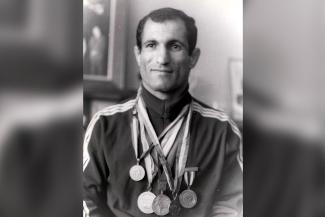
Abdullah MOVAHED (IRI)

From 1965 to 1970, Movahed was virtually untouchable. He won six consecutive major global titles at 68kg and 70kg, including World Championships in 1965, 1966, 1967, 1969, and 1970, along with Olympic gold at the 1968 Summer Olympics. That 1968 triumph, often cited as the pinnacle of his career, showcased his tactical mastery and unyielding determination. He also won the gold medal at the 1966 and 1970 Asian Games.

He returned for the 1972 Summer Olympics, but an unfortunate shoulder injury cut his campaign short, preventing a final chapter that might have further illuminated his already illustrious record. After the Games, Movahed, who had a master’s degree, moved to the USA, where he pursued a PhD at George Washington University. He continued to live there after earning his doctorate and worked as a mechanic.

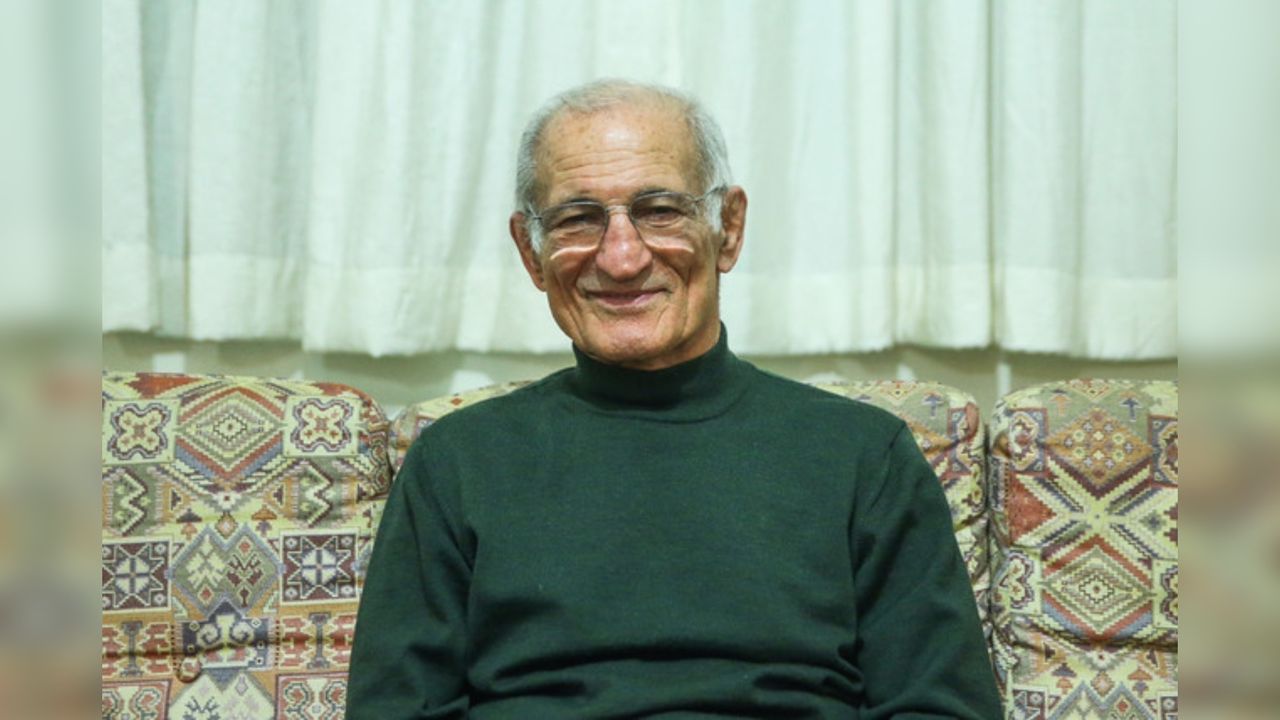
Abdullah MOVAHED (IRI)

Beyond his medals, Movahed’s legacy lies in the standard he set. He helped define a golden generation of Iranian wrestling and inspired countless athletes who followed in his footsteps. His induction into the United World Wrestling's Hall of Fame secured his place among the all-time greats.

In mourning his passing, the wrestling world remembers not just a champion, but a craftsman whose sustained excellence elevated freestyle wrestling to an art form.