

#panam2018

Rivera Wins First Women's Pan Am Title for Puerto Rico Since 2002

By Taylor Miller

LIMA (May 4) – Puerto Rico earned its first female Pan American champion since 2002 on Friday night when Andribeth RIVERA picked up her third win of the day to secure the 59 kg gold.

Rivera faced Laurence BEAUREGARD (CAN) in her final match of round-robin competition. Beauregard stormed out to an 8-0 win but just moments later, Rivera threw the Canadian to her back and got the pin.

Rivera became just the second women’s freestyler to win a Pan Am title for Puerto Rico. The last to do it was Mabel Fonseca Ramirez, who won back-to-back championships in 2001 and 2002.

The USA won two gold medals on Friday, receiving championship performances from Becka LEATHERS at 55 kg and Forrest MOLINARI at 65 kg.

Leathers had locked up the gold medal in the morning session in round-robin competition.

Molinari defeated Breanne Leigh GRAHAM (CAN) with a 5-2 win in the only match of the day at 65 kg.

The other women’s champion came at 72 kg, when Veronica Helen Frances KEEFE (CAN) put together a perfect 3-0 record in the event.
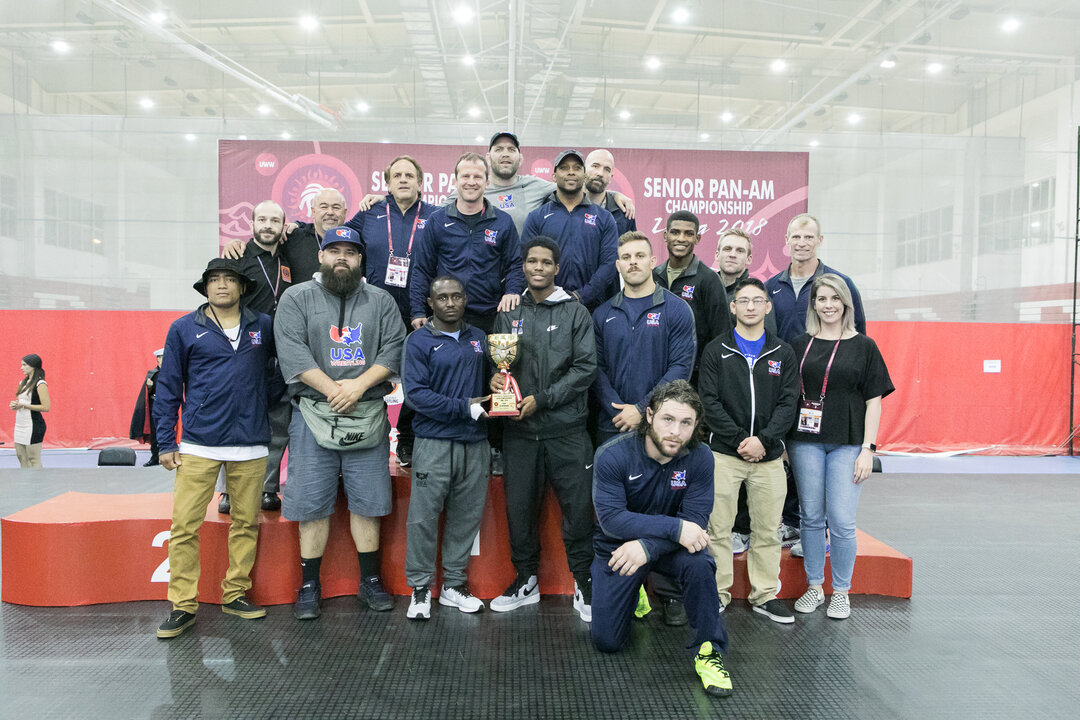
Moving on with the USA theme, the U.S. men’s Greco team won the Pan Am team title, outscoring runner-up Cuba 141-140.

Although they won the team title, the U.S. did not produce any champions in day-two action. However, the squad leaves Peru with six medals, including two gold, three silver and one bronze.

Cuba had two champions on Friday night, including Ariel FIS BATISTA (CUB) at 77 kg and Daniel GREGORICH HECHAVARRIA (CUB) at 87 kg.

Fis, a 2018 Central American Caribbean Championship gold medalist, topped four-time Pan American medalist Jair Alexis CUERO MUNOZ (COL), 9-5.
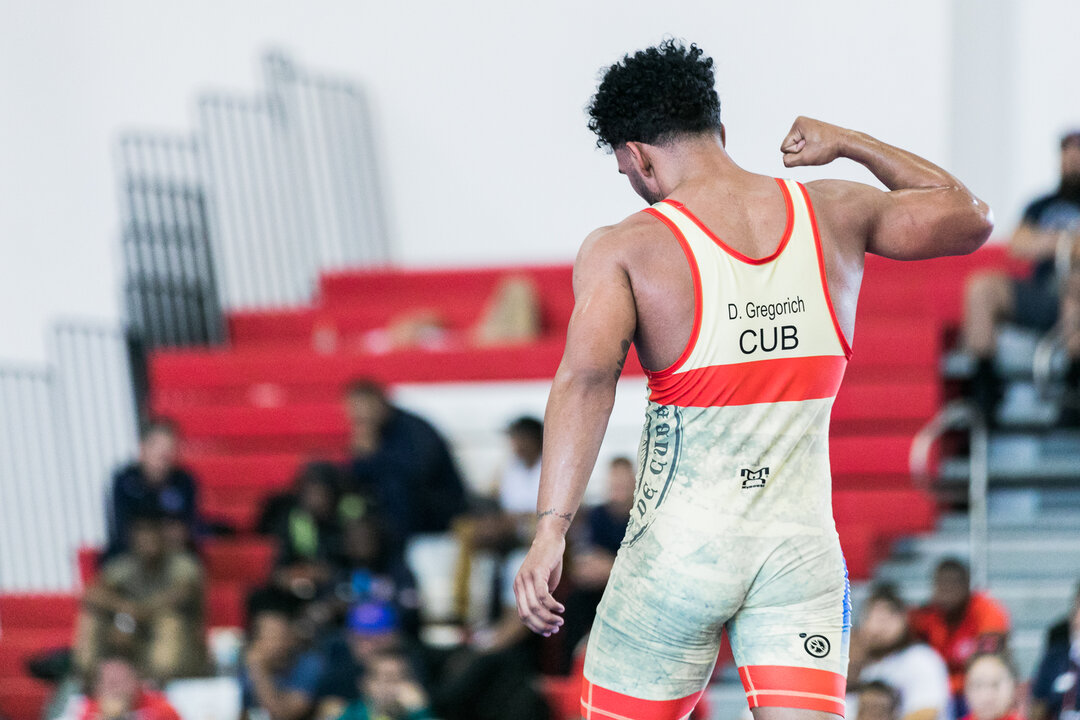
Gregorich, who finished seventh at the World Championships, improved on a second-place finish from last year’s Pan Ams, taking the top of the podium with a dominant 7-0 decision over Yorgen Jose COVA PULIDO (VEN).

Emerging from the 82 kg bracket was Luis Eduardo AVENDANO ROJAS (VEN), who strung together a perfect 4-0 record. In his final match of the day, Avendano defeated Brayden William AMBO (CAN) by fall early in the match.

The tournament continues tomorrow with the remaining women’s weights (50, 53, 57, 62, 68, 76) and the first part of the men’s freestyle weights (79 and 92). It will all be live on unitedworldwrestling.org.

GRECO TEAM SCORES
1. USA – 141
2. Cuba – 140
3. Brazil – 106

GRECO-ROMAN
77 kg
GOLD - Ariel FIS BATISTA (CUB) dec. Jair Alexis CUERO MUNOZ (COL), 9-5
BRONZE - Angelo Rafael MARQUES MOREIRA
(BRA) win by fall over Francisco Albano BARRIO (ARG), 1:41
BRONZE - Reinier JIMENEZ TERRY (GUA) win by fall over Johan Antonio BATISTA (DOM), 3:33

82 kg
GOLD - Luis Eduardo AVENDANO ROJAS (VEN)
SILVER – Geordan SPEILLER (USA)
BRONZE - Carlos Moises ESPINOZA CASTRO (PER)

87 kg
GOLD - Daniel GREGORICH HECHAVARRIA (CUB) df.
Yorgen Jose COVA PULIDO (VEN), 7-0
BRONZE - Benjamin Errol PROVISOR (USA) df. Alfonso Antonio LEYVA YEPEZ (MEX), 3-0
BRONZE - Carlos Alberto ADAMES PALMER (DOM) df.
Phillip Raweriio BARREIRO (CAN), 9-0

WOMEN’S FREESTYLE

55 kg
GOLD – Becka LEATHERS (GOLD)
SILVER – Cara Gail NANIA (CAN)
BRONZE - Lady Raysa MORAN VALENZUELA (ECU)

59 kg
GOLD - Andribeth RIVERA BELLIARD (PUR)
SILVER - Laurence BEAUREGARD (CAN)
BRONZE - Kelsey Rene CAMPBELL (USA)

65 kg
GOLD - Forrest Ann MOLINARI (USA)
SILVER - Breanne Leigh GRAHAM (CAN)

72 kg
GOLD - Veronica Helen Frances KEEFE (CAN)
SILVER - Diana Luisa Victoria CRUZ ARROYO (PER)
BRONZE - Hannah La Shae GLADDEN (USA)


Development

DNSS Program in Cambodia: Building Foundations for Wrestling Growth

By United World Wrestling Press

PHNOM PENH, Cambodia (December 2) --- From July 18 to November 30, 2024, the Development of the National Sports System (DNSS) program in Cambodia marked a significant milestone for the growth of wrestling in the country. Led by UWW Educator Martin Hauck (USA), this program provided a comprehensive approach to enhancing coaching, athlete development, and refereeing in Cambodia. Through a mix of workshops, camps, and tournaments, the initiative sought to foster collaboration, education, and enthusiasm for wrestling at all levels.

During the program, more educational opportunities were created for coaches, athletes, and referees. A key highlight was a youth national tournament held during the second visit, which connected athletes and coaches from several provinces, promoting competition and collaboration. Plans were made to make this event an annual tradition, further strengthening the sport’s foundation in Cambodia.

The program objectives included observing and assessing the national team during a high-performance camp in July, educating coaches on long-term athlete development, and organizing a one-day seminar in a neighboring province to introduce wrestling games to youth. Meetings with the Cambodia Wrestling Federation leadership helped establish a roadmap for future development and in-person training sessions.

Key deliverables included:

  • Running camps and seminars for coaches and athletes, focusing on practical and theoretical education.
  • Creating a Cambodian Coaches Course Curriculum and teaching topics such as emergency action planning, practice structuring, periodization, talent identification, and connecting traditional Cambodian wrestling with Olympic styles.
  • Organizing a youth national tournament and camp, which saw participation from almost all provinces, showcasing significant growth on and off the mat.
  • Promoting communication, education, and resource-sharing platforms for ongoing development.

The DNSS program not only strengthened technical skills but also built excitement and unity within the Cambodia Wrestling Federation. With a focus on collaboration among referees, coaches, athletes, and stakeholders, this initiative laid the groundwork for sustained development and opportunities in wrestling throughout Cambodia.

The Development of National Sports System (DNSS) program, conducted in Cambodia from July 18 to November 30, 2024, marked a significant step toward developing wrestling in the country. Led by UWW Educator Martin Hauck (USA), the program aimed to address critical gaps in coaching, athlete development, and organizational structure while fostering growth and enthusiasm for the sport nationwide.

CAMOver 100 participants competed in the national youth tournament during the Development of the National Sports System (DNSS) program in Cambodia.

Program Activities and Achievements

The DNSS program implemented a range of initiatives to address these challenges and lay the groundwork for wrestling’s growth:

  1. Youth Development and Competitions:
    The program introduced a national youth tournament, drawing over 100 athletes from nearly all provinces. This event not only provided a platform for competition but also fostered excitement and collaboration among athletes, coaches, referees, parents, and stakeholders.
  2. Coaching Education and Communication:
    Coaches participated in comprehensive seminars covering emergency action planning, athlete development, periodization, video analysis, coaching females, and practice structuring. A centralized communication platform on the Cambodia Wrestling Federation website improved collaboration among coaches and clubs, helping connect rural and urban areas.
  3. Structured Athlete Development:
    New frameworks for athlete progression were introduced, enabling coaches and athletes to engage in long-term development cycles. Practical sessions during national team camps allowed coaches to apply their learning while working with athletes from across the country.
  4. Safety and Inclusivity:
    Emphasis on mental health, recovery practices, and safety protocols improved understanding and implementation of safe wrestling environments.
  5. Stakeholder Engagement:
    Meetings with the Cambodia Wrestling Federation leadership resulted in a shared vision for growth, including plans to strengthen partnerships, increase opportunities, and enhance stakeholder representation.

Key Outcomes

The program’s efforts led to several important outcomes:

  • Improved communication and collaboration within the wrestling community.
  • Significant growth in coaches’ theoretical and practical knowledge.
  • Increased participation and retention among athletes and coaches.
  • The successful execution of Cambodia’s first youth national tournament.
  • The identification of Coach Sotheara as a future leader for the sport.

Path to Success

The success of wrestling in Cambodia will depend on sustained education, participation, and collaboration. With improved communication, increased opportunities, and the emergence of local leaders like Coach Sotheara, the sport is well-positioned for growth. The DNSS program has laid a strong foundation, and with continued effort, wrestling in Cambodia has the potential to thrive at both national and international levels.

By fostering education, inclusivity, and passion, this program has not only addressed immediate needs but also set a vision for wrestling’s bright future in Cambodia.