

Romania and Georgia Dominate First Stop of Beach Wrestling World Series
Saturday, March 30, 2019 - 18:19 By Tim Foley

CHAVES, Portugal (March 30) – Georgia and Romania asserted themselves as the world’s premier beach wrestling nations Saturday in Chaves as they combined to win 6 of 8 gold medals in men’s and women’s wrestling.
The Georgian squad was led by 2012 Olympic bronze medalist Dato MARSAGISHVILI who dominated the -90kg competition over the course of the two-day competition to take gold. Marsagishvili was also awarded “Best Move of the Tournament” after back-arching his quarterfinal opponent for what fans thought was the most spectacular technique of the weekend.
“I’m very happy to be involved in beach wrestling,” said Marsagishvili. “This is my first time and I was really excited to win. Beach wrestling is amazing it’s like a celebration atmosphere, which had me smiling.”
Levan KELEKHSASHVILI (60kg) and Davit KHUTSISHVILI (80kg) also took home gold medals for their efforts, each winning 3-0 in their finals bouts.
Team Georgia would have won all four medals, were it not for Iannis KARGIOTAKIS (GRE) who used a front head pinch to twist an undersized Mamuka KORDZAIA (GEO) for a match-ending three-point move in the semifinals to earn a spot in the afternoon's finals.
Kargiotakis’ upset run finally ended in the finals when Azeri big man Oyan NAZARIANI (AZE) used a series of underhooks and snap downs for three one-point moves and the +90kg title.
On the women’s side the Romanians -- who won four gold medals at the 2018 World Championships in Dalyan -- were once again tops in their division, winning three of the event’s four women’s categories.

The small European nation was led by Georgiana FILIP (60kg) who used two takedowns and a three-point throw in the finals to win her title, 5-0.
“We are used to mat wrestling, but we also practice a lot for the beach events,” said Filip. “We are focused on qualification for the World Beach Games and hope to be in Rio for the next World Beach Series event.”
The Romanian squad, who is also competing next week at the 2019 European Championships in the Olympic style of women’s wrestling, were boosted by a workwoman-like performance of 50kg megastar Stefania PRICEPUTU. Though shorter than most her opponents, Priceputu used a combination of intensity, heavy hand pressure and snap downs to earn the gold and 1000 CHF.
Greece earned the +70kg title with a comeback performance by Aikaterini PITSIAVA, who trailed 2-0 late in her match with Diana VLASCEANU, but bullied her way to a 3-2 gold medal.
The next stop on the Beach Wrestling World Series will be May 10-11 in Rio de Janerio. The points from the Chaves and Rio stops will determing which wrestlers and nations qualify for the 2019 ANOC World Beach Games in October.
The Beach Wrestling World Series can viewed live on FloWrestling.org. Fans and athletes can also follow the Beach Wrestling World Series on Instagram, Facebook, YouTube, and Twitter
Men’s Beach Wrestling
70kg
GOLD: Levan KELEKHSASHVILI (GEO) df. Panah ILYASLI (AZE), 2-2
BRONZE: Niko AROUZMANIDIS (GRE) df. Stefan Ionut COMAN (ROU), 1-1
80kg
GOLD: Davit KHUTSISHVILI (GEO) df. Ibrahim YUSUBOV (AZE), 3-0
BRONZE: Georgios KOULOUCHIDIS (GRE) df. Vasile Madalin MINZALA (ROU), Inj Def.
-90kg
GOLD: Dato MARSAGISHVILI (GEO) df. Murat OZKAN (TUR), 3-0
BRONZE: Pedro Jacinto GARCIA PEREZ (ESP) df. Christos SAMARTSIDIS (GRE), 3 - 1
+90kg
GOLD: Oyan NAZARIANI (AZE) df. Ioannis KARGIOTAKIS (GRE), 3-0
BRONZE: Baki SAHIN (TUR) df. Mamuka KORDZAIA (GEO), 3 - 2
Women’s Beach Wrestling
50kg
GOLD: Stefania Claudia PRICEPUTU (ROU)
SILVER: Kamila BARBOSA VITO DA SILVA (BRA)
BRONZE: Carmen Nireida GOMES TEIXEIRA VIEIRA (POR)
60kg
GOLD: Georgiana Narcisa FILIP (ROU)
SILVER: Camila FAMA TRISTAO (BRA)
BRONZE: Jeannie Agnes KESSLER (AUT)
70kg
GOLD: Adina Elena POPESCU (ROU)
SILVER: Sonia Marina PEREIRA BRAZIO (POR)
BRONZE: Sinem Cisem DOGDU (TUR)
+70kg
GOLD: Aikaterini Eirini PITSIAVA (GRE)
SILVER: Diana Elena VLASCEANU (ROU)
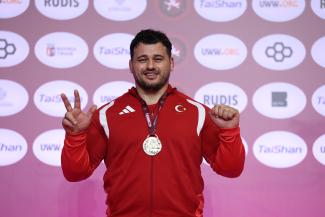
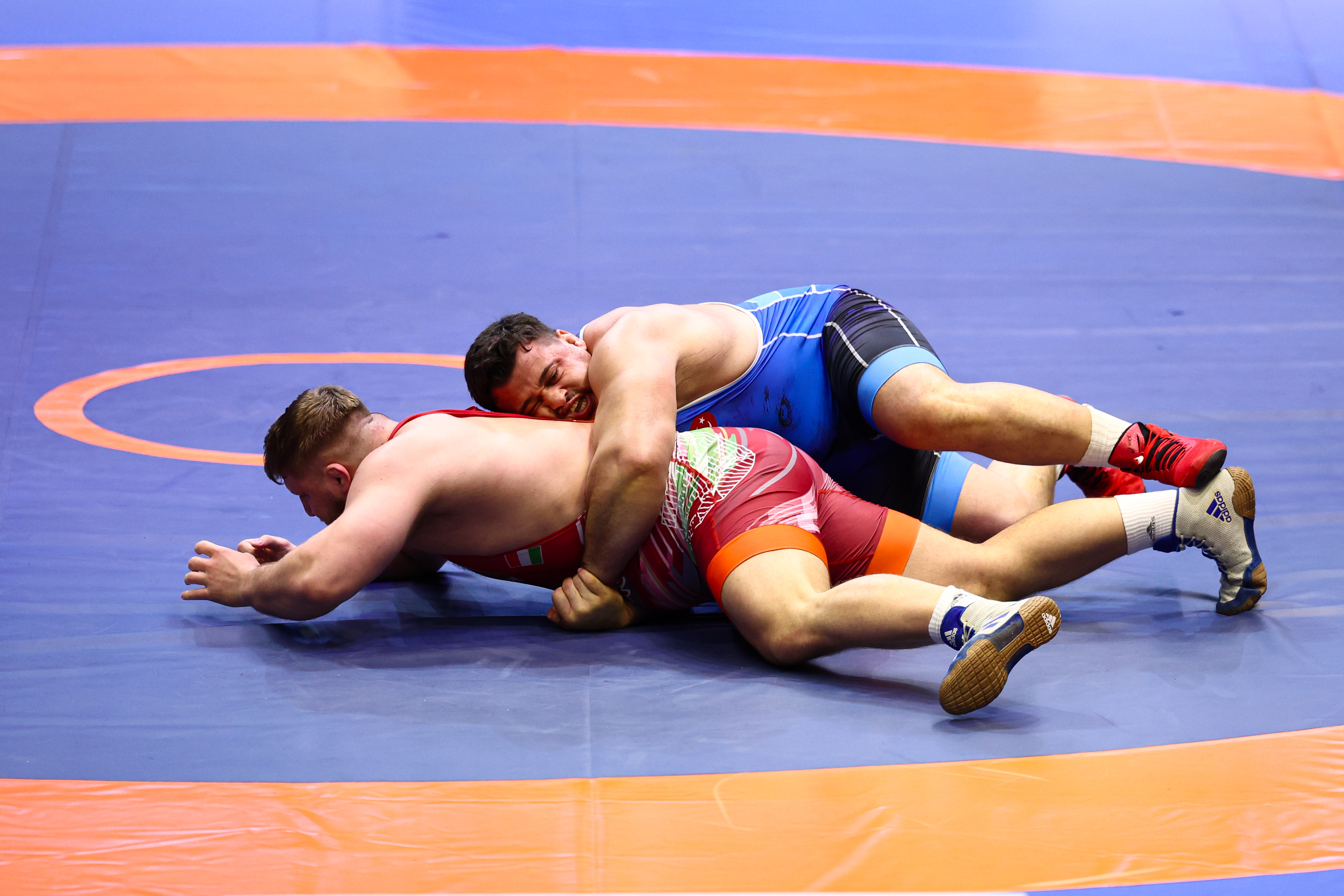 Riza KAYAALP (TUR) turns Darius VITEK (HUN) in the 130kg final. (Photo: United World Wrestling / Kadir Caliskan)
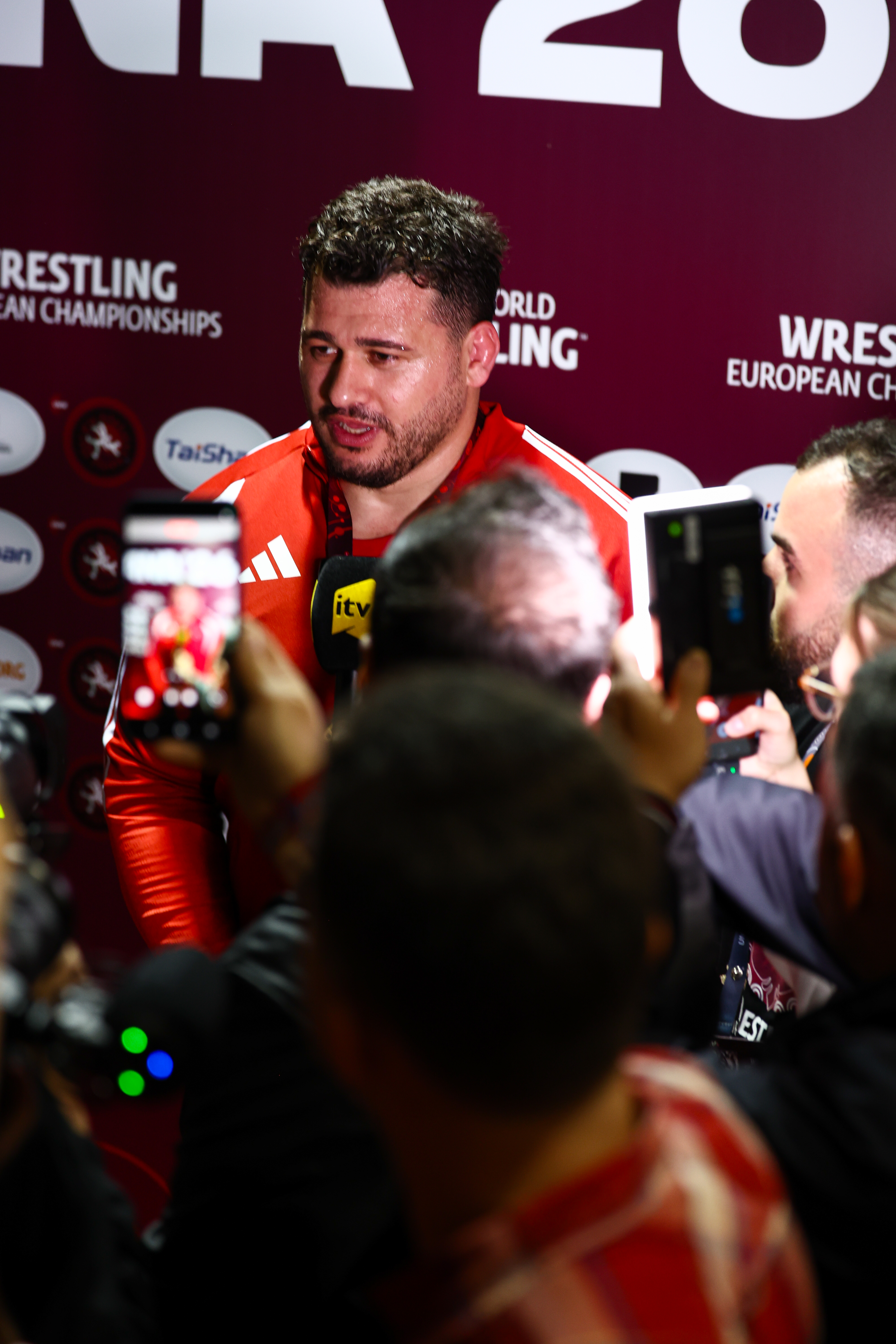 Riza KAYAALP (TUR) speaks to the media after winning the gold medal at the European Championships. (United World Wrestling / Jake Kirkman)
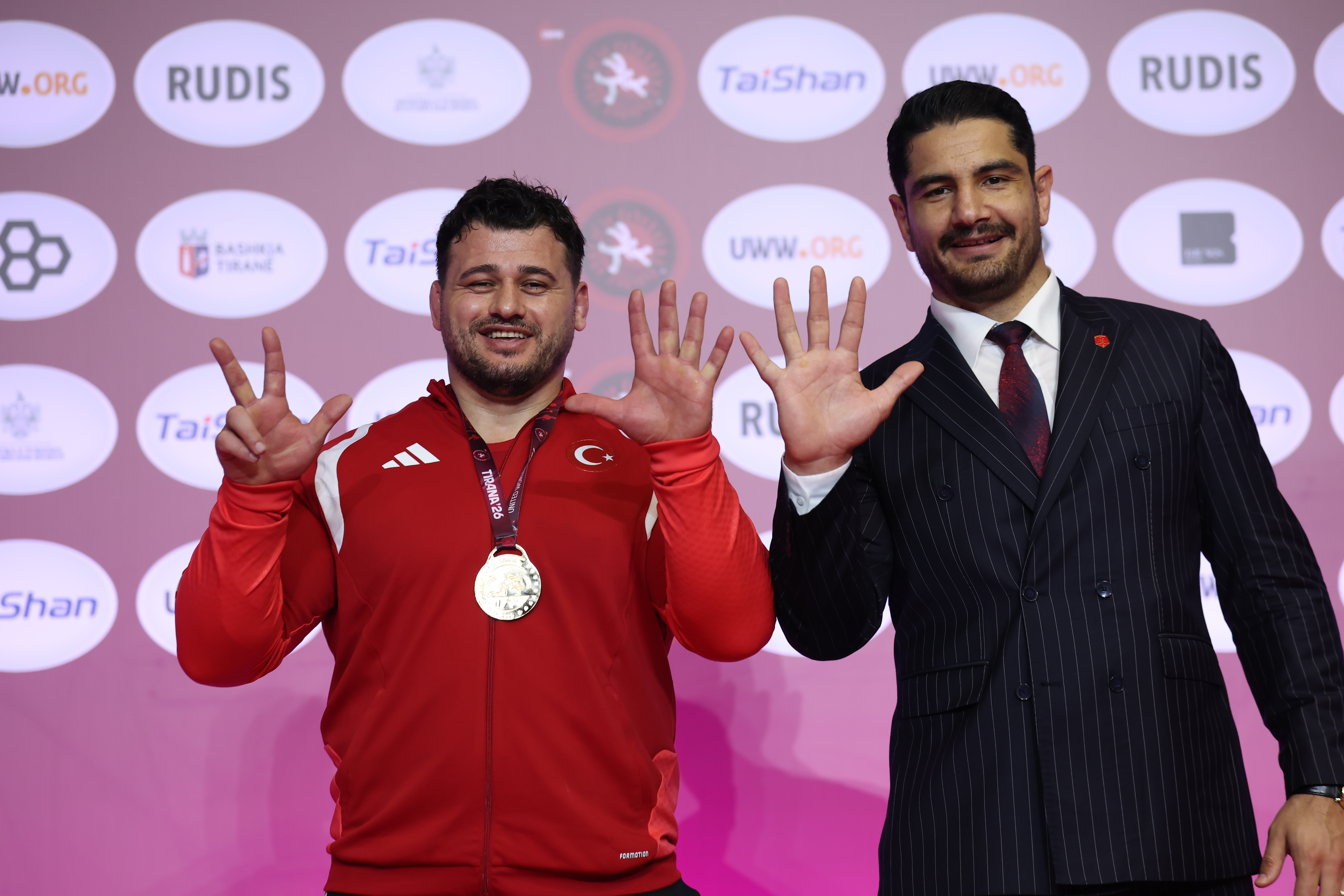 Riza KAYAALP (TUR) with Taha AKGUL (TUR) at the medal ceremony in Tirana. (Photo: United World Wrestling / Kadir Caliskan)
Share your thoughts.
Comments