

Rzazade leads Azerbaijan's dominant performance
Saturday, June 25, 2022 - 19:28 By Vinay Siwach

ROME, Italy (June 25) -- Among all the stars that Azerbaijan brought to Rome, Aliabbas RZAZADE (AZE) was one of the least experienced wrestlers. Before wrestling at this year's European Championships in March, he had only two other championships in a span of five years.
But by the end of the Matteo Pellicone Ranking Series event on Saturday, Rzazade might be the one of the three wrestlers that have confirmed their spot on the Azerbaijan national team for the World Championships. He did so by winning the 57kg gold medal in Rome.
Overall, Azerbaijan won four gold medals out of the eight contested on Saturday. Turkey, Puerto Rico, Slovakia and Ukraine had one champion each on the final day of the tournament.
Rzazade, one of the most attacking wrestlers on the circuit, switched to solid defense in the final against world bronze medalist Horst LEHR (GER) to claim a 5-3 win.
He opened the scoring with a stepout before Lehr was warned for fleeing during the second stepout which gave Rzazade a 3-0 lead. Lehr put that behind and scored a takedown just before the break to reduce the lead to 3-2.
Lehr, who won the U23 European Championships in March, tried the duck-under quite a few times but Rzazade was solid with his underhook to keep him away. In desperation, Lehr attempted a big double-leg attack but Rzazade threw him off for another takedown. A late stepout did not matter much as the U23 world champion won 5-3.
During the day, he had a wild 17-8 quarterfinal win over Roberti DINGASHVILI (GEO). 21 points were scored in the first period of the bout as both kept going at each other. Rzazade, however, had a four which made the difference. In the second period, he scored an exposure and takedown to win 17-8.
In the semifinal, Kamil KERYMOV (UKR) tried to stop him but his challenge was thwarted by Rzazade who finished the bout 10-0.
While he won the gold, Rzazade's tendency to give up points will be a point of worry for the Azerbaijan coaching staff.
Rzazade won the U23 world title and silver at the senior European Championships in a span of four months. But over the three tournaments (including the Matteo Pellicone), Rzazade gave up 48 points while scoring 105. While he won the title in Belgrade by a point, he lost the European final by the same margin.
The final against Lehr, however, had him sitting tight in defense, a change from his earlier finals.
The three other gold medalists for Azerbaijan were Joshgun AZIMOV (AZE) at 70kg, Abubakr ABAKAROV (AZE) at 86kg and Osman NURMAGOMEDOV (AZE) at 92kg.
In an all-Azerbaijan final at 70kg, Azimov wrestled youngster Murad EVLOEV (AZE) and came home with the gold with a 6-1 win. While Evloev did try to get on a scoring opportunity, Azimov used his experience and strength to outscore his opponent.
Tokyo Olympic silver medalist Haji ALIYEV (AZE) was also wrestling at 70kg but gave a walkover to Azimov in the semifinals. But that walkover was well-deserved as Azimov had defeated European champion Zurabi IAKOBISHVILI (GEO) in the quarterfinals.
Azimov scored two takedowns before giving up a point for passivity and a late takedown. But with only 15 seconds left in the bout, Azimov was happy to defend the lead.
 Abubakr ABAKAROV (AZE) clinched the 86kg gold medal with ease in Rome. (Photo: UWW / Martin Gabor)
At 86kg, world bronze medalist Abakarov made another big statement by winning the gold. Up against Tarzan MAISURADZE (GEO) in the final, Abakarov scraped through for a 3-2 win.
After getting a point for Maisuradze's passivity, he scored a takedown to lead 3-2 at the break. In the second period, Abakarov was warned for passivity and a late stepout but Maisuradze could not score a takedown.
In his semifinal, Abakarov faced former world silver medalist and his close friend Boris MAKOEV (SVK). The Slovakian had Abakarov on the ropes initially, leading the bout 3-3. But Abakarov made the score 5-3 at the break before moving into a defensive mode in the second period.
Another world bronze medalist, Nurmagomedov won the 92kg gold after Miriani MAISURADZE (GEO) injury defaulted in the final.
 Tajmuraz SALKAZANOV (SVK) defeated Turan BAYRAMOV (AZE) in the 74kg final. (Photo: UWW / Martin Gabor)
Azerbaijan could have won a fifth gold had Turan BAYRAMOV (AZE) defeated Tajmuraz SALKAZANOV (SVK). But he failed to break the defense of the European champion in the 74kg final.
Salkazanov won his second straight Ranking Series gold medal as he defeated Bayramov 4-0 in the final in Rome. A takedown, a point for Bayramov's passivity and stepout were the point-scoring actions in the bout.
Bayramov may have lost the gold but he managed to beat Dzabhail GADZHIEV (AZE) in the semifinal, 5-3, which may have sealed his spot for the World Championships.
 Sebastian RIVERA (PUR) won his nation's first-ever Ranking Series gold in Rome. (Photo: UWW / Martin Gabor)
Puerto Rico's first gold
In a historic moment, Sebastian RIVERA (PUR) won his country's first-ever Ranking Series gold medal in an epic 65kg final.
Rivera, who won a silver at the Pan-American Championships in May, produced a stellar performance throughout the day which included wins over former U17 world champion Hamza ALACA (TUR) and Shamil OMAROV (ITA) in the quarterfinal and semifinal, respectively.
Up against former U23 European champion Erik ARUSHANIAN (UKR) in the final, Rivera was on the backfoot after being thrown for four. Arushanian then scored a takedown to make it 6-0. But the bout turned on its head when Rivera managed to put eight points on the board, gut-wrenching his opponent.
With the lead secured, Rivera did slow down a little but never missed an opportunity to score. He managed to confirm another takedown and gut to lead 12-7. In the end, he secured the gold with a score of 14-7.
He had staged a similar comeback against Omarov in the semifinal. Trailing 4-0, he scored two takedowns in the second period to lead 4-4 on criteria. The wrestlers were brought to the center with only five seconds left. While Rivera did give up a takedown, the time had expired, a confirmation only after Rivera challenged the referee's call.
At 61kg, Recep TOPAL (TUR) had to resort to a body lock lift for four to win 6-4 against Andrii DZHELEP (UKR) in the final in which he trailed 4-2 for a significant time.
While Arushanian and Dzhelep failed to win the gold, Ukraine did have a champion in Vasyl MYKHAILOV (UKR) who defeated Iakub SHIKHDZHAMALOV (ROU) 7-2 in the 79kg with much ease to win the gold medal. He also stunned European champion Georgios KOUGIOUMTSIDIS (GRE) 10-0 in the quarterfinal at 79kg.
Results
57kg
GOLD: Aliabbas RZAZADE (AZE) df. Horst LEHR (GER), 5-3
BRONZE: Kamil KERYMOV (UKR) df. Roberti DINGASHVILI (GEO), 11-1
BRONZE: Saban KIZILTAS (TUR) df Beka BUJIASHVILI (GEO), via injury default
61kg
GOLD: Recep TOPAL (TUR) df. Andrii DZHELEP (UKR), 6-4
BRONZE: Teimuraz VANISHVILI (GEO) df. Islam BAZARGANOV (AZE), 7-3
BRONZE: Ahmet TAS (TUR) df. Adam BIBOULATOV (FRA), 9-3
65kg
GOLD: Sebastian RIVERA (PUR) df. Erik ARUSHANIAN (UKR), 14-9
BRONZE: Shamil OMAROV (ITA) df. Hamza ALACA (TUR), via injury (4-0)
BRONZE: Ali RAHIMZADA (AZE) df. Nikolai OKHLOPKOV (ROU), 4-1
70kg
GOLD: Joshgun AZIMOV (AZE) df. Murad EVLOEV (AZE), 6-1
BRONZE: Haji ALIYEV (AZE) df. Servet COSKUN (TUR), 4-3
BRONZE: Cuneyt BUDAK (TUR) df. Pavel GRAUR (MDA), 4-0
74kg
GOLD: Taimuraz SALKAZANOV (SVK) df. Turan BAYRAMOV (AZE), 4-0
BRONZE: Khadzhimurad GADZHIYEV (AZE) df. Fazli ERYILMAZ (TUR), via injury default
BRONZE: Mitchell FINESILVER (ISR) df. Dzhabrail GADZHIEV (AZE), 6-4
79kg
GOLD: Vasyl MYKHAILOV (UKR) df. Iakub SHIKHDZHAMALOV (ROU), 7-2
BRONZE: Vladimeri GAMKRELIDZE (GEO) df. Evsem SHVELIDZE (GEO), 4-1
BRONZE: Akhsarbek GULAEV (SVK) df. Muhammed AKDENİZ (TUR), 11-0
86kg
GOLD: Abubakr ABAKAROV (AZE) df. Tarzan MAISURADZE (GEO), 3-2
BRONZE: Zaur BERADZE (GEO) df. Mukhammed ALIIEV (UKR), via injury default
BRONZE: Boris MAKOEV (SVK) df. Ivars SAMUSONOKS (LAT), via injury default
92kg
GOLD: Osman NURMAGOMEDOV (AZE) df. Miriani MAISURADZE (GEO), via injury default
BRONZE: Erhan YAYLACI (TUR) df. Saba CHIKHRADZE (GEO), 8-4
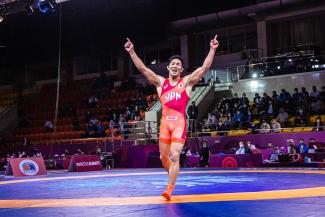
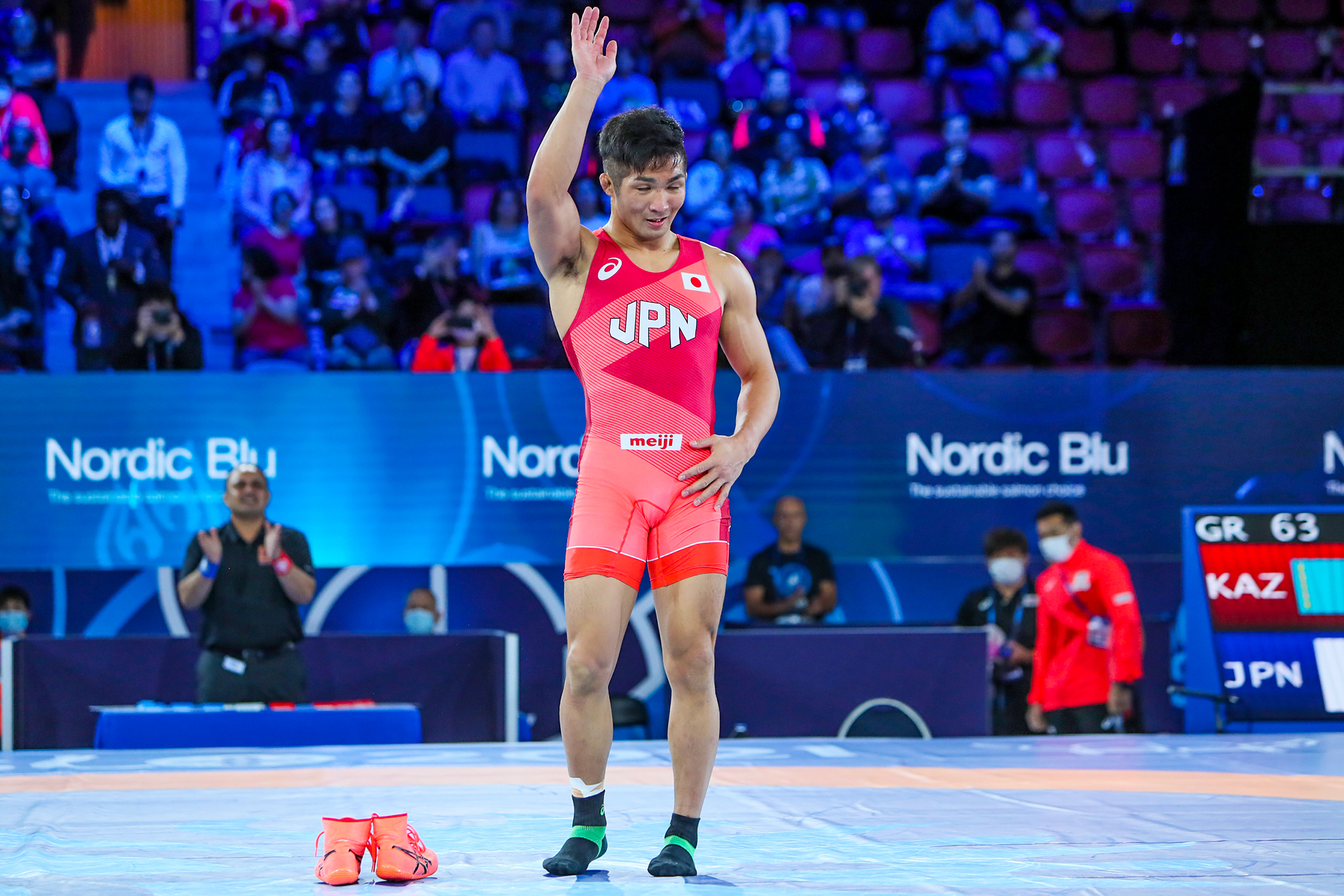 Tsuchika SHIMOYAMADA (AUS) had left his shoes on the mat during the 2021 World Championships to mark his retirement. (Photo: United World Wrestling / Martin Gabor)
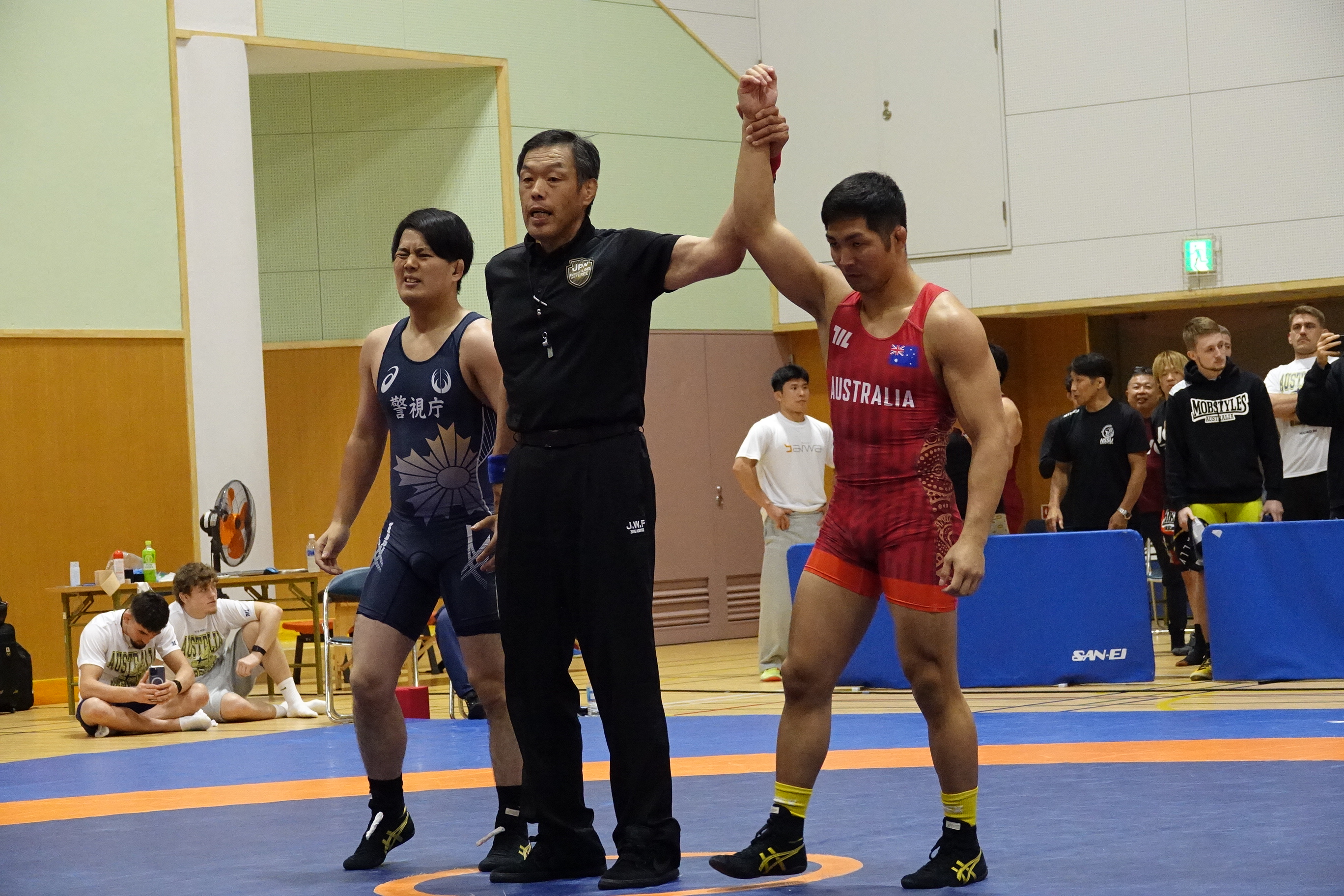 Tsuchika SHIMOYAMADA advances to the semifinals at the All-Japan Non-Student Championships in July with a 52-second win over Kokoro GOTO. (Photo: Koji Fuse / wrestling-spirits.jp)
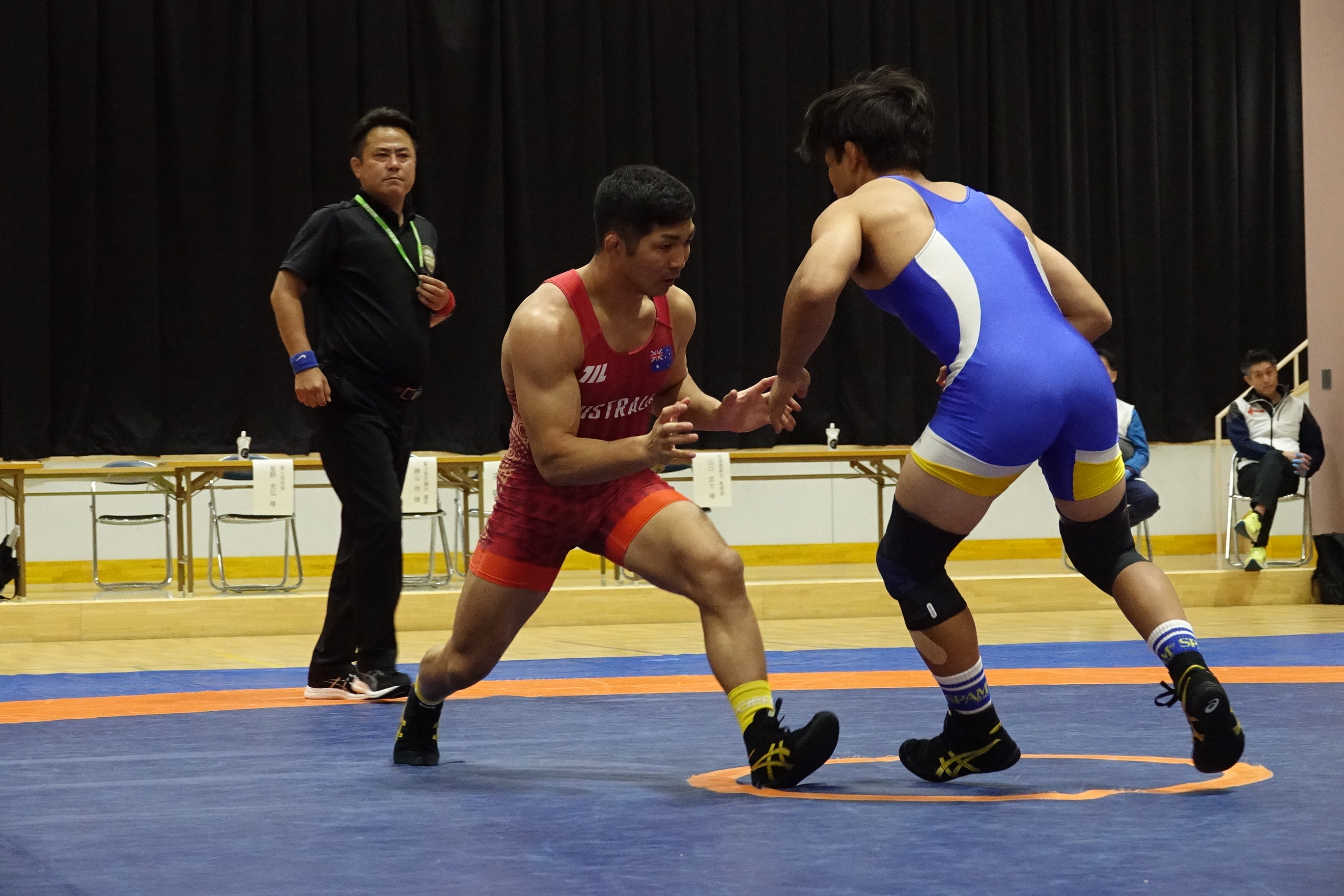 Tsuchika SHIMOYAMA faces Keitaro ONO in his opening match at the All-Japan Non-Student Championships in July. (Photo: Koji Fuse / wrestling-spirits.jp)
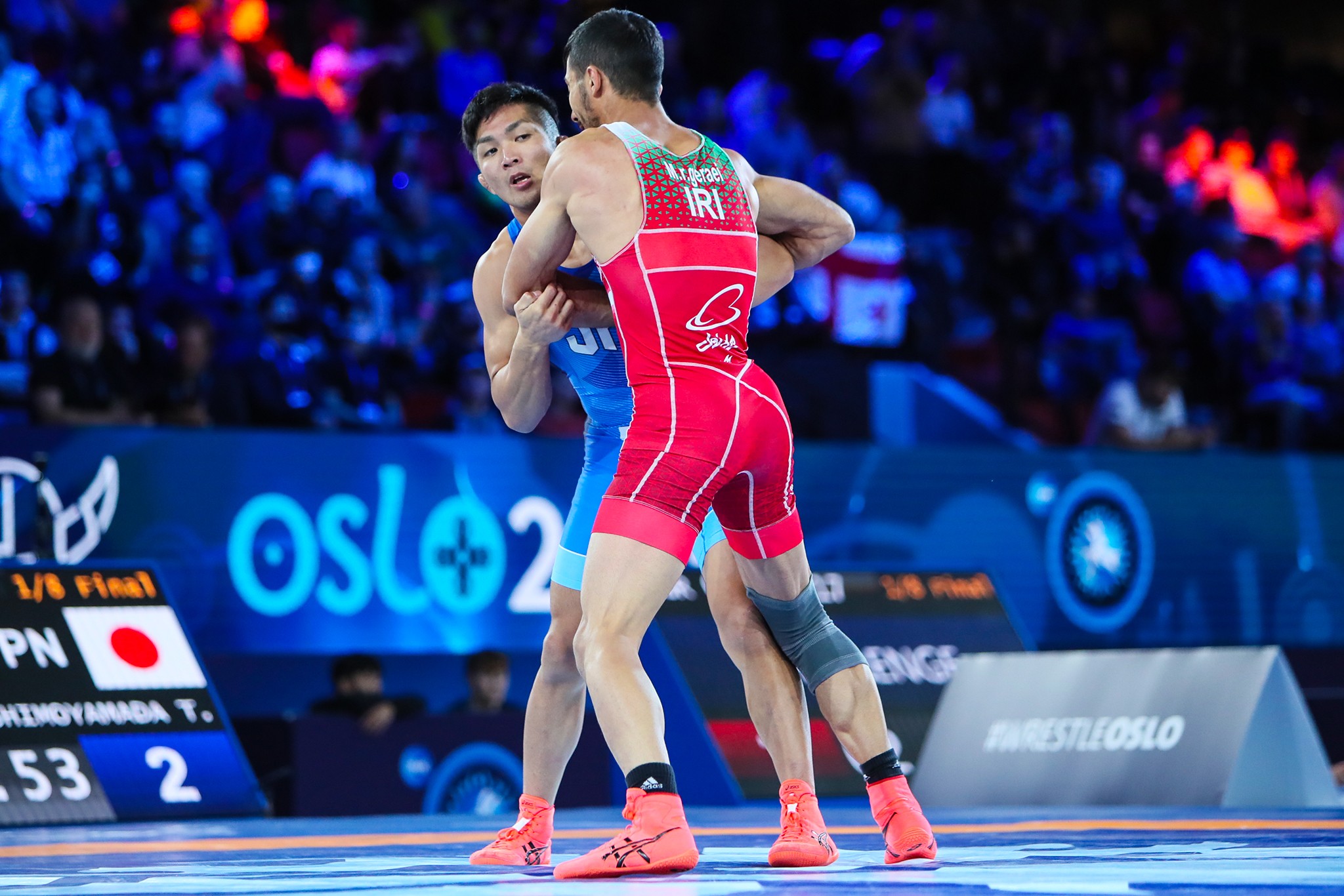 Tsuchika SHIMOYAMADA (AUS) was dominating Mohammadreza GERAEI (IRI) in their match at the 2021 World Championships before being pinned. (Photo: United World Wrestling / Martin Gabor)
Share your thoughts.
Comments