

Sasunouski Stops No. 1 Kus; Belarus Wins Oleg Karavev Team Title
Sunday, July 28, 2019 - 16:28 By Eric Olanowski

MINSK, Belarus (July 28) --- Viktar SASUNOUSKI (BLR) gave the host nation one of their four Oleg Karavaev golds and sealed up the third seed at September’s World Championships with a late clutch throw in the 82kg finals against the No.1-ranked wrestler in the world Emrah KUS (TUR).
In the opening period of the gold-medal match, Sasunouski conceded an inactivity point and an exposure and fell behind 3-0 to last year’s Budapest world runner-up. Sasunouski scored first in the second period and trailed 3-1 when he threw a desperation headlock -- which was good enough to pick up two correct throw points. Sasunouski hung on to edge Kus, 3-3 on criteria.
Sasunouski came into the Oleg Karavaev as the fourth-ranked wrestler in the world at 82kg, but after his title-winning efforts in his home country, he’s passed Iran’s Saeid ABDVALI for the third seed heading into Nur-Sultan.
The three other Belarusians gold medalists were Pavel LIAKH, Radzik KULIYEU and Siarhei STARADUB. They won their titles at 77kg, 87kg and 97kg, respectively.
In 77kg gold-medal match, Liakh cruised to an 11-0 win over Japan’s Shohei YABIKU and earned his second career Oleg Karavaev gold medal, but first since the 2016 season.
Kuliyeu earned the hard-fought victory in the 87kg finals over Dogan GOKTAS (TUR) and will move into the fourth seed at the World Championships. Hungary’s Erik SZILVASSY and Viktor LORINCZ are ranked third and fourth, respectively, but will have to forfeit one of the top-four spots because each nation can only enter one wrestler per nation into the World Championships. Hungary’s forfeiture of one of their top-four seeds moved Islam ABBASOV (AZE) into the fourth seed, but since he’s didn’t compete this weekend, Kuliyeu needed nine points to overthrow the Azeri for the fourth spot. He ended up collecting 16 Ranking Series points and is now the fourth-ranked wrestler in the world at 87kg.
The final Belarusian gold medal of the tournament went to Siarhei Staradub who took down Suleyman DEMIRCI (TUR), 6-1 in the 97kg finals.
Belarus (147 points), on the backs of the four gold medalists, won the team title two points ahead of second-place Russia (145 points). Turkey rounded out the top three of the team race with 113 points.
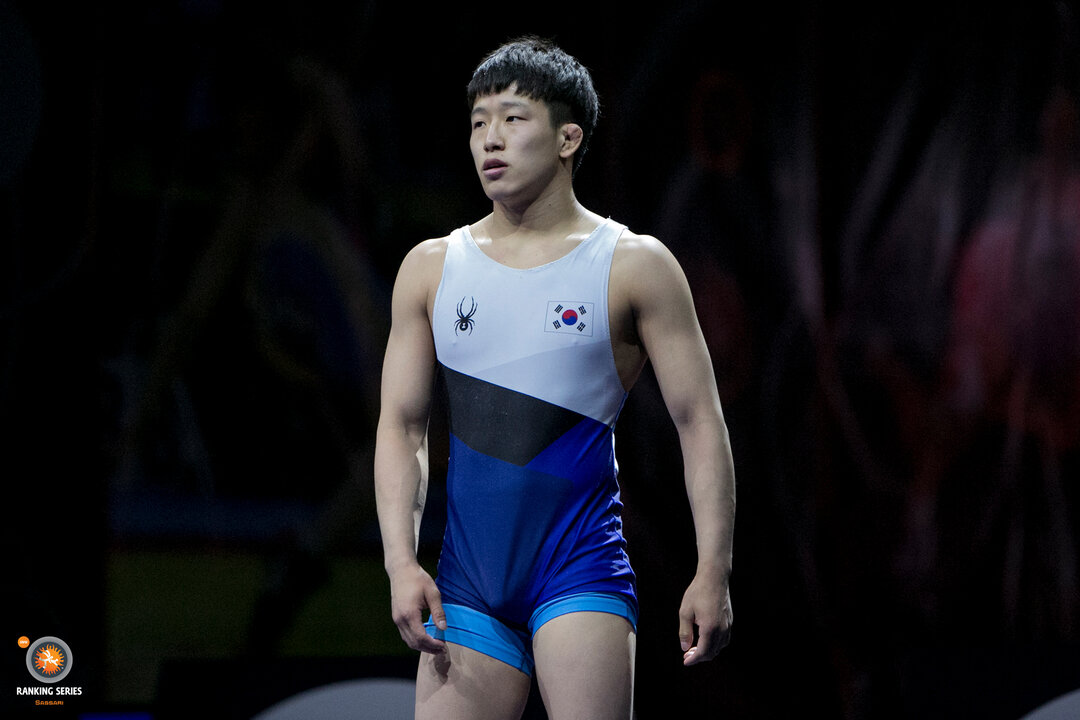 KIM Seunghak (KOR) won his third consecutive Ranking Series title with a 3-1 win over Ahmet UYAR (TUR) in the 60kg finals. (Photo: Gabor Martin)
Kim Wins Third Consecutive Ranking Series Title
KIM Seunghak (KOR) came into Minsk riding one of the hottest streaks in all of wrestling and added yet another Ranking Series title to his resume with a 3-1 victory over Ahmet UYAR (TUR) in the 60kg gold-medal bout.
Kim started his season off with a fifth-place finish at the Grand Prix of Zagreb, but has since won Ranking Series golds at three straight events. He's had title-winning performances at the Hungarian Grand Prix and the City of Sassari tournament in Sardinia and now the Oleg Karavaev.
Kim has now earned the second seed at 60kg. He was stationed 14 points behind Victor CIOBANU (MDA), last year’s world runner-up, but with the 16 points he earned at the Oleg Karavaev, the Korean passed the Moldovan wrestler for the world’s second Ranking.
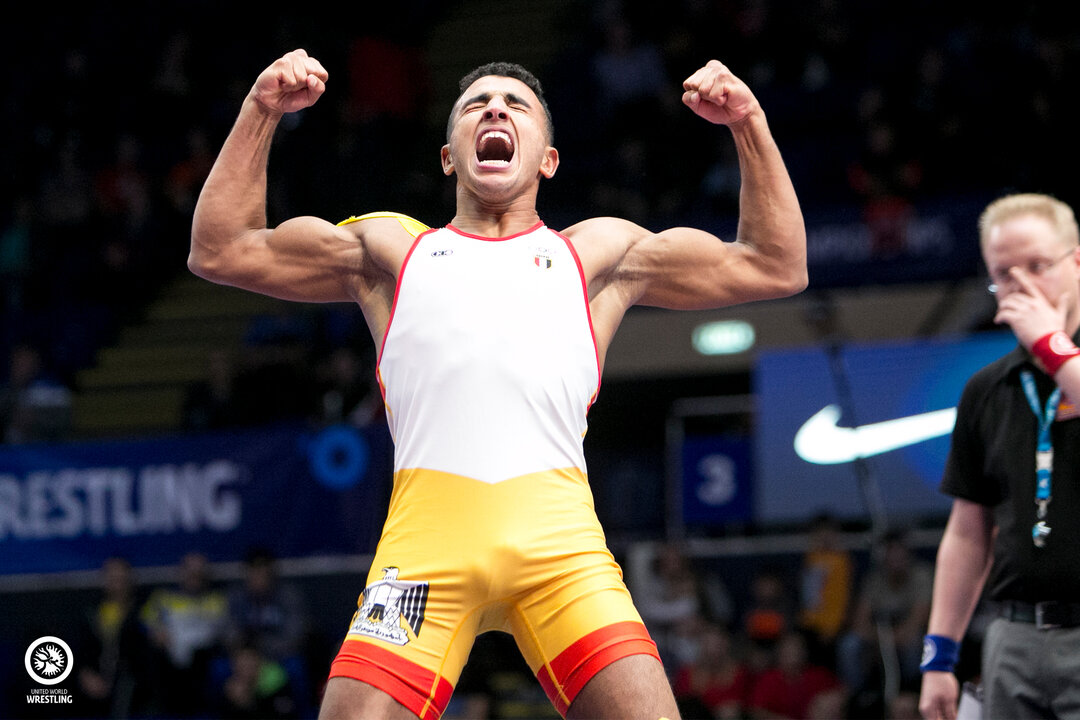
Mohamed ELSAYED stuck two-time world champion Hansu RYU (KOR) in the 67kg finals.
ElSayed Wins Battle of Past World Champs
In a battle of past world champions, Egypt’s Mohamed ELSAYED stuck RYU Hansu (KOR) in the 67kg finals after dominating the match from whistle-to-whistle.
ElSayed, the reigning U23 world champion, had a large lead on Ryu, the two-time world champion, before tossing the Korean wrestler to his back for the fall.
Ryu was clearly frustrated when he got up to his feet and demanded that his corner challenge the initial four-point action -- saying it was a leg four. Ultimately, an additional point was tacked on for the failed challenge and ElSayed grabbed his first Ranking Series title of his career.
RESUTLS
Final Team Standings
GOLD - Belarus (147 points)
SILVER - Russia (145 points)
BRONZE - Turkey (113 points)
FOURTH -Kazakhstan (88 points)
FIFTH - Uzbekistan (67 points)
Gold Medal Results
55kg - Emin Narimanovitch SEFERSHAEV (RUS) df. Manjeet MANJEET (IND), 9-0
60kg - Seunghak KIM (KOR) df. Ahmet UYAR (TUR) , 3-1
63kg - Shinobu OTA (JPN) df. Islomjon BAKHRAMOV (UZB), 11-1
67kg - Mohamed Ibrahim Elsayed Ibrahi ELSAYED (EGY) df. Hansu RYU (KOR), via fall
72kg - Magomed YARBILOV (RUS) df. Narek OGANIAN (RUS), 3-2
77kg - Pavel LIAKH (BLR) df. Shohei YABIKU (JPN), 11-0
82kg - Viktar SASUNOUSKI (BLR) df. Emrah KUS (TUR), 3-3
87kg - Radzik KULIYEU (BLR) df. Dogan GOKTAS (TUR), 2-2
97kg - Siarhei STARADUB (BLR) df. Suleyman DEMIRCI (TUR), 6-1
130kg - Osman YILDIRIM (TUR) df. Abdellatif Mohamed Ahmed MOHAMED (EGY), 9-0

 Women's Wrestling at the 2004 Athens Olympic Games. (Photo: United World Wrestling / Martin Gabor)
 Tayla FORD (NZL) is the first wrestler from New Zealand who will compete at the Olympics. (Photo: United World Wrestling / Amirreza Aliasgari)
Share your thoughts.
Comments