

Three world champs highlight Greco-Roman at Asian Games
Tuesday, October 3, 2023 - 07:03 By Vinay Siwach

HANGZHOU, China (October 3) -- Kyrgyzstan has only won one Greco-Roman gold medal in Asian Games history. But on Wednesday, it will have a chance to win two on the same day as world champions Zholoman SHARSHENBEKOV (KGZ) and Akzhol MAKHMUDOV (KGZ) take the mat on October 4 in Hangzhou.
The Chinese city is hosting the 19th Asian Games which kicked off on September 23. Wrestling is scheduled to be held from October 4 to 7 at the Lin'an Sports and Culture Center in 18 weight classes.
FREESTYLE PREVIEW | WOMEN'S WRESTLING PREVIEW
Apart from Sharshenbekov and Makhmudov, 130kg world champion Amin MIRZAZADEH (IRI) is also wrestling at the Asian Games, leading Iran which hopes to improve on the two-gold finish from 2018.
One of the gold medals was at 77kg, won by Mohammadali GERAEI (IRI) after beating Makhmudov in the final. But since that loss, Makhmudov has won an Olympic silver medal, two world titles and two Asian Championships.
 Akzhol MAKHMUDOV (KGZ) is a returning silver medalist. (Photo: UWW / Kadir Caliskan)
Makhmudov will be the favorite to win the gold medal in his weight despite the presence of former Asian champion Amin KAVIYANINEJAD (IRI). The Iranian and Makhmudov met in the Asian Championships final in April but the former forfeited the gold-medal bout due to an injury.
Kaviyaninejad will be up against Hyeonwoo KIM (KOR), a veteran of three Asian Games, in his first bout at 77kg. Kim will look for another medal to his Asian Games haul as he won a gold medal in 2014 and a bronze medal in 2018. The London Olympic Games champion and world champion from 2013 has lost some steam with age catching up but still has it in him to win against the best.
Asian Championships bronze medalists Kodai SAKURABA (JPN) and Rui LIU (CHN) are also wrestling in Hangzhou with the Japanese falling on Makhmudov's side of the bracket while Liu is with Kaviyaninejad and Kim.
U23 Asian champion Dilshod OMONGELDIYEV (UZB) will also look to make his mark at the senior event and will face the winner of the Kaviyaninejad-Kim bout in the quarterfinals.
For Sharshenbekov to win his Asian Games medal, he will have to go through a bracket that includes some of the best Asian wrestlers. Sharshenbekov had an extremely successful World Championships in which he defended his gold medal and defeated Islomjon BAKHRAMOV (UZB), Mehdi MOHSEN NEJAD (IRI) and Kenichiro FUMITA (JPN) in successive bouts.
Bakhramov won the bronze medal at the World Championships via repechage and will look to continue his good form at the Asian Games. But to win a medal, he will have to go past fellow world bronze medalist from Belgrade Liguo CAO (CHN). The two are expected to wrestle in the quarterfinals with Sharshenbekov likely waiting in the semifinals.
Bakhramov is a 2019 Asian champion and reached the semifinal in the 2018 edition of the Asian Games before finishing fifth.
The surprise of the 60kg weight class could be 2014 Youth Olympic champion Seung RI (PRK) who was fifth in Jakarta after losing to eventual silver medalist Kanybek Zholchubekov (KGZ). But Ri was a silver medalist at the 2019 Asian Championships in Xi'an, China and a fifth-placer at the 2018 World Championships.
The 26-year-old will look to mark his return to international competitions after years with a medal at the Asian Games. He is likely to face two-time Asian bronze medalist Ayata SUZUKI (JPN) in his second bout. Suzuki has not competed since the 2022 Asian Championships in Mongolia and has recently recovered from an injury.
63kg world champion in 2021 Meysam DALKHANI (IRI) is dropping down to the 60kg weight class for the first time. Since that gold medal, he has only wrestled at four international competitions and won the Ibrahim Moustafa Ranking Series 63kg gold medal in February. Dalkhani comes in with a lot of experience but has never won a gold medal at the continental level.
He will open his campaign against Gyanender DAHIYA who finished eighth at the 2018 Asian Games.
Two-time world bronze medalist Aidos SULTANGALI (KAZ) is also entered at 60kg. Sultangali is a 2021 Asian champion and has wins over Cao but has lost to Sharshenbekov.
Iran will look forward to Mirzazadeh's performance as he comes into the Asian Games after joining the short list of wrestlers with wins over Riza KAYAALP (TUR). Mirzazadeh stunned Kayaalp 2-2 in the World Championships final to win his first gold medal.
The top six wrestlers from the 2023 Asian Championships are wrestling in Hangzhou. But the champion Mirzazadeh is likely to have a rematch of the Asian final against Lingzhe MENG (CHN) who finished fifth at the recent World Championships in Belgrade. Meng finished seventh at the 2018 Asian Games after losing in the quarterfinals.
Roman KIM (KGZ) and Minseok KIM (KOR) are set to clash in the quarterfinals at 130kg. Roman is a three-time Asian bronze medalist including this year after losing to Mirzazadeh in the quarterfinals. He came back to win the bronze against Temurbek NASIMOV (UZB).
Misnseok is a returning bronze medalist and has three Asian Championships medals including two silvers he won in 2020 and 2022. He lost to Mirzazadeh in 2020 and to Alimkhan SYZDYKOV (KAZ) in 2022. He finished fifth this year after suffering a loss to Meng and later to Syzdykov in the bronze medal bout.
Youngster Nasimov finished fifth at the Asian Championships but has a chance to win a medal at the Asian Games. NAVEEN (IND) will look to avenge his 2018 loss to Meng as the two are likely to meet in the quarterfinals.
 Mohammadhadi SARAVI (IRI) and Rustam ASSAKALOV (UZB) will face each other in the opening round in Hangzhou. (Photo: UWW / Martin Gabor)
World Championships bronze medalist Mohammadhadi SARAVI (IRI) will be the favorite at 97kg even though he has veteran Rustam ASSAKALOV (UZB) in the opening bout. Saravi, a world champion in 2021, finished with a bronze medal at the Tokyo Olympics and has previously defeated Assakalov.
But the 39-year-old Uzbek has so many tricks that Saravi won't take him lightly. Assakalov won the Asian Games gold medal in 2014 and added a silver medal in 2018. But those medals came at 85kg and 87kg respectively.
The winner of the bout will face returning bronze medalist Uzur DZHUZUPBEKOV (KGZ) as the Kyrzgystan wrestler chases the gold medal this year. The Asian champion in 2019 has four other medals in the continental event including a silver medal this year.
Two-time Asian Games silver medalist Seyeol LEE (KOR) will face Narinder CHEEMA in his first bout but can find it tough against the winner of Takahiro TSURUDA (JPN) or Yiming LI (CHN).
 Hansu RYU (KOR) is a two-time Asian Games champion. (Photo: UWW / Bayrem Ben Mrad)
Two-time defending champion Hansu RYU (KOR) has a chance to become a three-time Asian Games champion as he returns at 67kg. The 35-year-old won a bronze medal in Budapest in July after losing to Hasrat JAFAROV (AZE), the young sensation and world silver medalist. Ryu may face a similar fate in Hangzhou as the younger wrestlers continue to make a mark. The two-time world champion's first big test is likely to be 21-year-old Danial SOHRABI (IRI) who won the U23 World Championships in 2022. At the recent Ranking Series in Bishkek and Budapest, Sohrabi came home with gold medals at 72kg.
The Asian Games will also mark the return of 2018 world bronze medalist Meiirzhan SHERMAKHANBET (KAZ) who was out of action since June 2022 due to an injury. The Asian champion in 2022 after beating Ryu, is also looking for a gold medal for Kazakhstan as one of the leading prospects for the wrestling-obsessed country. Shermakhanbet, who lost to Ryu in the 2019 Asian final, last wrestled at the 2022 Bolat Turlykhanov Cup at 72kg in Almaty and stunned Olympic champion Mohammadreza GERAEI (IRI).
2018 U23 world champion Katsuaki ENDO (JPN) will have his task cut out on the lower side of the bracket if he wants to reach the final at 67kg. Former U17 world champion Razzak BEISHEKEEV (KGZ), who won bronze at the Asian Championships this year, can prove to be a real hurdle. If Endo holds, he is likely to face Makhmud BAKHSHILLOEV (UZB) who is wrestling at his first international tournament since the 2022 Asian Championships.
Bakhshilloev, a silver medalist in the 2020 Asian Championships, will have to first beat NEERAJ (IND) who has moved up from 63kg.
 Naser ALIZADEH (IRI) will look to add an Asian Games gold to his three Asian Championships gold medals. (Photo: UWW / Bayrem Ben Mrad)
Three-time defending 87kg Asian Championships gold medalist Naser ALIZADEH (IRI) will look to win the gold at the Asian Games as well. He gets three-time Asian Championships silver medalist Atabek AZISBEKOV (KGZ) in the opening bout.
Alizadeh has been a dominant force at the continental level and it is unlikely that he will be challenged in Hangzhou. If he moves past Azisbekov, the route to the final looks rather simple.
Challenging Alizadeh is 2014 Asian Games bronze medalist Fei PENG (CHN), who is returning to competition for only the second time after the Tokyo Olympics, has Sunil KUMAR (IND) in the opening bout. Kumar won the gold medal in 2020 and is the bronze medalist from 2023 after he lost to Alizadeh.
But Jalgasbay BERDIMURTOV (UZB) will be hoping to avenge his 2022 Asian final loss to Alizadeh if the two meet. The two can only face each other in the final as both are on different sides of the bracket. Berdimuratov, a world silver medalist from 2022 at 82kg, won a bronze medal at the Asian Championships this year after beating Azisbekov 2-2.
Masato SUMI (JPN), who finished eighth in Jakarta, and U23 Asian champion Maksat SAILAU (KAZ) will hope to return with medals at 87kg.


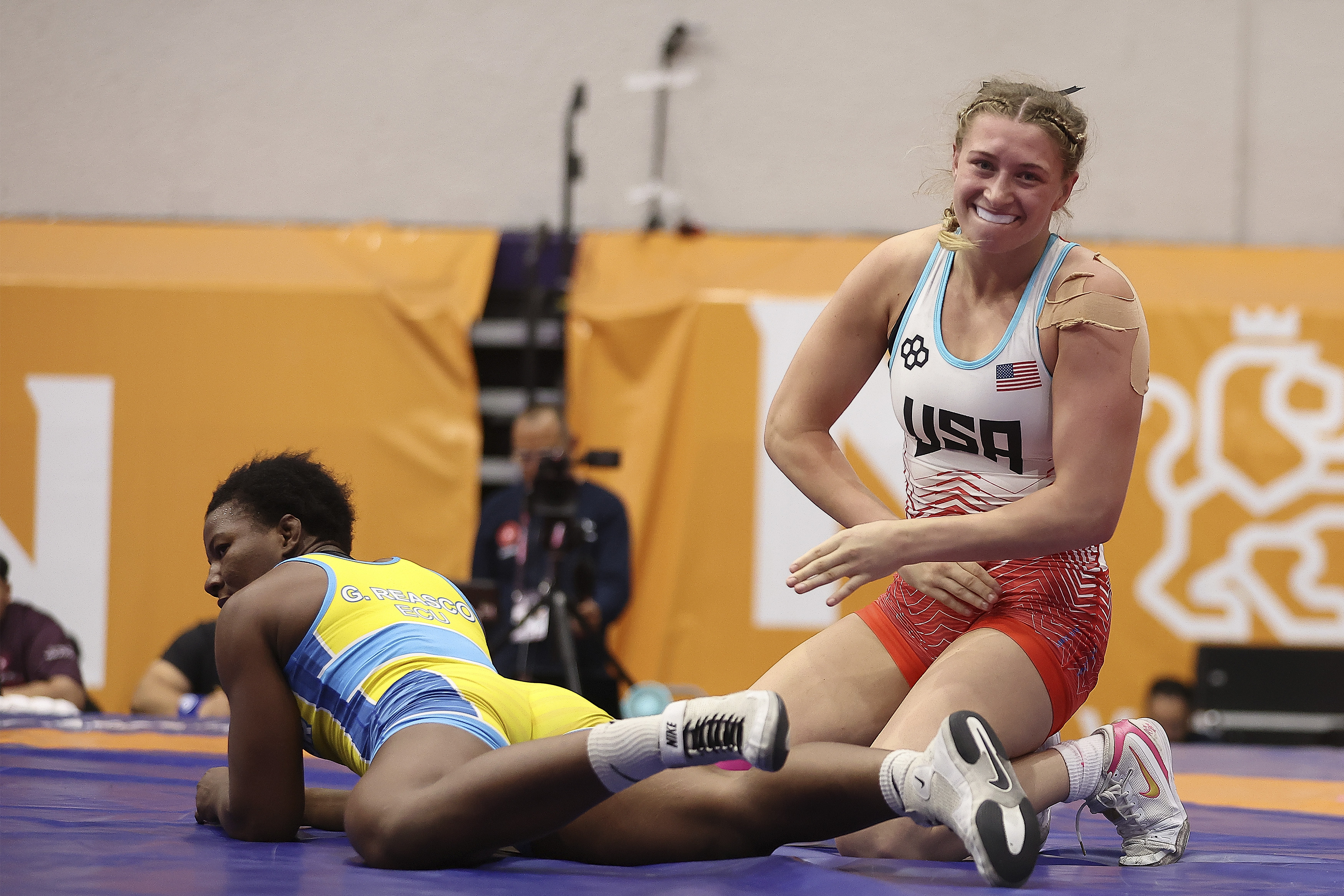 Defending champion Kylie WELKER (USA) and world champion Genesis REASCO (ECU) are expected to meet in the 76kg final. (Photo: United World Wrestling / Osvaldo Aguilar)
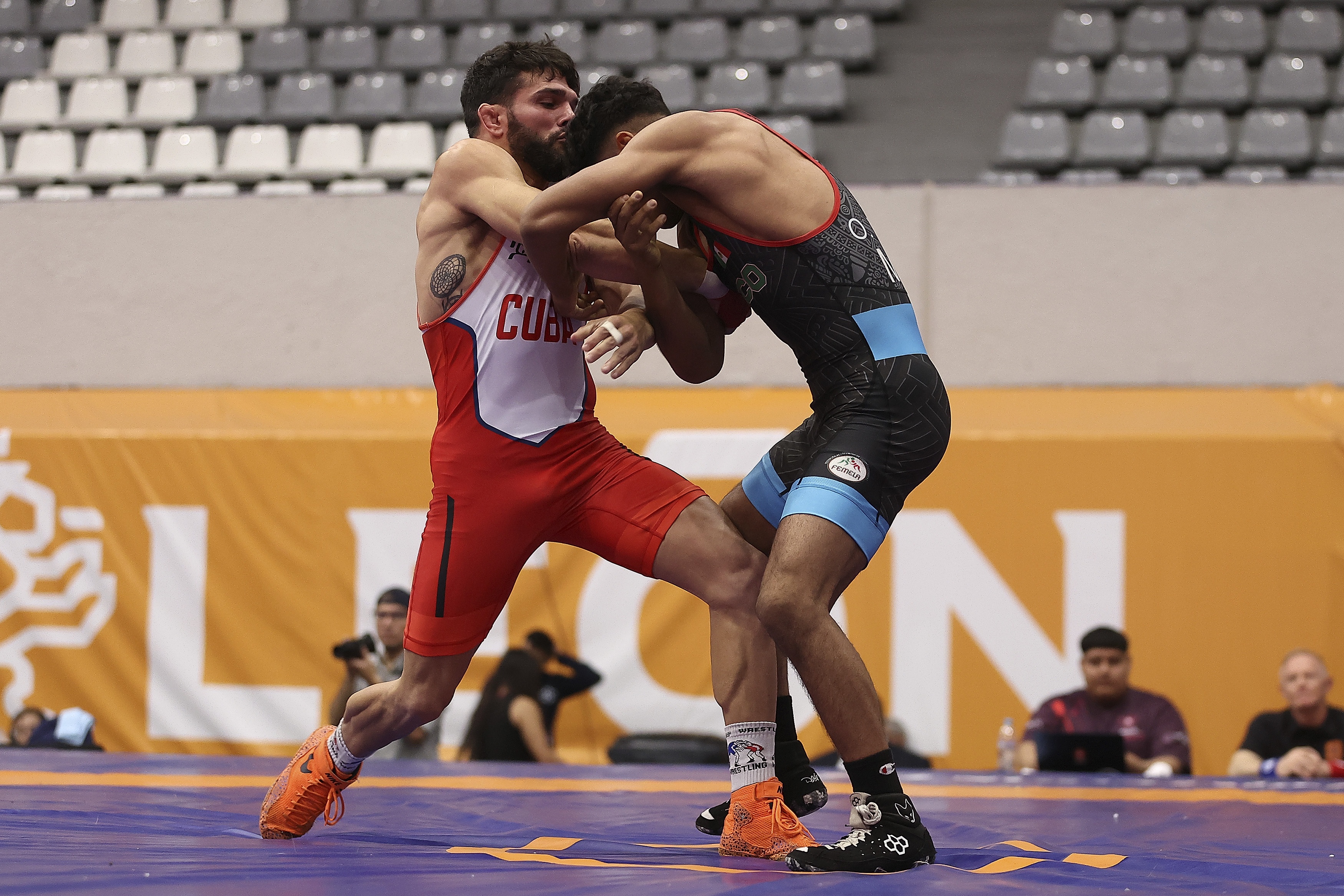 Luis ORTA (CUB) is a three-time Pan-American champion. (Photo: United World Wrestling / Osvaldo Aguilar)
Share your thoughts.
Comments