

Trio of World Silver Medalists Begin Quest to Turn Budapest Silver into Astana Gold
Wednesday, January 23, 2019 - 16:40 By Eric Olanowski

KRASNOYARSK, Russia (January 23) - For the first time, the Ivan Yariguin will be a Rankings Series event in women’s wrestling. This year’s winter classic is set to feature a trio of wrestlers that fell short in the world finals who begin their quest to turn their Budapest world silver medals into Astana world golds, while past senior and age-level world champions are looking to stamp their resumes with an Ivan Yariguin title.
The only returning champion, Tamyra MENSAH-STOCK (USA), has aspirations of becoming the first American female to win three straight Yariguin titles. But for her to do so, she’ll have the tall task of defeating a Mongolia's 2018 world runner-up OCHIRBAT Nasanburmaa.
While many wrestlers are looking to remain on top and continue their winning streaks from last season, the host nation Russia is looking to bounce back after subpar world championships, where they left Budapest without a medal and only had one Russian female finish in the top-five.
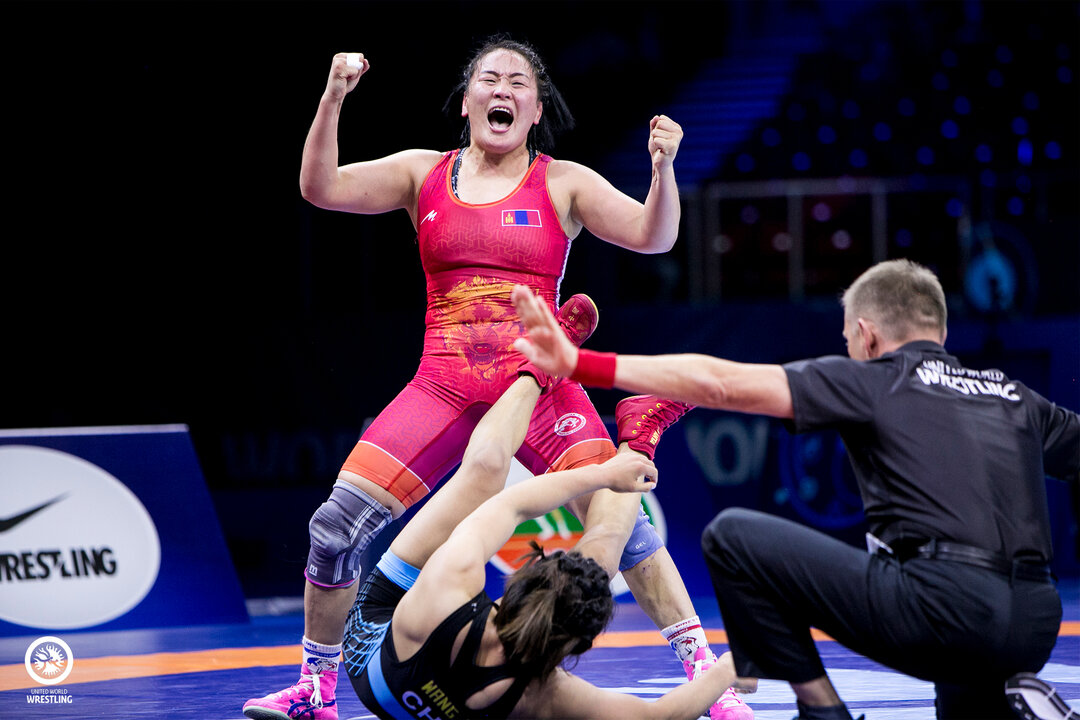
OCHIRBAT Nasanburmaa (MGL) sticks WANG Juan (CHN) to lock up a spot in the 2018 world finals. (Photo: Martin Gabor)
World Runner-Ups Begin Quest to Turn Silver into Gold
Three 2018 world silver medalists jump-start their journeys to improving their Budapest silver to Astana gold at this week’s Ivan Yariguin. Bilyana DUDOVA (BUL), Sarah HILDEBRANDT (USA), and Ochirbat Nasanburmaa all fell short in the world finals but come to Krasnoyarsk with hopes of building on the all-important Ranking Series points they’ve accumulated from their 2018 world finals appearances.
Bullen Returns After Run to U23 World Title
In her last outing, Norway’s Grace Bullen capped off the U23 World Championships with the most emotional win of her career. Bullen used late heroics in the final seconds of the 59kg gold-medal bout to knock off China’s reigning senior-level world champion, RONG Ning Ning.
Bullen now makes the trip to Krasnoyarsk with a target on her back, and world runner-up Bilyana Dudova has her sights down the scope of the Ranking Series rifle.
Dudova will try to flip the script from the last time these two wrestled. They met in the semifinals of the final Ranking Series event of 2018, the Poland Open, where Bullen bulldozed Dudova, 10-0.
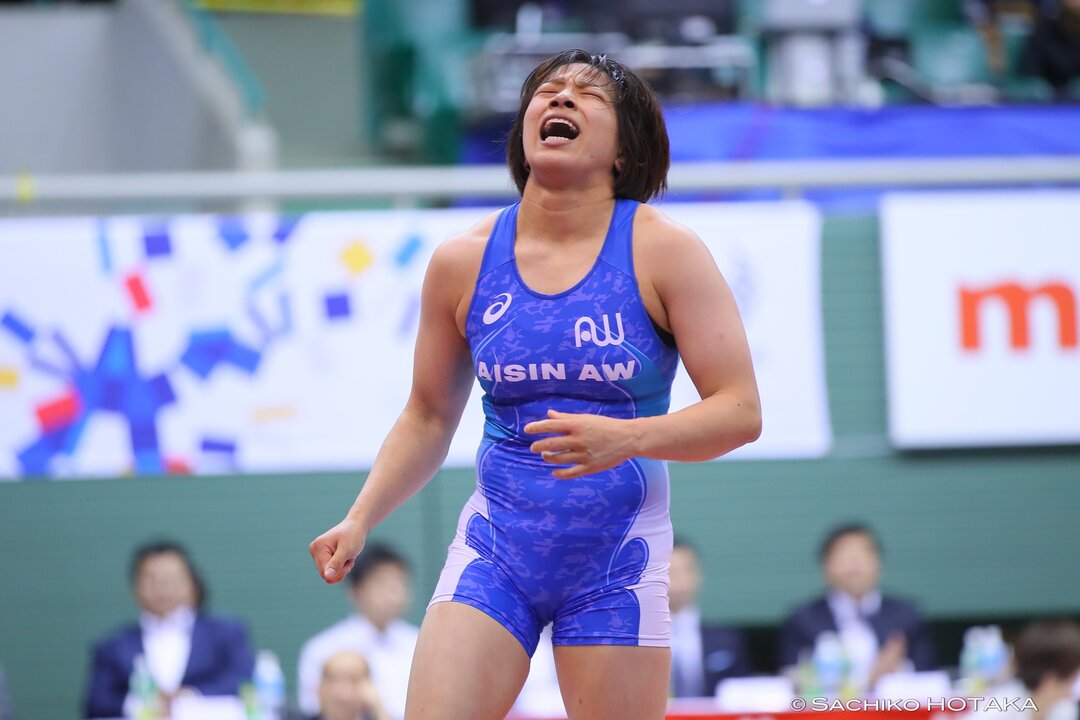
An emotional Rio WATARI (JPN) celebrates after she returned to the mat after defeating cancer. (Photo: Sachiko Hotaka)
Rio WATARI (JPN) to Make Ranking Series Debut After Beating Cancer
Japan’s 2016 Olympian Rio WATARI (JPN) will make her Ranking Series debut after winning the long and grueling two year battle against cancer.
The Ivan Yariguin marks Watari’s second international tournament since defeating Hodgkin lymphoma. Her first international tournament back was at October’s 2018 World Championships in Budapest, where she finished in 16th place. Watari also wrestled in the All-Japan Invitational Championships and Japan Championships, finishing with gold and silver respectively.
For Watari to win the 68kg bracket, she’ll have to get through a wrecking crew of 2015 world champion SORONZONBOLD Battsetseg (MGL) and Russia’s four-time age-level world champion Khanum VELIYEVA, who is still junior eligible.
Ochirbat Tasked with Halting Mensah-Stock From Making History
Mongolia's 2018 world runner-up Ochirbat Nasanburmaa (MGL) will try to halt 2018 world bronze medalist Tamyra Mensah-Stock from becoming the first American women’s wrestler to win three straight Ivan Yariguin titles.
Mensah’s unblemished 8-0 Yariguin record includes an 8-4 win over Ochirbat in the gold-medal bout of the 2017 Yariguin finals.
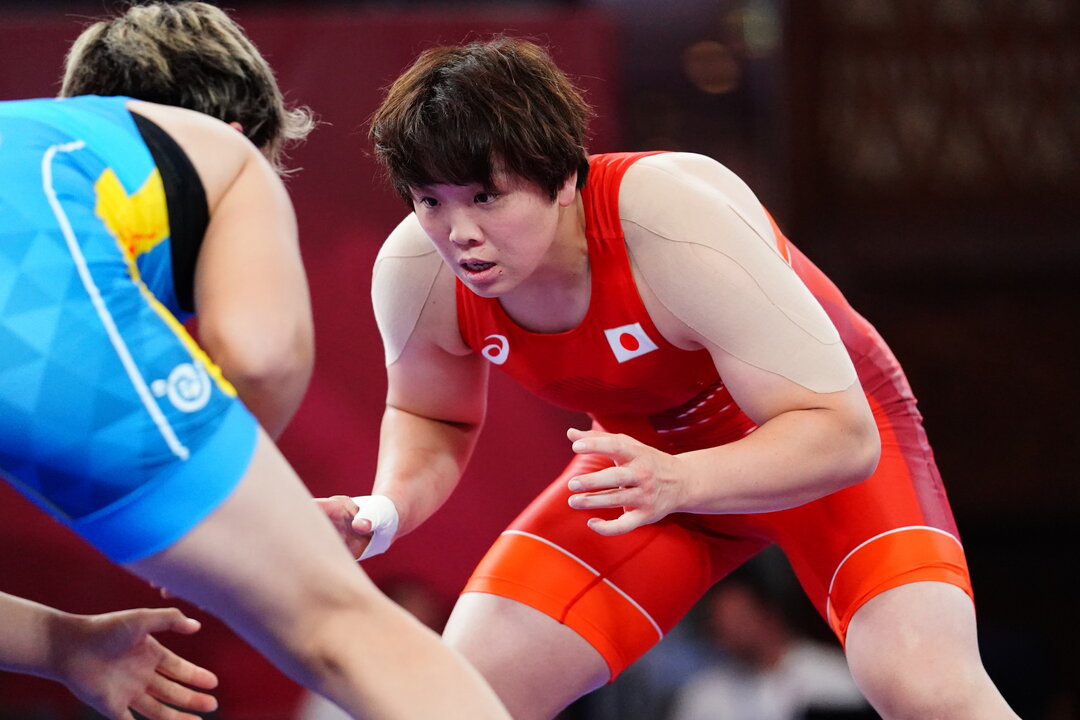
Hiroe MINAGAWA SUZUKI (JPN) , two-time world bronze medalist is one of the favorites to make the 76kg gold-medal bout. (Photo: Martin Gabor)
Clash of Underrated World Medalists, Minagawa, and Focken
Two of the most underrated and least talked about wrestlers in the world could clash for the 76kg title.
Hiroe MINAGAWA SUZUKI (JPN) finished with a bronze medal at the world championships for the second year in a row and did so behind four-time world champion Adeline GRAY (USA), Turkey’s 2017 world champion Yasim ADAR, yet is still one of least talked about wrestlers in the world.
Germany’s Aline ROTTER FOCKEN is another wrestler who should be a wrestling household name, yet Focken still isn't talked about enough. She’s reached a world finals in 2017 and is coming off a year where she reached the top of the podium at the Dan Kolov - Nikola Petrov Tournament, Yasar Dogu, and the Ion Corneanu & Ladislau Simon Memorial.
If these two 76kg favorites were to clash in the finals, it would be their first career meeting.

What’s at Stake?
The Ivan Yariguin is the first of four Ranking Series events of the year.
The winner of each Ranking Series event will be awarded eight (8) points, with second, third and fifth place grabbing six (6), four (4), and two (2) points respectively.
In addition to the placement points, wrestlers will receive points based on the number of participants in their bracket. For weight categories with 10 or fewer entries, an additional six (6) points will be added. For categories with 11-20 wrestlers entered an additional eight (8) points will be added. Ten (10) points will be added to any weight category with more than 20 entries. The points wrestlers gain this weekend are used as a part of the seeding process for the 2019 Astana World Championships. The number of points competitors accumulate from last year's World Championships, along with the 2019 Continental Championships and the Ranking Series events, will be combined and the wrestlers with the four highest cumulative points will be award the top four seeds.
SCHEDULE (Local time)
January 23 (Wednesday)
08.00 - Arrival of delegations
15.30 - Referees clinic
15.30 - Press conference with the Organizing Committee representatives, main referees body, team leaders and coaches
16.30 - Draw: Women: cat: 50,55,59,65 kg Men: cat: 57,61,70 kg
January 24 (Thursday)
08:30 - Medical examination and weigh-in cat: Women: 50,55,59,65 kg Men: 57,61,70 kg
11.00 - Elimination rounds cat: Women: 50,55,59,65 kg Men: 57,61,70 kg
16.00 - Draw cat: Women: 53,57,62,68 kg Men: 65,79,125kg
17.00 -1⁄2 finale cat: Women: 50,55,59,65 kg Men: 57,61,70 kg
January 25 (Friday)
08:15 - Weigh-in cat: Women: 50,55,59,65 kg Men: 57,61,70 kg
08:30 - Medical examination and weigh-in cat: Women: 53,57,62,68 kg Men: 65,79,125kg
11.00 - Elimination rounds and 1⁄2 finale cat: Women: 53,57,62,68 kg Men: 65,79,125kg - Repechage cat: Women: 50,55,59,65 kg Men: 57,61,70 kg
16.30 - Draw cat: Women: 72,76 kg Men: 74,86,92,97 kg
16.00 - Opening ceremony
17.00 - Finals cat: Women: 50,55,59,65 kg Men: 57,61,70 kg
January 26 (Saturday)
08:15 - Weigh-in cat: Women: 53,57,62,68 kg Men: 65,79,125kg
08:30 - Medical examination and weigh-in cat: Women: 72,76 kg Men: 74,86,92,97 kg
11.00 - Elimination rounds and 1⁄2 finale cat: Women: 72,76 kg Men: 74,86,92,97 kg - Repechage cat: Women: 53,57,62,68 kg Men: 65,79,125kg
18.00 - Finals cat: Women: 53,57,62,68 kg Men: 65,79,125kg
January 27 (Sunday)
09:00 - Weigh-in cat: Women: 72,76 kg Men: 74,86,92,97 kg
11.00 - Repechage cat: Women: 72,76 kg Men: 74,86,92,97 kg
13.00 - Finals cat: Women: 72,76 kg Men: 74,86,92,97 kg

Share your thoughts.
Comments