

U17 Worlds: Iran returns to top despite Japan's best show
Sunday, August 6, 2023 - 18:58 By Gaurav Bhatt

ISTANBUL (August 6) -- Iran is finally back where it belongs. After two successive non-podium finishes in Freestyle at U17 World Championships, the country bounced back in style and clinched the team title with 156 points, a decisive 30-point lead over second-place United States.
Impressive performances led Iran to claim a total of six medals, distributed as two golds, two silvers, and two bronzes. Their non-medalist wrestlers too played a crucial role, with two wrestlers finishing fifth (earning 10 points each) and two others finishing seventh (gathering 8 points each).
The U.S. also won six medals -- 3 golds and 3 bronzes -- and took second place with 126 points. Their tally took a hit as the team failed to score any points in three weight categories (51kg, 60kg, and 110kg).
Japan took third at 106 points with two gold medals and one silver. Five other wrestlers added 36 points to help Japan finish on the podium.
The final day of the tournament in Istanbul began with Ahora KHATERI (IRI) defeating Gor BUNIATYAN (ARM) in the 45kg category to fetch Iran its second gold of the competition.
It was followed by Japan's Yamato OGAWA (JPN) beating ROHIT (IND) to become the nation's first U17 world champion in freestyle since 2017 before Akito MAEHARA (JPN) made it double. The 60kg competitor defeated Sajad PIRDAYEH (IRI) in the first instance of Japan winning multiple gold medals in Freestyle at the U17 Worlds.
Khateri, the reigning Asian champion, remains in a league of his own. In Kyrgyzstan, he prevailed with 33 points, giving up no points. He continued where he left off, dominating his way to the world title in Istanbul.
On Sunday, Buniatyan was no match for the crafty Khateri, who secured a leg lace and rolled the Armenian out of bounds to open the scoring. The Iranian showed good timing, taking a 6-0 lead into the break and waiting for his moment in the second period. Khateri secured wrist control, ducked under and grabbed the waistlock to score again.
 Akita MAEHARA (JPN) pulled off a hard-fought 4-1 win against Sajad PIRDAYEH (IRI) in the 60kg final. (Photo: UWW / Kadir Caliskan)
Iran's hopes of winning the second gold on Sunday, however, were dashed by Maehara. Trailing 1-1 on criteria, the Japanese won a scramble and scored with 10 seconds on the clock to secure a 4-1 victory.
The bout started with both competitors opting for caution before the U17 Asian Championships silver medalist Pirdayeh was put on the shot clock. Maehara took the lead into the break but was later penalized for passivity in the second period. Desperate, he got the underhooks in place and pushed Pirdayeh toward the zone. Pirdayeh dropped on his knees to avoid a stepout but Maehara circled and scored a go-behind.
Iran challenged the call asking for a stepout since Maehara had gone out but on review, it was clear that Maehara had initiated the move inside and stayed on the mat, despite both knees going out, to finish the move. The lost challenge made the score 4-1.
 Yamato OGAWA (JPN) survived a scare against ROHIT (IND) before winning the 51kg gold 9-8. (Photo: UWW / Kadir Caliskan)
Earlier, Ogawa ended Japan's six-year wait for gold at the U17 level with a tight finish against Asian silver medalist Rohit.
Ogawa's run to gold featured wins over continental heavyweights as the Japanese beat U17 European silver medalist Sasha PETROSYAN (ARM) 7-1, U17 Pan-Am silver medalist Yandel MORALES (PUR) 10-0, and Asian bronze medalist Amirmohammad NAVAZI (IRI) 4-1.
It was a bout of two halves on Sunday. A slow start saw Rohit give up a point for passivity. The Indian started the second period with intent but paid the price for haste. Ogawa turned a missed takedown attempt into a shoot of his own, launching a double-leg for four. Rohit got two points as well but Ogawa added a leg-lace to lead 7-2. Ogawa won another counter to make it 9-2.
With a late rally, Rohit pushed Ogawa out of bounds along with a point for fleeing to make it 9-4. He added four points for a takedown and roll in the final three seconds but the clock expired as he was turning Ogawa for the second time. Ogawa secured the gold medal at 9-8.
 Ladrion LOCKETT (USA) celebrates after becoming the 71kg U17 world champion. (Photo: UWW / Kadir Caliskan)
Golden Lockett
Ladarion LOCKETT (USA) won the match-up against Seyedabolfazl HOSSEINI (IRI) to win the 71kg gold. The American — who hadn't surrendered a point in the competition so far, amassing 38 points — finally gave up one in the 4-1 win over the Iranian.
The Oklahoma native has spoken about the state's signature wrestling style before.
“Oklahoma State is always known for elbows, duckunders and things like that," Lockett had told Ocolly.com. "I wanted to have an Oklahoma State style."
That style helped him run roughshod throughout the event. A highlight was his performance in the semifinal against 2021 U17 Asian silver medalist NARENDER (IND). The technical fall win saw Lockett get a spin behind takedown and a trapped arm gut wrench, turning the Indian to finish the bout in the first period.
But on Sunday, after he was put on the shot clock, Lockett had to adapt to the reigning U17 Asian champion's game.
"I think scoring in the first 30 seconds, opening a guy up is really difficult," Lockett said. "But once you can break them and make them tired, it's all fun and games from there."
In the second period, Lockett drove into Hosseini to secure a clutch takedown to pick up a 2-1 lead. After that, it was back to Oklahoma style as the American spun behind Hosseini to pick up two more points, eventually securing the triumph.
"I wrestle a lot when I'm tired," he said. "The training camp of months upon months. Hard work and dedication. He was super tired. I knew he was going to be like that. He did that a lot in the other matches, taking a long time to get to the center, and taking breaks. I knew if I push him hard and make him keep wrestling, he will gas out."
Lockett was buoyed by compatriots Paul KENNY (USA) and Marcus BLAZE's (USA) gold medal wins on Saturday -- "Getting to feel the belt, win the belt," he grinned — and now has one of his own. However, he already has a new target in place.
"2032 Olympic champion, 86kilos baby!"
 Sandro KURASHVILI (GEO), blue, scored a technical superiority win over Eyyup CENTIN (TUR) in the 92kg final. (Photo: UWW / Kadir Caliskan)
At 92kg, Sandro KURASHVILI (GEO) silenced the home crowd with a superiority win over Eyyup CETIN (TUR) to take the gold. The two met in the U17 European Championships final as well. Cetin will at least be relieved that he did not get pinned like in Tirana.
The final in Istanbul began with Cetin being warned for passivity. He went for a single-leg but Kurashvili pulled off a stunning move by throwing him over for four points. Kurashvili scored a stepout at the stroke of the break to lead 6-0.
Perhaps feeling the pressure of a loud home crowd, Centin attempted a loose double-leg attack and Kurashvili threw him off for another four points, claiming the world title 10-0.

RESULTS
45kg
GOLD: Ahora KHATERI (IRI) df. Gor BUNIATYAN (ARM), 11-0
BRONZE: Ignacio VILLASENOR (USA) df. Agashirin AGASHERINOV (AIN), 3-2
BRONZE: Ebubekir GUR (TUR) df. Nurmukhamed TURDALY (KAZ), via fall (4-0)
51kg
GOLD: Yamato OGAWA (JPN) df. ROHIT (IND), 9-8
BRONZE: Usman INDIRBAEV (AIN) df. Sadraddin HASANOV (AZE), via fall (10-2)
BRONZE: Sasha PETROSYAN (ARM) df. Amirmohammad NAVAZI (IRI), 2-1
60kg
GOLD: Akito MAEHARA (JPN) df. Sajad PIRDAYEH (IRI), 4-1
BRONZE: Iasin BERSANUKAEV (AIN) df. Zandanbat BATSAIKHAN (MGL), 7-5
BRONZE: Jamal ABBASOV (AZE) df. Yandro SOTO (PUR), 6-0
71kg
GOLD: Ladarion LOCKETT (USA) df. Seyedabolfazl HOSSEINI (IRI), 4-1
BRONZE: Islam KAZHAROV (AIN) df. Alp BEGENJOV (TKM), 5-1
BRONZE: Nurdaulet SEILBEKOV (KAZ) df. NARENDER (IND), 1-1
92kg
GOLD: Sandro KURASHVILI (GEO) df. Eyyup CETIN (TUR), 11-0
BRONZE: Toohid NOORY (IRI) df. Genki HOKI (JPN), 12-2
BRONZE: Samir DURSUNOV (KAZ) df. VINAY (IND), 12-1
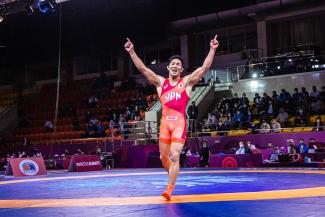
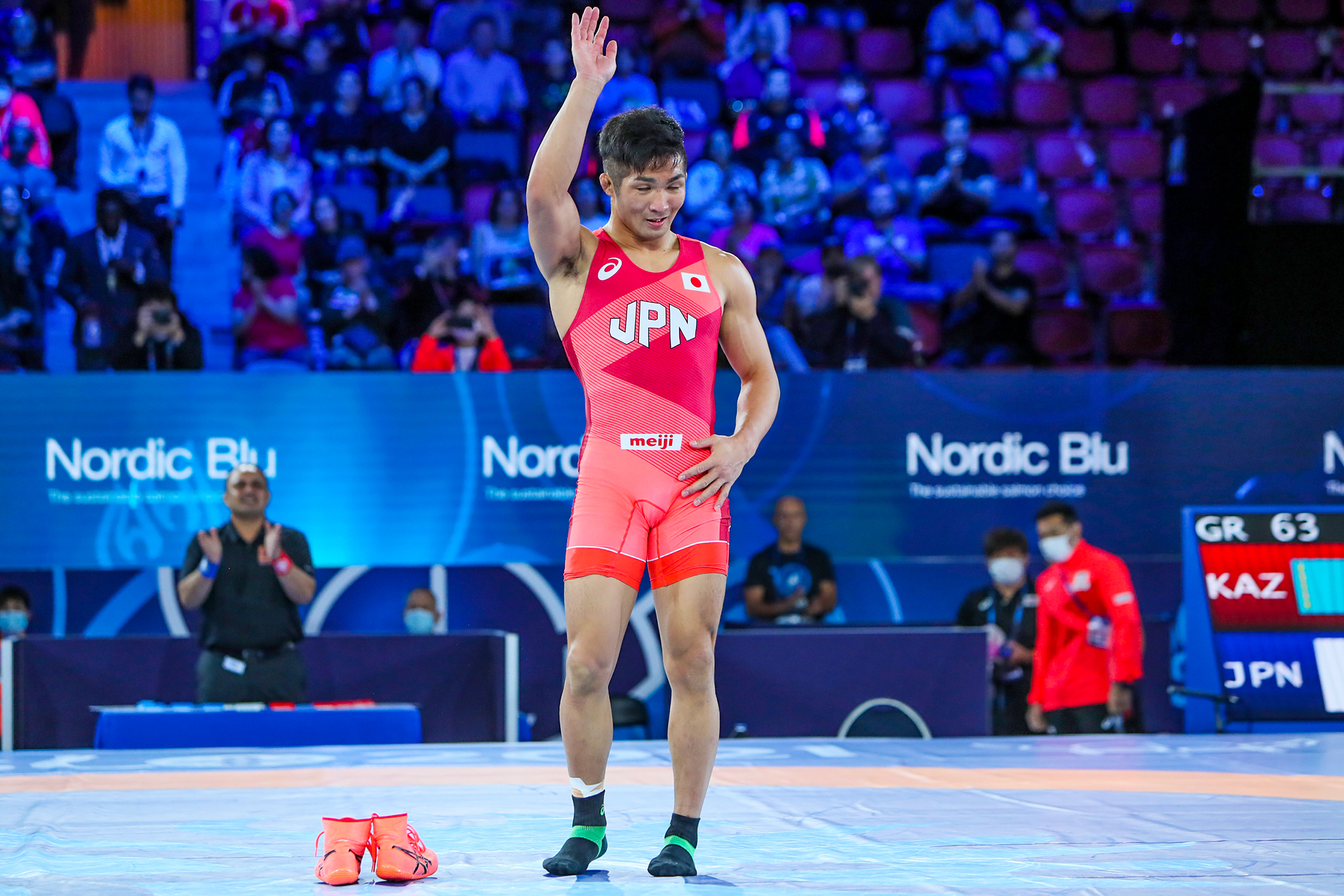 Tsuchika SHIMOYAMADA (AUS) had left his shoes on the mat during the 2021 World Championships to mark his retirement. (Photo: United World Wrestling / Martin Gabor)
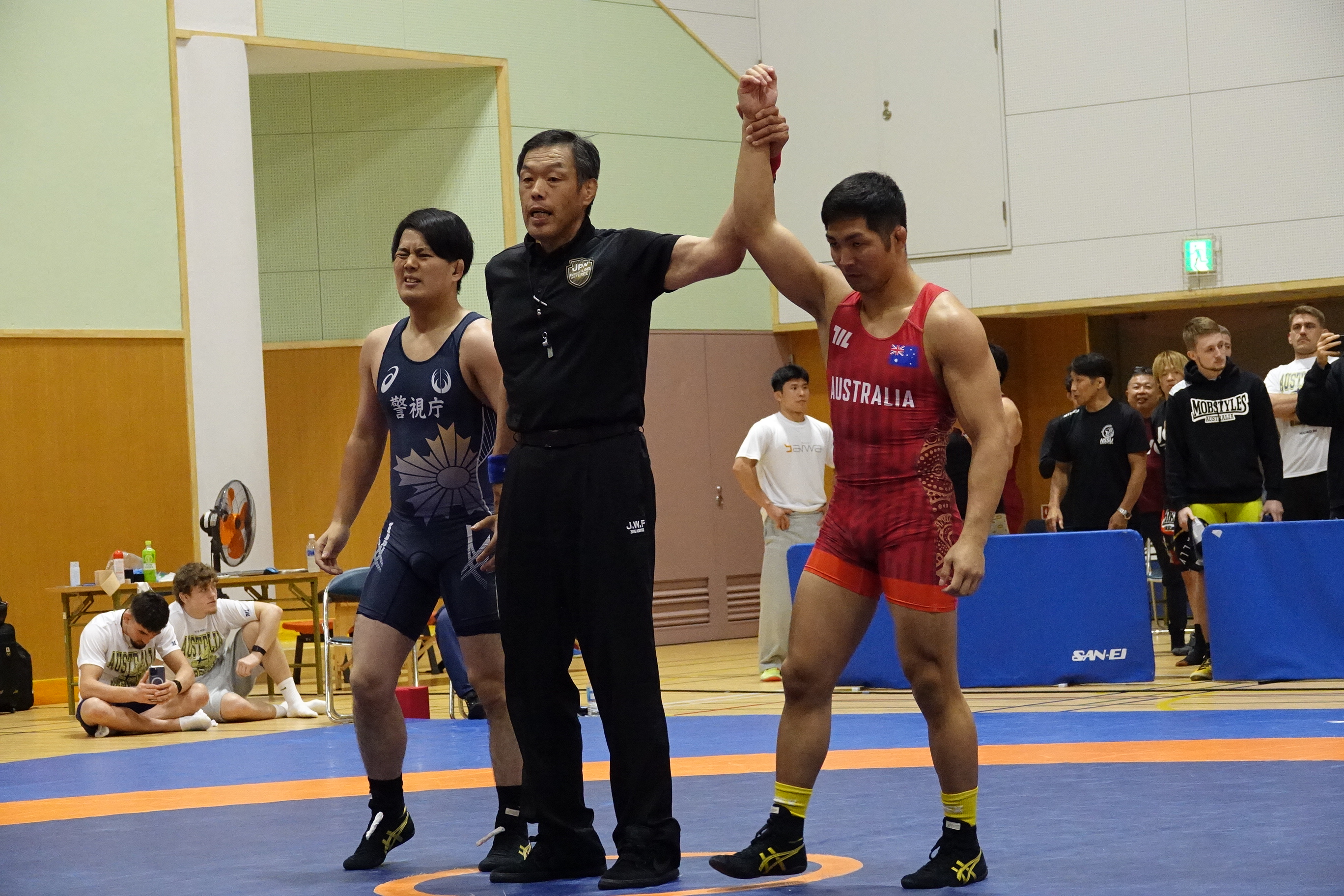 Tsuchika SHIMOYAMADA advances to the semifinals at the All-Japan Non-Student Championships in July with a 52-second win over Kokoro GOTO. (Photo: Koji Fuse / wrestling-spirits.jp)
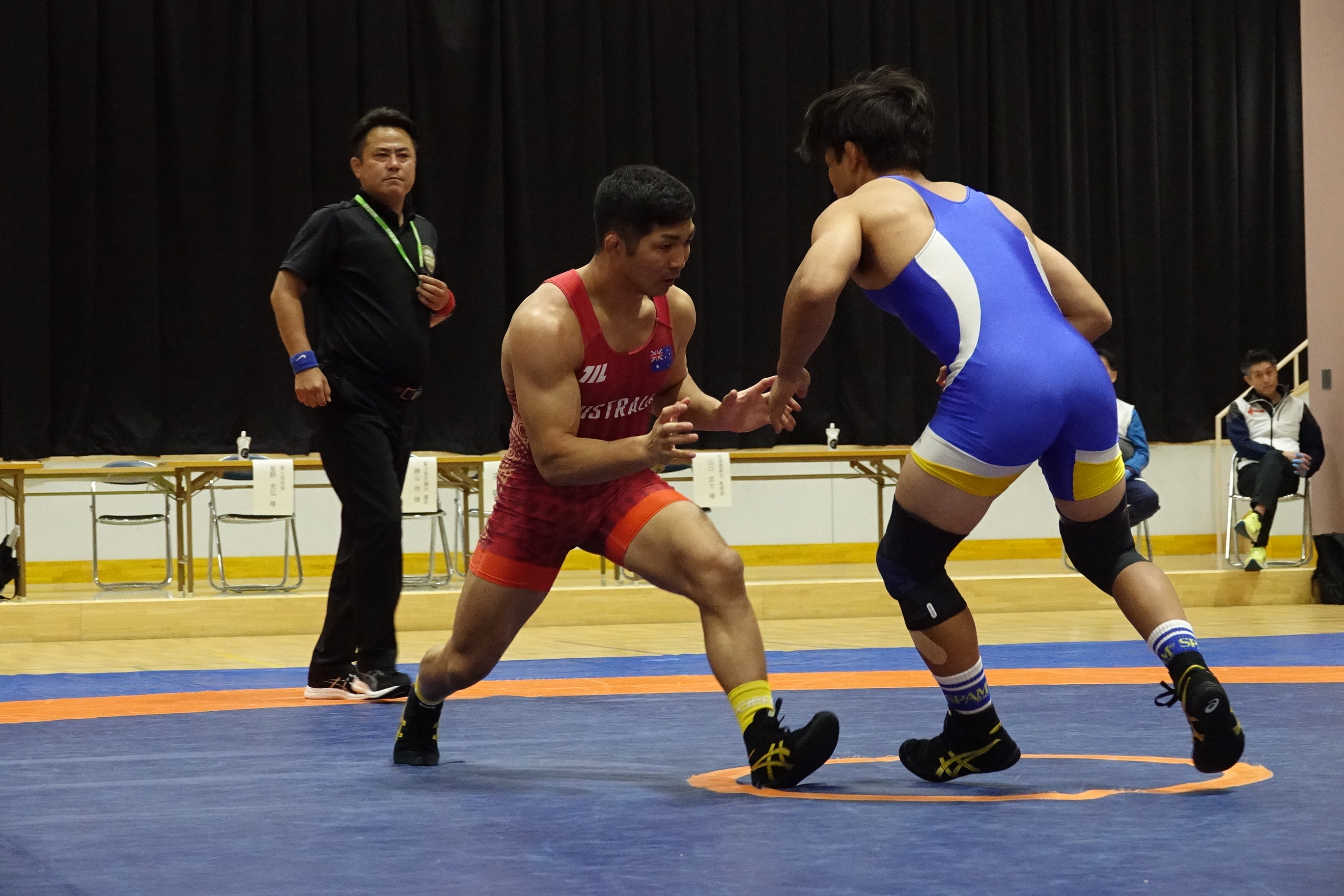 Tsuchika SHIMOYAMA faces Keitaro ONO in his opening match at the All-Japan Non-Student Championships in July. (Photo: Koji Fuse / wrestling-spirits.jp)
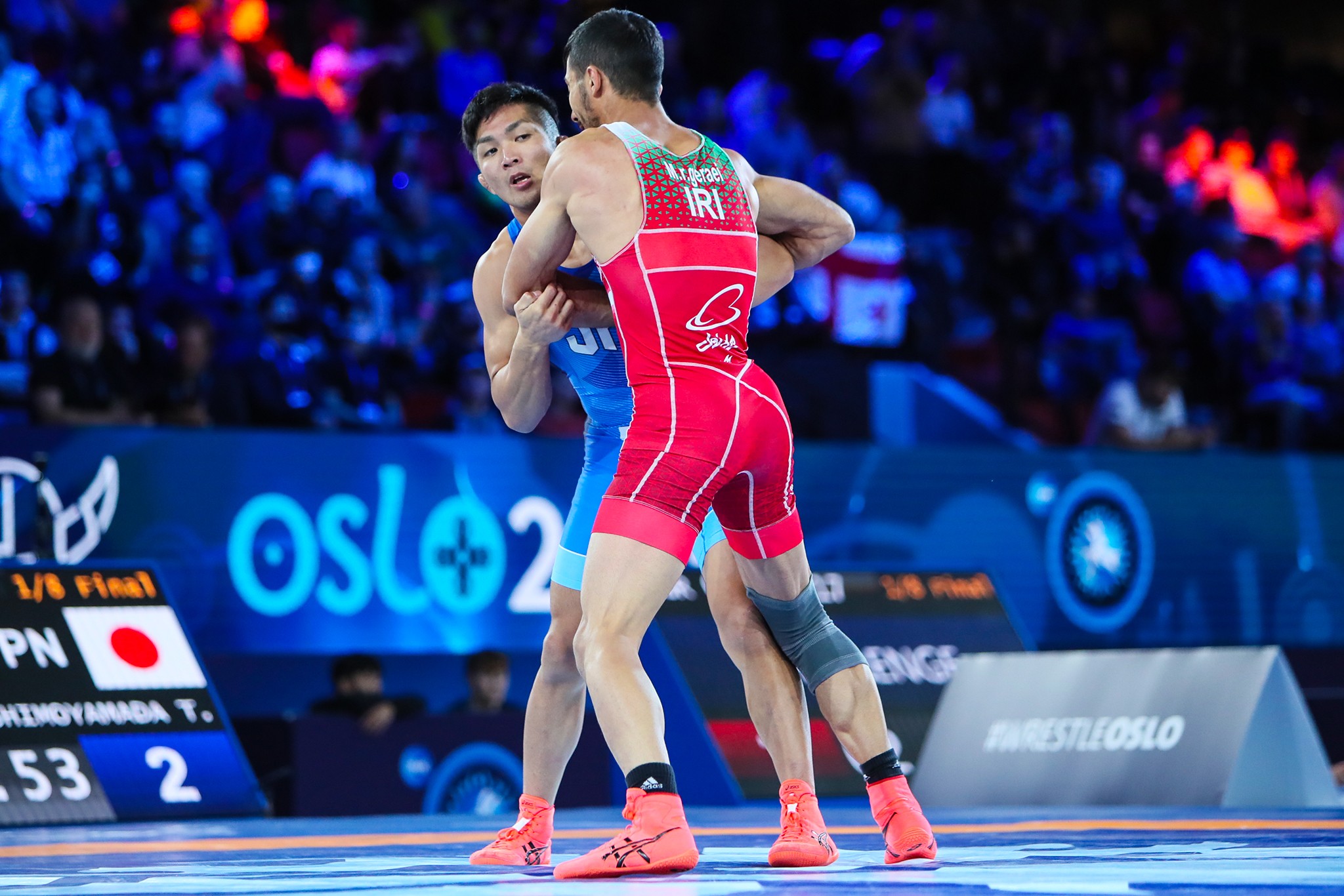 Tsuchika SHIMOYAMADA (AUS) was dominating Mohammadreza GERAEI (IRI) in their match at the 2021 World Championships before being pinned. (Photo: United World Wrestling / Martin Gabor)
Share your thoughts.
Comments