

U20 Worlds: Elor keeps it simple to win third title
Saturday, August 19, 2023 - 10:03 By Vinay Siwach

AMMAN, Jordan (August 18) -- It's rare for a wrestler who has all the world titles on offer to return to a U20 World Championships. But then, Amit ELOR (USA) is a rarity.
Besides the 2019 U17 World Championships semifinal loss, Elor has gone on to win a U17 world title, three U20 world golds, a U23 world title and even a senior world gold. So why does a wrestler who has captured the imagination of the wrestling world, return to an age-group world championship for the third time?
She has a simple explanation to offer.
"You'll only be under 20 years for so long I am going to take advantage of getting to compete at as many world championships as I possibly can," Elor said. "The ultimate goal is to go to the Olympics and hopefully win the Olympic gold, so whatever I could do to challenge myself and give more experience. I will definitely take those opportunities."
The 19-year-old has competed in seven World Championships and managed to win seven medals (six golds, one bronze) in a short period of four years. Despite her credentials, Elor thinks every bout is a challenge in itself.
"I won the senior World Championships at 18," Elor said. "I believe that anybody up and coming can be a rising star. The U20 field can have just as challenging opponents as the senior level and I think it's a great preparation for the senior World Championships."
Elor perhaps is being respectful to her opponents. Fair enough. But when she steps on the mat for her bouts whether it's a team trial or world championships, Elor likes to demolish them.
On Friday in Amman, Elor won her third U20 world title, outscoring her opponents 36-0 in four bouts. It's not 40-0 or more because one win was a fall. The final was a 10-0 win over Bukrenaz SERT (TUR) after Elor got the leg lace.
While the secret to success could be different for different wrestlers, Elor likes to keep it simple.
"I think it's just discipline and consistency in my training," she said. "It's all the hard work over the years that adds up. It's believing in myself and having a great support system and pushing past hardships. On the competition day, all that hard work starts to pay off."
However, Elor does visit that day in Sofia when she lost to Honoka NAKAI (JPN). Lead 1-1 on criteria, Elor got hit by an arm spin by Nakai who converted it into a takedown to lead 3-1. Elor had 22 seconds to win but Nakai played the time.
"My first world championships, I got a bronze and I really think a lot of that was because of lack of experience," she said. "Ever since then, I'm like I have to compete as much as I can, as long as my body is healthy. These competitions are great stimulation for senior worlds and Olympics so I love them."
And what lessons she takes from Amman?
"I learned how powerful I can actually be and a lot of things are just your mindset and the feelings you have at the moment," she said. "Even if you feel things in those moments, you'll get past those feelings and you have to just believe in yourself that anything is possible."
 The United States finished third in the team standings. (Photo: UWW / Kostadin Andonov)
Elor and her United States teammates not only battle their opponents but had to go through a few hardships off the mat as well.
A day after arriving in Amman, most of the Freestyle and women's team complained of food poising as they made at least one trip to the hospital every day. Kennedy BLADES (USA), who won a bronze medal at 76kg, had to be run to the hospital hours before her bout.
The U.S. still managed to finish third in the team race which was won by India and Japan finishing second. Elor credited the team for its performance and how it comes together for any big tournament.
"It's been challenging for the whole team and we had a lot of hardships," she said. "But we stayed strong and we are going to come back stronger after this. It's been a challenge for me as well and it's one of the hardest tournaments I have been to. It was a great experience for us to push through and still compete."
 Eniko ELEKES (HUN) celebrates after winning the gold medal in the 65kg weight class. (Photo: UWW / Kostadin Andonov)
Elekes gives Hungary gold
Eniko ENEKES (HUN) may not have been the first Hungary wrestler to win the U17 world title in women's wrestling but she made sure she becomes the first from Hungary to win the U20 world title. In 2021, Elekes became the second woman wrestler from Hungary to win U17 world gold and two years later, she added a U20 world title in Amman on Friday.
Wrestling Antim KUNDU (IND) in the 65kg final, Elekes used her counters to great effect and came out on top 9-2.
"I won the U17 gold and last year was not the best for me. So I am glad this happened," she said.
Last year, Elekes finished 10th in Sofia after losing her opening round bout and later the repechage. But this year, Elekes made it to the final after some strong wins.
"My toughest match was the final against India," she said. "And the Turkiye bout was also strong as well."
Elekes defeated U17 world silver medalist Duygu GEN (TUR) 5-1 in her opening bout. Kundu tried making a stronger case but Elekes was up for the task, countering Kundu's attempted leg attacks.
"I don't like to think and plan what I would do," she said. "I like to go with the flow. My reaction is very fast so I don't like to plan."
Though she is the first world champion in her family, Elekes' father Endre represented Hungary at the 1992 Barcelona Olympics in 68kg Freestyle. The family tradition made it easier for Elekes to decide what sport she wanted to pursue.
"I grew up on the mat," she laughs.
 Alina FILIPOVYCH (UKR) hits a clutch four to win against Ichika ARAI (JPN) in the 57kg final. (Photo: UWW / Amirreza Aliasgari)
At 57kg, Ichika ARAI (JPN) was stunned by Alina FILIPOVYCH (UKR) when the Ukrainian hit a four-pointer with 20 seconds on the clock. Arai worked hard for a 3-0 lead and had 20 seconds to survive the final. But Filipovych shot a double-leg from neutral and got four. Japan challenged but lost and Arai, despite a leg-hold, failed to score three points she needed to win.
The loss meant that Japan finish the U20 World Championships in Amman with only one gold, at 68kg, and second in the team title race that it won last year. Japan had won eight gold and a total of 10 medals in Sofia last year.
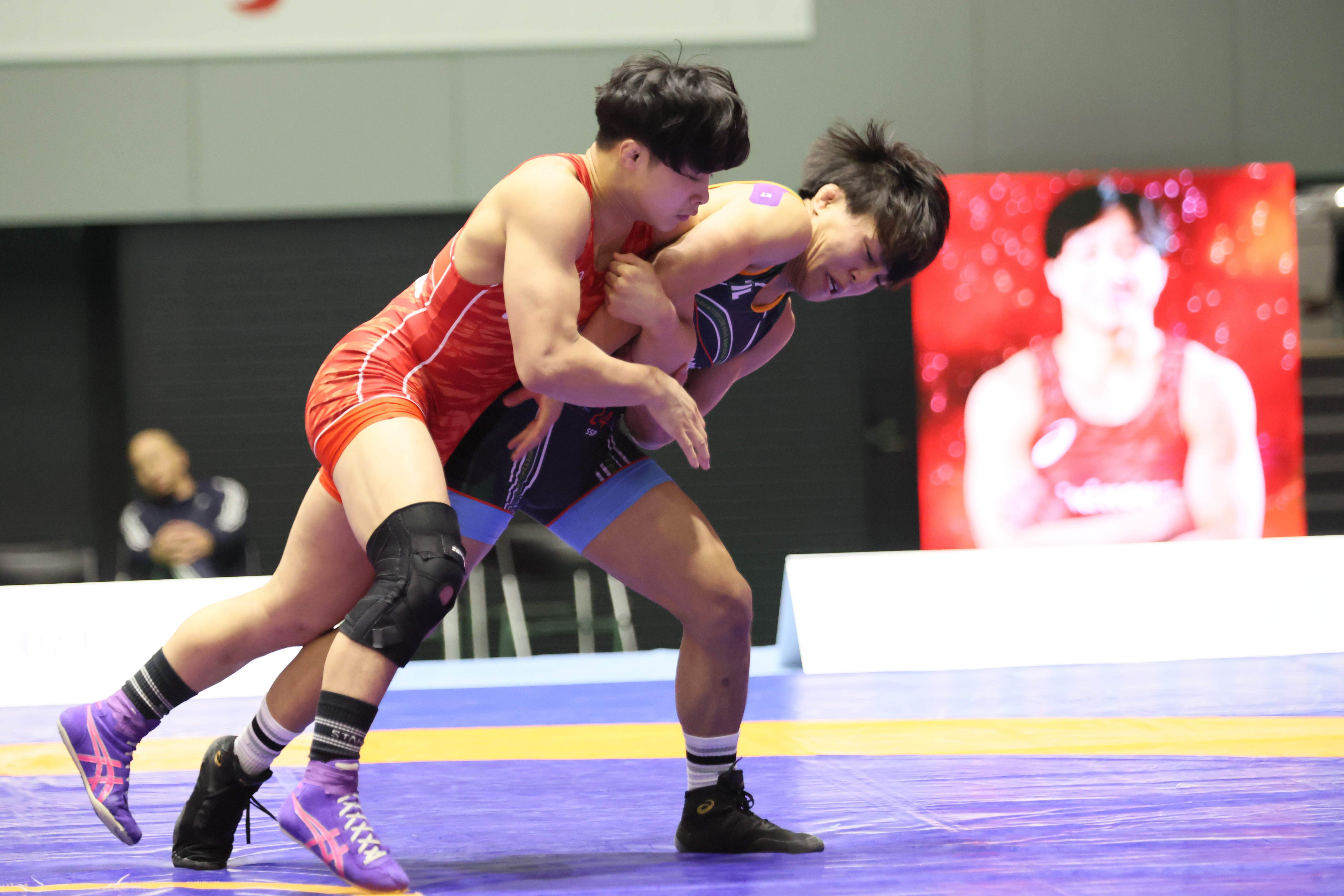 Kaisei TANABE, left, works to get behind Ryota KOSHIBA in the Greco 63kg final. (Photo: Takeo Yabuki / wrestling-spirits.jp)
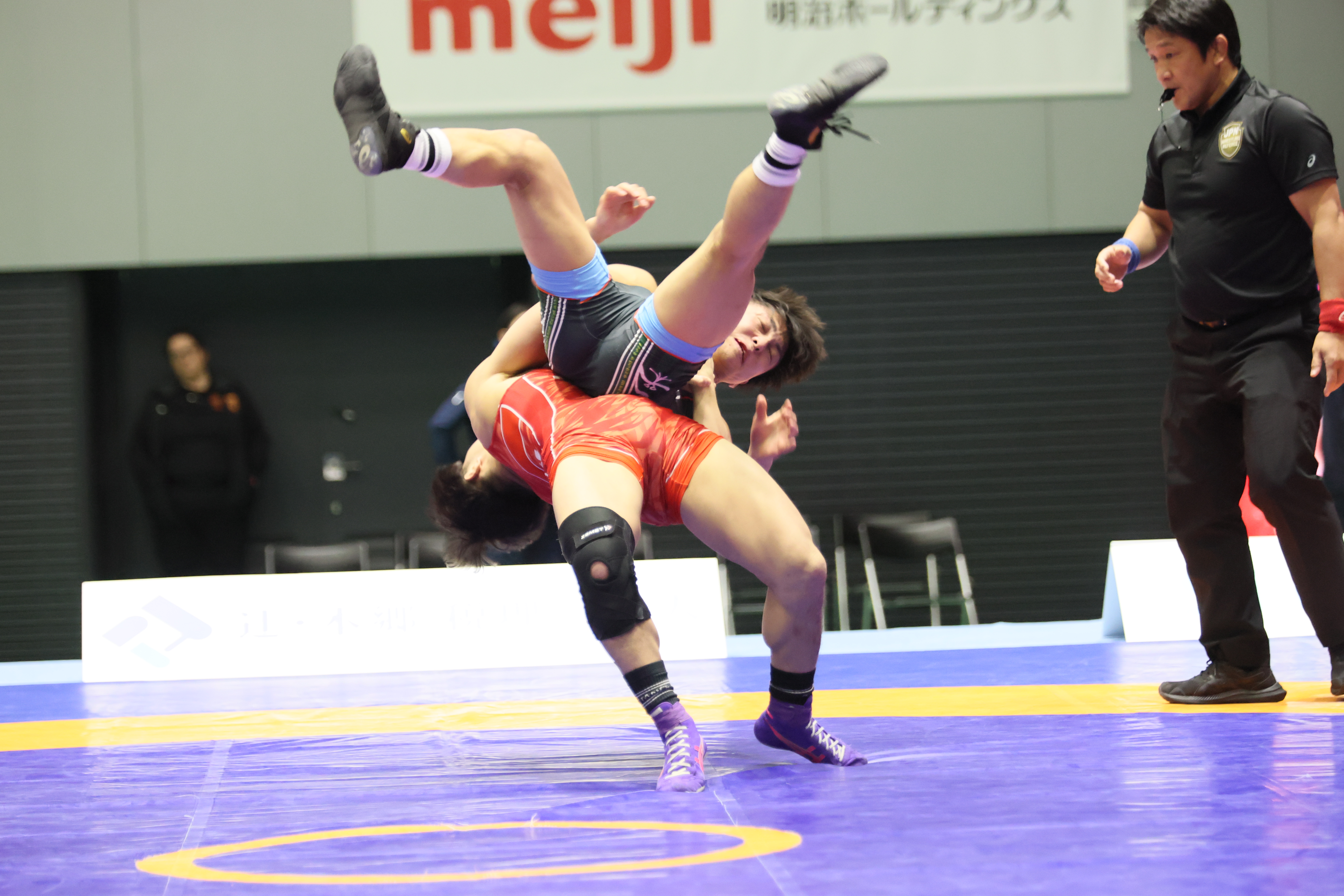 Kaisei TANABE finishes up his victory over Ryota KOSHIBA with a four-point throw in the Greco 63kg final. (Photo: Takeo Yabuki / wrestling-spirits.jp)
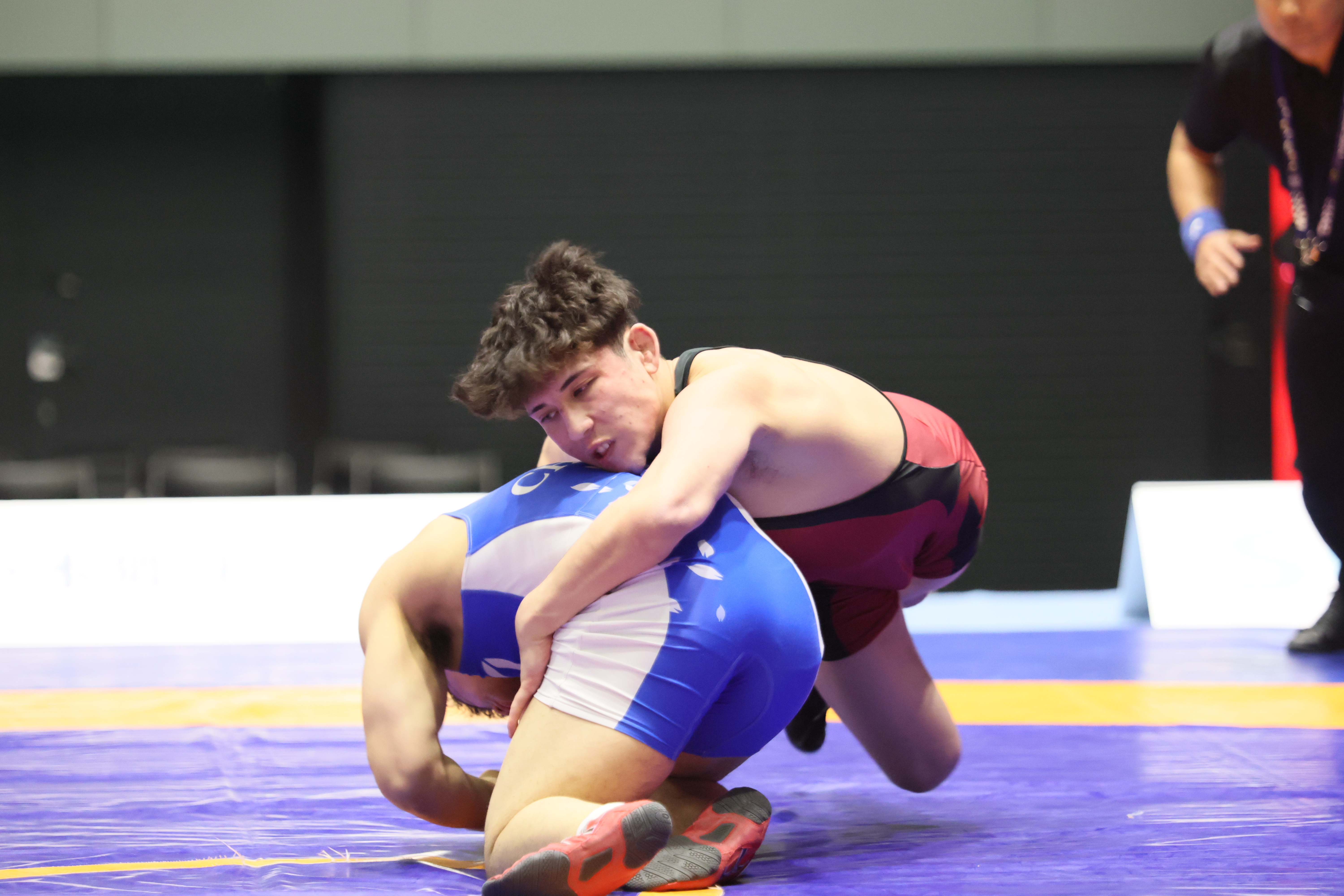 Keyvan GHAREHDAGHI, right, spins behind Kanata YAMAGUCHI in the freestyle 79kg final. (Photo: Takeo Yabuki / wrestling-spirits.jp)
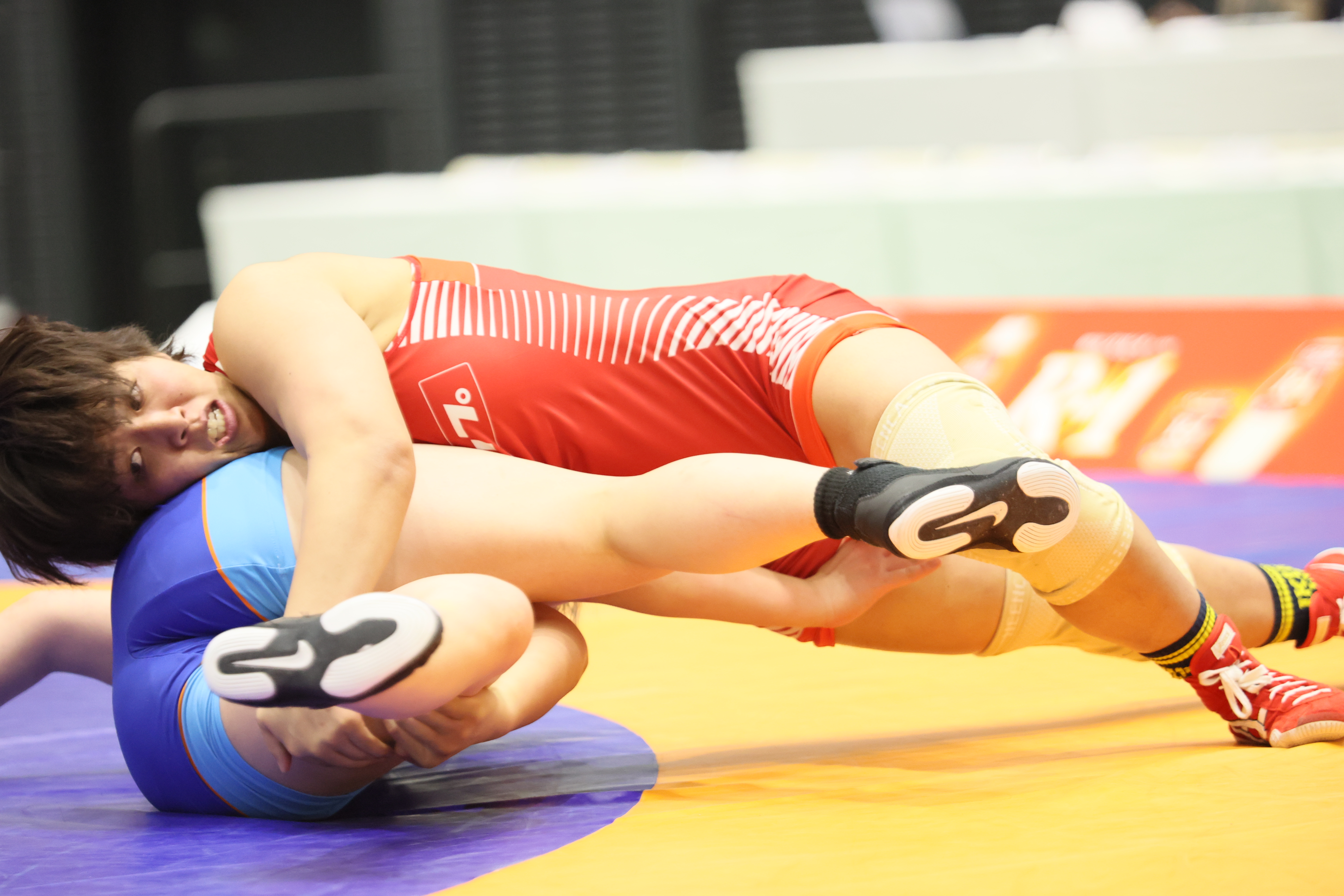 World champion Ami ISHII scores a takedown in the women's 68kg semifinal against Kaede MATSUYAMA. (Photo: Takeo Yabuki / wrestling-spirits.jp)
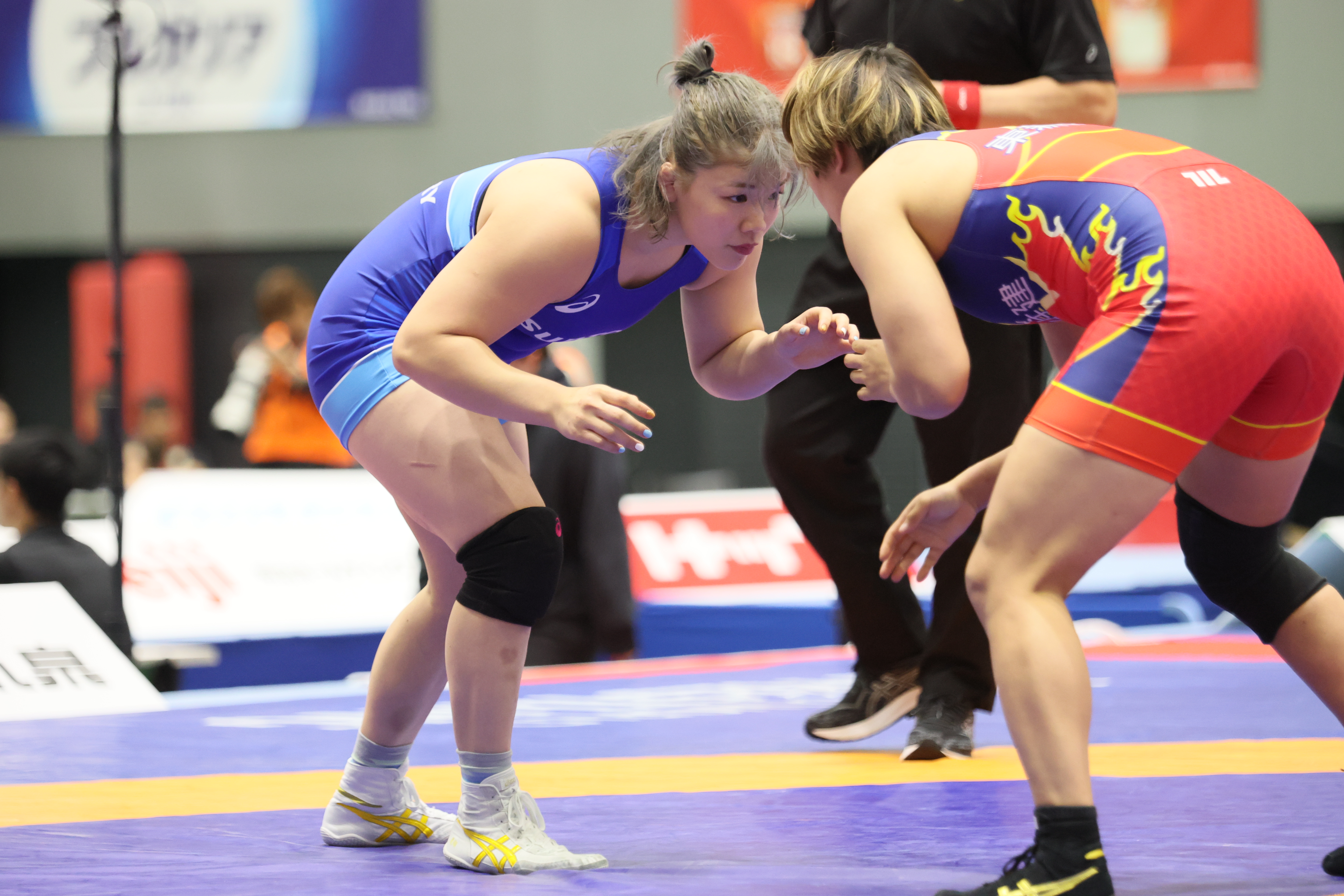 Olympic champion Yuka KAGAMI, left, competes for the first time since her victory in Paris. (Photo: Takeo Yabuki / wrestling-spirits.jp)
Share your thoughts.
Comments