Neha Strikes Gold
NEHA (IND) captured her second straight Ranking Series gold medal at 59kg, edging Abigail NETTE (USA), 6-4, in the final. Nette struck first with a stepout to take a 1-0 lead, but it was short-lived as Neha responded with a double-leg takedown for two points.
Just before the break, Neha used a snap to score a go-behind before adding a turn. Although Nette managed a reversal, Neha still carried a 6-2 lead at the break. Nette completed a single-leg takedown in the second period to cut the lead to 6-4, but Neha closed out the bout without giving her another opening, upgrading the silver medal she won in Budapest last year to gold.
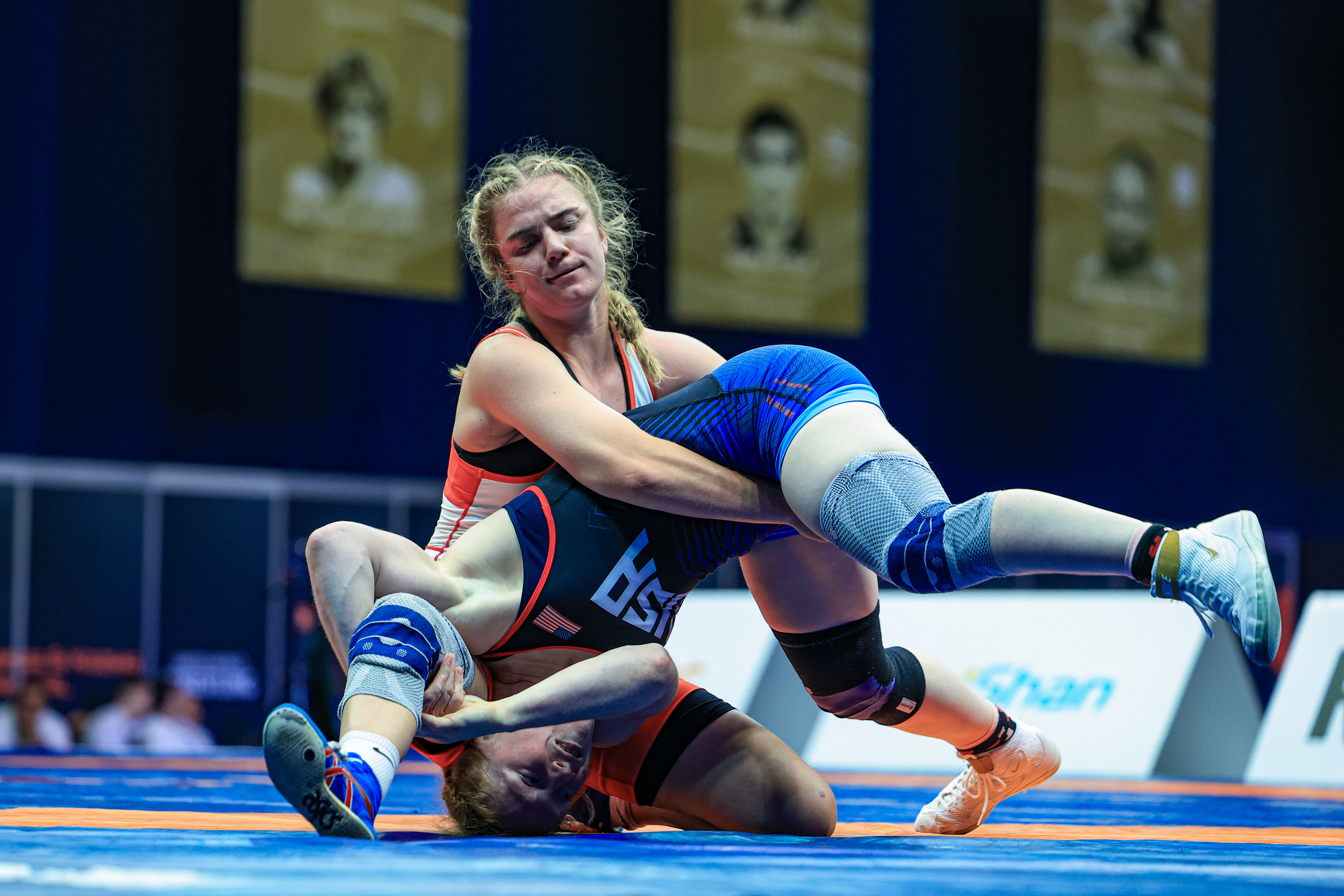 Reese LARRAMENDY (USA) defeated compatriot Jennifer PAGE ROGERS (USA), 7-1, in the 65kg final. (Photo: United World Wrestling / Amirreza Aliasgari)
The United States secured the 65kg gold medal after an all-American final. Unheralded Reese LARRAMENDY (USA) upset her senior teammate Jennifer PAGE ROGERS (USA), 7-1, to claim her first international medal.
The two were involved in an early scramble, with Larramendy emerging on top for the opening takedown and a 2-0 lead. Page was then put on the activity clock but failed to score, giving Larramendy a 3-0 advantage at the break.
Page opened the second period with a stepout to cut the deficit to 3-1 and continued to pressure Larramendy toward the zone. During one exchange, Page appeared to force Larramendy out of bounds, but the action was allowed to continue as the officials did not award a stepout. Larramendy capitalized by scoring a takedown to extend her lead to 5-1.
Larramendy sealed the victory when Page attacked the legs but was countered for two points, completing a 7-1 victory and earning the first international medal of her career.
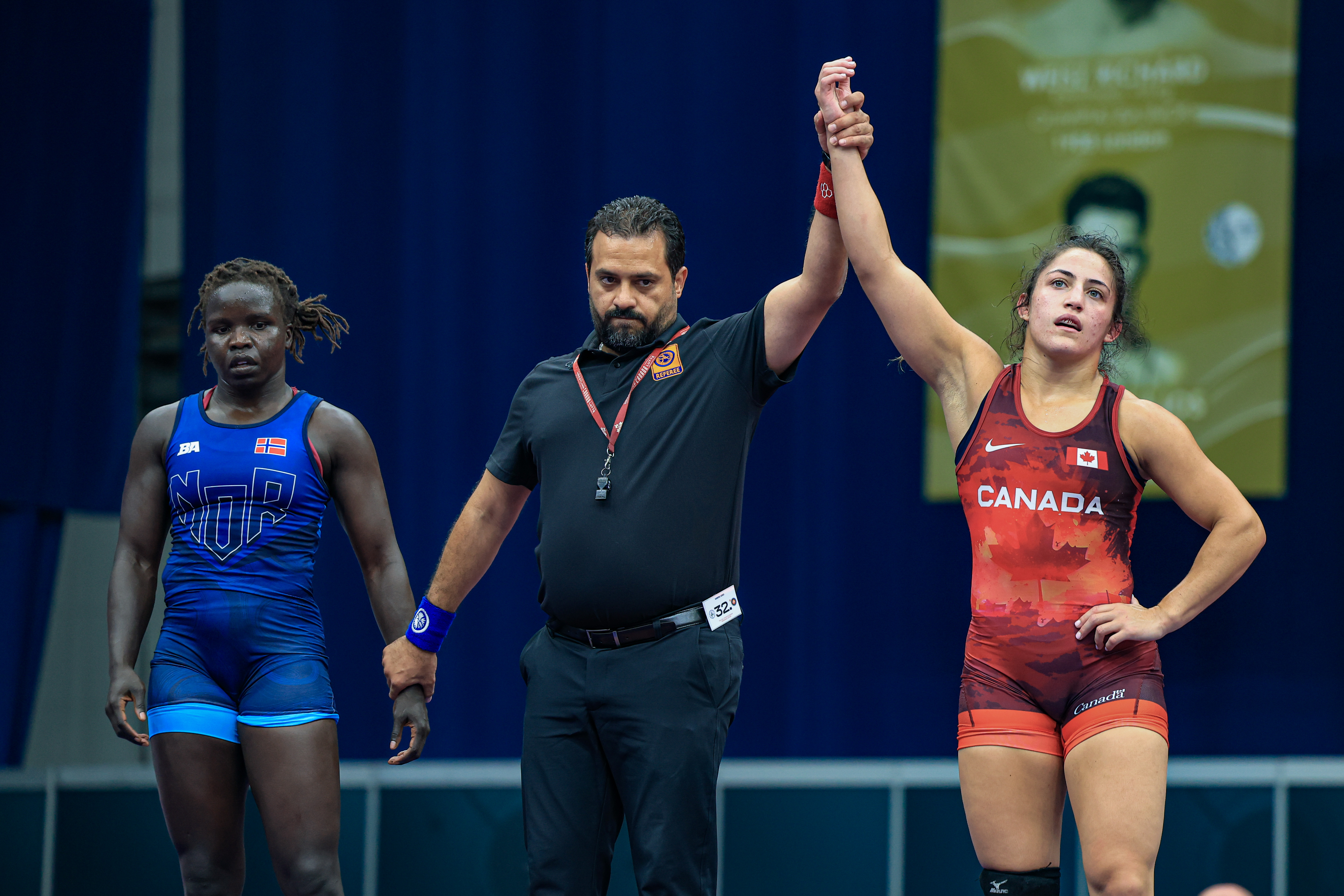 Ana GODINEZ (CAN) pulled off a thrilling 7-6 victory over Grace BULLEN (NOR). (Photo: United World Wrestling / Amirreza Aliasgari)
Godinez Stuns Bullen
Ana GODINEZ (CAN) claimed the 62kg gold medal after MANSI (IND) was forced to withdraw through injury in the final. However, her toughest test came much earlier against European champion Grace BULLEN (NOR), who had defeated Godinez, 11-0, in the bronze medal bout at the Paris Olympics.
Trailing 6-4, Bullen scored a takedown and secured the fall but Godinez challenged the call. While the takedown was upheld, the fall was overturned after it was evident that Bullen had locked her hands behind Godinez's head.
Bullen held a 6-6 criteria advantage and needed only to protect it for the final 12 seconds. Godinez, however, scored a late stepout to secure a 7-6 victory and advance to the semifinals, where she defeated Veranika IVANOVA (BLR), 13-7.
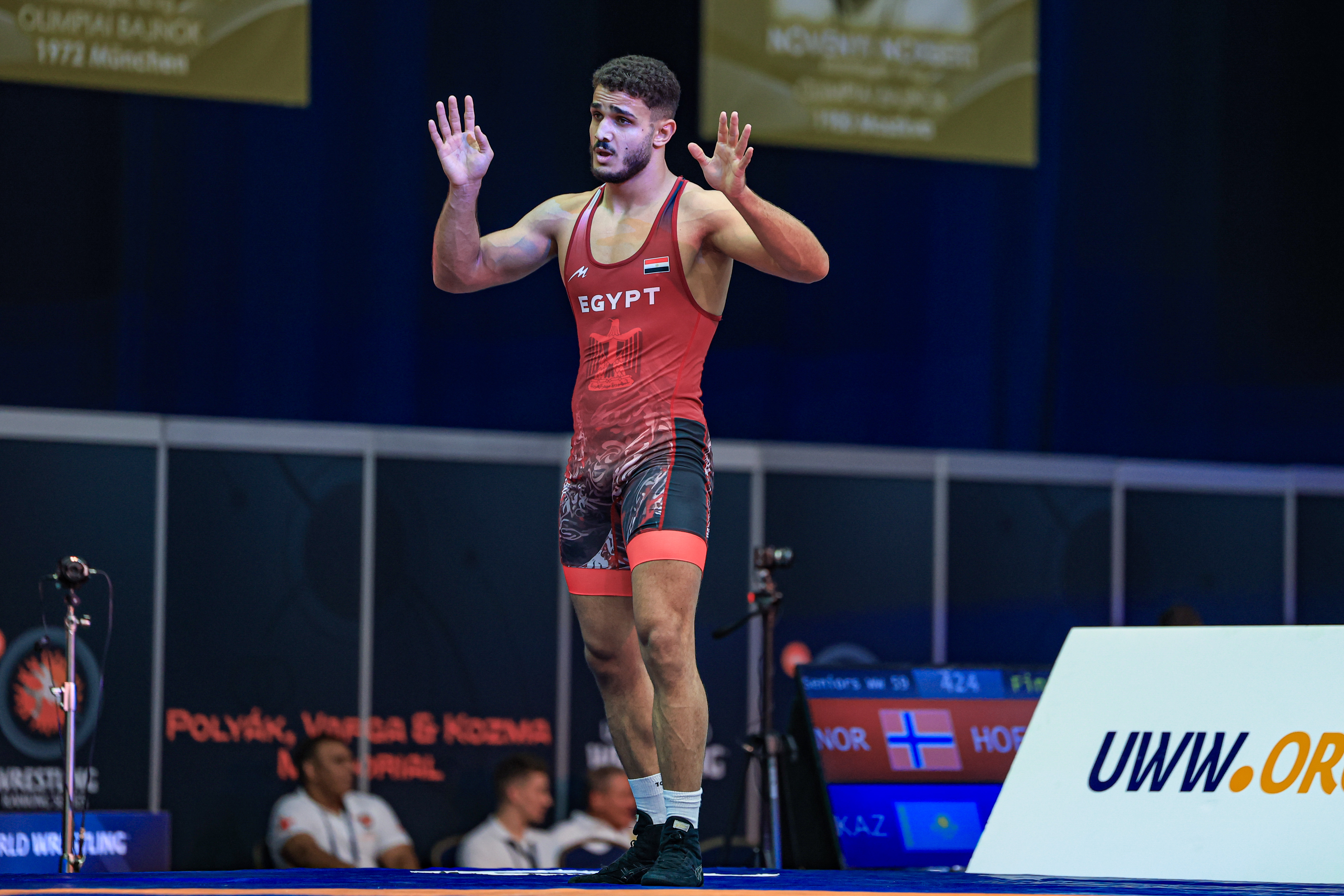 Moustafa ALAMELDIN (EGY) made a successful run at 77kg and won the gold medal. (Photo: United World Wrestling / Amirreza Aliasgari)
Alameldin Shines at 77kg
The two Greco-Roman finals on Friday both ended in 1-1 criteria victories, with Dinislam BAMMATOV (RUS) winning at 67kg and Moustafa ALAMELDIN (EGY) taking the 77kg title.
In Greco-Roman, when a wrestler is called passive, his opponent receives one point and a par terre opportunity. If both wrestlers score only from passivity and the bout ends 1-1, the wrestler who scored first wins on criteria.
Alameldin, the 2024 U20 world champion at 67kg, completed a successful move up to 77kg. He claimed a 1-1 criteria victory over former U17 world champion Alexandru SOLOVEI (MDA) in the final. But before the final, Alameldin completed a stunning 8-0 victory over Levente LEVAI (HUN) in the quarterfinals and then held off Sergei KUTUZOV (RUS), 2-2, in the semifinals.
At 67kg, Bammatov faced U23 world champion Mohamed ABDELREHIM (EGY) in the final and earned the first passivity point. Abdelrehim received par terre in the second period, but neither wrestler scored from the position, allowing Bammatov to retain the criteria advantage and secure the title.
RESULTS
Women's Wrestling
59kg
GOLD: NEHA (IND) df. Abigail NETTE (USA), 6-4
BRONZE: Othelie HOEIE (NOR) df. Altyn SHAGAYEVA (KAZ), 3-3
BRONZE: Mariia VYNNYK (UKR) df. Alexis JANIAK (USA), 8-1
62kg
GOLD: Ana GODINEZ (CAN) df. MANSI (IND), via inj. def.
BRONZE: SAVITA (IND) df. Irina KUZNETSOVA (KAZ), 14-5
BRONZE: Grace BULLEN (NOR) df. Veranika IVANOVA (BLR), 6-4
65kg
GOLD: Reese LARRAMENDY (USA) df. Jennifer PAGE ROGERS (USA), 7-1
BRONZE: Gulnura TASHTANBEKOVA (KGZ) df. Virginia JIMENEZ (CHI), 8-2
BRONZE: Birgul SOLTANOVA (AZE) df. Miki ROWBOTTOM (CAN), via fall (10-0)
68kg
GOLD: Jia LONG (CHN) df. Meerim ZHUMANAZAROVA (KGZ), 4-0
BRONZE: Noémi SZABADOS (HUN) df. Alina SHEVCHENKO (RUS), 5-3
BRONZE: Zelu LI (CHN) df. Nesrin BAS (TUR), 5-4
Greco-Roman
67kg
GOLD: Dinislam BAMMATOV (RUS) df. Mohamed ABDELREHIM (EGY), 1*-1
BRONZE: Ruslan BICHURIN (RUS) df. Tsuchika SHIMOYAMADAA (AUS), 13-6
BRONZE: Din KOSHKAR (KAZ) df. Slavik GALSTYAN (ARM), via inj. def.
77kg
GOLD: Moustafa ALAMELDIN (EGY) df. Alexandru SOLOVEI (MDA), 1*-1
BRONZE: Danil GRIGOREV (RUS) df. Aleksa ILIC (SRB), 1*-1
BRONZE: Sergei KUTUZOV (RUS) df. Levente LEVAI (HUN), 6-2



 Nethmi AHINSA (SRI) won a bronze medal in the 57kg weight class in Birmingham.
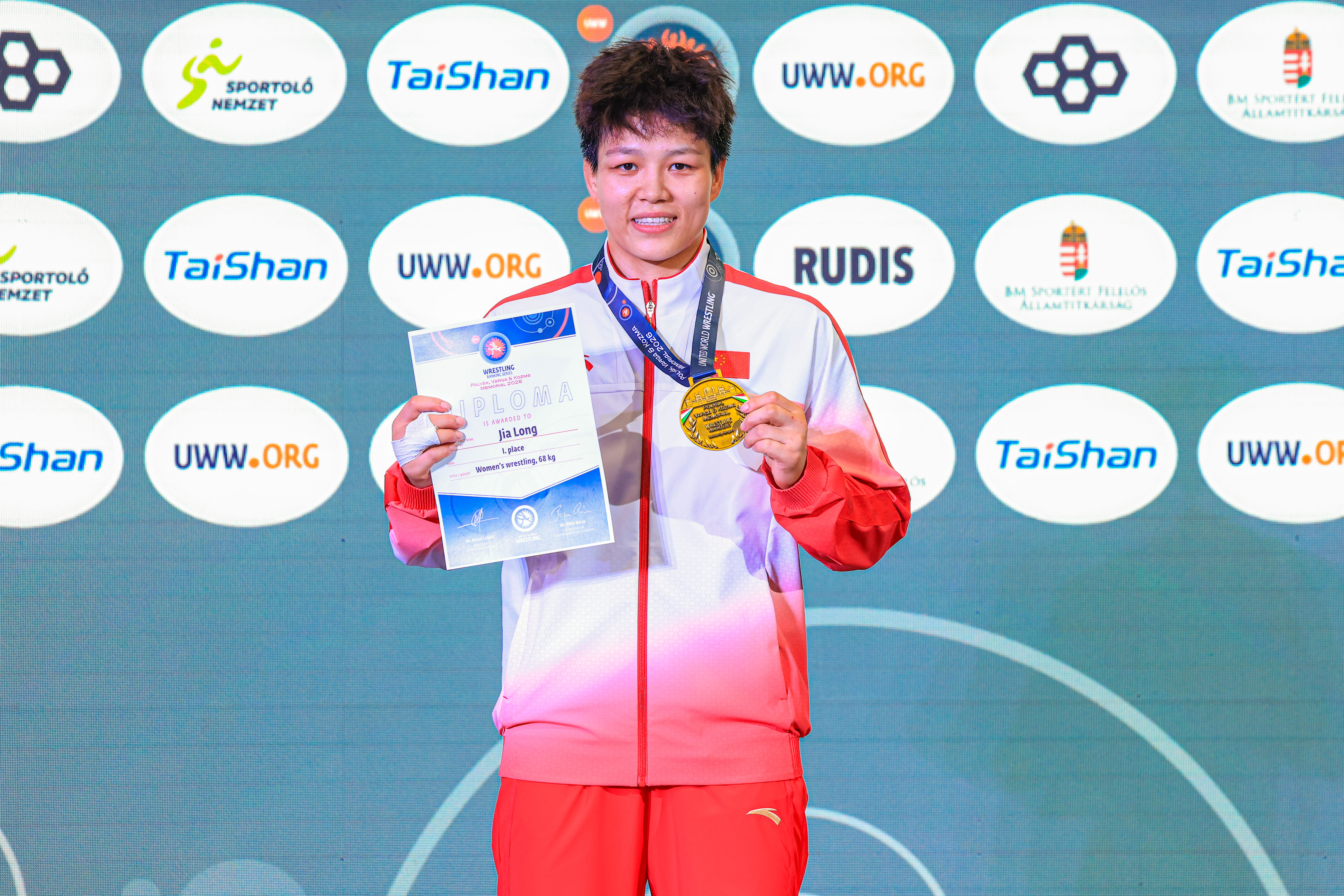 Jia LONG (CHN) won gold at 68kg in Budapest. (Photo: United World Wrestling / Amirreza Aliasgari)
Share your thoughts.
Comments