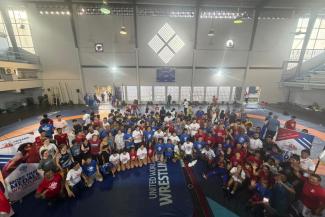
PANAMA CITY, Panama (April 14) -- United World Wrestling’s More Than Medals program reached a new milestone as its 10th edition in Panama recorded its highest participation to date, bringing together 120 athletes from 17 countries across the Americas.
Held from April 6 to 11 in Panama City, the six-day camp reflected the steady growth of the program, both in scale and impact, reinforcing its role as one of UWW’s leading development initiatives in the region.
Since its inception, More Than Medals has been designed to go beyond competition, and the 2026 edition continued that vision by combining high-performance training with education and cultural exchange. The record participation in this milestone edition highlighted the increasing relevance of the program.
On the mat, athletes trained under the guidance of experienced regional coaches, focusing on technical execution, tactical awareness and physical conditioning. Sessions were structured to accommodate different levels, ensuring a productive environment for both emerging and advanced wrestlers.
Off the mat, the educational component remained central to the program. Workshops on anti-doping and sports psychology provided athletes with essential tools to manage performance, decision-making and well-being in high-level environments.
The program also emphasized connection and exchange among participants. Cultural activities, including visits to local natural sites and the Panama Canal, offered opportunities for athletes to interact outside of training, strengthening relationships across national boundaries.



Share your thoughts.
Comments