

#WrestleBishkek: Ravi returns with golden aim
Friday, May 26, 2023 - 11:51 By Vinay Siwach

NEW DELHI, India (May 16) -- Three months back, Ravi KUMAR (IND) was keen on starting the season with a bang. He was in "perfect shape" to wrestle.
Then at one training session, it all changed.
"The hit was so loud that I felt that I will need surgery," Kumar said. "My medial collateral ligament [MCL] and anterior cruciate ligament [ACL] broke."
That was February 6 and since then Kumar has been in rehabilitation, nursing his knee injury. But earlier this month, he return to the mat training sessions and is now making a comeback to competition, 10 months since his last, the World Championships.
"I can't wait."
The Tokyo Olympic silver medalist will wrestle at the Bishkek Ranking Series scheduled for June 1 to 4. Wrestling at 61kg, Kumar will try to regain his form that helped him win three Asian titles, a Commonwealth Games gold medal and become India's biggest hope for Paris Olympics.
"This competition is very important," he said. "I have missed many. I will try to do my best and attain a level which I had before the injury."
An MCL or ACL tear can require surgery but Kumar says his injury was on the borderline and he opted out of the surgery which could have kept him away from the mat for more than six months.
"My partner got hold of my leg and while I was trying to move away, I hit his shoulder with my knee," he said. "So February, March, April I was in rehabilitation."
That meant he missed the second Ranking Series and the Asian Championships in which he won three back-to-back gold medals, the first Indian to the title thrice.
In his absence, U23 world champion AMAN (IND) won the gold medal at 57kg to keep the top medal in India. Incidentally, Aman also trains at the same stadium.
Both Kumar and Aman are registered at 61kg for Bishkek along with a third Indian PANKAJ. European champion at 57kg Aliabbas RZAZADE (AZE) is also in the same weight class and so is the Asian champion at 61kg Taiyrbek ZHUMASHBEK UULU (KGZ) and so is former Asian champion Ulukbek ZHOLDOSHBEKOV (KGZ).
"See if I prepare for every wrestler separately, I will never win," Ravi said. "I have to focus on doing my work and make myself the best. Then whoever is the opponent, it does not matter."
 Ravi KUMAR (IND) lost to Gulomjon ABDULLAEV (UZB) at the World Championships. (Photo: UWW / Martin Gabor)
Kumar, however, would have liked to wrestle Abdullaev, a wrestler who has constantly troubled him since his U20 days. Abdullaev leads the head-to-head record 3-2 after his win in Belgrade.
"Abdullaev has an attack on my left leg and he hits on me," he said. "It's kind of perfect. He always hits on me.
"That day in Belgrade, my body could not get going. Even if I had won against Abdullaev, I don't know what the next result could have been. I wanted to work, but my body didn't. My weight also was set a day before the bout so I slept with ease. I did not do anything in the morning. No warm-up as such. I remained lazy."
While he reflects on the World Championships bout, Kumar knows that it doesn't matter now. With the Asian Games and the Olympic qualifying World Championships scheduled, he has to focus on the upcoming tournaments.
"I will be back on the mat after a long time," he said. "So it's very different to be in a competition. Training is great but when you are in a tournament, it's a different feeling. So I want to be good in Bishkek."
Undoubtedly, Kumar will be the favorite to win the gold in his weight class but with young blood coming up, he will be tested.
"It's wrestling," he said. "No one can predict the result because I am not in regular competition. But if I control the bouts, the result will be in my favor."
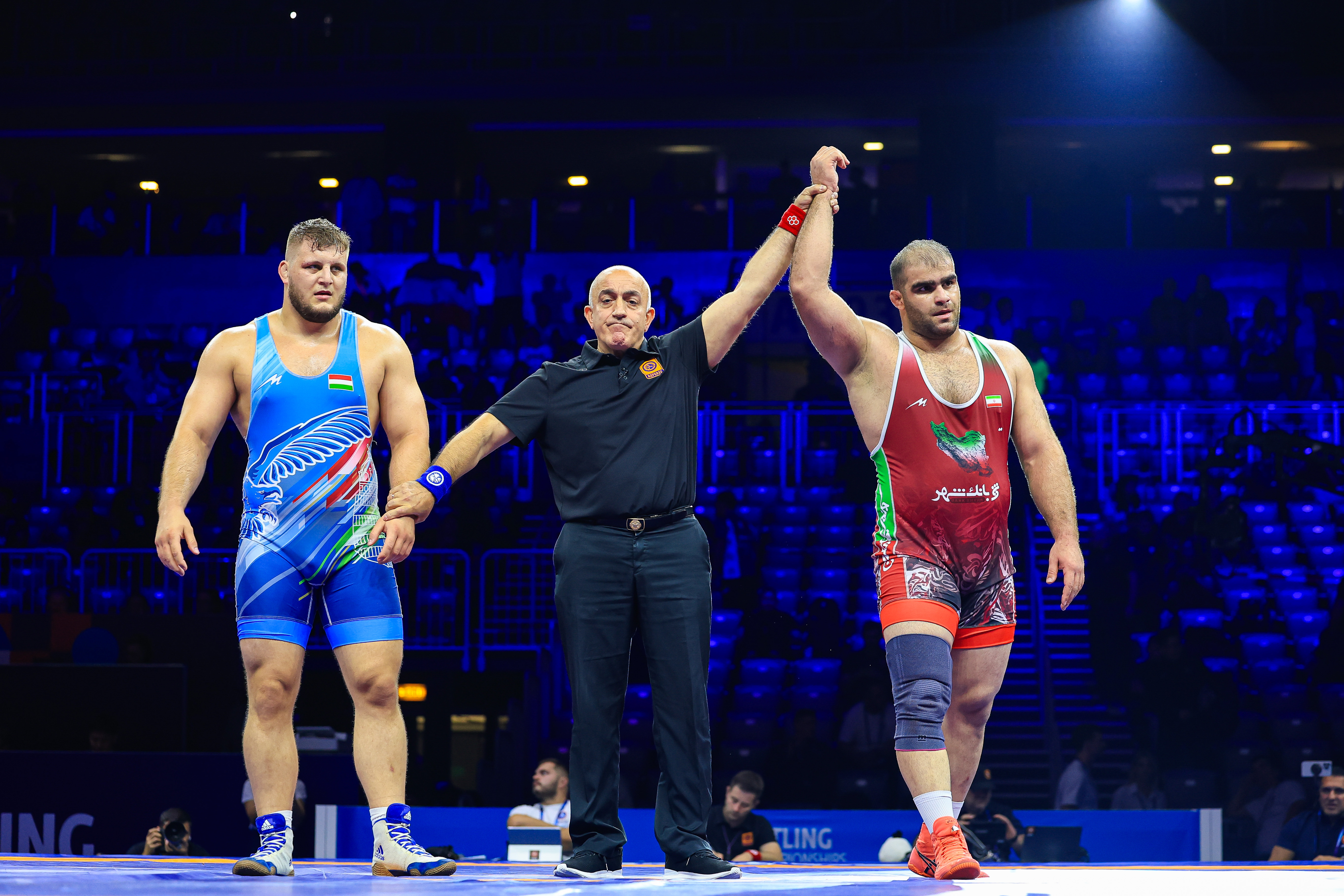 Amin MIRZAZADEH (IRI) is now a two-time world champion. (Photo: United World Wrestling / Kadir Caliskan)
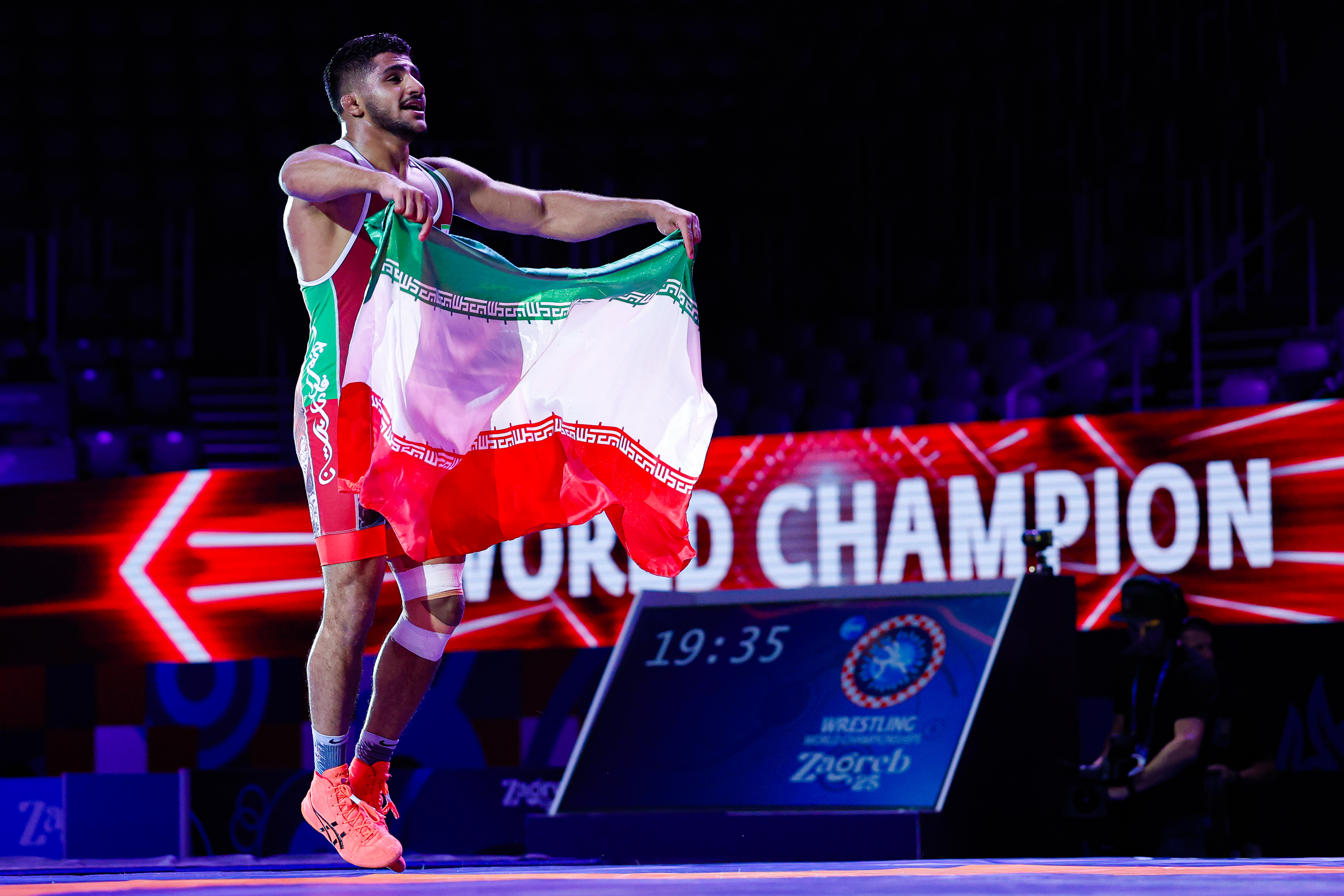 Gholamreza FAROKHI (IRI) celebrates after winning the 82kg final. (Photo: United World Wrestling / Kostadin Andonov)
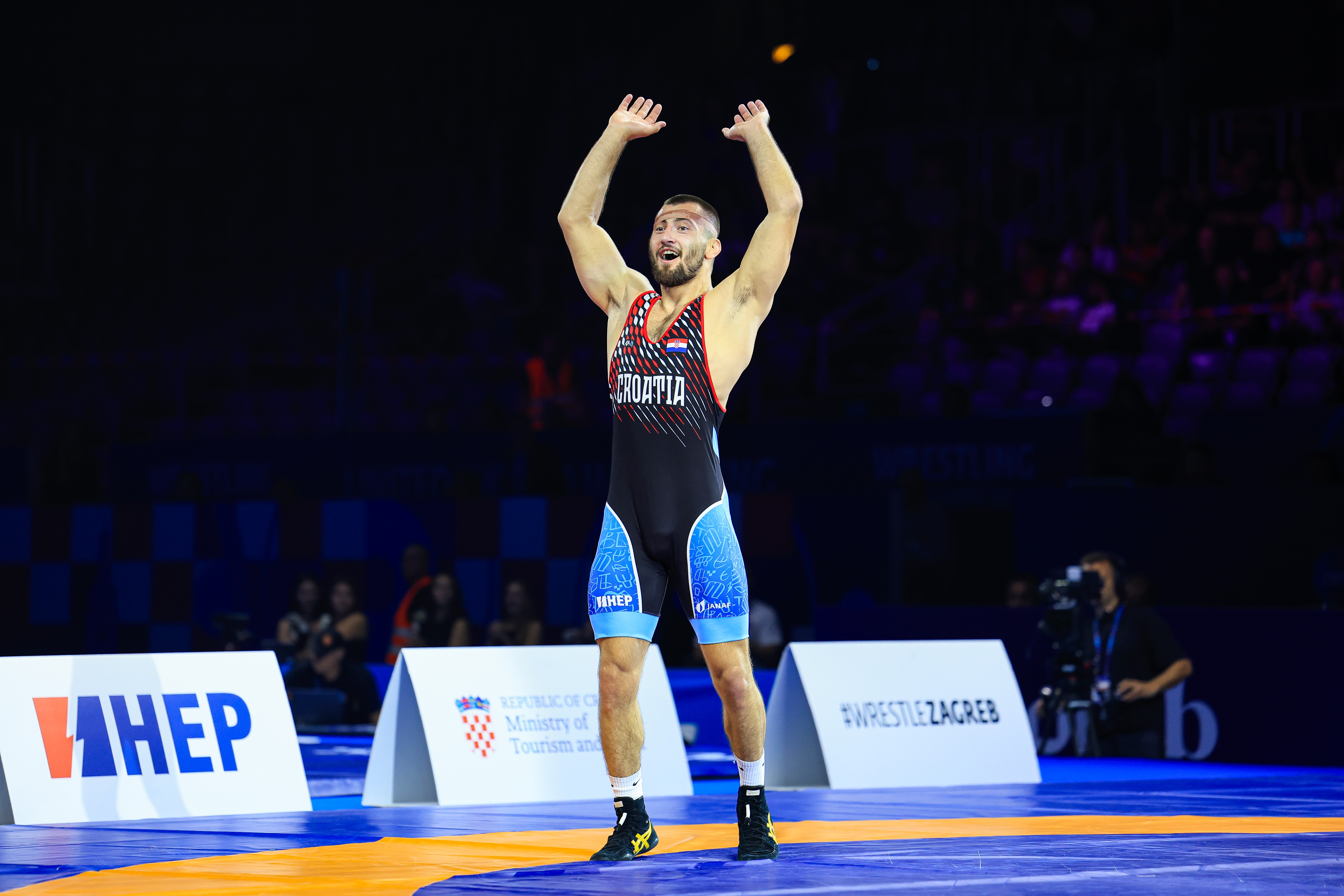 Karlo KODRIC (CRO) celebrates with home fans after winning Croatia's first world medal since 2014. (Photo: United World Wrestling / Kadir Caliskan)
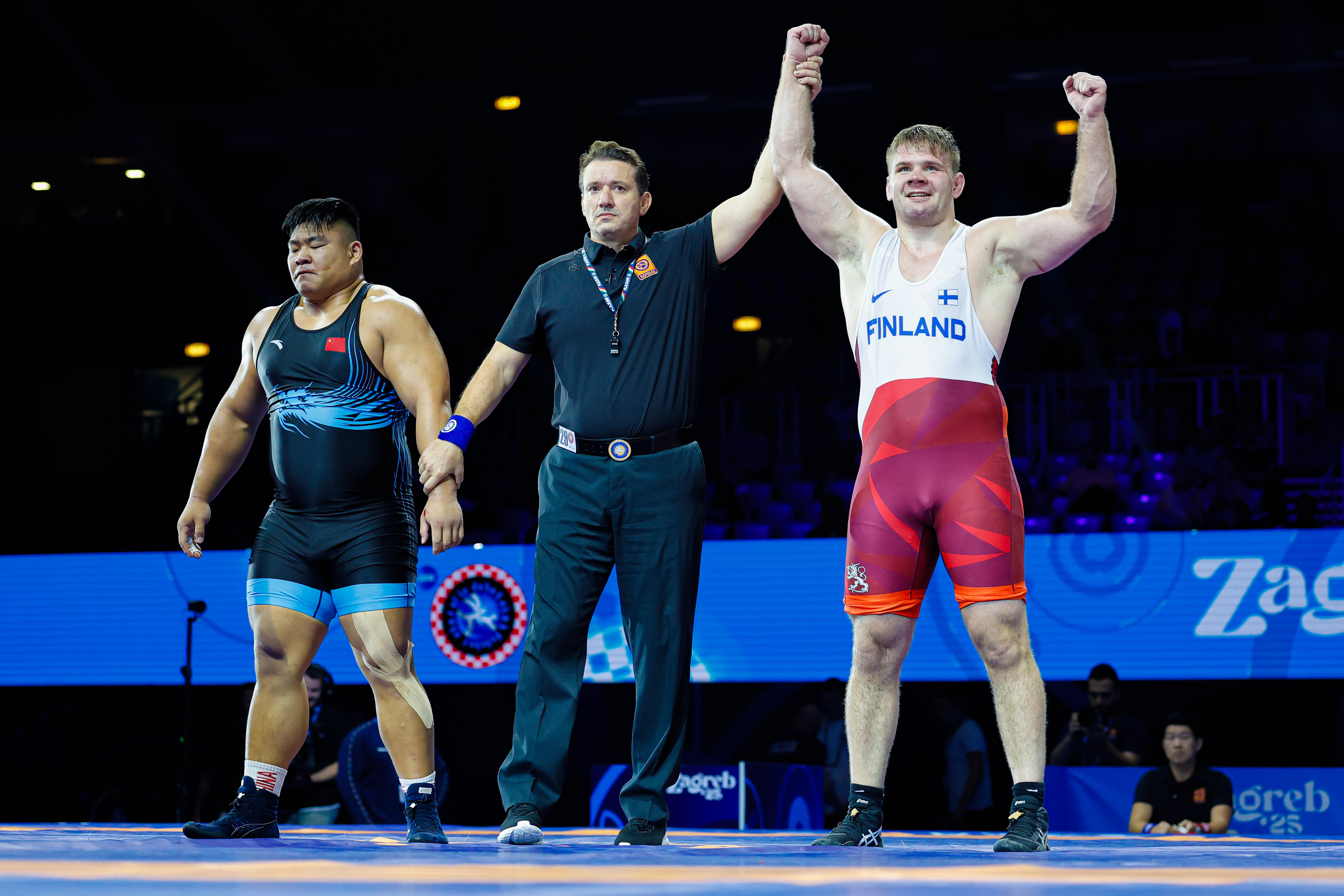 Elias KUOSMANEN (FIN) wins the bronze medal bout against Wenhao JIANG (CHN). (Photo: United World Wrestling / Kostadin Andonov)
Share your thoughts.
Comments