

#WrestleBudpest: Bisultanov dominates to 87kg gold; Kayaalp wins 11th title
Saturday, April 2, 2022 - 22:56 By Vinay Siwach

BUDAPEST, Hungary (April 2) -- Denmark has hosted the World Championships only once -- 2009.
As the world descended in Herning that September, wrestling fans thronged the stadium. Among them was Turpan BISULTANOV (DEN) and his brother Rajbek. And when the tournament ended, the two brothers went home inspired.
12 years after that World Championships in Herning, Bisultanov is a European champion. The 21-year-old switched from taekwondo to wrestling after the Worlds and has been breaking records for Denmark ever since.
Last year, he won the junior championships for Denmark after 17 years and Saturday, he won the gold for Denmark three years after his brother Rajbek won one in 2019. Rajbek's medal ended his country's 93-year wait for a senior continental gold.
The flamboyant 21-year-old outscored his opponents 35-0 over two days and with his crowd-pleasing style became a fan favorite in Budapest.
"I don't know what happened," Bisultanov said. "It's unbelievable. But I am here but I don't know what to say."
Wrestling Nicu OJOG (ROU) in the 87kg final, Bisultanov took only one minute and 13 seconds to finish the bout 8-0. In his four bouts, he did not wrestle the full six minutes in any, spending just over 13 minutes on the mat.
While he expected to wrestle world champion Zurabi DATUNASHVILI (SRB) in the final but Islam ABBASOV (AZE) defeated him before himself getting pinned by Ojog. Bisultanov is now waiting for a bout against the Serbian at the next competition.
"Zurabi is a fine wrestler," he said. "I am trying to learn how to fight him and other good wrestlers. But you can't forget the underdogs because they are also here to win the medal."
But no one could trouble Bisultanov here as his low-stance and high-paced wrestling made him a difficult opponent. Bisultanov explains he idolized Islambek ALBIEV (RWF) and Mark MADSEN (DEN) growing up and learned the style from the two.
Incidentally, both Albiev and Madsen won gold at the Herning World Championships.
But growing up, he did not have the same luxury as the two world champions as he had to attend school and travel to different countries if he wanted good partners.
"I have only one partner in Denmark and it's difficult to train," he said. "I have to attend school as well so I can't have more than three days a week for training. Other countries are training every day."
Most of Bisultanov's training is in Sweden or Norway. The members of the two teams were the first ones to congratulate him after the win.
Among them was Marcel STERKENBURG (NED) who wrestled at 82kg in Budapest but is expected to move to 87kg later this year. The two have been training together since childhood and are most likely to meet in an international competition soon.
"I don't know, may the best man win," he said. "We have fought each other since we were little. We were enemies as kids but now only on the mat."
Bisultanov's win in Budapest eased some of his pain from missing out on the medal in Oslo, where he finished fifth and now hopes to win one in Belgrade, hopefully, gold with a win over Datunashvili.
"I either win or learn," he said. "It was so painful to miss out on medals in Oslo and even at the Euros in Warsaw also. But I dream of winning gold at Olympics and Worlds."
 Riza KAYAALP (TUR) now has 11 European titles. (Photo: UWW / Kadir Caliskan)
Kayaalp wins 11th gold
Riza KAYAALP (TUR) is on a mission to break Alexander KARELIN (RWF) record of 12 European gold medals. He took another step closer to that by winning his 11th gold in Budapest. The four-time world champion defeated Danila SOTNIKOV (ITA), 4-0 in the 130kg final using a head-pinch exposure when the Italian was trying to push him out.
"This is my 12th final and my 11th win, it's an incredible feeling," Kayaalp said. "It always motivates me to be on top of the podium. I want to finish my career at the top. My goal is to break the records of wrestling legend Karelin."
Kayaalp has gold medals beginning from the 2010 European Championships. He missed out on medals in 2011 [silver] and 2020 [seventh]. In 2015, he won the European Games instead of the championships.
But when asked to compare his first and latest European gold, the 32-year-old said that age is catching up to him.
"It's harder to win the title every time," he said. "I feel a little older. I love wrestling and it is a part of my life and I am very happy and proud that I can do this since I was six years old."
He will now be looking to win the World Championships in Belgrade, Serbia which will be his fifth.
 Malkhas AMOYAN (ARM) celebrates after beating Yunus BASAR (TUR) in the final. (Photo: UWW / Kadir Caliskan)
Two other world champions won gold in Budapest as Malkhas AMOYAN (ARM) won the 77kg title while Eldaniz AZIZLI (AZE) captured the top medal at 55kg.
Amoyan, who won the gold in Oslo at 72kg, was making his debut at the 77kg and wrestled Yunus BASAR (TUR) in the final. He was called passive and gave up a gut wrench to trail 3-0 at the break. But he got the same action using a chest wrap in the second period to lead 3-3 on criteria.
Turkey challenged the call asking for a leg foul but the judges found no negative wrestling which gave another point to Amoyan, extending his lead 4-3 with two minutes remaining.
The silver medalist from Warsaw European Championships was again called passive but this time Basar could not get any exposure from par terre as Amoyan let out a loud scream to celebrate his maiden gold at the continental championships.
"Last year I got second place and it was my fault," Amoyan said. "But here I was focused only on wrestling for the gold and used the instructions of the coaches correctly."
Since he has moved up to an Olympic weight class, Amoyan thinks that winning gold at 77kg is slightly more significant than his gold in Oslo which came at 72kg.
"At the Worlds, I wrestled at 72kg weight class which is not an Olympic weight," he said. "But this gold in Budapest has its Olympic significance. Well, each of them has a special purpose in my life."
The win was even more special as he had beaten 77kg Oslo silver medalist Sanan SULEYMANOV (AZE), 6-5, in the semifinals. It was his first win over the Azerbaijan wrestler in three meetings.
After his semifinal and final wins, Amoyan also got a special pat on the back from the Rio Olympic champion and Tokyo silver medalist Artur ALEKSANYAN (ARM) who was present during the celebrations.
"Artur helped me a lot, he was always close to our team, and his presence inspired our team to become winners," he said.
 Eldaniz AZIZLI (AZE) won his second European title in Budapest. (Photo: UWW / Kadir Caliskan)
Azizli wrestled his rival and world champion from 2019 Nugzari TSURTSUMIA (GEO). Prior to this meeting, the two had wrestled each other four times with Azizli enjoying a perfect 4-0 record over Tsurtsumia. He extended that record to 5-0 when he won 8-2 in the 55kg final.
The two greeted each other with a hug before the final but there was no love on the mat as Azizli went on the offensive straight away. He got the point for his opponent's passivity and a roll gave him a 3-1 lead.
Tsurtsumia tried exposing with a head pinch but in turn, ended up giving two points. In the same action, Azizli scored two more and led 7-1 with two minutes remaining before closing out the bout 8-2.
 Leri ABULADZE (AZE) gave Georgia the gold at 63kg. (Photo: UWW / Bayrem Ben Mrad)
Georgia did have a gold medalist Saturday as U23 World champion Leri ABULADZE (GEO) added a European title to his resume. He wrestled Taleh MAMMADOV (AZE) in the 63kg final and controlled it well. His one scoring action in par terre in the second period was enough to give him a 3-1 win over Mammadov, his first in two meetings.
"I was well prepared for this championship," Abuladze said. "I was waiting for this moment for quite a long time. I was ready and everything worked out just as I planned it."
Abuladze has also put behind the defeat in the 63kg final in Oslo to Meysam DALKHANI (IRI).
"The next World Championship is ahead and I don’t want to think of that championship in Oslo," he said. "I am 100 percent ready for the next one. There will be different training camps in Georgia."
The final five gold medals of the European Championships will be handed out Sunday.

GR Medal Bouts
55kg
GOLD: Eldaniz AZIZLI (AZE) df Nugzari TSURTSUMIA (GEO), 8-2
BRONZE: Rudik MKRTCHYAN (ARM) df Denis MIHAI (ROU), 9-1
BRONZE: Emre MUTLU (TUR) df Artiom DELEANU (MDA), via fall
63kg
GOLD: Leri ABULADZE (GEO) df Taleh MAMMADOV (AZE), 3-1
BRONZE: Oleksandr HRUSHYN (UKR) df Etienne KINSINGER (GER), 5-2
BRONZE: Ahmet UYAR (TUR) df Hrachya POGHOSYAN (ARM), 6-5
77kg
GOLD: Malkhas AMOYAN (ARM) df Yunus BASAR (TUR), 4-3
BRONZE: Sanan SULEYMANOV (AZE) df Per OLOFSSON (SWE), 5-0
BRONZE: Aik MNATSAKANIAN (BUL) df Antonio KAMENJASEVIC (CRO), 4-0
87kg
GOLD: Turpan BISULTANOV (DEN) df Nicu OJOG (ROU), 8-0
BRONZE: Islam ABBASOV (AZE) df Yoan DIMITROV (BUL), 5-1
BRONZE: Roberti KOBLIASHVILI (GEO) df Mirco MINGUZZI (ITA), 3-3
130kg
GOLD: Riza KAYAALP (TUR) df Danila SOTNIKOV (ITA), 4-0
BRONZE: Konsta MAEENPAEAE (FIN) df Franz RICHTER (GER), 1-1
BRONZE: Dariusz VITEK (HUN) df Beka KANDELAKI (AZE), 4-1
GR Semifinals
60kg
GOLD: Kerem KAMAL (TUR) vs Edmond NAZARYAN (BUL)
SF 1: Kerem KAMAL (TUR) df Murad MAMMADOV (AZE), via fall
SF 2: Edmond NAZARYAN (BUL) df Gevorg GHARIBYAN (ARM), 10-1
67kg
GOLD: Krisztian VANCZA (HUN) vs Murat FIRAT (TUR)
SF 1: Krisztian VANCZA (HUN) df Slavik GALSTYAN (ARM), 4-2
SF 2: Murat FIRAT (TUR) df Hasrat JAFAROV (AZE), 2-0
72kg
GOLD: Robert FRITSCH (HUN) vs Shmagi BOLKVADZE (GEO)
SF 1: Robert FRITSCH (HUN) df Pavel PUKLAVEC (CRO), 1-1
SF 2: Shmagi BOLKVADZE (GEO) df Ulvi GANIZADE (AZE), 4-1
82kg
GOLD: Rafig HUSEYNOV (AZE) vs Gela BOLKVADZE (GEO)
SF 1: Rafig HUSEYNOV (AZE) df Mihail BRADU (MDA), 3-1
SF 2: Gela BOLKVADZE (GEO) df Pascal EISELE (GER), 3-1
97kg
GOLD: Kiril MILOV (BUL) vs Arvi SAVOLAINEN (FIN)
SF 1: Kiril MILOV (BUL) df Vladlen KOZLIUK (UKR), 7-1
SF 2: Arvi SAVOLAINEN (FIN) df Daniel GASTL (AUT), 4-2
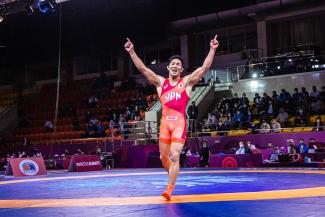
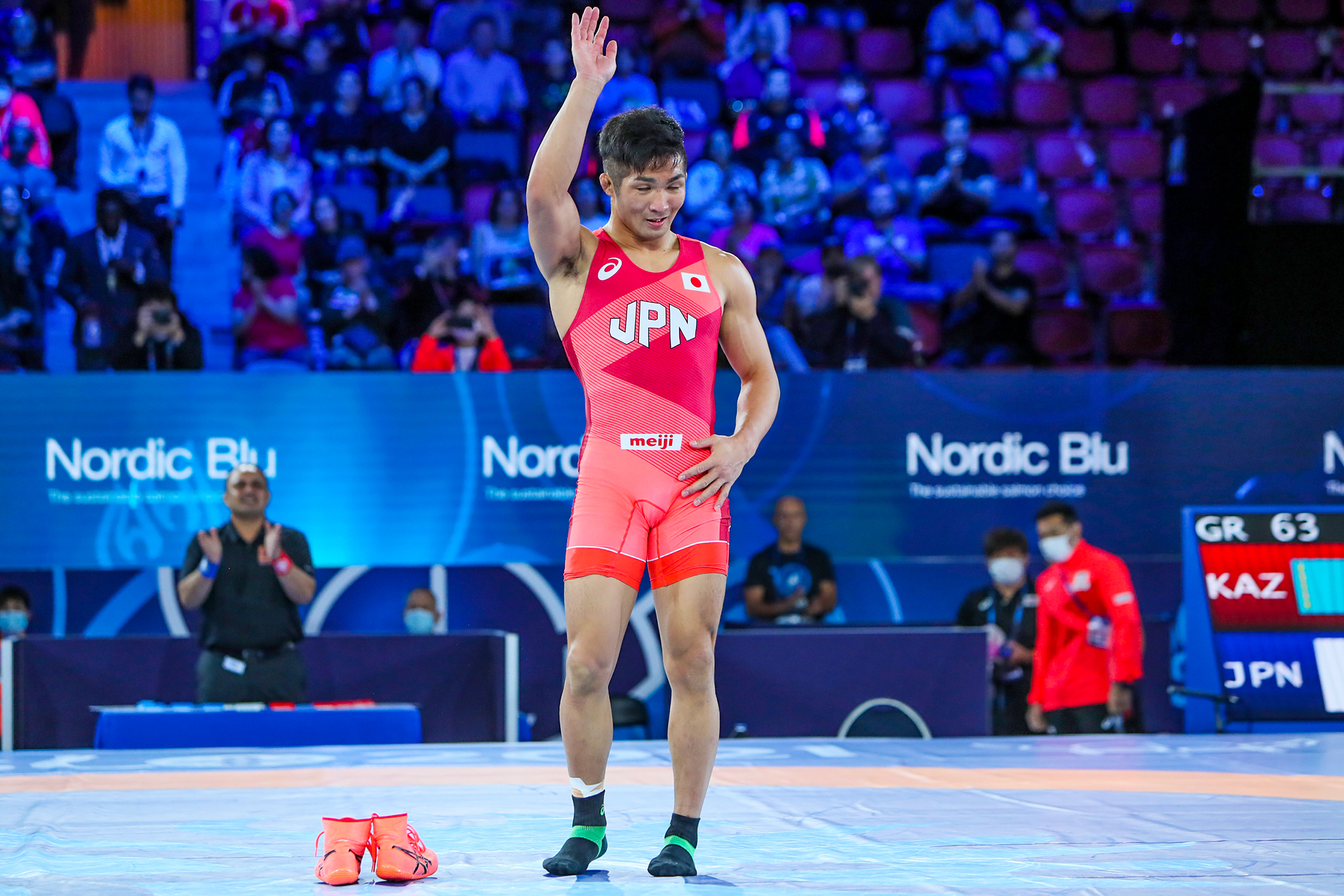 Tsuchika SHIMOYAMADA (AUS) had left his shoes on the mat during the 2021 World Championships to mark his retirement. (Photo: United World Wrestling / Martin Gabor)
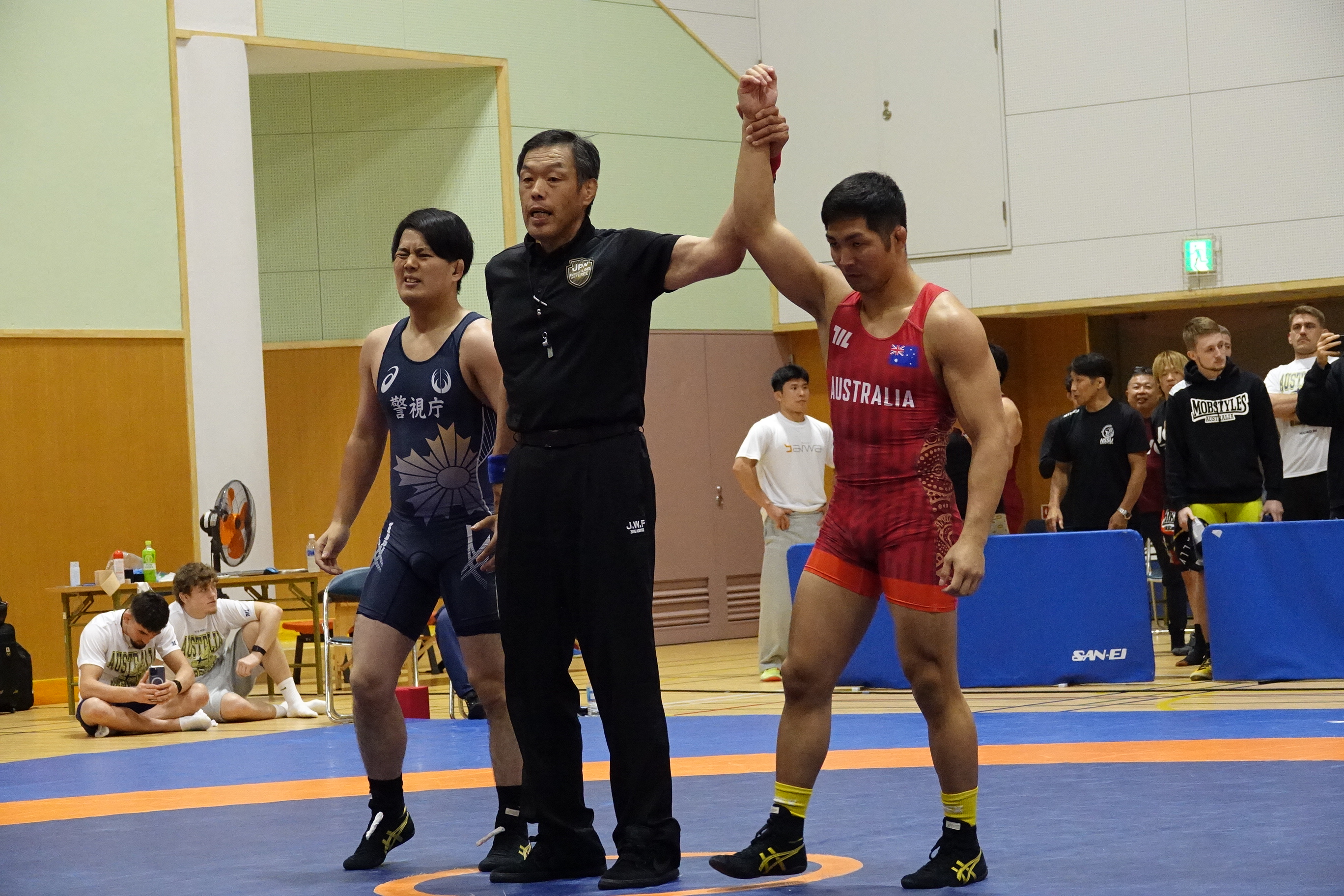 Tsuchika SHIMOYAMADA advances to the semifinals at the All-Japan Non-Student Championships in July with a 52-second win over Kokoro GOTO. (Photo: Koji Fuse / wrestling-spirits.jp)
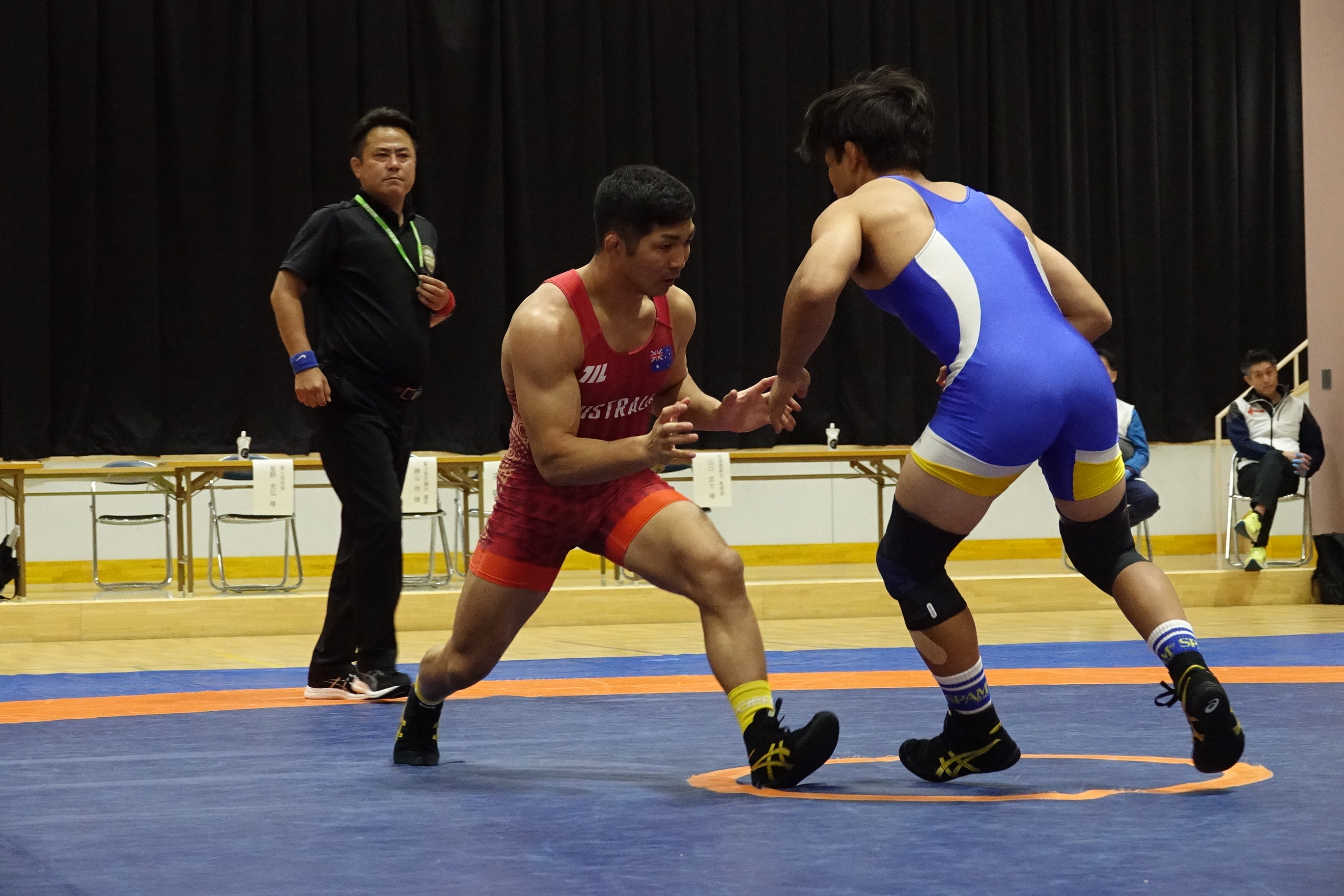 Tsuchika SHIMOYAMA faces Keitaro ONO in his opening match at the All-Japan Non-Student Championships in July. (Photo: Koji Fuse / wrestling-spirits.jp)
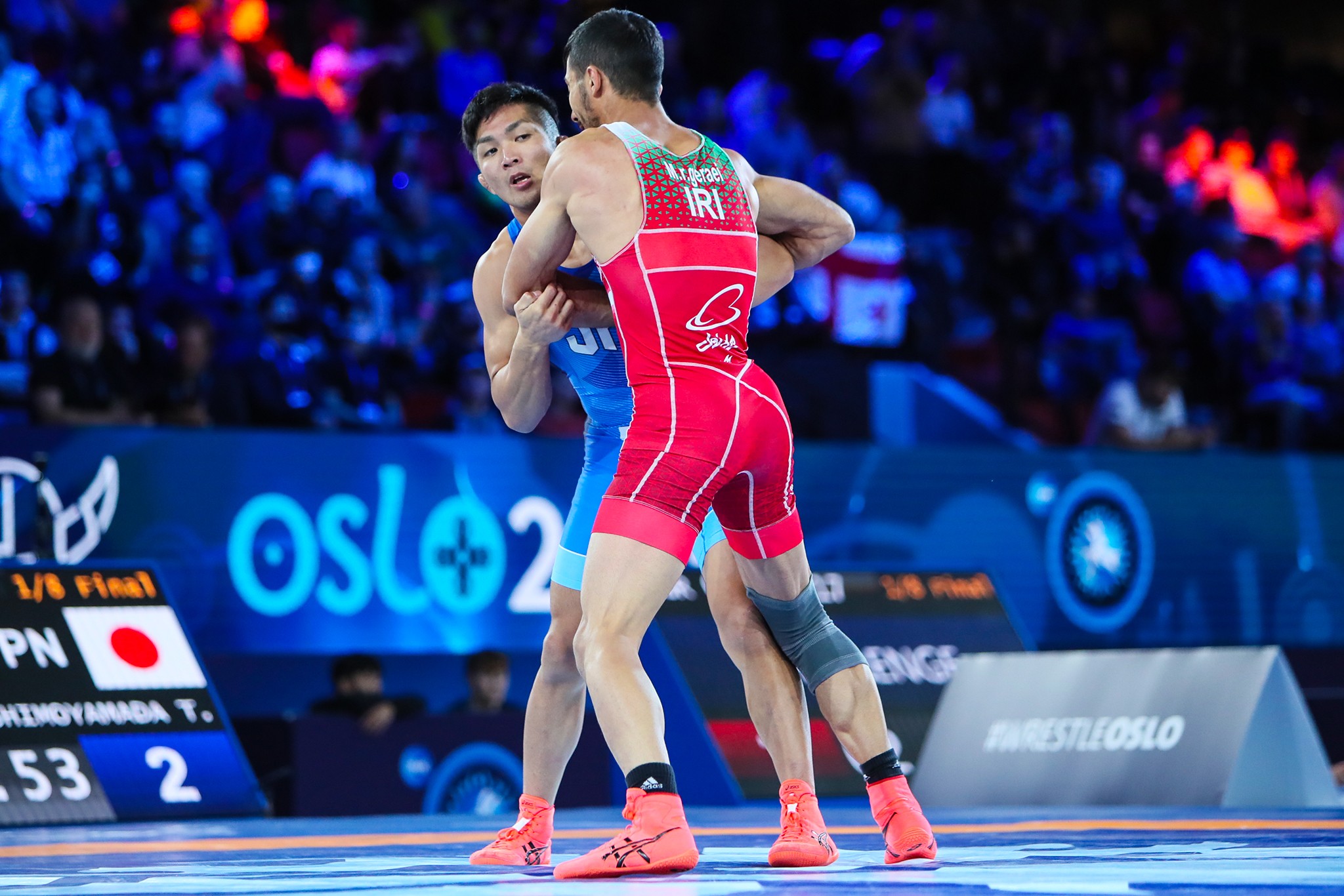 Tsuchika SHIMOYAMADA (AUS) was dominating Mohammadreza GERAEI (IRI) in their match at the 2021 World Championships before being pinned. (Photo: United World Wrestling / Martin Gabor)
Share your thoughts.
Comments