Women's Wrestling

Wrestler Yasemin Adar Wins Mustafa Koç Sports Award

By GİLA BENMAYOR

Mustafa Koç, the late Turkish businessman who we lost too soon, was a leading advocate of the United Nations’ “HeForShe” initiative, which aims to get the support of men for gender equality. If he could have seen who won the second Mustafa V. Koç Sports Award, organized by Holding and the Turkish Olympics Committee, he would surely have been very pleased.

Designed by the famous designer Ivan Chermayeff, and presented by Caroline Koç, the wife of the late businessman, the award trophy was received this year by 2018 World Wrestling Champion Yasemin Adar.

She is Turkey’s first woman world champion wrestler. Adar, who also earned a 200,000 Turkish Lira prize, is a three-time successive (2016-2017-2018) world champion. When top jury Caroline Koç announced the award, she described Adar as “determined, hardworking and disciplined.” After an emotional introductory film, Adar’s speech revealed the determination of a woman who chose wrestling, widely considered a “sports for men.”
 

Do women ever wrestle? 

“When I started wrestling, there were many prejudices. I was often told I should not do this sport and that I could not do it. As a woman, I proved what I could achieve by ignoring what was being said, by never giving up, believing in myself, never stopping and by practicing with passion.”

Adar is a role model for all women in Turkey who wish to take up wrestling.

In many cities of Turkey, there are “women’s wrestling clubs” which were opened after Adar’s successes.

There are many girls who wish to follow her and achieve success just like her. Adar already stressed this in her speech. “I now believe that my struggle was for the new generation of wrestler girls. I stepped on that mat in order to lead their way.”

A legendary name in the Olympics

Another meaningful speech during the ceremony was made by another woman who thought exactly the same as Adar years ago in the sense of leading the way for women. The first African Muslim female athlete who managed to win a gold medal in the 1984 Los Angeles Olympics: Nawal El Moutawakel from Morocco.

El Moutawakel, who used to be a vice president in the International Olympics Committee and who became Morocco’s sports and youth minister twice, is one of the legendary figures of the Olympics. Today, she is one of the leading figures of the international Olympics community.

“When I participated in the 1984 Olympics, nobody knew me and nobody believed in me,” she said in her speech.

During her successful career, El Moutawakel struggled for women’s liberation in sports.

“I am where I stand now thanks to the sports,” she said. El Moutawakel, who led the way for Muslim female athletes in the 1980s, and Adar, who leads the way for the female wrestling sports in Turkey, came together due to the Mustafa Koc Sports Awards. Watching and listening to them was a pleasure for all ceremony attendees.
#WrestleTirana

Kayaalp's 13: New Golden Standard Set in Europe

By United World Wrestling Press

TIRANA, Albania (April 20) -- On Tuesday evening in Tirana, Riza KAYAALP (TUR) did something that for years existed and was expected to continue to exist only as a hypothetical.

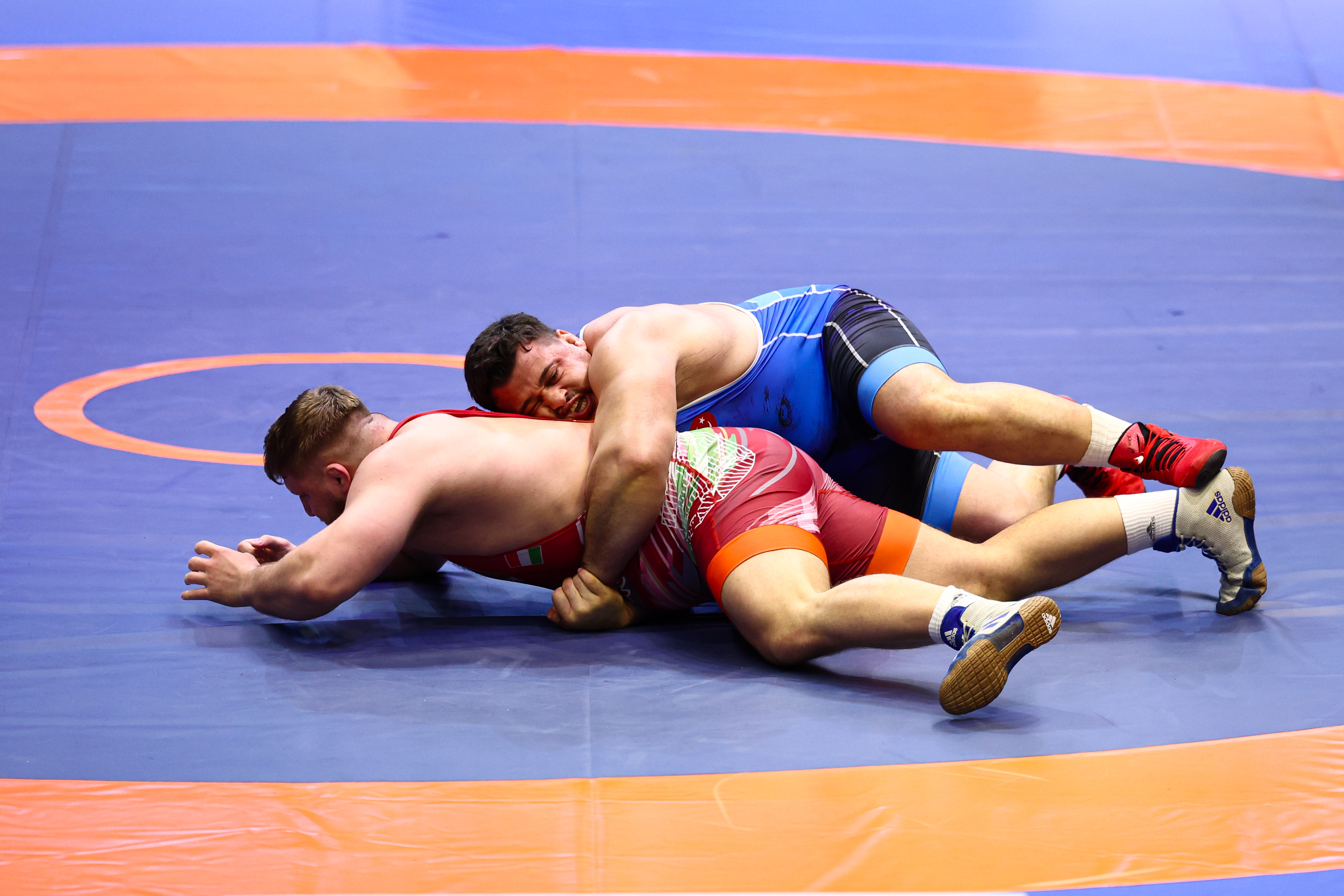
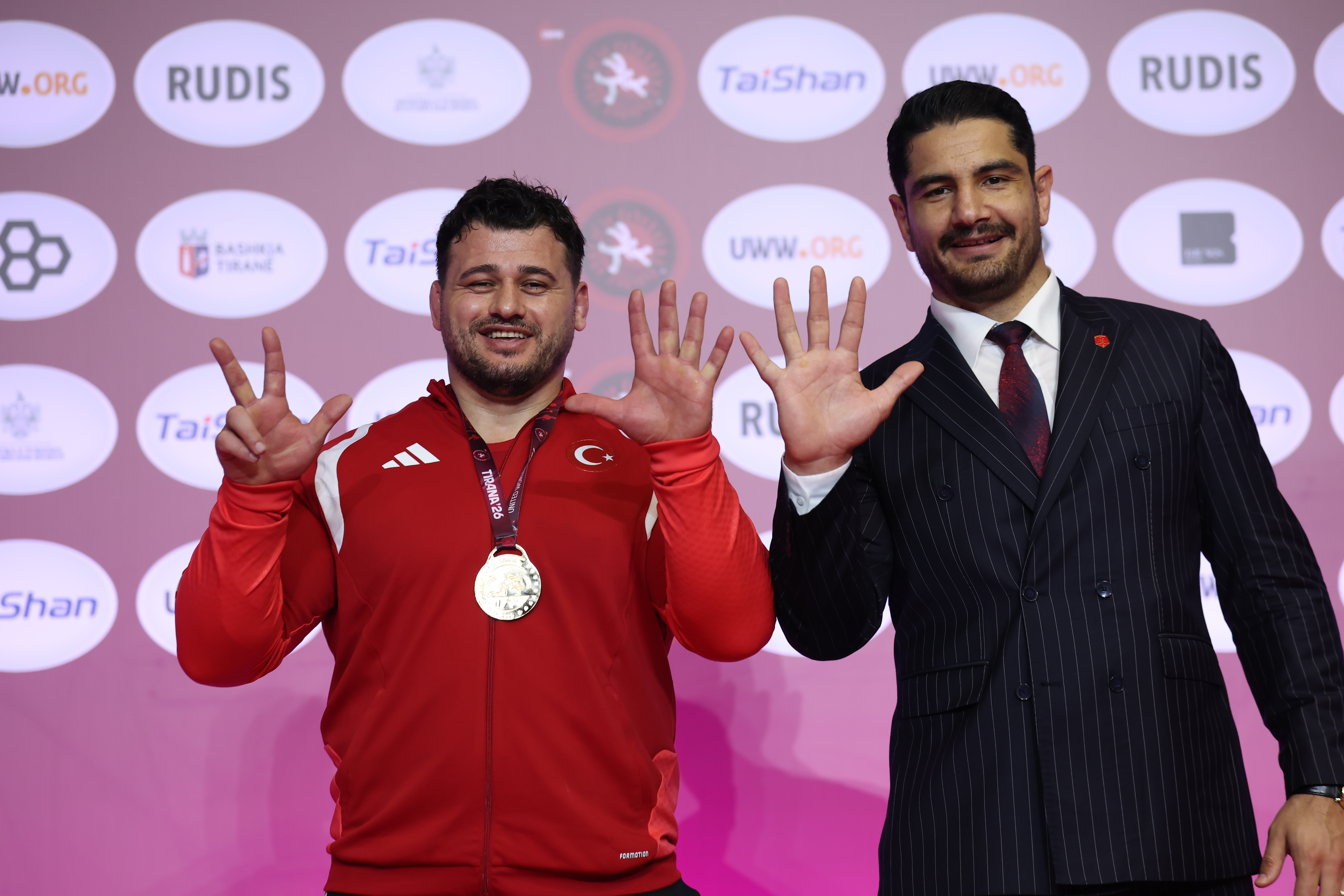
He won his 13th European title in Tirana on Tuesday, beating Darius VITEK (HUN), 7-1, in the 130kg European Championships. 2026 joined 2023, 2022, 2021, 2019, 2018, 2017, 2016, 2015, 2014, 2013, 2012 and 2010.

Riza KAYAALP (TUR)Riza KAYAALP (TUR) turns Darius VITEK (HUN) in the 130kg final. (Photo: United World Wrestling / Kadir Caliskan)
As the referee raised his powerfully sculpted right arm in triumph, Kayaalp raised the ceiling in Greco-Roman. He moved past the legendary Aleksandr KARELIN’s 12 European gold medals, the last of which he had won in 2000. Generations of wrestlers had competed, won and lost, knowing all the while that that number would outlast them. Until Kayaalp finally eclipsed it.

The moment itself wasn’t dramatic in the way history is often expected to be. Just a raised hand, a nod and a lap of honor around the mat with the Turkish flag around his shoulders. That’s been the story of Kayaalp’s career.

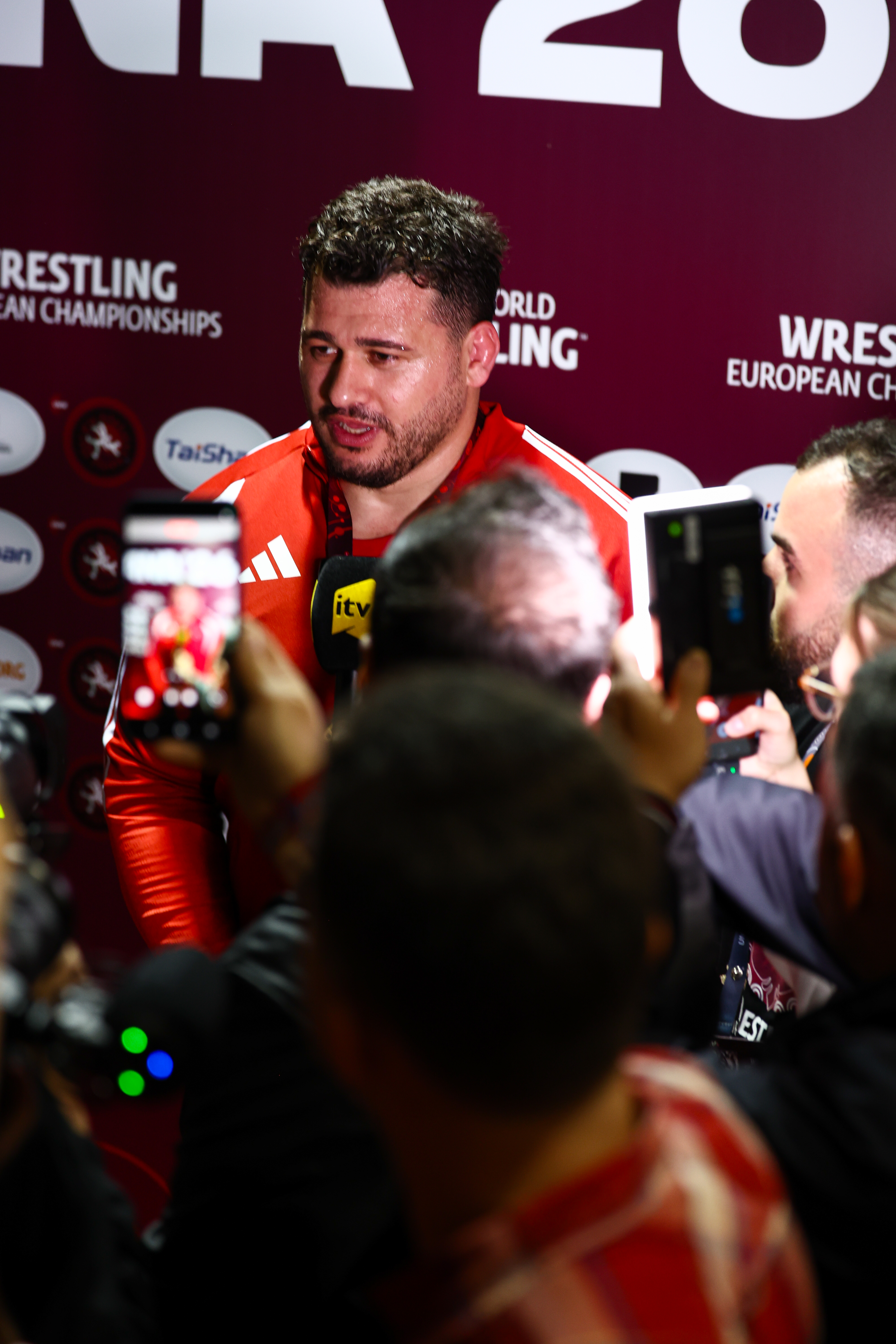
Riza KAYAALP (TUR)Riza KAYAALP (TUR) speaks to the media after winning the gold medal at the European Championships. (United World Wrestling / Jake Kirkman)
Born in Yozgat, in central Turkey, Kayaalp would have inherently understood the role of wrestling in Turkish sporting heritage and the place champions of the sport have historically held in the nation. He would have grown up in the shadow of two-time Olympic and eight-time European champion Hamza YERLIKAYA, who defined Turkish wrestling in the 1990s and like everyone else in the sport, under the global shadow of Karelin.

Slowly and methodically Kayaalp would try to match them. His career has been relentless and consistent rather than spectacular. Since his first European gold in 2010, won as a twenty-year old, Kayaalp has claimed titles across two decades. He’s adapted through rule changes, generations of opponents, and brutal physical wear and tear of time itself.

Apart from his European titles, he has five World Championships gold medals, and three Olympic medals -- a bronze in London 2012, silver in Rio 2016, bronze again in Tokyo 2020. Every time a major medal was to be decided over the past decade and a half, Kayaalp would with almost absurd reliability be counted in the mix.

Riza KAYAALP (TUR)Riza KAYAALP (TUR) with Taha AKGUL (TUR) at the medal ceremony in Tirana. (Photo: United World Wrestling / Kadir Caliskan)

For all of Kayaalp’s longevity, his career has always carried the one obvious gap compared to Karelin or Yerlikaya -- no Olympic gold. That absence will still be there. That gap is unlikely to close any time soon. As such the European mark became a milestone within his grasp. Or in the last few years, a milestone just out of grasp.

Indeed, for Kayaalp the title will provide a sense of closure. He had equalled Karelin’s record at the 2023 European championships in Zagreb. Prior to that tournament, he had in an interview with Anadalou Agency spoken of equalling Karelin’s record, breaking it at the 2024 European Championships and finally finishing his career on a high note with a gold at the 2024 Paris Olympics.

But things would not go as planned. At the 2024 European Championships, Kayaalp was pinned in the final by Sergey SEMENOV (UWW) -- only the second final he had ever lost in Europe. A few months later despite qualifying for the Olympics he was unable to compete due to a medication issue linked to treatment for persistent tinnitus. His appeal to the Court of Arbitration for Sport was upheld, clearing the way for his return. He would describe the period as the toughest of his career.

But the ordeal had left him with a new purpose and a desire to exit the stage on his own terms.

“For an athlete with so many titles, this was the worst thing that could happen,” he said. “Because of a simple issue, we faced a huge problem. But I always believed I would overcome it, return to my job and leave the sport on my own terms,” he had told Anadalou Agency at the start of 2026 when he made his return to international competition at the Zagreb Ranking series earlier this year.

“There was fatigue before. In this 18-month period, my desire to work came back stronger. I was already motivated to be champion. Now it is even greater. I feel renewed,” he had said.

While Kayaalp has said he would compete until the 2028 Olympics, he had also spoken of the unfinished business he had had in Europe. “I was so close,” he said. “Fourteen finals, 12 European titles, one more for the record, and then something unwanted happens. But everything is resolved. To bring that record to my country would mean a lot,” he had said then.

He had come close once and fallen short. That could have been the ending -- a near miss against an immortal number. Instead, with his 13th European title, Kayaalp gets to tell his story. He stands alone as the most decorated European wrestler of all time.

Records though exist to be broken. At some point, inevitably, another wrestler will look at Kayaalp's number and decide to chase it. But at least for some time, records exist to define limits. For over a quarter of a century that limit was Karelin’s 12. Now it’s Kayaalp’s 13.