Host Cities

Wrestling Launches New Online Tools for National Federations and Event Organizers 

By United World Wrestling Press

CORSIER-SUR-VEVEY, Switzerland (January 29) -- The United World Wrestling Sport Department, in collaboration with Megaphone Live, has created a comprehensive guide for those looking to organize wrestling events.  

Over the past several years, as the professionalization of the international wrestling has increased and viewership boomed, stakeholders and organizers have requested consistent and clear guidelines for the Field of Play. The updated handbook is packaged to easily identify the location of everything from scoreboards, to furniture, and positions for television. The documents also provide you the exact measurements for items such as the award podium, tables for the technical delegate, and the boxes used by coaching staffs. 

“We are very proud to offer this new tool to all our National Wrestling Federations but also to every Wrestling Organizer. With such precise documents, the preparation of the event will be managed smoothly, and the respect of our requirements will be easier to follow,” said UWW Sport Director Jean-Daniel REY. 

Readers interested in the details of the plans can access them, for free, here. (You will need a ‘Sketchup’ viewer to access the 3D model.) 

“We have invested heavily in Wrestling’s sport presentation over the past six years and a fundamental part are details around the field of play and venue layouts,” said United World Wrestling president Nenad LALOVIC. “These documents are integral for us to deliver competitions seamlessly and we wanted to make this available to all our member federations. As UWW improves, the whole wrestling community should benefit.” 
#development

Afghanistan Coaches Build Skills at UWW Level 1 Coaching Course

By United World Wrestling Press

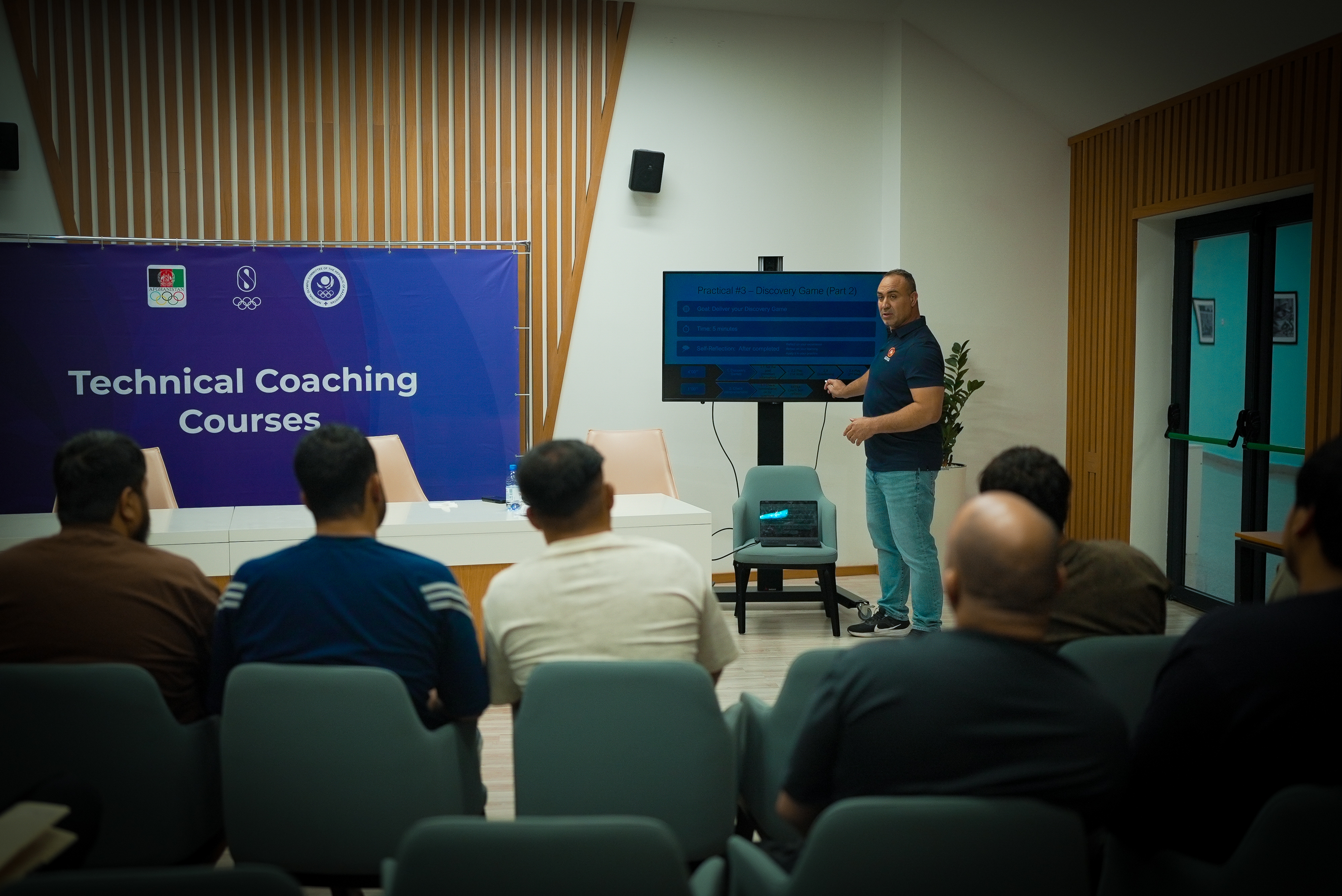
ALMATY, Kazakhstan (June 30) -- Eleven coaches from Afghanistan were among 21 participants who completed a United World Wrestling Level 1 Coaching Course in Almaty, strengthening the country's coaching capacity while building closer ties with neighboring Kazakhstan.

Organized through a partnership between Olympic Solidarity, the Kazakhstan National Olympic Committee, the Afghanistan National Olympic Committee, the Kazakhstan Wrestling Federation, and United World Wrestling, the course focused on developing internationally recognized coaching competencies while fostering collaboration between the two wrestling nations.

Apart from the 11 coaches from Afghanistan, coaches from Kazakhstan also joined for a comprehensive program. The curriculum covered coaching responsibilities, skill development using UWW's Key Factors teaching methodology, athlete-centered learning through discovery games, coaching self-reflection, risk management, and practical coaching assessment.

Afghanistan

UWW Educator and former world champion Mohammed ABDELFATTAH praised the participants for their commitment throughout the program.

"I was very impressed with the overall level of the participants," Abdelfattah said. "The coaches were highly motivated, actively participated in every session, and continuously asked thoughtful questions throughout the course."

Abdelfattah was particularly encouraged by the technical level demonstrated by the Afghan coaches.

"The Afghan coaches demonstrated a strong technical understanding of wrestling." he said. "After speaking with several participants, I learned that traditional wrestling is extremely popular in Afghanistan and shares many technical similarities with Olympic wrestling. This provides coaches with an excellent technical foundation for further development."

The practical sessions proved to be a particular highlight, with coaches working through technical demonstrations, problem-solving exercises, and athlete-centered coaching activities designed to strengthen both technical instruction and coaching methodology.

The Afghanistan Wrestling Federation views the course as an important step in its long-term development strategy. Dr. Yonus POPALZY, an Afghan NOC and Olympic Council of Asia member, was instrumental in the development, organization, and success of the course.

Participants highlighted the practical nature of the course and the opportunity to exchange ideas with coaches from different backgrounds.

"The course exceeded our expectations. The practical sessions and interactive teaching methods gave us new ideas that we can immediately apply in our daily coaching."