#Yariguin2019

Yariguin Final Pairings Set for Saturday Night

By Eric Olanowski

KRASNOYARSK, Russia (January 25) -  The Russian Federation inserted at least one wrestler into the finals in six of the seven weight classes that'll be up for the taking on Saturday night. 

In freestyle, Russia continued to plow through the competition and prove why they’re the most dominant freestyle nation in the world. They followed Friday's three gold medal performances by claiming five of Saturday’s six finals spots. 

Turkish big-man Taha AKGUL, a two-time world and Rio Olympic champion, is the only non-Russian freestyle wrestler that'll compete for a gold medal on Saturday night. He'll wrestle Anzor KHIZRIEV (RUS) in the 125kg gold-medal match. 

In women’s wrestling, Russia won a pair of gold medals on Friday night and has an opportunity to claim three additional golds on Saturday night when five wrestlers compete in the finals. 

The lone weight class where a non-Russian woman can claim a Yariguin gold medal is at 68kg. This weight class will feature the all-Mongolian battle between 2015 world champion SORONZONBOLD Battsetseg and ENKH AMAR Davaanasan. 

The finals are set to begin on Saturday at 18:00 (local time). 

Finals Matchups

Freestyle 

65kg - Akhmed CHAKAEV (RUS) vs. Nachyn KUULAR (RUS)
79kg - Akhmed GADZHIMAGOMEDOV (RUS) vs. Magomed RAMAZANOV (RUS)
125kg - Taha AKGUL (TUR) vs. Anzor KHIZRIEV (RUS)

Women’s Wrestling 
53kg - Natalia MALYSHEVA (RUS) vs. Sarah Ann HILDEBRANDT (USA)
57kg - Olga KHOROSHAVTSEVA (RUS) vs. Tserenchimed SUKHEE (MGL)
62kg - Anzhela FOMENKO (RUS) vs. Anna SHCHERBAKOVA (RUS)
68kg -  Battsetseg SORONZONBOLD (MGL) vs. ENKH AMAR Davaanasan (MGL)
#development

Afghanistan Coaches Build Skills at UWW Level 1 Coaching Course

By United World Wrestling Press

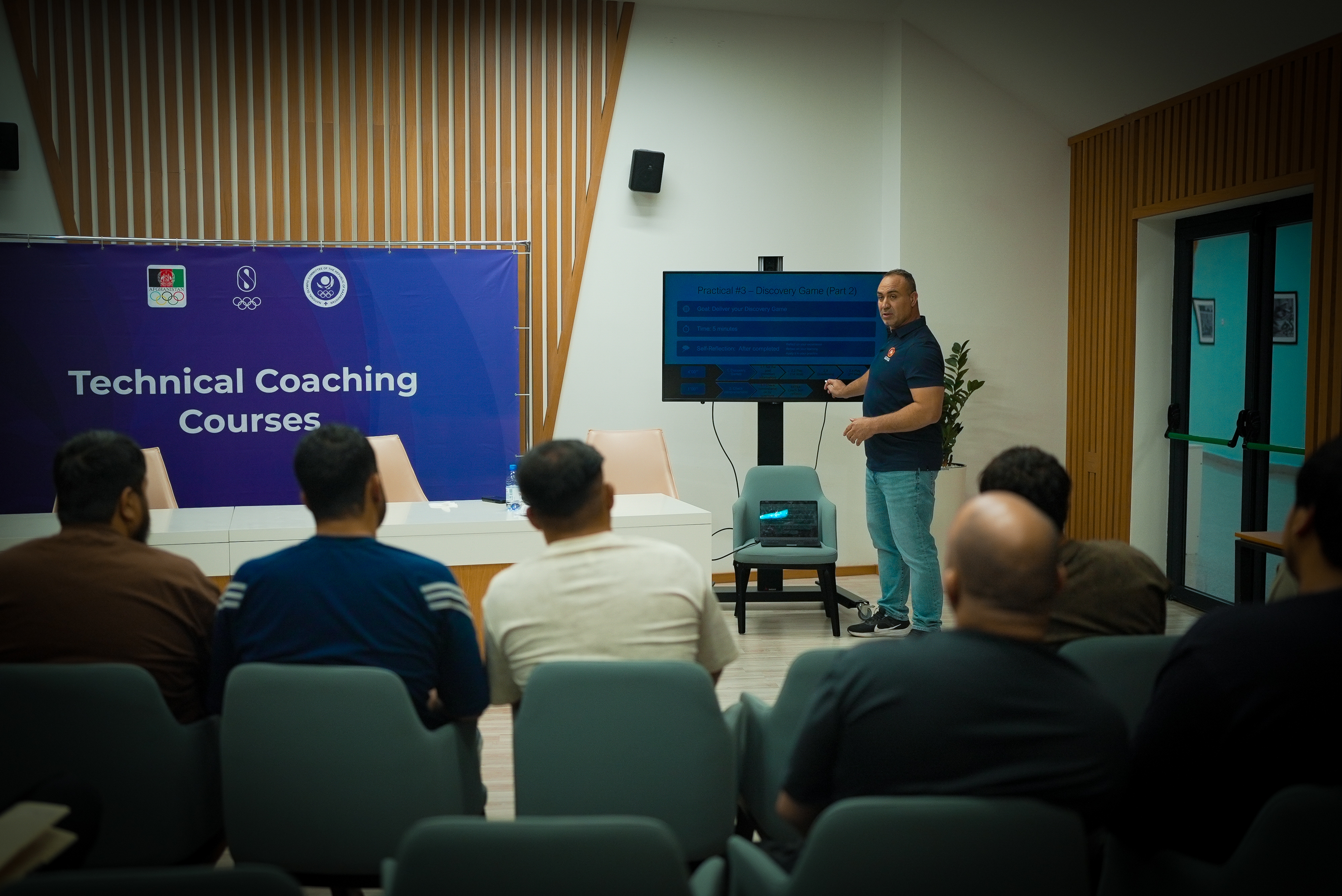
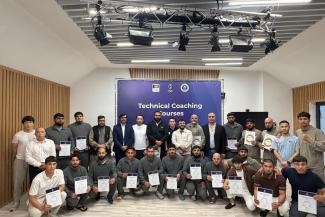
ALMATY, Kazakhstan (June 30) -- Eleven coaches from Afghanistan were among 21 participants who completed a United World Wrestling Level 1 Coaching Course in Almaty, strengthening the country's coaching capacity while building closer ties with neighboring Kazakhstan.

Organized through a partnership between Olympic Solidarity, the Kazakhstan National Olympic Committee, the Afghanistan National Olympic Committee, the Kazakhstan Wrestling Federation, and United World Wrestling, the course focused on developing internationally recognized coaching competencies while fostering collaboration between the two wrestling nations.

Apart from the 11 coaches from Afghanistan, coaches from Kazakhstan also joined for a comprehensive program. The curriculum covered coaching responsibilities, skill development using UWW's Key Factors teaching methodology, athlete-centered learning through discovery games, coaching self-reflection, risk management, and practical coaching assessment.

Afghanistan

UWW Educator and former world champion Mohammed ABDELFATTAH praised the participants for their commitment throughout the program.

"I was very impressed with the overall level of the participants," Abdelfattah said. "The coaches were highly motivated, actively participated in every session, and continuously asked thoughtful questions throughout the course."

Abdelfattah was particularly encouraged by the technical level demonstrated by the Afghan coaches.

"The Afghan coaches demonstrated a strong technical understanding of wrestling." he said. "After speaking with several participants, I learned that traditional wrestling is extremely popular in Afghanistan and shares many technical similarities with Olympic wrestling. This provides coaches with an excellent technical foundation for further development."

The practical sessions proved to be a particular highlight, with coaches working through technical demonstrations, problem-solving exercises, and athlete-centered coaching activities designed to strengthen both technical instruction and coaching methodology.

The Afghanistan Wrestling Federation views the course as an important step in its long-term development strategy. Dr. Yonus POPALZY, an Afghan NOC and Olympic Council of Asia member, was instrumental in the development, organization, and success of the course.

Participants highlighted the practical nature of the course and the opportunity to exchange ideas with coaches from different backgrounds.

"The course exceeded our expectations. The practical sessions and interactive teaching methods gave us new ideas that we can immediately apply in our daily coaching."