

#development, #WrestleBirmingham

UWW-KIMBA partnership helps Ahinsa win Sri Lanka’s first CWG medal

By United World Wrestling Press

CORSIER-SUR-VEVEY, Switzerland (August 17): The Commonwealth Games in Birmingham, which concluded on August 8, saw some thrilling wrestling action, with athletes from 10 countries finishing on the podium. New rivalries were established in the process and history was rewritten, the latter being true in the case of one wrestler in particular.

Nethmi AHINSA (SRI) won the bronze medal in the women’s freestyle 57kg category, sharing the podium with Hannah TAYLOR (CAN), who also won a bronze, silver medal winner Anshu MALIK (IND) and gold medallist from Odunayo ADEKUOROYE (NGR).

For Ahinsa and her country, though, the medal will hold a special significance. The bronze, after all, was Sri Lanka’s first medal in wrestling at the Commonwealth Games. And Ahinsa, only 18 years old, was the youngest to win a medal.

Ahinsa’s medal is also a testimony to the success of the UWW’s developmental programs.

Ahinsa had been a part of the Crysbro Next Champ Program, which is run by the National Olympic Committee of Sri Lanka. As a part of the program, the schoolgirl from the country’s North Western Province was sent to Hungary, where she got exposure to training and competing with some of the top-level athletes.

AHINSANethmi AHINSA (SRI) won a bronze medal in the 57kg weight class in Birmingham.

The UWW funded and supported her three-month training program at its partner center in Hungary, the Kozma István Hungarian Wrestling Academy (KIMBA), in collaboration with the NOC of Sri Lanka, which expressed its gratitude towards UWW and KIMBA.

The partnership between UWW and KIMBA came to fruition during President Lalovic’s visit to Budapest, Hungary, last year in December. During his trip, a partnership was initiated with KIMBA for the global development of the sport. Under the agreement, it was decided that KIMBA would host several international wrestling events, training camps, seminars and other programs.

The positive impact of the collaboration is for all to see, and Ahinsa’s medal at the Commonwealth Games underlines the importance UWW places on such developmental programs.
#development

South Africa Advances National Wrestling System with DNSS Phase 2

By United World Wrestling Press

PRETORIA, South Africa (April 8) -- South Africa has reached a decisive milestone in its long-term wrestling development strategy with the successful implementation of Phase 2 of the Development of National Sport System (DNSS) programme, delivered in collaboration with United World Wrestling (UWW) and supported by Olympic Solidarity.

Following the diagnostic and mapping phase conducted earlier, Phase 2 marks a clear transition from analysis to structured implementation, laying the foundation for a sustainable and internationally aligned wrestling system.

Led by UWW Development Officer Vincent AKA, in close cooperation with the South African Wrestling Federation (SAWF), the National Head Coach, Markus DEKKER and Provincial Coordinators, the programme was deployed across multiple provinces through a structured 10-day intervention from March 2 to 13. 

Activities were conducted in key locations including:

· LPWA (Ion Bachu)
· CGWA (Ruiter)
· NGWA (Menlo Park Hall)
· Frank Joubert Tournament (Menlo Park Hall)

This nationwide approach ensured direct engagement with provincial structures, strengthening alignment between national leadership and local associations while promoting inclusive development across the country.

From Talent Identification to System Building

Unlike traditional training camps, DNSS Phase 2 focused on identifying talent and building long-term development systems. Wrestlers and coaches from all age categories -- U13, U15, U17, U20, and Senior -- were actively involved, ensuring a complete pathway approach.

Provincial visits and stakeholder meetings played a key role in assessing facilities and operational structures, strengthening coordination between SAWF and provinces, and identifying emerging wrestlers.

Building Athlete Pipeline

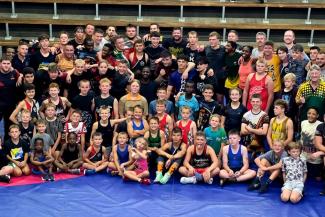
A training camp for different provinces brought together wrestler to consolidate talent identified during Phase 1 and introduce standardized training methodologies.

The training camp included technical sessions, physical conditioning, match simulations and wrestling. The initiative contributed to the creation of an updated national prospect and the foundation of a structured athlete monitoring system.

South Africa

Beach Wrestling Gains Momentum

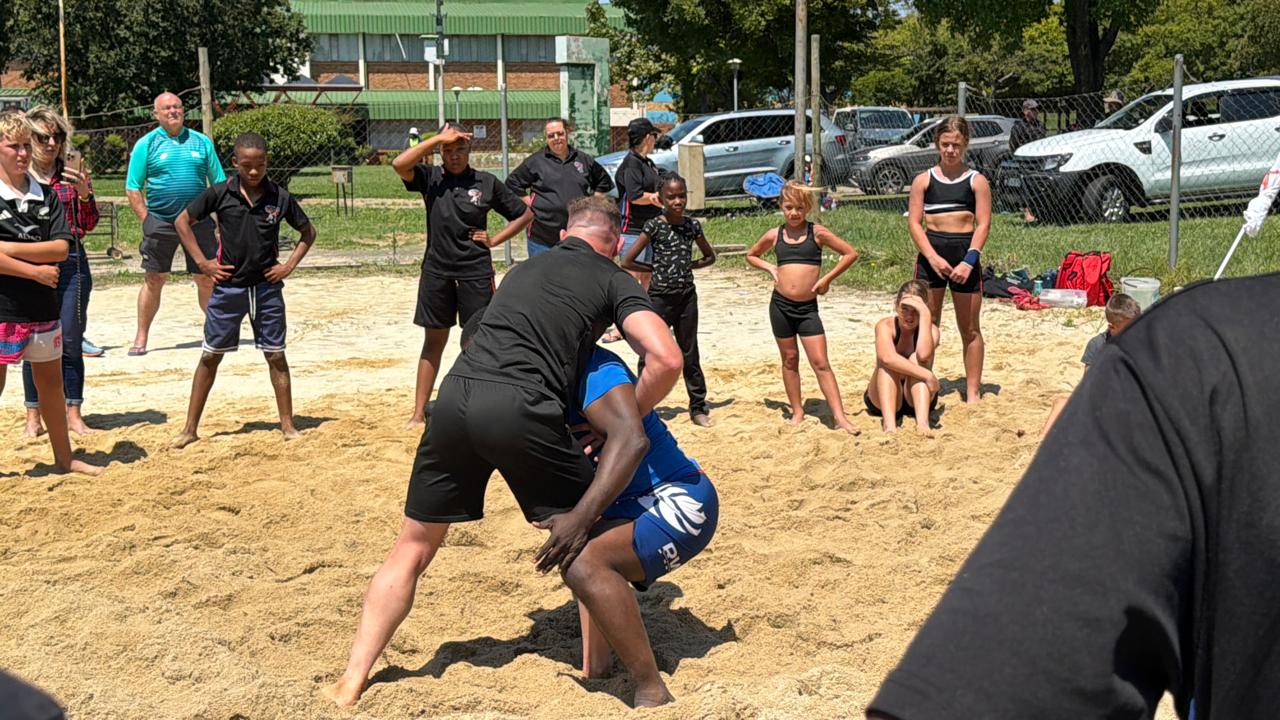
As part of the DNSS activities, a Beach Wrestling training session in Roodepoort highlighted the programme’s expanding impact.

During the visit, Aka led a specialized session, sharing advanced technical insights adapted to beach wrestling. It included stance and balance adjustments, grip and control techniques, and movement adaptation on sand.

The training programme comes at a crucial time, as South African athletes prepare for African Beach Wrestling Championships in Alexandria, Egypt and other international tournaments.