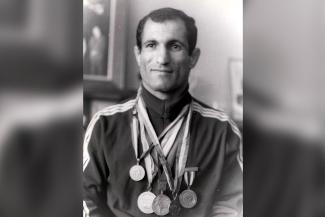
Obituary

Abdullah Movahed: Iranian Legend Who Elevated Wrestling to Art Form

By United World Wrestling Press

CORSIER-SUR-VEVEY, Switzerland, (May 1) -- Abdullah MOVAHED (IRI), one of the all-time greats of world wrestling and a dominant force in Freestyle during the 1960s, passed away in the United States on Thursday, April 30, after suffering a heart stroke. The Iranian legend was 86.

A member of the United World Wrestling Hall of Fame, Movahed’s name became synonymous with technical brilliance and relentless discipline. A five-time world champion, an Olympic gold medalist and twice Asian Games winner, Movahed was at the forefront of an era of Iranian excellence on the global stage. Competing in the 68kg and 70kg Freestyle weight classes, Movahed achieved a level of sustained dominance rarely seen in the sport.

Born in March 1940 in Babolsar, in Iran’s Mazandaran province, Movahed was introduced to volleyball as a young boy and was known locally for his exploits as a spiker. However, he quit the sport as he felt he wasn’t tall enough and didn’t believe he was suited for it. Ultimately, it was on the wrestling mat that he would carve out his legacy. 

He went on to join the Tehran Javan Sports Club, and as a youngster, Movahed didn’t have it easy. He frequently lost to established wrestlers like Mohammad SANATGARAN (IRI). However, he persevered, and coaches recognized his rare blend of agility, intelligence, and composure under pressure. These traits would define his career.

Movahed emerged during a time when Iranian wrestling was rich in talent. He shared the stage with wrestling legends such as Gholamreza TAKHTI (IRI), Mansour MEHDIZADEH (IRI), Ebrahim SEYFPOUR (IRI), and Emamali HABIBI (IRI). In such a company, greatness was neither guaranteed nor easily attained, but Movahed’s rise was swift.

His breakthrough came in 1962, when the erstwhile Soviet Union’s Freestyle champions travelled to Iran for a series of friendly bouts. His win over Zarbag BERYASHVILI made him an overnight sensation in Iran, and the following year, Movahed made his debut for the Iranian national team at the World Championships in Sofia, Bulgaria.

As a 23-year-old rookie, Movahed didn’t make much of an impact -- he shared sixth place with well-known Bulgarian wrestler Enyu VALCHEV (BUL). At the 1964 Olympics in Tokyo, he showed signs of improvement and finished fourth. A year later, at the World Championships in Manchester, he claimed his first world title, beginning an extraordinary run.
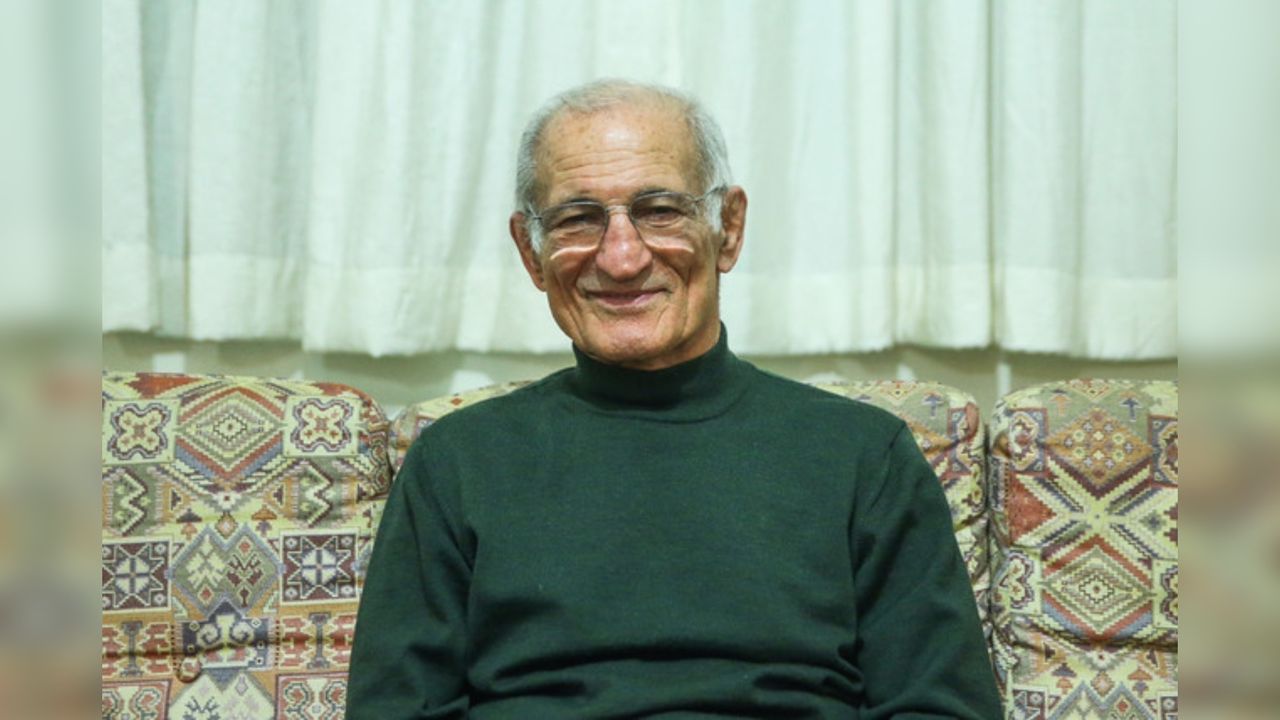
Abdullah MOVAHED (IRI)

From 1965 to 1970, Movahed was virtually untouchable. He won six consecutive major global titles at 68kg and 70kg, including World Championships in 1965, 1966, 1967, 1969, and 1970, along with Olympic gold at the 1968 Summer Olympics. That 1968 triumph, often cited as the pinnacle of his career, showcased his tactical mastery and unyielding determination. He also won the gold medal at the 1966 and 1970 Asian Games.

He returned for the 1972 Summer Olympics, but an unfortunate shoulder injury cut his campaign short, preventing a final chapter that might have further illuminated his already illustrious record. After the Games, Movahed, who had a master’s degree, moved to the USA, where he pursued a PhD at George Washington University. He continued to live there after earning his doctorate and worked as a mechanic.
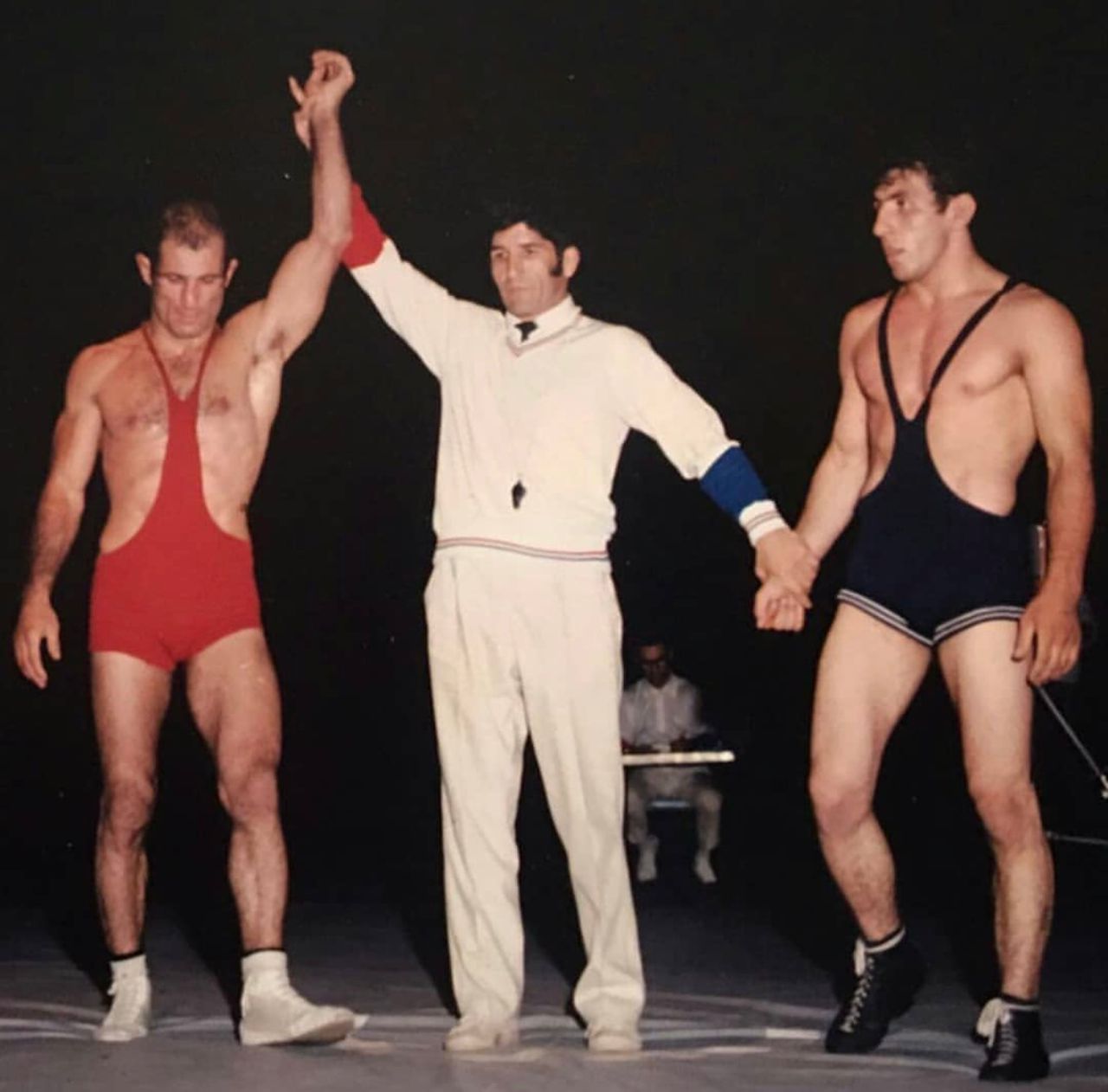
Abdullah MOVAHED (IRI)

Beyond his medals, Movahed’s legacy lies in the standard he set. He helped define a golden generation of Iranian wrestling and inspired countless athletes who followed in his footsteps. His induction into the United World Wrestling's Hall of Fame secured his place among the all-time greats.

In mourning his passing, the wrestling world remembers not just a champion, but a craftsman whose sustained excellence elevated freestyle wrestling to an art form.
#WrestleTirana

Kayaalp's 13: New Golden Standard Set in Europe

By United World Wrestling Press

TIRANA, Albania (April 20) -- On Tuesday evening in Tirana, Riza KAYAALP (TUR) did something that for years existed and was expected to continue to exist only as a hypothetical.

He won his 13th European title in Tirana on Tuesday, beating Darius VITEK (HUN), 7-1, in the 130kg European Championships. 2026 joined 2023, 2022, 2021, 2019, 2018, 2017, 2016, 2015, 2014, 2013, 2012 and 2010.

Riza KAYAALP (TUR)Riza KAYAALP (TUR) turns Darius VITEK (HUN) in the 130kg final. (Photo: United World Wrestling / Kadir Caliskan)

As the referee raised his powerfully sculpted right arm in triumph, Kayaalp raised the ceiling in Greco-Roman. He moved past the legendary Aleksandr KARELIN’s 12 European gold medals, the last of which he had won in 2000. Generations of wrestlers had competed, won and lost, knowing all the while that that number would outlast them. Until Kayaalp finally eclipsed it.

The moment itself wasn’t dramatic in the way history is often expected to be. Just a raised hand, a nod and a lap of honor around the mat with the Turkish flag around his shoulders. That’s been the story of Kayaalp’s career.

Riza KAYAALP (TUR)Riza KAYAALP (TUR) speaks to the media after winning the gold medal at the European Championships. (United World Wrestling / Jake Kirkman)

Born in Yozgat, in central Turkey, Kayaalp would have inherently understood the role of wrestling in Turkish sporting heritage and the place champions of the sport have historically held in the nation. He would have grown up in the shadow of two-time Olympic and eight-time European champion Hamza YERLIKAYA, who defined Turkish wrestling in the 1990s and like everyone else in the sport, under the global shadow of Karelin.

Slowly and methodically Kayaalp would try to match them. His career has been relentless and consistent rather than spectacular. Since his first European gold in 2010, won as a twenty-year old, Kayaalp has claimed titles across two decades. He’s adapted through rule changes, generations of opponents, and brutal physical wear and tear of time itself.

Apart from his European titles, he has five World Championships gold medals, and three Olympic medals -- a bronze in London 2012, silver in Rio 2016, bronze again in Tokyo 2020. Every time a major medal was to be decided over the past decade and a half, Kayaalp would with almost absurd reliability be counted in the mix.

Riza KAYAALP (TUR)Riza KAYAALP (TUR) with Taha AKGUL (TUR) at the medal ceremony in Tirana. (Photo: United World Wrestling / Kadir Caliskan)

For all of Kayaalp’s longevity, his career has always carried the one obvious gap compared to Karelin or Yerlikaya -- no Olympic gold. That absence will still be there. That gap is unlikely to close any time soon. As such the European mark became a milestone within his grasp. Or in the last few years, a milestone just out of grasp.

Indeed, for Kayaalp the title will provide a sense of closure. He had equalled Karelin’s record at the 2023 European championships in Zagreb. Prior to that tournament, he had in an interview with Anadalou Agency spoken of equalling Karelin’s record, breaking it at the 2024 European Championships and finally finishing his career on a high note with a gold at the 2024 Paris Olympics.

But things would not go as planned. At the 2024 European Championships, Kayaalp was pinned in the final by Sergey SEMENOV (UWW) -- only the second final he had ever lost in Europe. A few months later despite qualifying for the Olympics he was unable to compete due to a medication issue linked to treatment for persistent tinnitus. His appeal to the Court of Arbitration for Sport was upheld, clearing the way for his return. He would describe the period as the toughest of his career.

But the ordeal had left him with a new purpose and a desire to exit the stage on his own terms.

“For an athlete with so many titles, this was the worst thing that could happen,” he said. “Because of a simple issue, we faced a huge problem. But I always believed I would overcome it, return to my job and leave the sport on my own terms,” he had told Anadalou Agency at the start of 2026 when he made his return to international competition at the Zagreb Ranking series earlier this year.

“There was fatigue before. In this 18-month period, my desire to work came back stronger. I was already motivated to be champion. Now it is even greater. I feel renewed,” he had said.

While Kayaalp has said he would compete until the 2028 Olympics, he had also spoken of the unfinished business he had had in Europe. “I was so close,” he said. “Fourteen finals, 12 European titles, one more for the record, and then something unwanted happens. But everything is resolved. To bring that record to my country would mean a lot,” he had said then.

He had come close once and fallen short. That could have been the ending -- a near miss against an immortal number. Instead, with his 13th European title, Kayaalp gets to tell his story. He stands alone as the most decorated European wrestler of all time.

Records though exist to be broken. At some point, inevitably, another wrestler will look at Kayaalp's number and decide to chase it. But at least for some time, records exist to define limits. For over a quarter of a century that limit was Karelin’s 12. Now it’s Kayaalp’s 13.