

Financial Assistance Programs Boost Wrestling Nations in Olympic Year
Tuesday, June 1, 2021 - 11:07 By United World Wrestling Press

Augusto MIDANA (GBS) qualified for the Tokyo Olympic Games after receiving financial assistance to attend the qualification event in Tunisia. (Photo: UWW)
CORSIER-SUR-VEVEY, Switzerland (June 1) -- As the COVID pandemic swept the globe and impacted lives and economies worldwide, United World Wrestling - led by president Nenad Lalovic and the UWW bureau - worked to create financial opportunities for small, heavily affected nations keen to continue in their Olympic journey even as financial opportunities dwindled.
In addition to existing programming, Lalovic and the bureau settled on direct assistance to support athletes and coaches in their quest to qualify for the Tokyo Olympic Games. Utilizing its established Technical Assistance program, UWW supported 121 athletes and coaches from 43 nations.
"We were determined to assist all our national associations and stay united through the most difficult challenges," said Lalovic. "These past 16 months have tested our resilience, but we've stayed united as a family and through the efforts delivered by the UWW Development Team, we saw great buy-in and five athletes who were able to qualify."

Georgios PILIDIS (GRE) qualified during the World Olympic Qualifier in Sofia. (Photo: Kadir Caliskan)
Of the recipients, five athletes successfully qualified for the Tokyo Olympic Games via the program:
Augusto Midana (GBS) -- FS 74, African Olympic Qualifier
Zholaman SHARSHENBEKOV (KGZ) -- GR 60, Asian Olympic Qualifier
BAT-OCHIR Bolortuya (MGL) -- WW 53, World Olympic Qualifier
Georgios PILIDIS (GRE) -- FS 65, World Olympic Qualifier
Karen ASLANYAN (ARM) -- GR 67, World Olympic Qualifier
In addition to funds provided directly from UWW, the IOC also entered as a collaborator, under its ‘Youth Athlete Development, International Federation Training Opportunities’, which was built to support smaller NOCs in sending their teams to Continental Qualifications.
The total cost for the training assistance was EUR 180’000, with 40’000 to be reimbursed by Olympic Solidarity.
"The qualifications were burdensome on the athletes," said Deqa Niamkey, UWW Director of Development. "They faced uncertainty in their training routines, issues with travel, and of course their own experiences with the impact from COVID. But as we know, wrestlers are tough and always find a way to get the job done!"

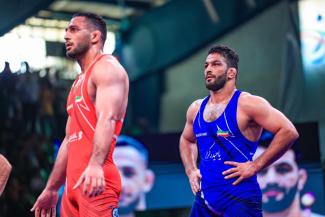
Aker AL OBAIDI (UWW) was a member of the refugee team funded by United World Wrestling that traveled to various qualification events. (Photo: Kadir Caliskan)
In addition to the OS program UWW's development department oversaw a myriad of success stories during Olympic qualification with UWW Africa, referee scholarships, female coach support and refugee athlete support all making an impact.
UWW African Center qualified four of its nine fully supported athletes at the Africa/Oceania Olympic Games qualifier in Tunisia.
While they fell short of Olympic qualifications, logistical support was provided to Aker AL OBAIDI (who resides in Austria) and Amir ALAWAD (who resides in Egypt) to attend Olympic Game Qualification events under the flag of the UWW Refugee team.
The referee scholarship program was utilized to send Demetra KOUTSOPODIOTIS-GAUTHIER (CAN) to the World OG Qualifier in Sofia, while UWW also sent Van Zyl Esta (RSA) - one of the scholarship holders of the Women's Sport Leadership Academy for High Performance Coaches Program - to the African/Oceania OG qualifier as a coach.
Wrestling at the 2021 Olympic Games will be August 1-7 at the Makhuari Messe Arena in Tokyo.
Share your thoughts.
Comments