Obituary

Habibi, Iran's first Olympic champion, dies aged 94

By United World Wrestling Press

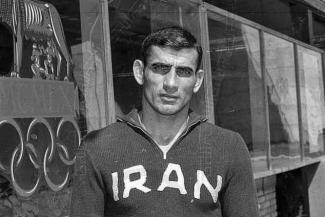
TEHRAN, Iran (August 24) -- Emamali HABIBI (IRI), Iran's first-ever Olympic gold medalist and United World Wrestling Hall of Fame member, passed away Sunday aged 94.

Habibi was born Babol in 1931 and won the first Olympic gold medal for Iran in 1956 Melbourne Olympic Games. Facing Alimbeg BESTAEV in the final round to decide the gold medalist, Habibi secured a fall in the 67kg final and etched his name in history, became first Olympic champion for Iran.

It was a rare feat in those times as he had never wrestled at an international event before the Olympics. He would make his World Championships debut in 1959, winning gold medal at 73kg. He defended his title in 1961 and added a third gold medal in 1962 at 78kg.
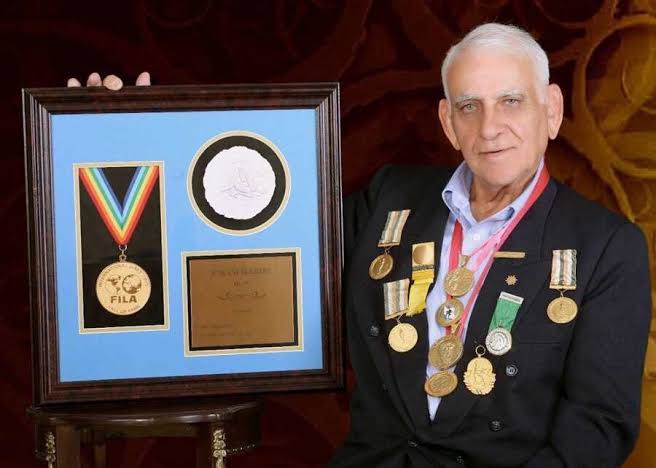
Emamali HABIBI (IRI)Emamali HABIBI (IRI) with his World Championships gold medal.

He participated in the 1960 Olympic Games in Rome at 73kg and finished fourth. Habibi also has a gold medal at the 1958 Asian Games, held in Tokyo, Japan.

Habibi's legacy also includes his diverse wrestling techniques and speed on the mat which allowed him to win bouts with domination. He is widely considered one of the greatest freestyle wrestlers of his times. He was included in the UWW Hall of Fame in 2007 for his contribution to wrestling.

UWW offers its condolences to Iran Wrestling Federation and the Habibi family.
#development

South Africa Advances National Wrestling System with DNSS Phase 2

By United World Wrestling Press

PRETORIA, South Africa (April 8) -- South Africa has reached a decisive milestone in its long-term wrestling development strategy with the successful implementation of Phase 2 of the Development of National Sport System (DNSS) programme, delivered in collaboration with United World Wrestling (UWW) and supported by Olympic Solidarity.

Following the diagnostic and mapping phase conducted earlier, Phase 2 marks a clear transition from analysis to structured implementation, laying the foundation for a sustainable and internationally aligned wrestling system.

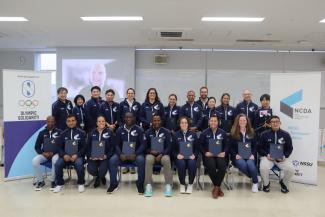
Led by UWW Development Officer Vincent AKA, in close cooperation with the South African Wrestling Federation (SAWF), the National Head Coach, Markus DEKKER and Provincial Coordinators, the programme was deployed across multiple provinces through a structured 10-day intervention from March 2 to 13. 

Activities were conducted in key locations including:

· LPWA (Ion Bachu)
· CGWA (Ruiter)
· NGWA (Menlo Park Hall)
· Frank Joubert Tournament (Menlo Park Hall)

This nationwide approach ensured direct engagement with provincial structures, strengthening alignment between national leadership and local associations while promoting inclusive development across the country.

From Talent Identification to System Building

Unlike traditional training camps, DNSS Phase 2 focused on identifying talent and building long-term development systems. Wrestlers and coaches from all age categories -- U13, U15, U17, U20, and Senior -- were actively involved, ensuring a complete pathway approach.

Provincial visits and stakeholder meetings played a key role in assessing facilities and operational structures, strengthening coordination between SAWF and provinces, and identifying emerging wrestlers.

Building Athlete Pipeline

A training camp for different provinces brought together wrestler to consolidate talent identified during Phase 1 and introduce standardized training methodologies.

The training camp included technical sessions, physical conditioning, match simulations and wrestling. The initiative contributed to the creation of an updated national prospect and the foundation of a structured athlete monitoring system.

South Africa

Beach Wrestling Gains Momentum

As part of the DNSS activities, a Beach Wrestling training session in Roodepoort highlighted the programme’s expanding impact.

During the visit, Aka led a specialized session, sharing advanced technical insights adapted to beach wrestling. It included stance and balance adjustments, grip and control techniques, and movement adaptation on sand.

The training programme comes at a crucial time, as South African athletes prepare for African Beach Wrestling Championships in Alexandria, Egypt and other international tournaments.