

ITA imposes two-year sanctions on nine Russia wrestlers
Thursday, April 27, 2023 - 09:44 By United World Wrestling Press

CORSIER-SUR-VEVEY, Switzerland (April 27) -- The International Testing Agency (ITA), leading an independent anti-doping program for United World Wrestling (UWW), has successfully prosecuted nine Russian wrestlers for the use of prohibited substances based on data retrieved from the Moscow laboratory.
The cases are based on investigations conducted by WADA’s Intelligence & Investigations Department (WADA I&I) and by Professor Richard McLaren into allegations of systemic doping practices in Russian sport as well as Moscow Laboratory Information Management System (LIMS) data retrieved by WADA I&I over time. The evidence was provided by WADA I&I to the ITA in 2021 and 2022 for further assessment. In particular, these investigations uncovered LIMS data indicative of the presence of banned substances in samples provided by the athletes in 2012.
The ITA reports that in line with the UWW Anti-Doping Rules (UWW ADR), the following Russian wrestlers have each admitted to the Anti-Doping Rule Violation (ADRV) and accepted a two-year period of Ineligibility for the Use of a Prohibited Substance (Article 2.2 of the applicable UWW ADR) and disqualification of all competitive results from 20 November 2012 until 20 November 2014. The athletes benefitted from “early admission” and partial backdating of their period of Ineligibility was granted (Article 10.9.2 of the applicable version of the UWW ADR):
Dariya LEKSINA – period of ineligibility until March 1, 2023
Elena VOSTRIKOVA – period of ineligibility until March 1, 2023
Margarita FATKULINA – period of ineligibility until November 18, 2023
Elena GETTA – period of ineligibility until November 18, 2023
Anzhela KATAEVA – period of ineligibility until November 18, 2023
Elena KULIKOVA – period of ineligibility until November 18, 2023
Alevtina LISITSINA – period of ineligibility until November 18, 2023
Anastasiya SHCHAVLINSKAYA – period of ineligibility until November 18, 2023
Athlete Aleksey SHCHEKOV did not admit to the ADRV and thus did not benefit from early admission reduction (Article 10.9.2 of the applicable UWW ADR). He was sanctioned with a 2-year period of ineligibility until 1 March 2024 and the disqualification of all competitive results from 6 April 2012 until 2 March 2022.
During the period of ineligibility, as per Article 10.14 of the UWW ADR, the athletes cannot participate in any capacity in any competition or any other activity either at the international or national level organized by any Signatory of the World Anti-Doping Code.
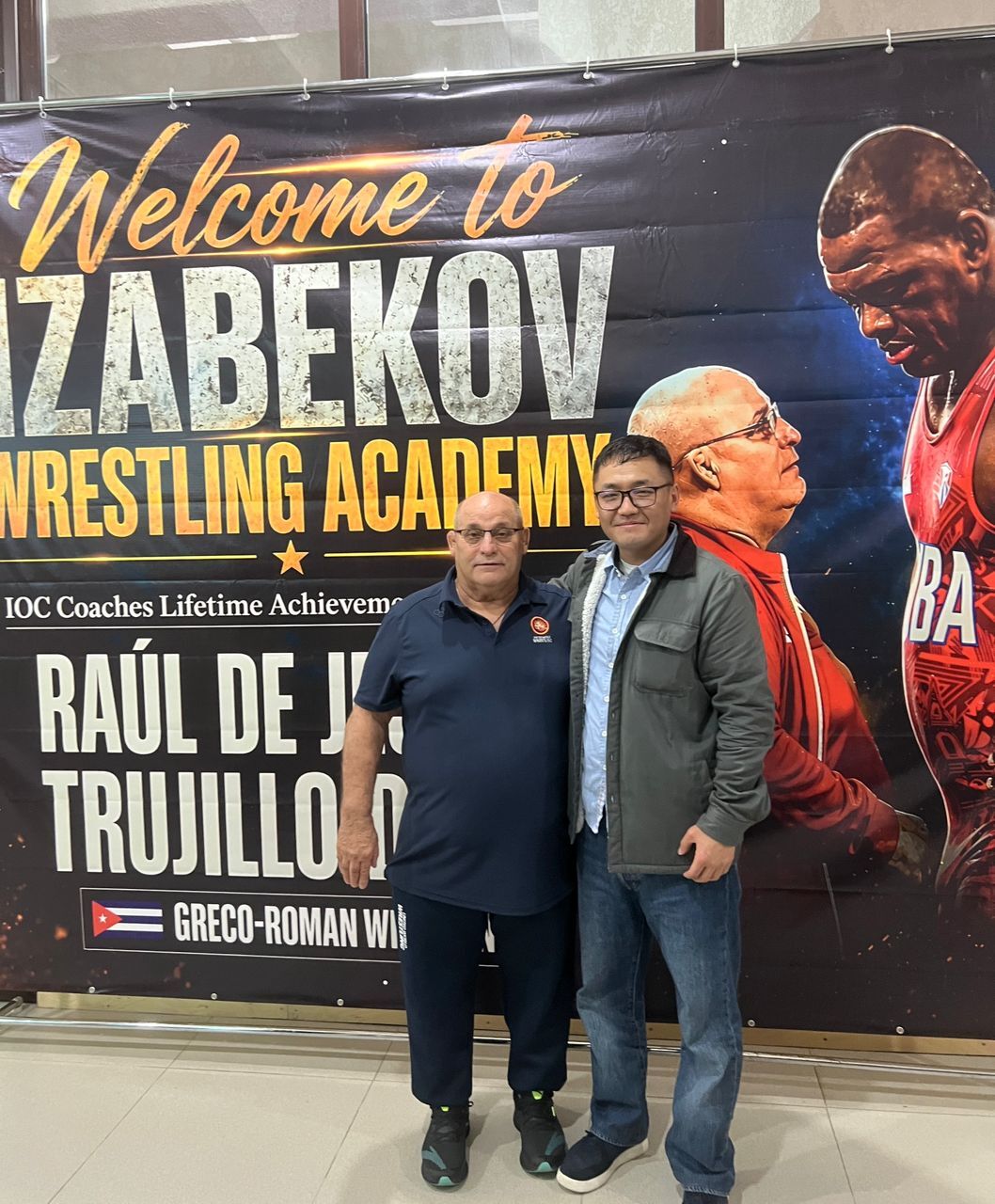 Raul TRUJILLO, left, in Bishkek.
Share your thoughts.
Comments