

Japan Holds 1st National-Level Tournament Since Feb. as High Schoolers Take Mat
Monday, October 19, 2020 - 01:06 By Ken Marantz

NIIGATA, Japan---The loudest sounds came from the referees' whistles, even though they were blown behind plastic face shields. Other than shouts from the coaches in the corners, the only encouragement was from teammates in the stands in voices muted by obligatory masks.
Japan took another small step forward toward normalcy in the pandemic era, cautiously and optimistically holding its first national-level tournament since February with the three-day Kazama Cup National High School Invitational Championships Oct 9-11.
Protocols to prevent the spread of the coronavirus were firmly in place as over 300 of the top second- and third-year high schoolers converged on the port city of Niigata for the tournament which had been originally scheduled for March---and had one point been canceled outright.
But less than a month ago, as restrictions on sports and other large-scale events began easing, the Niigata Prefecture wrestling federation stepped up and took up the challenge of hosting what will likely act as a template for tournaments in the near future.
 A referee wearing a face shield keeps an eye on the action. (Japan Wrestling Federation photo)
"My feeling is, 'The wait is finally over,'" said Yoshihiko HARA, vice-chairman of the tournament organizing committee on what it was like to finally see the event, which included separate team and invidividual competitions, actually being held.
"We need one month to prepare, but it got pushed back another week and we had to wait until there was only three weeks before it was decided. In the first week of September, the Niigata Prefecture government vastly eased the restrictions and we were able to become the host."
The Kazama Cup is one of three tournaments making up the high school "triple crown" for boys, along with the Inter-High and the National Games (Kokutai). With the latter two canceled for good, national wrestling officials wanted to give the outgoing seniors a final goal to strive for.
"For the 3rd-year students, this is their final tournament," Japan Wrestling Federation Vice-President Hideaki TOMIYAMA said. "They had nothing because the Inter-high and Kokutai weren't held. It's good they have one."
Tomiyama denied the suggestion that the federation might be pulling the trigger too soon and pressing to hold the event.
 Everyone entering the facility had their temperature automatically taken. (Japan Wrestling Federation photo)
"Looking at other sports, the pro sports have gradually been allowing spectators back in," he said, referring to Japan's leading pro sports of sumo, baseball and soccer. "First of all, you have to move forward. As long as you prepare thoroughly and take firm countermeasures, it can be done."
There was also a precedent of sorts, as Niigata last month hosted the national collegiate championships in athletics.
"Before this, there was a national college track and field meet and the restrictions were very tough," said Hara, a Niigata native and former five-time national freestyle champion and two-time Olympian. "The athletes and coaches weren't allowed to leave their hotels and had to submit a written pledge. It had 1,300 athletes."
Allaying local fears
While Niigata city, located on the Sea of Japan coast about 250 kilometers northwest of Tokyo, has a population of 810,000, the prefecture of the same name in which it sits is a mix of rural and mountainous regions.
The prefecture has been spared much of the brunt of the pandemic--there have been less than 200 total cases and no deaths recorded. That is in stark contrast with Tokyo, which continually has 100 to 200 cases per day and accounts for about one-fourth of the nation's 1,670-plus deaths. There is constant concern among locals about "outsiders" spreading infection.
"We are far away from Tokyo and there were many complaints about holding the tournament," Hara said. "'Why are we holding a national event? Why are people from Tokyo coming here?' There is still an 'allergy' in terms of events."
 A wrestler bows to his opponent's corner after his match instead of shaking hands. (Japan Wrestling Federation photo)
Unlike other individual sports such as athletics, tennis and golf, wrestling and other contact sports are in a much tougher position when it comes to preventing the spread of infection. That was true even before the coronavirus came along, but is now even more so.
As such, other contact sports, along with the media, took great interest to see how wrestling handled the Kazama Cup. Hara noted that three national officials from boxing came to observe.
"Among contact sports, it is the first national tournament," Hara said. "Rugby was canceled. Judo is also halted. We're holding the first high school event on a national scale, so it has become mainstream news. Interview requests are coming not for those of us involved in wrestling, but the doctor on site and the volunteers checking temperatures at the entrance. Still, we're grateful."
The rules were strict and encompassing. Only the wrestlers, coaches and tournament officials and staff were allowed into the venue, the Higashi General Sports Center; that meant no family members, friends or general spectators. As teams were limited in their preparation, wrestlers were recommended not to cut excessive weight, and a 2-kilogram allowance was adopted.
Everyone entering the arena had to submit a form with their daily temperature for the previous 14 days. At the reception desk, infrared cameras were set up to take temperatures again. Inside, everyone other than the wrestlers in action on the four mats had to wear a mask at all times.
Access to the warm-up room was limited to avoid crowding. "The biggest problem was trying to get people to maintain social distancing in there," Hara said. The referees on the mat wore face shields, and, following a match, the wrestlers bowed to the opponent's coach, instead of the normal handshake.
"You need to carefully handle the reception area," Tomiyama said. "If you do that, there's no real problem. With no spectators, we can confirm everyone who comes here."
 Tuvaadorj BUKHCHULUUN (NSSU Kashiwa) battles Kyo KITAWAKI (Nirasaki Technical) in the 92kg final. (Japan Wrestling Federation photo)
Mongolian leaves final mark
The tournament is set up for 48 entries in the team competition and in each of the eight individual weight classes, selected from nine regions and host Niigata. The number of allotments per region ranged from eight each from Kanto (which includes Tokyo) and Kyushu to one from Hokkaido. The draw that was made in March was used as is, so there were about five to 10 no-shows in each division.
Starting things off was the team competition, which was held on the first day and the morning of the second, and consisted of a knockout-style competition of duel meets between seven-man squads.
Nippon Sports Science University Kashiwa High School of Chiba Prefecture won its fourth straight title, defeating Saitama Sakae 5-2 in the final. NSSU Kashiwa advanced to the final by edging another Saitama Prefecture school, Hanasaki Tokuharu, 4-3 in the semifinals.
Mongolian Tuvaadorj BUKHCHULUUN provided the decisive victory at 125kg in the semifinal win over Hanasaki Tokuharu, then became the lone NSSU Kashiwa wrestler out of three in the finals to win an individual crown, taking the gold at 92kg.
Bukhchuluun chalked up four straight technical falls without surrendering a point before blanking Kyo KITAWAKI of Yamanashi Prefecture's Nirasaki Technical 6-0 in the final.
For Bukhchuluun, the victory marked not only the end of his career as a high schooler, but as a freestyle wrestler as well. He said he will be joining the sumo team at Nippon Sports Science University next year, the first step toward a career in that sport, which has in recent years been dominated by Mongolians.
Bukhchuluun, who speaks conversational Japanese, said the switch was to fulfill a pledge he made to his father before he died in 2018. "I wanted to wrestle in college, but he wanted me to go into sumo," he said.
Bukhchuluun only started wrestling in 2016 and won the Mongolian junior high school championship the following year. That drew the notice of former sumo yokozuna (grand champion) Asashoryu, who helped arrange for the youngster to enter NSSU Kashiwa as a foreign student.
Last year, Bukhchuluun won the 92kg title at both the Inter-High and Kokutai, beating Atsushi Miura of Kyoto Prefecture's Amino High School in the final both times. Those avenged a loss to Miura in the final of the Kazama Cup. This year, they both emerged victorious, as Miura moved up to 125kg and won the gold for his second title.
One big difference for Bukhchuluun as he prepares for a sumo career is that his weight concerns will no longer be about making a certain weight (although at a natural weight of 83kg, that wasn't really a factor). He will now have to bulk up in a sport where 100kg is considered light. "I have to get bigger to win," he said.
 Kaisei TANABE (NSSU Kashiwa), the son of an Olympic medalist, had to settle for the silver after a loss in the 55kg final to Kento YUMIYA (Inabe Sogo Gakuen). (Japan Wrestling Federation photo)
Family ties with mixed results
In other finals, there was a handful of names that global wrestling fans might recognize, although their owners had mixed success.
NSSU Kashiwa's Kaisei TANABE, the son of 2004 Athens Olympic bronze medalist Chikara TANABE, had to settle for a silver medal for the second year in a row when he was dealt a close 4-2 loss in the 55kg final by Kento YUMIYA of Mie Prefecture's Inabe Sogo Gakuen.
Yumiya, the Kokutai champion, followed in the footsteps of older brother Hayato, the 55kg champ in 2019, when he scored a stepout with :25 left and Tanabe leading 2-2 on criteria.
"The latter part of my match is my weakest part," Tanabe said. "I have to fix that for the next tournament."
For Tanabe, who lost in the 51kg final last year, the match was his 11th over the three days, combining team and individual bouts.
"It was tough, but coming into the tournament I wanted to win the team and individual titles. I was good through the semifinal," he said, adding that he felt adequately prepared.
Next year, Tanabe will join older sister Yumeka TANABE, the 2019 world U-23 champion at 59kg, at Nippon Sports Science University, where their father is the coach. His father would normally have been at his side in Niigata, but could not attend because of the coronavirus restrictions.
"He gave me advice by phone," Kaisei said. "That was enough."
In the 51kg final, Taiga ONISHI of Saga Prefecture's Tosu Technical chalked up an 11-1 technical fall over Hanasaki Tokuharu's Akito MUKAIDA, the younger brother of two-time women's world champion Mayu MUKAIDA.
It was the second major title for Onishi, who last year won the 55kg title in Greco-Roman at the Kokutai.
 The eight gold medalists gather for a group photo. (Japan Wrestling Federation photo)
Meanwhile, Tosu Technical's Iori KOSHIBA, the son of 1998 Asian Games silver medalist Kenji KOSHIBA, picked up his first major title with a 10-0 technical fall of Wakayama Kita's Taishin YAMAJI in the 71kg final.
Saitama Sakae wrestlers took home two of the three other golds at stake, with Kenji OGINO winning at 60kg and Fumiya IGARASHI at 80kg. Hanasaki Tokuharu's Ryosuke KERA triumphed at 65kg.
In a snapshot of the times, the top eight wrestlers in each weight class received their awards (medals for top four, certificates for fifth places) while wearing masks, which they kept on for the memorial photo. The eight champions later took off the masks for a group shot together.
While the tournament seemed to come off without a major hitch, officials know they are not out of the woods yet, given the time that it takes for symptoms of infection to be detected.
"I don't think I'll be able to sleep until two weeks after the tournament ends," one official told the federation website prior to the tournament. "I'll be worried that someone will test positive."
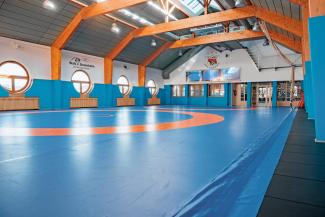
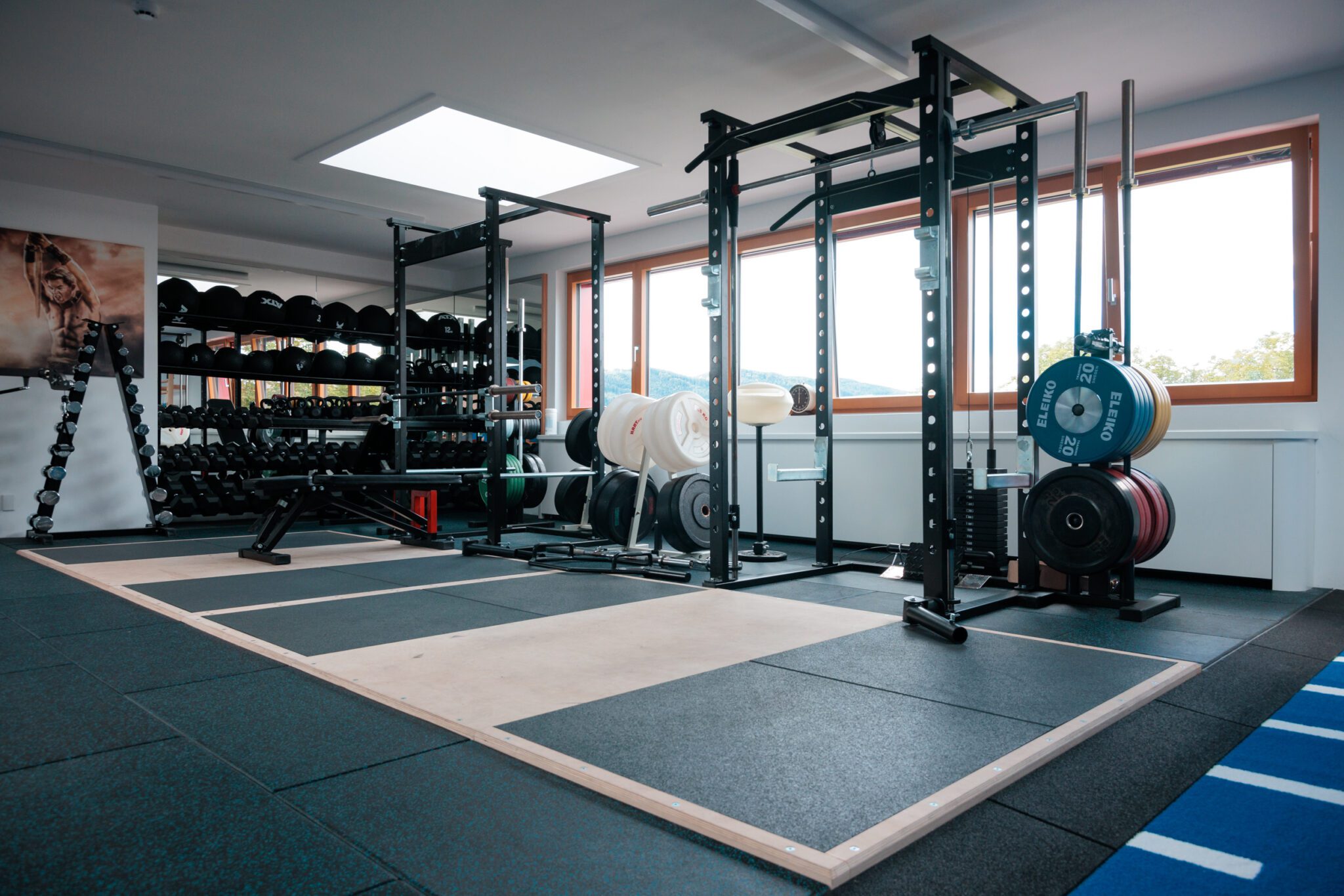 Fitness centre at A.C. Wals. (Photo: Austrian National Wrestling Centre)
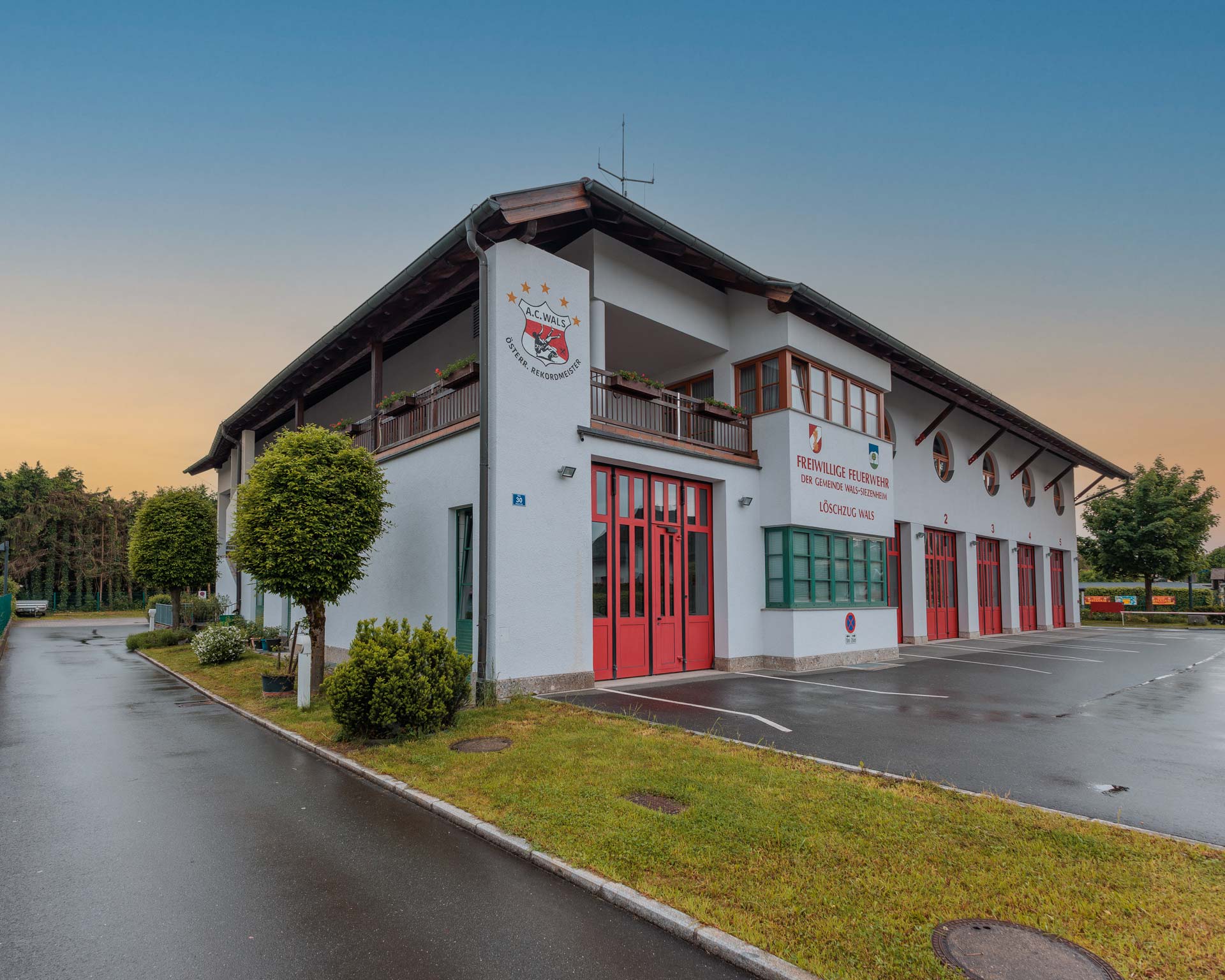 A.C. Wals
Share your thoughts.
Comments