

wiebe, erica, canada wrestling, Canada, Women's Wrestling, Olympic champion

RIO 2016 Champion Erica Wiebe Stays Committed to Olympic Dream

By United World Wrestling Press

“No other sport like it” for committed Olympic champ Erica Wiebe
Luke Norman, Special to United World Wrestling

In the 10 months since winning gold at the Rio 2016 Olympic Games, Canada’s Erica Wiebe has been mobbed “like The Beatles”, courted by the powerful world of WWE and challenged to endless eating competitions by her coach. But nothing has dimmed her focus on Tokyo 2020.

“I took some time, took a lot of the opportunities that were afforded me after I was successful in Rio. Now I am back. It is a huge challenge to do it again in Tokyo, but that is the goal,” said the Olympic 75kg champion.

“I really love wrestling.”

In early 2017, this passion, allied to an always independent and open mind, saw the Canadian embrace the kind of life-enhancing opportunity that comes with Olympic success. Drafted as captain of the women’s Mumbai Maharathi team, the 27-year-old took part in the Indian Pro Wrestling League.

“It was very different. There were lights, there was smoke, there was an announcer bellowing out my name, drums. I was recognised on the street, everywhere you went the Indian fans just went crazy,” Wiebe said of the three-week, city-state tournament.

Wrestling in front of thousands of passionate fans is something the Canadian lives for, but this took it to a new level. 


“After one particular match that we won, we did our media and then I had to have a guard of six security officers who were pushing all of the fans away from me as we got on the bus,” she said. “It was crazy, I felt like The Beatles.”

On and off the mat, Wiebe was way out of her habitual zone.

“The local Indians on the team, one by one begged me to go visit their families in their small villages nearby. We would drive and sit in one of their homes and drink fresh buffalo milk from the village buffalo and meet with their family. It was an experience I will never forget,” she said.
But ultimately, it is the competitor inside that still rules the 2014 Commonwealth Games champion. Despite winning all six of her bouts in India, her team were defeated in the semi-final. It is a loss that “still hurts”.

And it is this burning obsession with winning that led Wiebe to turn down the lucrative approach made by the WWE in late 2016. For one thing, she is too excited about her form on the mat to contemplate giving up Olympic competition.

“I have been successful and dominant internationally for a while,” said the woman who won 36 consecutive matches in 2014, “but I have never wrestled as well as I did on that one day in Rio. But I kind of feel like it was scratching the surface of what I am capable of.”

It has been a long but largely bump-free ride to reach such a place of confidence and serenity. Wiebe was a soccer-mad, 14-year-old schoolgirl when her eye was caught by a poster on the gymnasium door.

“It said ‘co-ed wrestling practice’. I had played soccer all my life to that point, but in that moment I was like ‘wrestling that sounds like so much fun, I’ll wear spandex and I’ll wrestle with boys’,” she laughed.

“So I went to my first practice and then instantly I was hooked on it.”

Thirteen years later, the sport continues to enthral Wiebe. And, despite all the potential distractions, this is a champion for whom her sport means everything.

“It (Wrestling) is a true display of character, perseverance, resiliency and grit. I don’t think there is another sport like it,” she said. “Wrestling had that tagline, ‘to wrestle is to be human’ and I couldn’t agree more. It is one of the purest forms of physical movement and sport we have.”
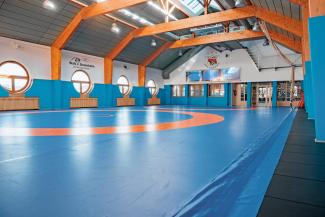
Austria Develops Wrestling Future at UWW Performance Centre A.C. Wals

By Jörg Richter

WALS-SIEZENHEIM, Austria (June 16) -- Anyone in Wals-Siezenheim, Austria, looking for the local wrestling centre is directed towards the fire station. Standing in front of it, you look up at the tall tower where the hoses are hung up to dry after call-outs, and at the garages housing the emergency vehicles. But the floor above the firefighters belongs to the wrestlers.

The training centre of wrestling champions A.C. Wals was inaugurated in 1994, completely renovated in 2022 and, a year later, declared the sixth United World Wrestling training centre worldwide by UWW President Nenad LALOVIC.

The former mayor of Wals-Siezenheim, Ludwig BIERINGER, visits the training centre almost daily and can recount stories about the development of the wrestling venue, as well as the sporting stronghold of Wals-Siezenheim, home to the Red Bull family.

His words, "if, by building the wrestling centre, we manage to keep even one young person away from drugs, then this investment will have been worth it,” are likely to hold just as much significance today as they did 32 years ago, when the training hall was completed.

h In Austria, wrestlers are battling against the dominance of winter sports; whilst every child knows the ski jumpers, downhill and slalom skiers, wrestlers have to work incredibly hard to also make it into the spotlight of the mainstream media.

In Toni MARCHL, the Austrian Wrestling Federation has a dedicated and passionate leader who has given himself fully to the growth of the sport. His extensive network spans business, politics, and the highest levels of international sport, including UWW European Council President Karl Martin Dittmann and UWW President Lalovic, with whom he has built a strong and trusted relationship.

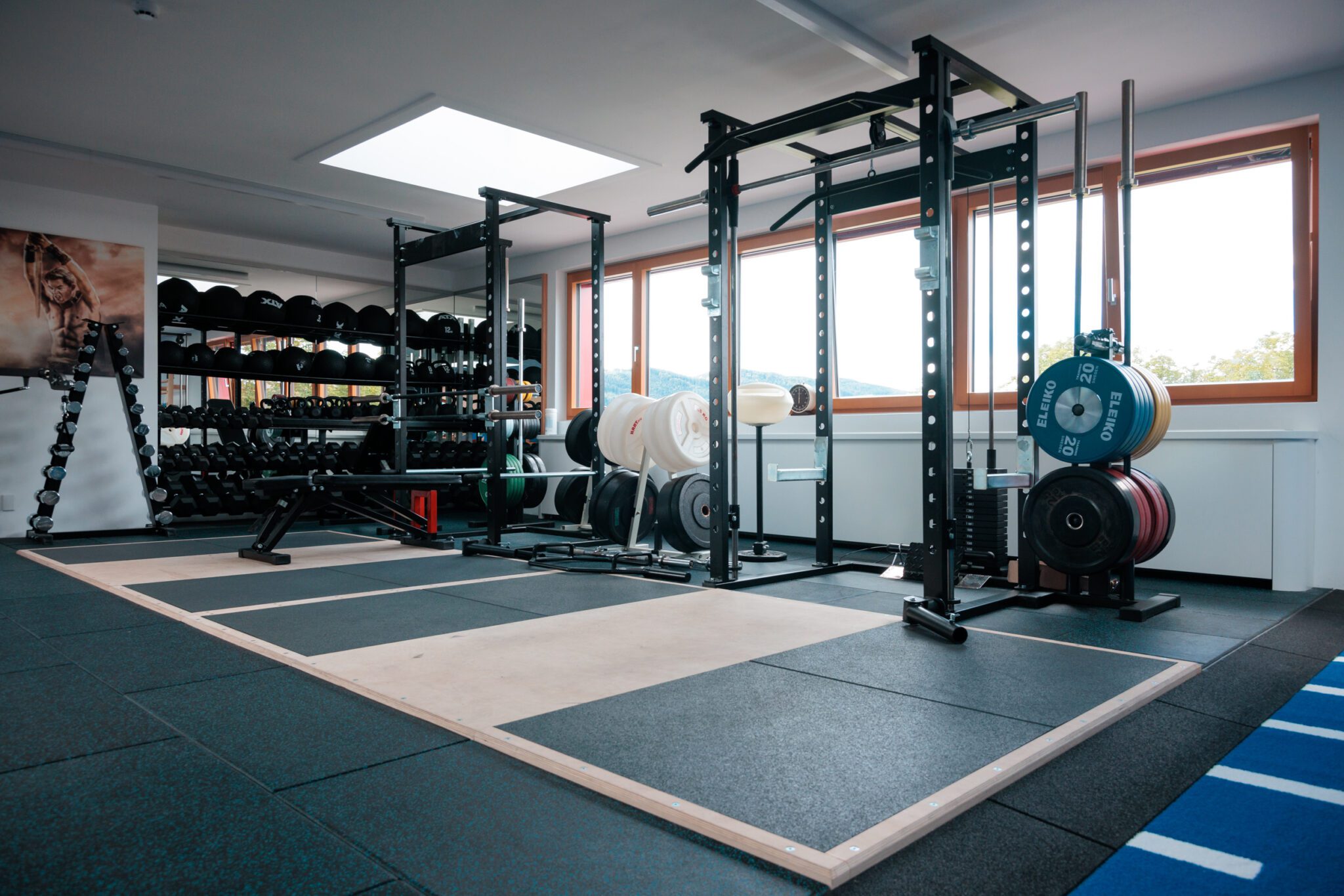
AC WalsFitness centre at A.C. Wals. (Photo: Austrian National Wrestling Centre)
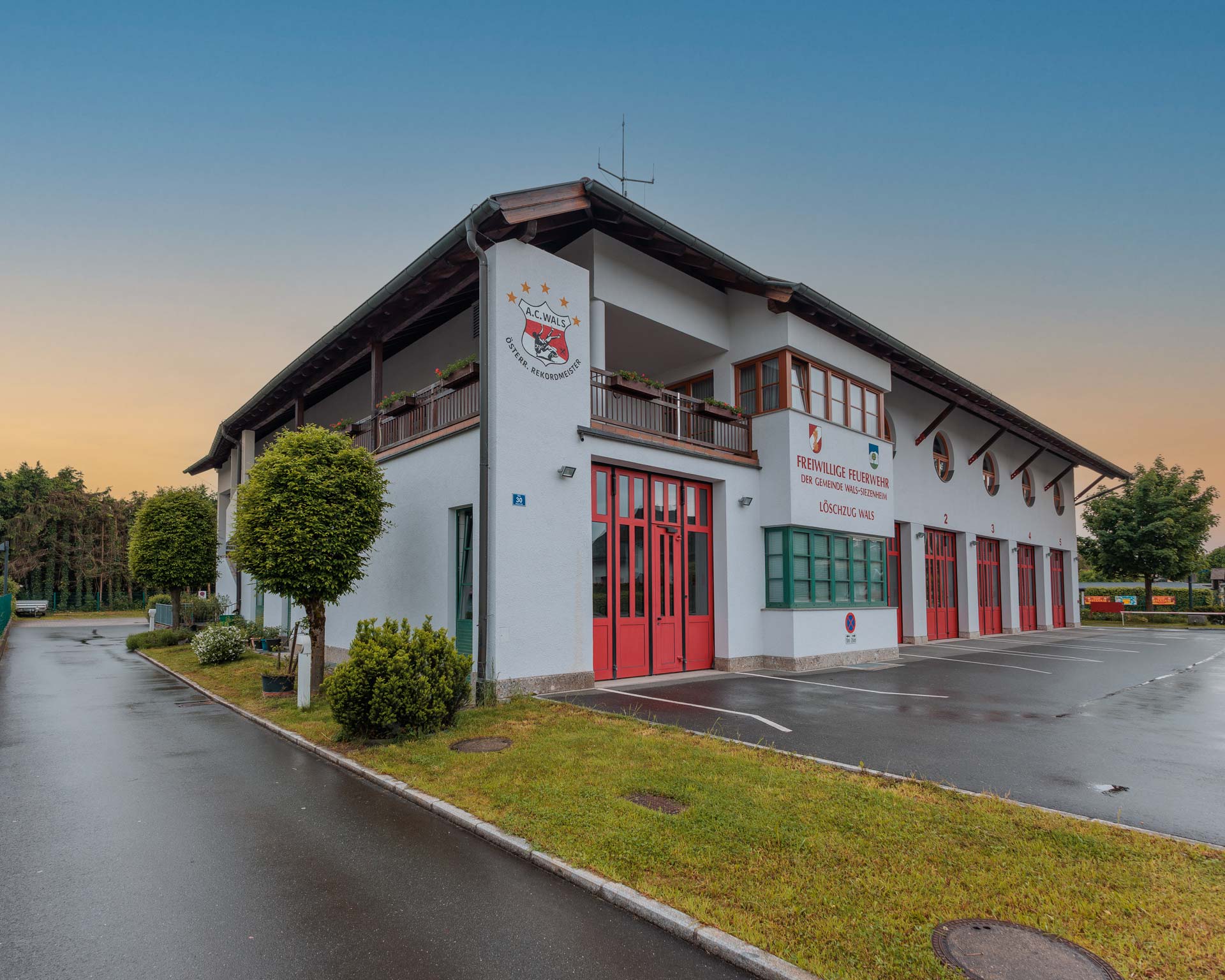
Back to the training centre in Wals, which was designated a UWW higperformance centre in 2022, wrestlers from all over the world now come together to train. This naturally also benefits the ORSV wrestlers, who can now train alongside the world’s best on a selective basis – and do so at home, on their own mats. What’s more, thanks to the efforts of ORSV wrestlers can now be found in positions supported by the sports programme within the army, as well as in the police, judiciary and customs services.

A small boarding school accommodates male and female athletes from all over Austria who combine school, vocational training or work with the demands of competitive sport in Wals-Siezenheim, whilst also travelling there on an ad hoc basis for centralised training sessions.

A large team of coaches has also been established to pass on their experience to the wrestlers. Georg MARCHL (Freestyle), Jeno BODI and Amer HRUSTANOVIC (Greco-Roman), and Elena PITTL (Women's Wrestling) lead a well-trained and dedicated team of coaches, supported and supervised by sports director Benedikt ERNST, and trained in collaboration with former German heavyweight wrestler Sven THIELE. The medical sector is also well-equipped in Wals-Siezenheim, with physiotherapy and sports medicine staff.

AC WalsA.C. Wals

The UWW Performance Centre is having an impact on the larger Austrian clubs and federations, which are following its example in developing talent under ever-improving conditions, so that an ever-stronger elite is emerging from the existing base. But no champion falls from the sky, no talent becomes a world champion overnight; everything takes time.

The ORSV is firmly committed to the long-term development of its athletes, investing in homegrown talent and building a sustainable future for Austrian wrestling. This philosophy is reflected in the growth of wrestlers such as Markus RAGGINER, Daniel GASTL, Simon MARCHL, Benjamin GREIL, Johannes LUDESCHER, Aker ACHMIDT and, last but not least, 10-time international medallist Martina KUENZ.

Projects like the UWW Performance Centre in Wals-Siezenheim represent exactly the kind of investment that nurtures the next generation, creates lasting foundations for the sport, and ensures that Austria's wrestling future is built from within.

 - by Jorg RITCHER, Ringsport Magazine