

Three Gold, Three Finalists as Russia Close-in on Greco-Roman title
Saturday, May 22, 2021 - 20:18 By Vinay Siwach

Russia took a step closer to winning the Greco-Roman team title after entering three more wrestlers in the finals apart from winning three gold and two bronze medals on the penultimate day of the U23 European Championships.
The three gold medals are already a better record than the last U23 Euros in which Russia claimed only two gold of 10.
They have a chance to double that on Sunday as Anvar ALLAKHIAROV (RUS), Shamil OZHAEV (RUS) and Artur SARGSIAN (RUS) entered the final at 60kg, 82kg and 97kg.
Ukraine and Hungary also managed to advance two wrestlers each to the finals while Turkey, Armenia and Georgia got one each at the Jane Sansadski Arena in Skopje, North Macedonia.
Led by the senior Russian Championships silver medalist Allakhiarov, Russia had four wrestlers in the semifinal with Sergei KUTUZOV (RUS) falling short.
Allakhiarov wrestled junior World Championships silver medalist Tigran MINASYAN (ARM) in the semifinal at 60kg and made it look easy with his control of the center. Minasyan was the first to attack but Allakhiarov countered with a body lock throw for four points. A stepout made it 5-0.
The Russian performed a takedown in the second period to lead 7-0 and almost had the fall but Minasyan rolled out. A successful challenge from Armernia only delayed the eventual result as Allakhiarov won 7-0.
He will take on Ihor KUROCHKIN (UKR) who defeated Krisztian KECSKEMETI (HUN) 5-2 in the other semifinal, which saw all the points scored in the first period.
Kecskemeti scored with a stepout before he was awarded a point for Kurochkin's passivity. But during the following par terre position, he lost control and the Ukrainian reversed it and also slammed him for four points lead 5-2, a margin which remained till the end of the bout.
His teammate Andrii KULIK (UKR) also made it to the final on Saturday. In the 72kg semifinal against Martun BADALIAN (BLR), Kulik scored two stepouts before been awarded the passivity point. Leading 3-0, he got a gut and then held the position to win via fall in just 2:19.
From the other semifinal, Malkhas AMOYAN (ARM) wrestled accoring to his reputation and reached the semifinal after defeating Kutuzov. The Individual World Cup and European silver medalist opened the scoring with a stepout before the referee called Kutuzov for inactivity.
Amoyan completed a throw from par terre position to lead 4-0. Kutuzov did score a stepout but that was all, Amoyan winning the bout 4-1.
At 82kg, returning bronze medalist Tamas LEVAI (HUN) improved on his performance and made it to the final with a close 2-1 win over senior European bronze medalist Aivengo RIKADZE (GEO).
Levai was the first to be given passive but Rikadze was warned in the seccond period, giving Levai the criteria at 1-1. He scored a stepout with an arm lock in the final few seconds of the bout. The Georgian corner wanted to challenge the call Rikadze refused.
Levai will now take on Ozhaev who took no time to beat Arminas LYGNUGARIS (LTU) 8-0 in the other semifinal. After scoring a stepout, he was awarded a point for Lygnugaris' passivity. From the par terre position, Ozhaev slammed a throw for four points. A takedown later, he pocketed the bout in 2:14.
Another Russian to successfully reach the final was Sargsian as he also won 8-0 against Michail IOSIFIDIS (GRE) at 97kg. He was even quicker than Ozhaev, finishing the bout in just 1:37. He scored via three takedowns and a throw for two to finish the bout with technical superiority.
The other semifinal at this weight was much more closer as Giorgi KATSANASHVILI (GEO) etched out a 4-3 win over Ondrej DADAK (CZE). At the end of the bout, both wrestler took a few seconds to catch there breath.
They were awarded points for passivity but it was Katsanashvili who managed an exposure from the par terre position to lead 3-3. Dadak scored a reversal at this point to reduce the lead to 3-2. He later scored a stepout but Katsanashvili held the criteria 3-3.
With both wrestlers struggling to match the intensity of the bout, it was the Georgian who kept his cool and scored a stepout to lead 4-3 while Dadak, despite his tries, failed to score.
Turkey also had a finalist as Kadir KAMAL (TUR) ended the hopes of Oleksii MASYK (UKR) with a 6-2 win in the 67kg semifinal. Kamal led 1-0 as Masyk was warned for inactivity but he quickly gave it up with a lost challenge as he claimed a gut wrench from par terre position. The judges did not think the same.
But like any smart wrestler, he made sure he has the clear lead. He went big with a shoulder throw and got two points. A stepout gave another point. Just before the break, he scored a takedown by snapping Masyk down to lead 6-1.
Masyk managed only a stepout in the second period but could avoid the defeat.
From the other side of the bracket, Krisztian VANCZA (HUN) entered the final after a agonisingly close 4-3 win against Hasrat JAFAROV (AZE).
In a bout that saw a number of interruptions, mainly for medical attention to Vancza's bleeding, Jafarov had almost pulled of the win but a Hungary challenge denied him.
Vancza led 1-0 after Jafarov was passive but was awarded two more points as the referee thought the Azerbaijan wrestler was using his head to hit Vancza. A successful challenge from Azerbaijan reversed the decision.
But soon after, the referee did awarded the Hungarian the two points in the second period. Jafarov again challenged the call. He lost, making the score 4-0. He roared back with a takedown and another one soon to make it 4-4. A step out in the same action made it 5-4.
Hungary challenged the latest takedown saying Jafarov used his legs in the action. The video replays confirmed that and the score was reversed to 4-2 for the Hungarian. A late stepout was not enough for Jafarov in the 4-3 defeat.
Komarov leads Russia to three gold
Aleksandr KOMAROV (RUS) has medals from cadet, junior and senior level continental championships. On Saturday, he completed his medal cabinet with a gold medal at the U23 level as well.
Making his debut at this age-group, the Russian defeated Temuri TCHKUASELIDZE (GEO) 6-1 in the 87kg final to win the gold medal.
Tchkuaselidze was the aggressive wrestler of the two as he pressured Komarov in the first minute. During one such attack, he had the Russian on the edge but Komarov used the Georgian's momentum to reverse the attack and score a takedown.
Another takedown gave him a 4-0 lead before Tchkuaselidze answered with a stepout. Komarov in his composed and laid back wrestling scored another takedown to lead 6-1 at the break. The scorers were not troubled till the six minutes expired.
This was the second of Russia's three golds on Saturday. Junior world champion Sergei STEPANOV (RUS) also claimed his first U23 Euro gold after beating Per OLOFSSON (SWE) 5-2 at 77kg.
A big four point throw and the passivity point were enough for Stepanov to counter Olofsson's opening takedown in the final.
The gold medal at 130kg also went to Russia as Mikhail LAPTEV (RUS) beat David OVASAPYAN (ARM) 5-1 in the final.
Laptev got going after sneaking out of a dangerous position to duck under and put Ovasapyan on his back for two points. A passivity warning against Ovasapyan made it 3-0 for the Russian.
But later, Laptev was warned for passivity to see his lead being reduced to two points. As Ovasapyan was looking for a turn from par terre position, Laptev reversed it to lead 4-1. Armenia challenged the call but lost.
But his teammate Hrachya POGHOSYAN (ARM) had a different ending to his tournament. In the 63kg final, he defeated Niklas OEHLEN (SWE) 4-1 to win the gold medal.

At 55kg, a thrilling final saw junior World Championships silver medalist Zaur ALIYEV (TUR) win the gold medal over Adem UZUN (TUR), thanks to a successful challenge at the beginning of the bout.
Aliyev tried and shoulder throw but failed. Uzun got the takedown and a gut wrench to lead 4-0. Azerbaijan challenged the call and won, reversing the score to 0-0.
The deadlock was broken when Uzun was called passive and Aliyev led 1-0. Later, it was the turn of Aliyev to be in par terre and Uzun managed an exposure to lead 3-1.
With just over a minute left, Aliyev got Uzun in front head lock and looked at his corner, with his coach instructing him for a roll. He did exactly that and rolled Uzun for two points to lead 3-3.
He maintained the criteria, despite desperate attempts from Uzun, for the win.
The final medal bouts of the remaining Greco-Roman weight classes will be held on Sunday, the final day of the U23 event, the first after 592 days of absence.
Results: GR Semifinals
60kg
GOLD: Anvar ALLAKHIAROV (RUS) vs Ihor KUROCHKIN (UKR)
SF 1: Anvar ALLAKHIAROV (RUS) df Tigran MINASYAN (ARM), 7-0
SF 2: Ihor KUROCHKIN (UKR) df Krisztian KECSKEMETI (HUN), 5-2
67kg
GOLD: Krisztian VANCZA (HUN) vs Kadir KAMAL (TUR)
SF 1: Krisztian VANCZA (HUN) df Hasrat JAFAROV (AZE), 4-3
SF 2: Kadir KAMAL (TUR) df Oleksii MASYK (UKR), 6-2
72kg
GOLD: Andrii KULIK (UKR) vs Malkhas AMOYAN (ARM)
SF 1: Andrii KULIK (UKR) df Martun BADALIAN (BLR), via fall (5-0)
SF 2: Malkhas AMOYAN (ARM) df Sergei KUTUZOV (RUS), 4-1
82kg
GOLD: Tamas LEVAI (HUN) vs Shamil OZHAEV (RUS)
SF 1: Tamas LEVAI (HUN) df Aivengo RIKADZE (GEO), 2-1
SF 2: Shamil OZHAEV (RUS) df Arminas LYGNUGARIS (LTU), 8-0
97kg
GOLD: Artur SARGSIAN (RUS) vs Giorgi KATSANASHVILI (GEO)
SF 1: Artur SARGSIAN (RUS) df Michail IOSIFIDIS (GRE), 8-0
SF 2: Giorgi KATSANASHVILI (GEO) df Ondrej DADAK (CZE), 4-3
GR Medal Results
55kg
GOLD: Zaur ALIYEV (AZE) df Adem UZUN (TUR), 3-3
BRONZE: Bajram SINA (ALB) df Denis DEMIROV (BUL), 12-9
BRONZE: Mavlud RIZMANOV (RUS) df Denis MIHAI (ROU), 16-5
63kg
GOLD: Hrachya POGHOSYAN (ARM) df Niklas Jan Olov Pontus OEHLEN (SWE), 4-1
BRONZE: Aliaksandr PECHURENKA (BLR) df Abdulkadir SAYDAM (TUR), 8-2
BRONZE: Rakhman TAVMURZAEV (RUS) df Leri ABULADZE (GEO), 4-2
77kg
GOLD: Sergei STEPANOV (RUS) df Per OLOFSSON (SWE), 5-2
BRONZE: Erkan ERGEN (TUR) df Mikita KAZAKOU (BLR), 7-2
BRONZE: Samvel GRIGORYAN (ARM) df Nikoloz TCHIKAIDZE (GEO), 11-2
87kg
GOLD: Aleksandr KOMAROV (RUS) df Temuri TCHKUASELIDZE (GEO), 6-1
BRONZE: Istvan TAKACS (HUN) df Muhutdin SARICICEK (TUR), 1-1
BRONZE: Svetoslav NIKOLOV (BUL) df Gevorg TADEVOSYAN (ARM), 4-1
130kg
GOLD: Mikhail LAPTEV (RUS) df David OVASAPYAN (ARM), 5-1
BRONZE: Fatih BOZKURT (TUR) df Delian ALISHAHI (SUI), 9-0
BRONZE: Dariusz VITEK (HUN) df Franz RICHTER (GER), 5-4
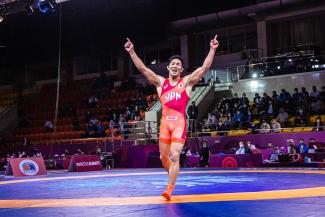
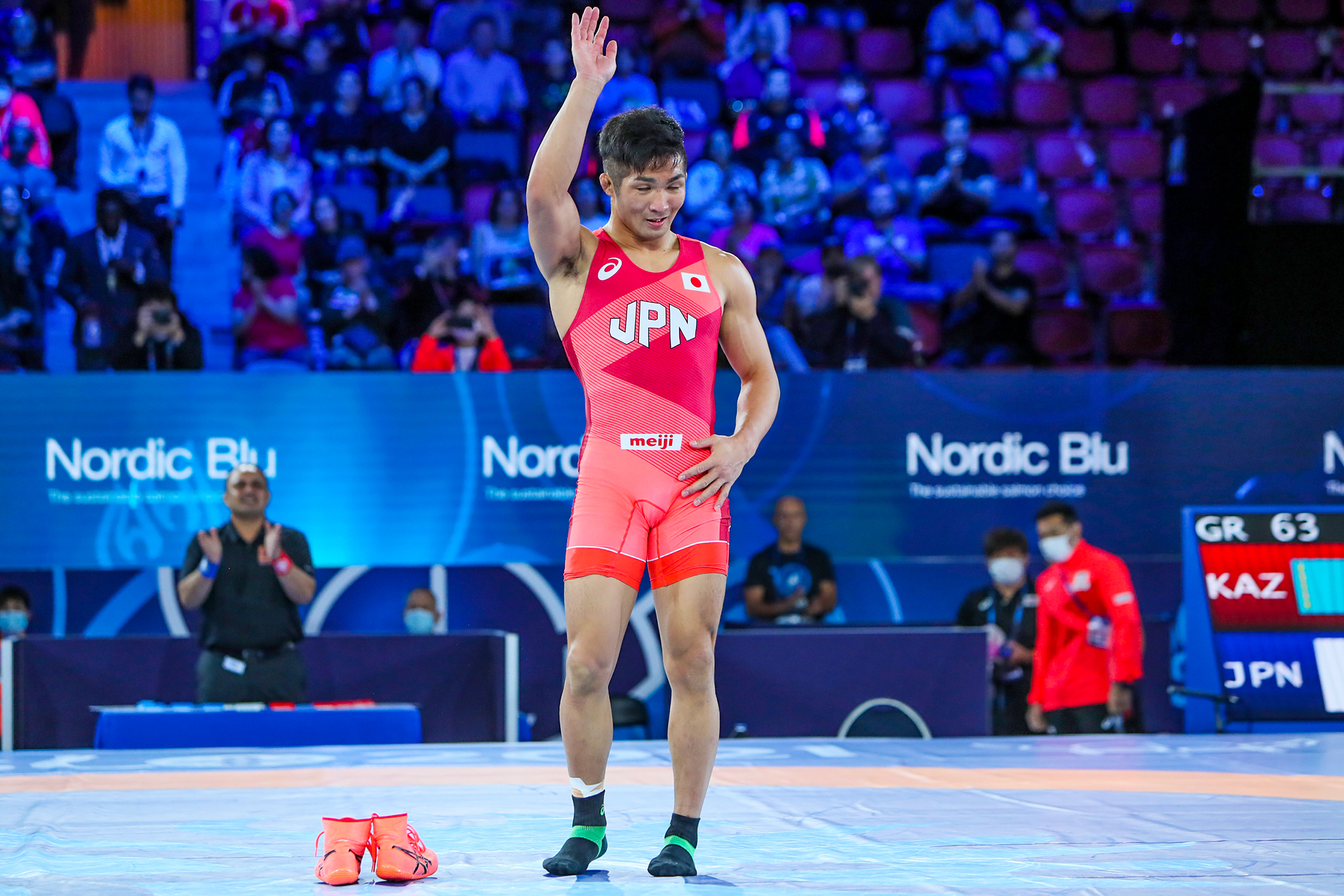 Tsuchika SHIMOYAMADA (AUS) had left his shoes on the mat during the 2021 World Championships to mark his retirement. (Photo: United World Wrestling / Martin Gabor)
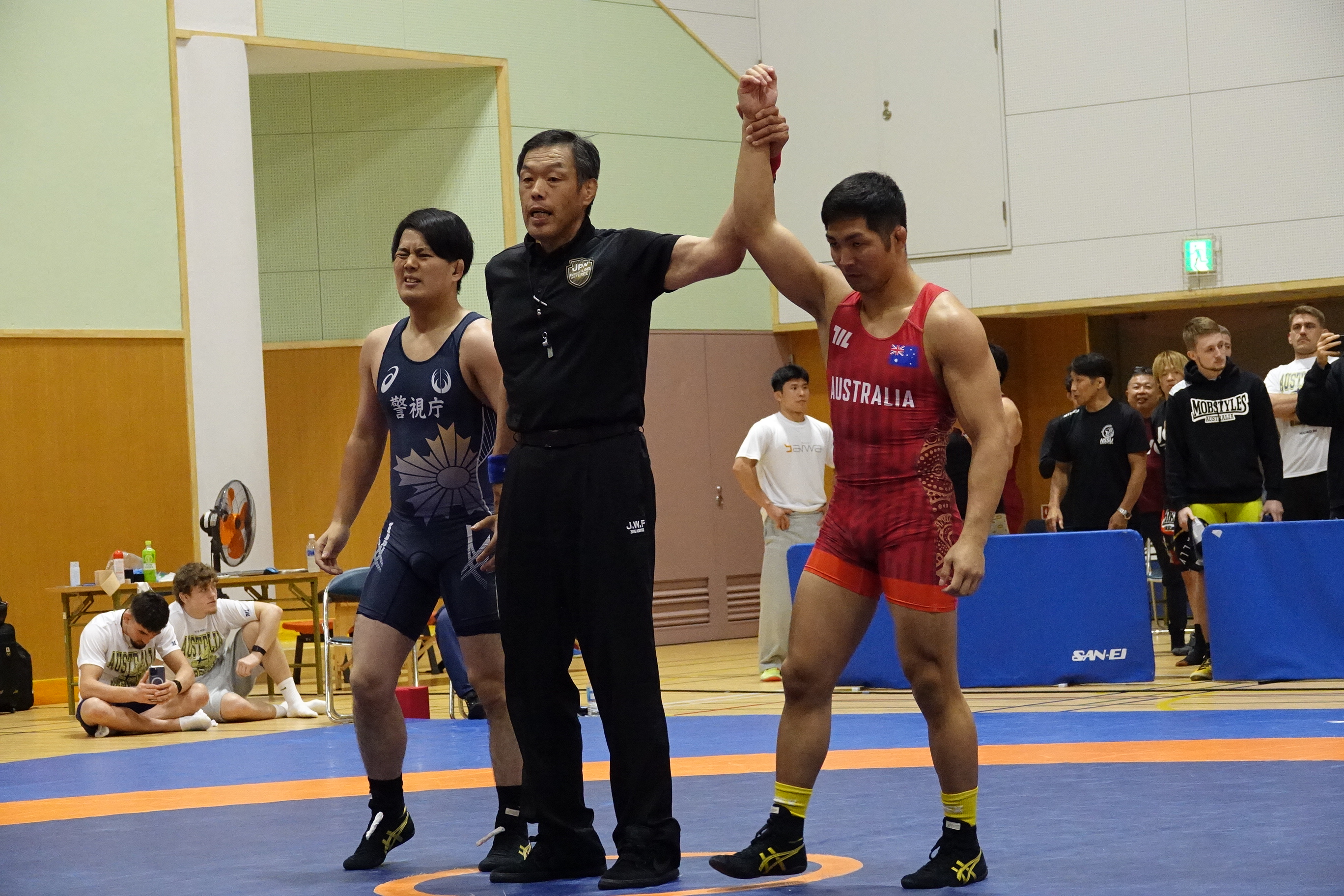 Tsuchika SHIMOYAMADA advances to the semifinals at the All-Japan Non-Student Championships in July with a 52-second win over Kokoro GOTO. (Photo: Koji Fuse / wrestling-spirits.jp)
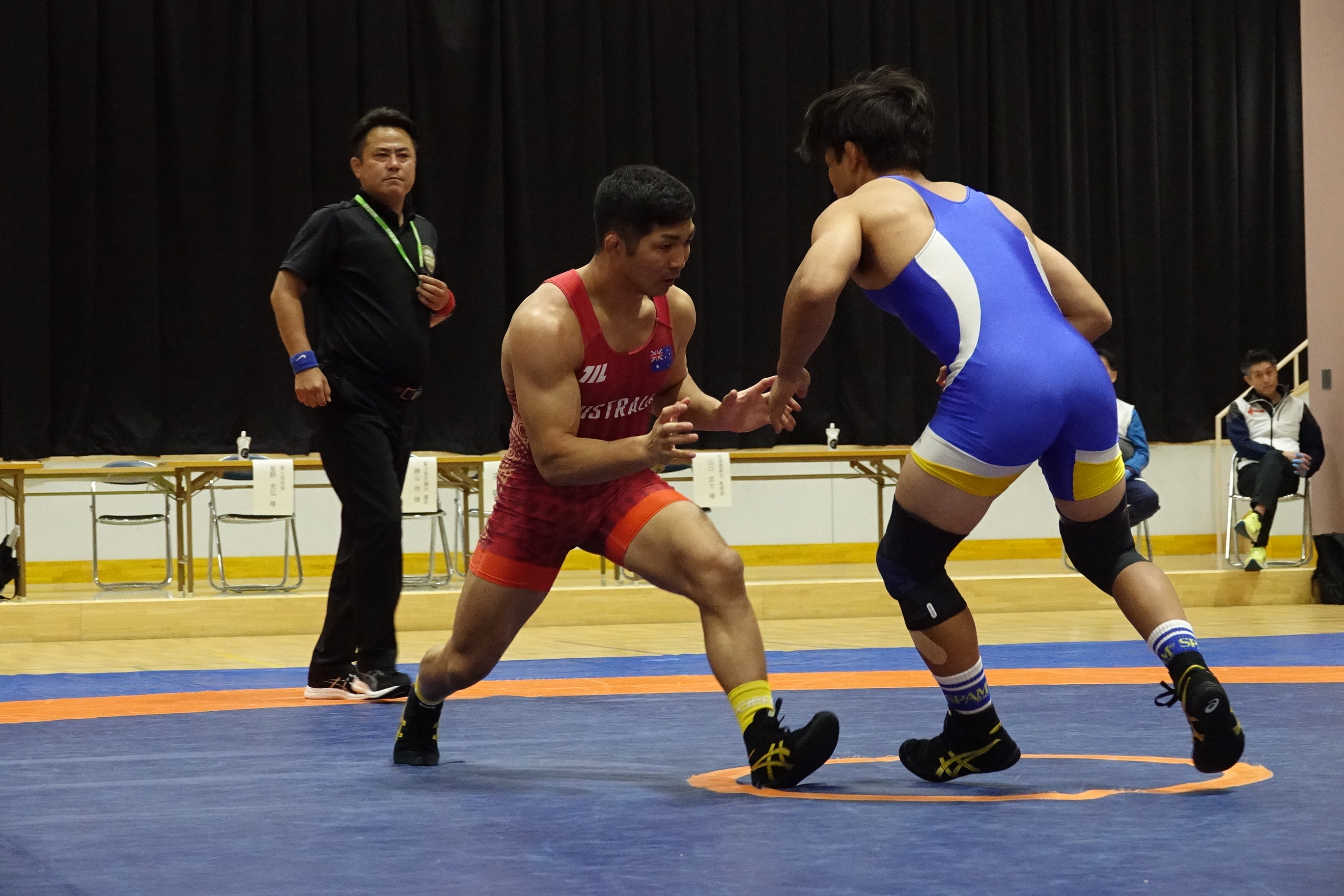 Tsuchika SHIMOYAMA faces Keitaro ONO in his opening match at the All-Japan Non-Student Championships in July. (Photo: Koji Fuse / wrestling-spirits.jp)
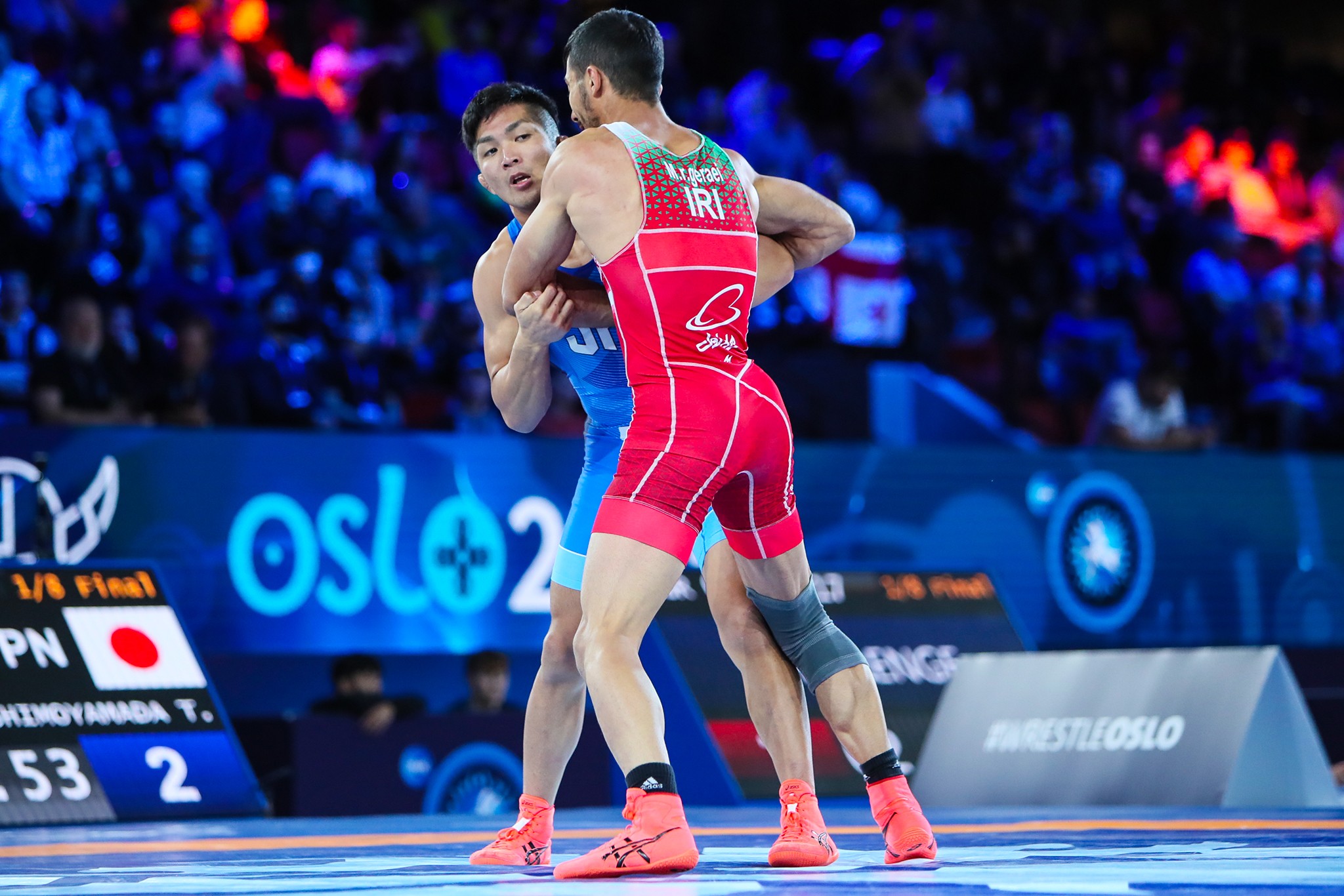 Tsuchika SHIMOYAMADA (AUS) was dominating Mohammadreza GERAEI (IRI) in their match at the 2021 World Championships before being pinned. (Photo: United World Wrestling / Martin Gabor)
Share your thoughts.
Comments