

Veteran Japanese Wrestling Writer Eyes Covering 2nd Tokyo Olympics, 56 Years Later
Sunday, August 18, 2019 - 21:40 By Ikuo Higuchi

(The following is an abridged version of a story that recently appeared on the Japan Wrestling Federation website. Translation for UWW by Ken Marantz.)
Getting to cover more than one Olympics during a career can be considered an honor, but is not necessarily such a rarity for the world's top sports journalists. But to report on two Olympics held in the same city---and more than a half-century apart---that puts a writer into a class all their own.
Veteran Japanese wrestling writer Masayuki Miyazawa could pull off this astounding feat when the 2020 Tokyo Olympics open less than a year from now.
In the decades since covering the first Tokyo Olympics in 1964 for the Nikkan Sports daily, Miyazawa established himself as a leading fixture on the wrestling scene in Japan, not only as a peerless reporter, but as a magazine editor, Japan federation official, impromptu coach, and maverick of sorts.
"I don't want to go watch, I want to be on the scene reporting," says Miyazawa, who has long retired from Nikkan Sports and, his health willing, wants to be involved in some writing capacity at Tokyo 2020, when he will be 90.
Miyazawa still holds a position as an advisor in the Japan Wrestling Federation, but never forgets his roots. Although he has a seat on the dais reserved for federation officials at the All-Japan Championships, he always heads for the press section to sit among his "peers." "I'm a journalist for life," he says.
Miyazawa was not aware of the possibility of doing the Tokyo double and earning a place in journalistic history until a fellow press member mentioned to him, "You can get into the Guinness Book." That sparked Miyazawa's interest, the same inquisitiveness that led him to some of Japan sports' biggest scoops.

Miyazawa is praised for his long years of contribution to wrestling by JWF President Tomiaki Fukuda at an event heralding the first Olympic gold medal won by a wrestler (Tatsuhiro Yonemitsu) from Takushoku University, Miyazawa's alma mater, in 2012. (photo by Ikuo Higuchi)
It was during his days at Nikkan Sports that Miyazawa broke the story of the retirement of one of sumo wrestling's legendary champions, yokozuna Wakanohana I (the wrestler's wife phoned him to tell him). And at the 1962 Asian Games in Jakarta, Miyazawa made use of the Indonesian he had studied at Takushoku University to land an exclusive interview with President Sukarno, who was engulfed in a political crisis at the time.

Miyazawa serves as a referee, one of his many functions, at the GANEFO (Games of the New Emerging Forces) held in Jakarta, Indonesia, in 1963. He was also a judge in judo, a coach in both sports, and a journalist covering the event. (photo courtesy of Masayuki Miyazawa).
While he has mostly left his mark in wrestling, he covered many sports in his career, including judo, gymnastics, karate, modern pentathlon and the Paralympics. His prolific writing could fill volumes.
Finding the missing medalist
Miyazawa's greatest achievement was when he tracked down a Japanese Olympic medalist who had disappeared without a trace. It was Miyazawa who not only found Katsutoshi Naito alive and well in Brazil, but made it his life work to recount an amazing tale that very few Japanese even knew about.
The history of Japanese wrestling can pretty much trace its roots back to Naito, a judo competitor who took the rare and bold step in the 1920s of venturing overseas, in his case to enroll at Penn State University, currently a U.S. collegiate powerhouse. He joined the wrestling team and, in the days before the establishment of the NCAA, won the Eastern Intercollegiate title in 1924.
At that time, there was strong anti-immigrant sentiment in the United States, and Japan was not exempt. Against that background, Naito kept a low profile but still managed to find success. A Japanese politician, hoping to improve relations between the two countries, arranged for Naito to compete at the 1924 Paris Olympics.

Katsutoshi Naito, left, a star wrestler at Penn State who won Japan's first ever Olympics medal in wrestling, a bronze at the 1924 Paris Games. (JWF archives)
Naito followed up on his success at Penn State by winning the bronze medal in the freestyle 61kg class. It was Japan's first-ever medal in wrestling and only the third overall, following a pair of silvers won in tennis at the 1920 Antwerp Games.
Naito returned to Japan after the Olympics and tried to introduce wrestling into the country, but it could not compete with the home-grown sport of judo. Naito, who studied horticulture at Penn State, then left for Brazil, where a large Japanese immigrant population had developed. In addition to starting a horticulture business, Naito introduced judo to his new hosts.
It would not be until 1932 that the Japan Wrestling Federation was established. By then, Naito was all but forgotten, and no one associated with the sport knew his whereabouts.
That was the situation until Miyazawa decided it was time to find this "legendary hero." Driven by the spirit of a wrestling journalist, Miyazawa plunged wholeheartedly into finding this ancestor of Japanese wrestling. His efforts paid off and, through an exchange of letters, he confirmed that Naito was living in Brazil. Miyazawa then played an influential role in getting Naito and his wife to attend wrestling matches at the 1964 Tokyo Olympics, when the two met for the first time.
How proud Naito must have felt to see how wrestling had planted such firm roots in Japan, and how far it had come---enough to win a startling five gold medals.
Later, to properly chronicle Naito's tale, Miyazawa started his journalistic endeavors in earnest, and the story was first published in a leading Japanese magazine in October 1987. "I went to Brazil three times, and Penn State three times," he recalls. At Penn State, he was hosted by Hachiro Oishi, a long-time coach of the Nittany Lions.
In 1985, Miyazawa accompanied Tomiaki Fukuda, the current JWF president, and Kazuko Oshima, Japan's first female wrestler, to report on Oshima appearing in the first-ever international women's tournament in Clermond-Ferrand, France. Miyazawa stayed behind after the other two returned to Japan to visit sites of the 1924 Paris Olympics and get a sense of the path taken by Naito. Looking back, the 89-year-old Miyazawa recently revealed how well-versed he became in Naito's life, as he can still recall from memory, "July 14, that was the day that Naito won his bronze medal."

Miyazawa, center, poses in Brazil in February 1990 with Katsuhiro Naito, left, the oldest son of Katsutoshi Naito, and Tatsuo Oishi, older brother of former Penn State coach Hachiro Oishi and who was living in Sao Paulo. On the wall is the diploma Katsutoshi Naito received for winning the bronze medal at the 1924 Paris Olympics. (photo courtesy of Masayuki Miyazawa)
For the sake of posterity
Over a nearly quarter-century span, from after the 1964 Tokyo Olympics to March 1990, Miyazawa served as editor of a monthly magazine published by the Japan federation, originally called Japan Amateur Wrestling, then later renamed Monthly Wrestling and now Olympic Wrestling. At that time, wrestling was a completely amateur sport relying on government funding, and money was in short supply. As such, it was an unpaid position for Miyazawa, and one he carried out in his spare time away from his fulltime job.
One JWF president used to plead with the press for coverage, even if it was negative news. But in reality, most members of the federation regarded media relations as frivolous. "Expending energy on public relations doesn't result in any gold medals," was a common refrain.
"I don't recall ever getting compensation for writing, editing, transportation or any other expenses," says Miyazawa, who also somehow found time to serve for a decade as manager of the wrestling team at his alma mater Takushoku University, after it had fallen to the third division of the regional league. In 2012, Tatsuhiro Yonemitsu (freestyle 66kg) became the first-ever Takushoku wrestler to win an Olympic gold.
In the early days of the magazine, there was no fax machine or email, and Miyazawa had to meet the printer at Shinjuku train station in Tokyo to hand over the texts. They would meet again to get him a copy of the galley proof, then yet again so he could convey corrections. All of this in the precious time between newspaper assignments. The fact that results of tournaments often were published three or four months later hardly detracts from his impressive dedication.
Why did he do it? For Miyazawa, it was about fulfilling the journalist's mission of preserving an accurate history for future generations, in a sport he loved.
One day, a federation official said to Miyazawa, "If someone wants to look up results, they can just come to the federation office. Shouldn't you include more stories?" But Miyazawa was having none of that. For him, it was more important to have a depository for results to be left for posterity. He had his supporters, including one high-ranking official who noted that it would be easy for people living in Tokyo to visit the office, but all but impossible for many others. "Many people have an interest in seeing the results," the official said. "For the wrestlers, to see their name in print, even if it’s only on one line, would serve as motivation."
Others would later praise Miyazawa's efforts, saying the details and results included in the magazine were invaluable in determining qualifications for awards or putting together histories.
Miyazawa also revolutionized how wrestling terms were used in Japan. Back then, "period" was referred to as "round", and instead of the weight class in kilograms, terms like "flyweight" were used. It is suspected that the use of such boxing terms had been decided by journalists covering contact sports. Miyazawa became determined to unify Japan with the rest of the world after attending an international tournament. "When I mentioned the 'flyweight class,' a European wrestler had no idea what I was talking about," he recalls.
As wrestling in Japan was imported from the United States, Miyazawa wondered if it also used the boxing terms. But asking former Kokushikan University coach and longtime JWF website contributor William May, who wrestled collegiately in Minnesota, the American said had never heard of such a thing. Without consulting anyone, Miyazawa immediately started using "period" and "xx kg" in the magazine, and nobody complained.

Miyazawa, left, poses with Japan's first female wrestler Kazuko Oshima, 3rd from right, and others following an exhibition match for women held in conjunction with the Super Champions Cup in Tokyo in 1985. (photo courtesy of Masayuki Miyazawa)
Still in the running
While Miyazawa hopes to attend the Tokyo Olympics in some writing capacity, he has also applied to be a runner in the nationwide torch relay. If he is selected, he knows that his unique link to both Tokyo Games will lead to him being the subject of interviews, instead of the other way around.
Of more serious concern, though, is his current health. In the fall of last year, he had gallstone surgery, at which time he was found to have prostate cancer. As the cancer was not malignant, the doctor said that hormone injections could guarantee another of five to 10 years of life. As that would take him through the Tokyo Olympics, Miyazawa agreed to the treatment.
Recently, Miyazawa's condition has stabilized. In the olden days, the lifestyle of a reporter could be considered anything but healthy. Irregular working hours and late nights were the norm, as well as drinking until morning with colleagues. Smoking while typing out a story on deadline was a common site. While Miyazawa himself was not a smoker, his work left him with little time to exercise and he rarely thought about his diet.
At 62, five years after he had reached retirement age and was working for Nikkan Sports on a contract basis, he paid his own way to the 1992 Barcelona Olympics. It was there that, seeing a photo of himself, he was shocked at how plump he had become. Thinking the problem might be more internal than a matter of diet, he underwent a physical exam upon returning to Japan, and was diagnosed with diabetes.
The doctor immediately recommended that Miyazawa see a specialist. Fortunately, his condition was not life-threatening, nor was he at a stage where amputation of a limb would be necessary. With medicine, a change to a healthy diet and the start of an exercise regimen, his condition vastly improved. Every day before going to work, he would go through a workout of walking in a pool. He managed to drop from 74kg to his current weight of 57kg, about the same as during his days as a wrestler at Takushoku.
Prior to his surgery last year, Miyazawa participated in an event hosted by the Daiichi Seimei Life Insurance women's athletics team, in which he ran two laps on a 400-meter track. He finished well behind the others. But as each leg of the Olympic torch relay will be 200 meters, it has given him confidence of being able to successfully complete the task.
One other obstacle could be getting credentials. When he covered the 1964 Olympics, criteria for getting a pass was very loose and he was very free to report on what he wanted. Nowadays with the IOC handling the process, it has become much more select.
Recently, an acquaintance took Miyazawa's quest a step further. "After covering the Tokyo Olympics for a second time, how about the [2024] Paris Olympics, which will mark 100 years after Naito won his bronze medal?"
"When the prostate cancer was discovered [last year], I was told the hormone treatment would give me another five or 10 years," Miyazawa replied. "I'd like to be around for that."
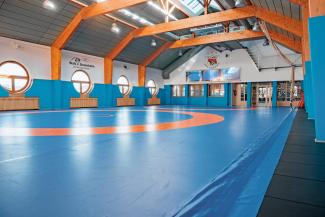
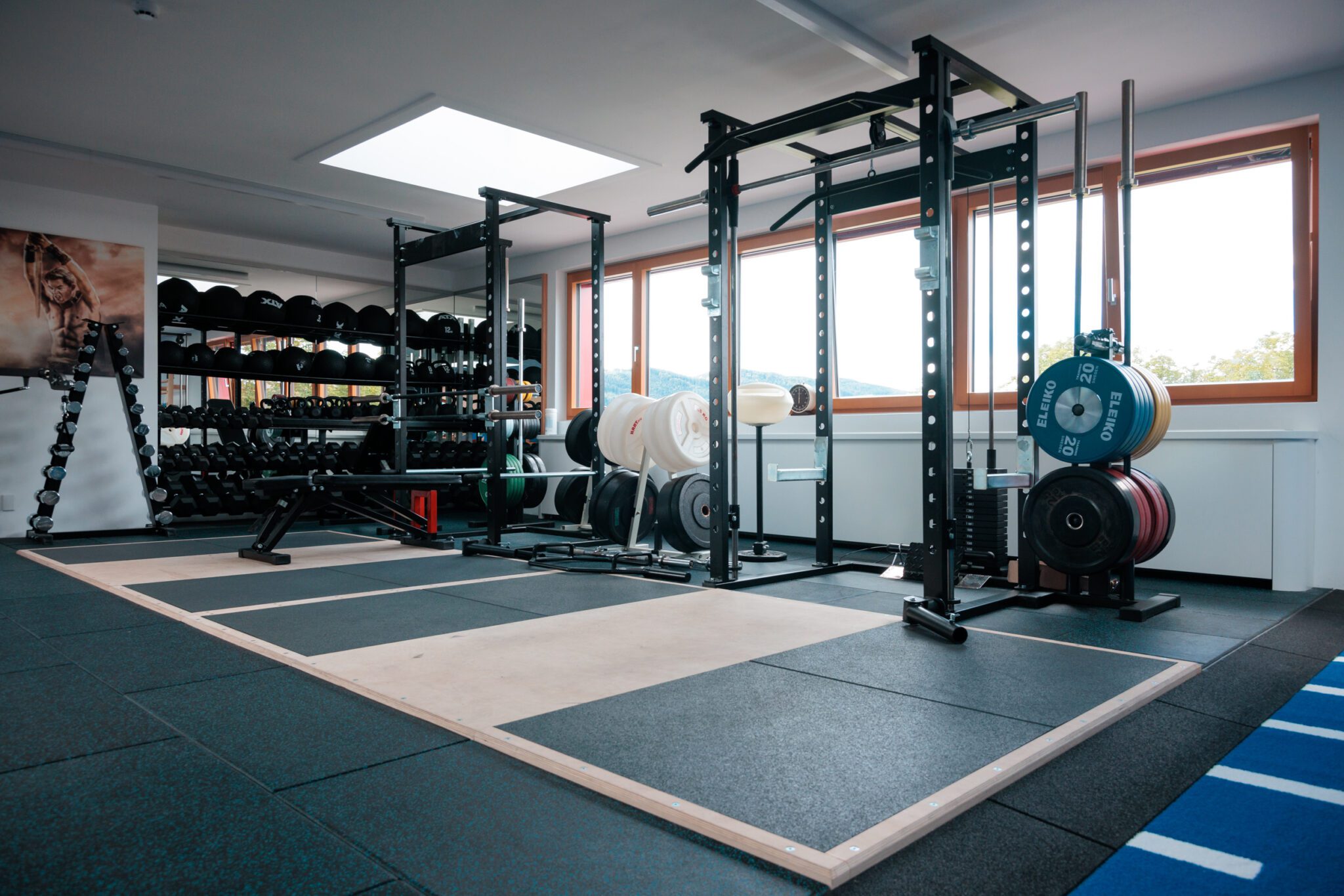 Fitness centre at A.C. Wals. (Photo: Austrian National Wrestling Centre)
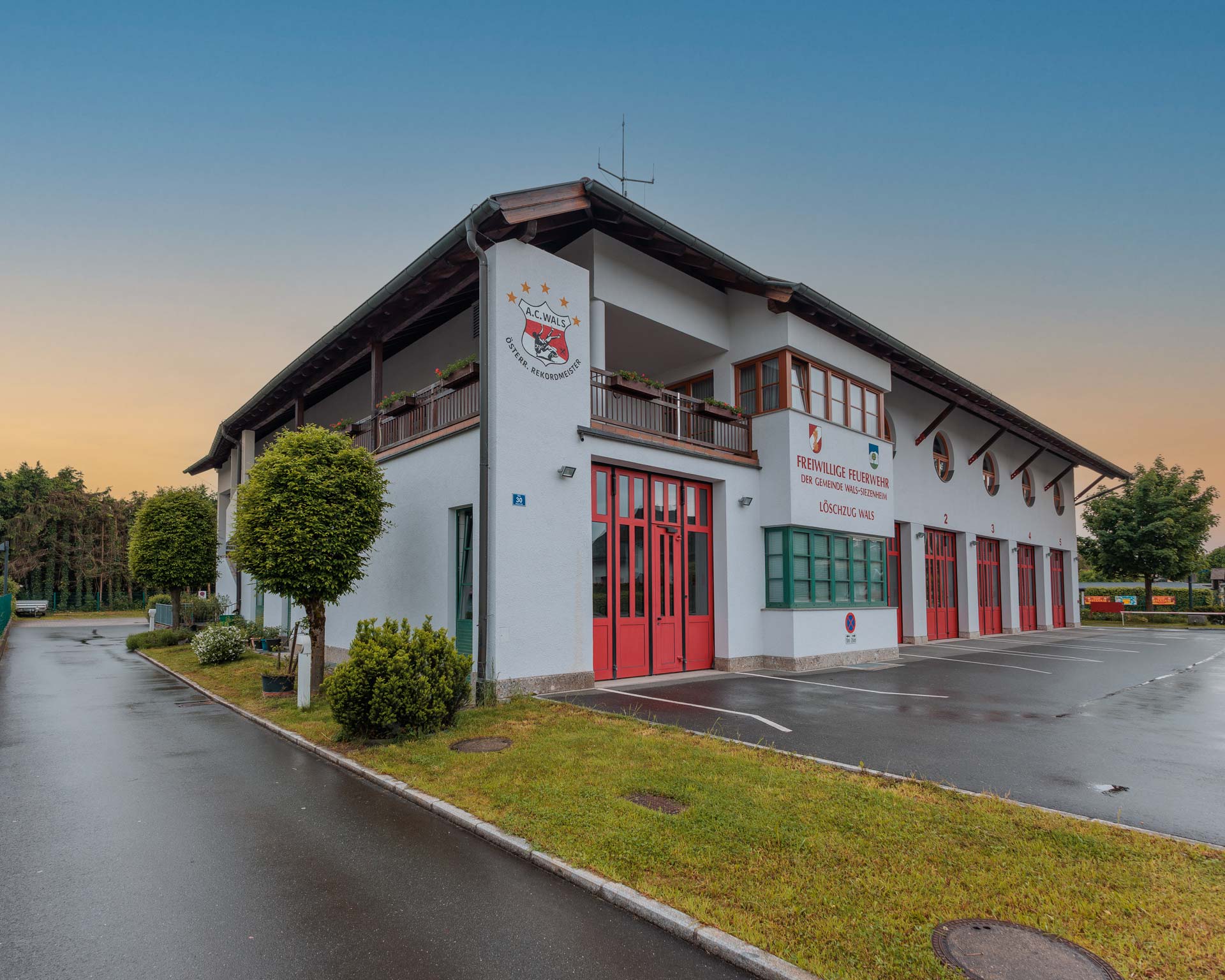 A.C. Wals
Share your thoughts.
Comments