

Wrestling Fights its Way Back onto Olympic Programme
Friday, January 3, 2020 - 15:12 By Tim Foley

United World Wrestling President Nenad Lalovic speaks at the 125th IOC Session (AP Photo/Victor R. Caivano)
CORSIER-SUR-VEVEY, Switzerland (January 3) – The news spread quickly. On the morning of February 12, 2013, the International Olympic Committee Executive Board voted that wrestling be eliminated from the Olympic Programme. The 2016 Rio Olympic Games would be the sport’s last as a member of the Olympic family.
By early afternoon stories had run on every major international wire and sports website informing the worldwide wrestling community of the sport’s unlikely elimination from the Olympic Games. With the information came an immediate and worldwide mobilization effort aimed at earning back wrestling’s position on the Olympic programme.
Reacting to the news, the FILA bureau met in Thailand to decide next steps. It was apparent that there had been missed signs and opportunities for organizational improvement and the bureau moved quickly to elect a new president, ultimately choosing Serbian businessman Nenad Lalovic. Two months later Lalovic was elected interim president during an extraordinary Congress in Moscow and set the tone of hard work and cooperation that would ultimately prove successful in helping the sport recapture its spot in the Olympic Games.
“What goes on in this room today and the days that follow will determine if we are an Olympic sport after 2016. We have been given a strong message by the IOC. How we answer that message will determine if our future includes the Olympic Games. We need to convince the IOC that we will listen to them. We are strong enough to change,” said Lalovic.
By June there were promotional events being held around the globe. In Japan a petition was signed with more than 1 million signatures. The United States and Russia raised millions of dollars to ensure additional promotion of values, consultation for a reshaping of the sport, and the creation of marketing and media departments.
In the midst of the upheaval the wrestling community had been given an opportunity. Shortly after the 125th IOC Session in September 2013 -- where members would vote to eliminate wrestling -- there would be a second vote allowing a new sport to earn its place on the programme. Wrestling was eligible for that slot, which allowed Lalovic and the wrestling community to focus its campaign on earning enough votes to win back the sport’s position in the Olympic Games.
The IOC has requests and Lalovic -- along with newly inspired cadre of wrestling leaders -- made the changes required to comply with good governance. One of the most pressing requests was that an effort be made for greater gender equity. Wrestling answered by expanding women’s wrestling to six weight categories to match with both Greco-Roman and men’s freestyle.
Competition rules were deemed too complicated for fans to follow so a new set was developed which simplified and focused action.
Women needed more representation in leadership positions. The referee body was to be separated from bureau control. Anti-doping education and enforcement were increased, and sport presentation was professionalized. As overhauls go, the renovation for wrestling would need to be complete.
On September 8, 2013 the 125th IOC Session took account of wrestling’s myriad initiatives and improvements and voted on whether or not to allow the sport back on to the programme for 2020 and beyond.
Wrestling – who faced competing bids from Squash and Baseball/Softball -- received 49 votes in the first ballot, which was enough to be awarded its position back in the Olympic Games.
"Today is the most important day in the 2,000-year history of our sport," Lalovic told the media in 2013. "We feel the weight of that history. Remaining on the Olympic programme is crucial to wrestling's survival."

From left to right: Jim Scherr, Daniel Igali, Lise Legrand, Carol Huynh and Nenad Lalovic were instrumental in getting wrestling back on the Olympic Programme (AP Photo/Victor R. Caivano)
With the vote wrestling returned to the Olympics, but the energy -- the drive the change --wasn’t to wane.
"With this vote, you have shown that the steps we have taken to improve our sport have made a difference,” Lalovic said in addressing media after the 2013 vote. "I assure each of you that our modernization will not stop now. We will continue to strive to be the best partner to the Olympic movement that we can be."
Since 2013 the sport has continued to improve, develop, and grow. From a modernized development department to the inclusion of more women in leadership positions, and the signing of partnership, sponsor, TV and streaming deals –progress and innovation are at the center of the sport’s future.
FILA is now ‘United World Wrestling’ an organization with fresh branding and worldwide marketing initiatives. Gone are the yellow mats, replaced with eye-friendly deep blue with orange accents. The new rules are still creating some of the most entertaining sporting moments in the world, and more women have become top-of-the-fold superstars both inside the wrestling community and in the wider sports media.

United World Wrestling President Nenad Lalovic was elected to the same IOC executive board that had voted to eliminate the sport only five years before
President Lalovic has increased participation United World Wrestling’s cooperation with the IOC and was added as a member in 2015. In 2018 he was elected to the same IOC executive board that had voted to eliminate the sport only five years before.
“We can never forget the mistakes of our past,” said Lalovic. “But at the end of the decade it’s impossible to not feel optimistic. Our sport is the strongest it’s ever been, and we are excited for the 20’s so we can showcase our wrestlers in Tokyo, Paris, and Los Angeles. Wrestling is now and will always be part of the Olympic programme.”
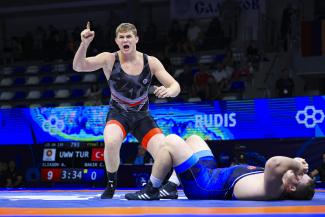
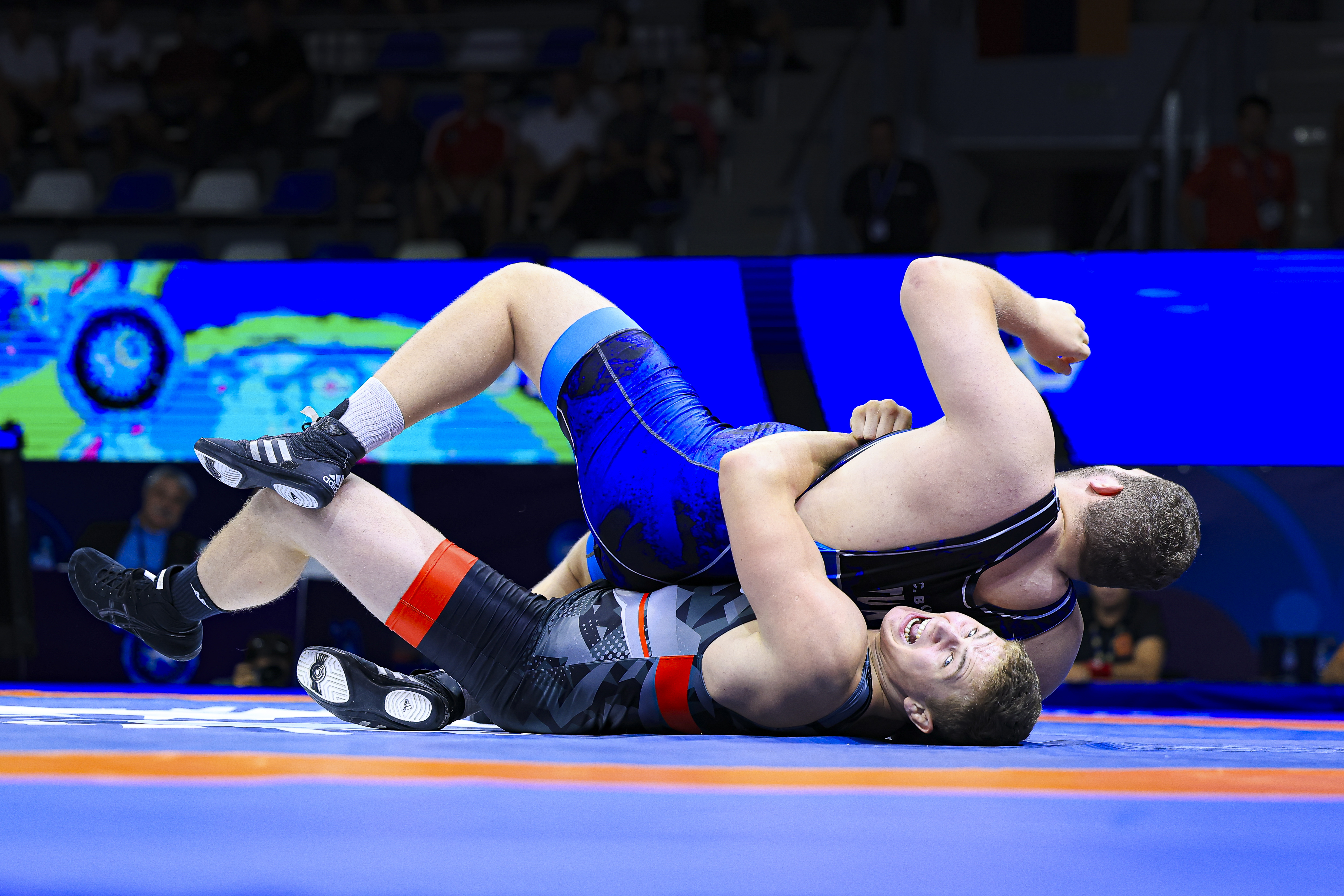 Ali ILIASOV (UWW) turns Yusuf BAKIR (TUR) for two points during the 130kg final at the World U20 Championships. (Photo: United World Wrestling / Kadir Caliskan)
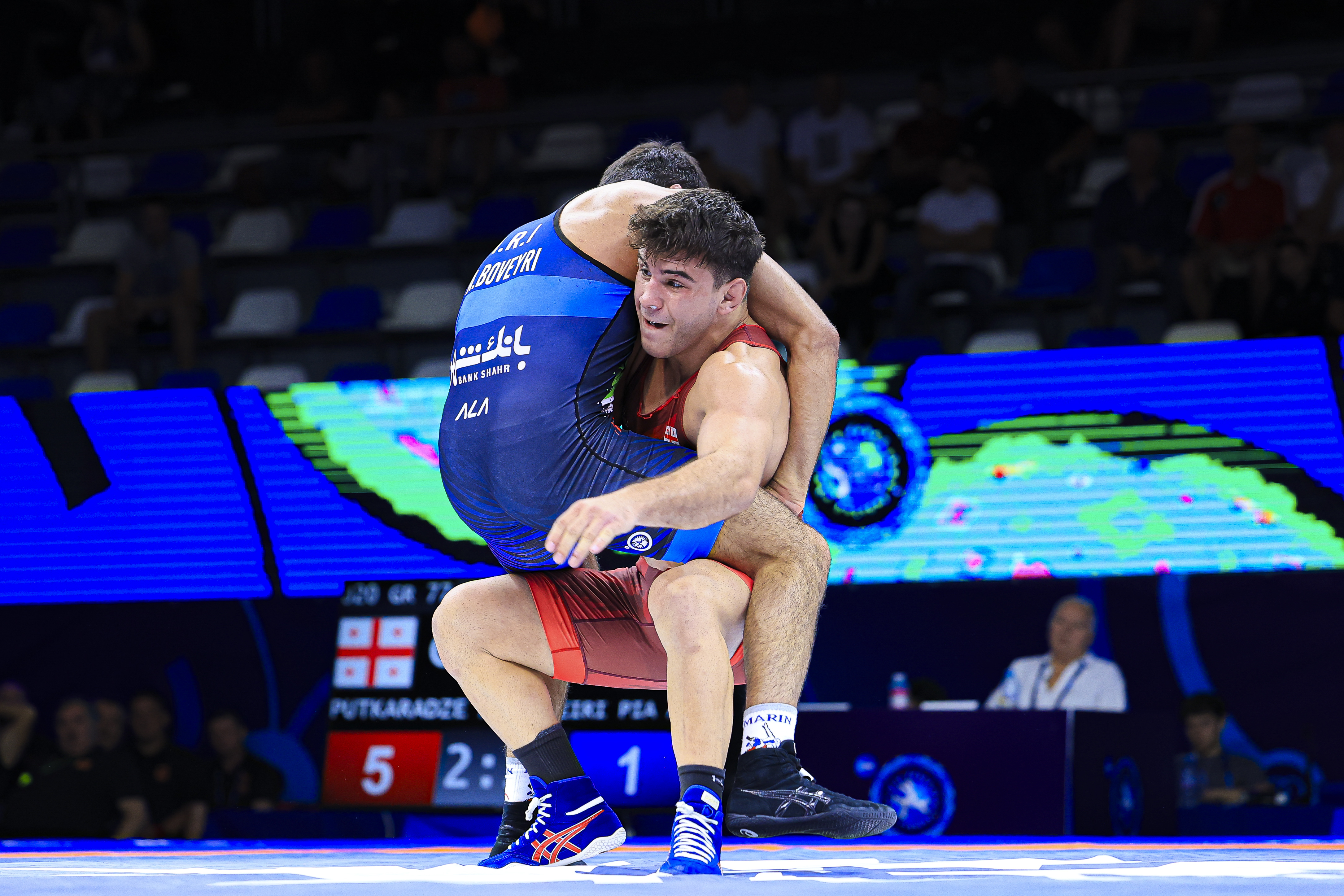 Anri PUTKARADZE (GEO) hits a counter attack against Ahoura BOUVEIRI (IRI) during the 77kg final. (Photo: United World Wrestling / Kadir Caliskan)
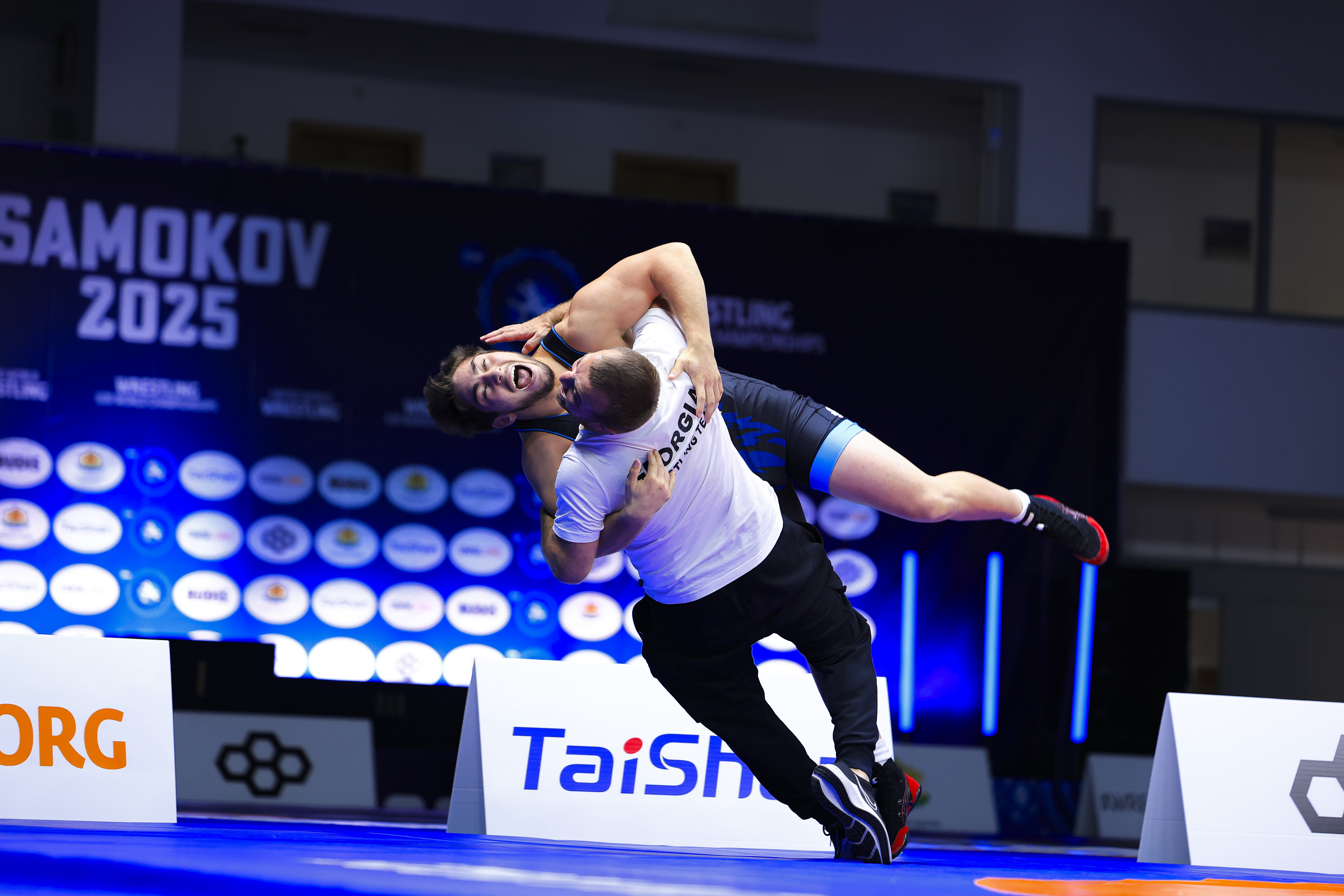 Luka KOCHALIDZE (GEO) celebrates with his coach after winning the 87kg final. (Photo: United World Wrestling / Amirreza Aliasgari)
Share your thoughts.
Comments