

Top Stories of the Decade

Wrestling Introduces New Weight Categories, Gender Equity, and Ranking Series

By Eric Olanowski

CORSIER-SUR -VEVEY, Switzerland (December 29) -- The growth of international wrestling since 2010 has required a number of changes, but few have seemed to impact as many wrestlers and fans as the addition of weight categories, expansion of women's opportunities, and the introduction of a yearlong competition calendar, knowns as the Ranking Series.

 Heading into the 2017 World Championships in Paris, Wrestling enjoyed eight weight categories in each style, with six aimed at Olympic participation. During a bureau meeting at the event, it was decided to increase that total allotment to 10 weight categories and slightly shift a number of weight categories across the styles to better match anticipated participation. The additional weights also prompted a two-day format with same-day weigh-ins.

"These improvements made are incredible for the sport of wrestling," UWW President Nenad Lalović said at the time. "Our sport has never been stronger, and I believe that with the new categories and the improved competition format we will see continued growth in participation, support and viewership. I also believe these new rules will also encourage healthier wrestlers."

Another significant shift in the sport came with the launch of the Ranking Series in 2018, which uses four previously independent events, plus the world and continental championships to determine a points champion for the season. The rankings also determine the top seeds at the world championships and Olympic Games. 

“The Ranking Series makes it easier for fans, athletes, and coaches to understand the impact of each tournament and match," said Lalovic.

The Ranking Series was tweaked heading into the 2019 season with more weight placed on the number of participants to help determine the ultimate allocation of points per event. The shift proved prescient as participation in the events more than doubled in 2019.

As of 2019, the points earned from the World Championships, Continental Championships and Ranking Series events are as follows:

Wrestling’s growth hasn’t been contained to competition formats. In an effort to ensure better governance and compliance with IOC norms, wrestling has reached out to female leaders around the world to ensure their participation in the sport’s growth. Wrestling has utilized national federations, IOC-backed initiatives, and created an annual Women in Wrestling Global Forum to ensure increased outreach and education of women in the wrestling community.

“The past few years has seen wrestling provide more opportunities to female leaders and competitors than ever before,” said UWW Development Director Deqa Niamkey. “I’m pleased with our growth and looking forward to the next ten years!”

In addition to professional opportunities for women in wrestling, there has also been a much-increased focus on their mat achievements. From photos to stories to documentaries the women of wrestling are covered equally to men and have enjoyed several breakout moments, including many listed in the Top Ten Stories of the Decade.

2026 U17 World Championships

Women's Wrestling Watch at U17 World Championships 2026

By Vinay Siwach

BAKU, Azerbaijan (July 28) -- Wrestlers at the U17 World Championships will breathe a sigh of relief. China, Asia's top team at this level, will not compete in the tournament in Baku.

With China absent, Japan, India and the United States emerge as the leading contenders for the team title. India won the championship last year, with the U.S. finishing second and Japan third.

Despite China's absence, the wrestling in Baku promises to be top-notch. From individual milestones to the battle for the team title, there will be no shortage of compelling storylines.

Fernandez Chases Third Gold

Among the biggest storylines is Taina FERNANDEZ (USA), a two-time U17 world champion at 61kg. Now competing at 69kg, Fernandez is chasing a third U17 world title. A gold medal would make history, as she would become the first non-Japanese wrestler to win three U17 world championships.

Only four wrestlers have won three U17 world titles, all of them Japanese women: Masako FURUICHI (JPN) [2011, 2012, 2013], Kika KAGATA (JPN) [2012, 2013, 2014], Yui SUSAKI (JPN) [2014, 2015, 2016] and Honoka NAKAI (JPN) [2017, 2018, 2019].

Fernandez, yet to lose an international bout, faces a stern test after moving up eight kilograms to 69kg. Her opening opponent is U17 Asian silver medalist TANIYA (IND). Hopefully, the commentators don't confuse Taina and Taniya.

The bracket also features U17 European champion Kiymet TEZCAN (TUR), bronze medalists Nino SAMKHARADZE (GEO) and Polina EFIMOVA (RUS), as well as Hibiki IIDA (JPN), because counting out a Japanese wrestler has rarely ended well.

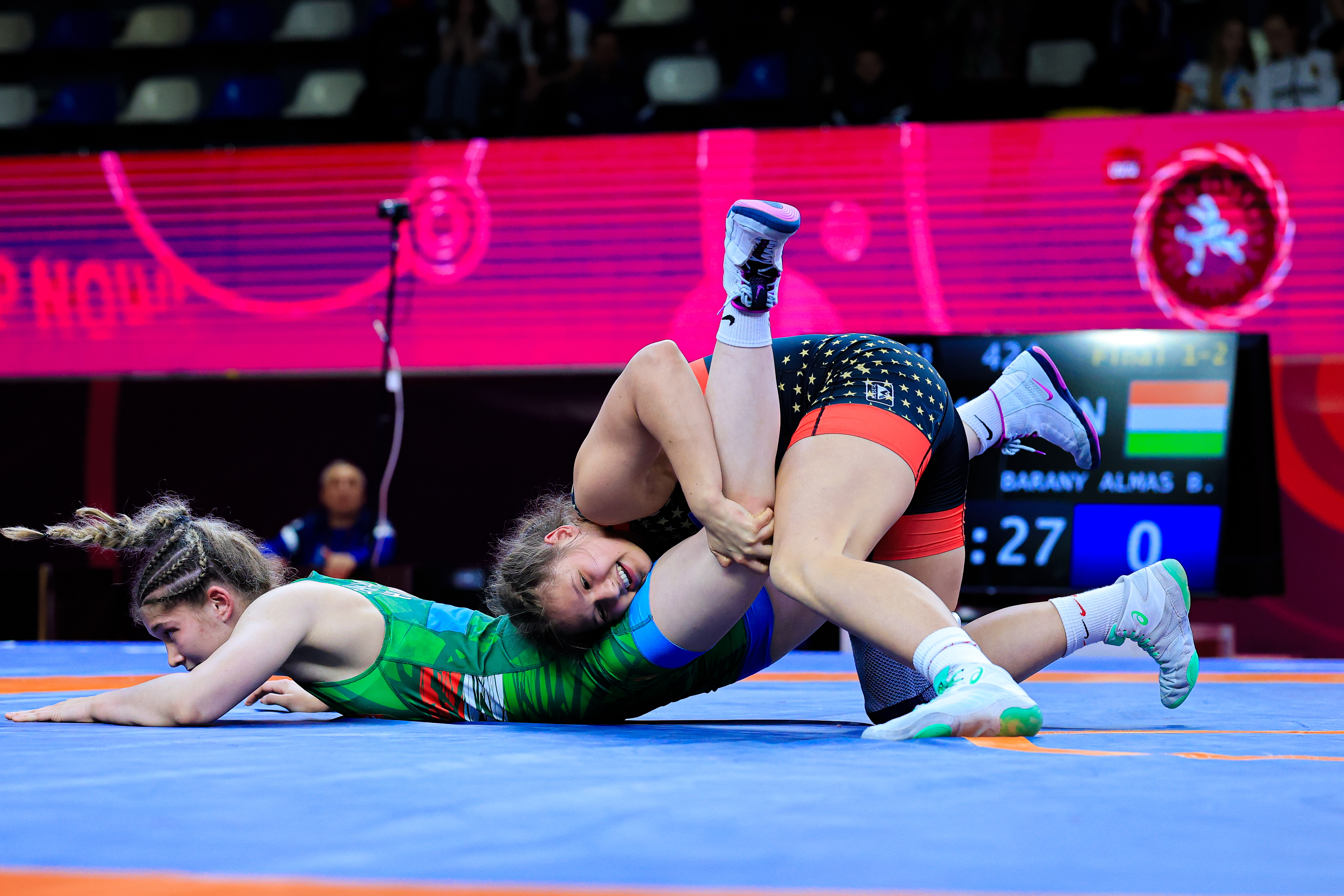
Wrestling Solomiia PETRIV (UKR)U17 European champion Solomiia PETRIV (UKR), red, at 73kg. (Photo: United World Wrestling / Kostadin Andonov)
Battle of 73kg

The 73kg weight class was introduced in 2018, when Yuka KAGAMI (JPN) claimed the inaugural title. That remains the last time Japan won the heaviest women's weight class. Since then, India has captured three gold medals, while China, the United States and Russia have won one each.

The race for the 73kg title in Baku is wide open with China absent. India is banking on U17 Asian champion GARIMA (IND), who will need to elevate her performance from the continental championships if she hopes to claim the world title that KAJAL (IND) narrowly missed after finishing runner-up last year.

U17 European champion Solomiia PETRIV (UKR), who won bronze at 69kg last year, enters as one of the favorites. Potential rematches from the U17 European Championships loom, with silver medalist Bianka BARANY (HUN) and bronze medalists Karina MUZALEVSKAIA (RUS) and Lyra LEDERER (GER) also in the field.

U17 Asian silver medalist Namuuntsetseg BATBOLD (MGL) brings Mongolia's trademark throwing attack, while Kaili MANUEL (USA) could emerge as the dark horse.

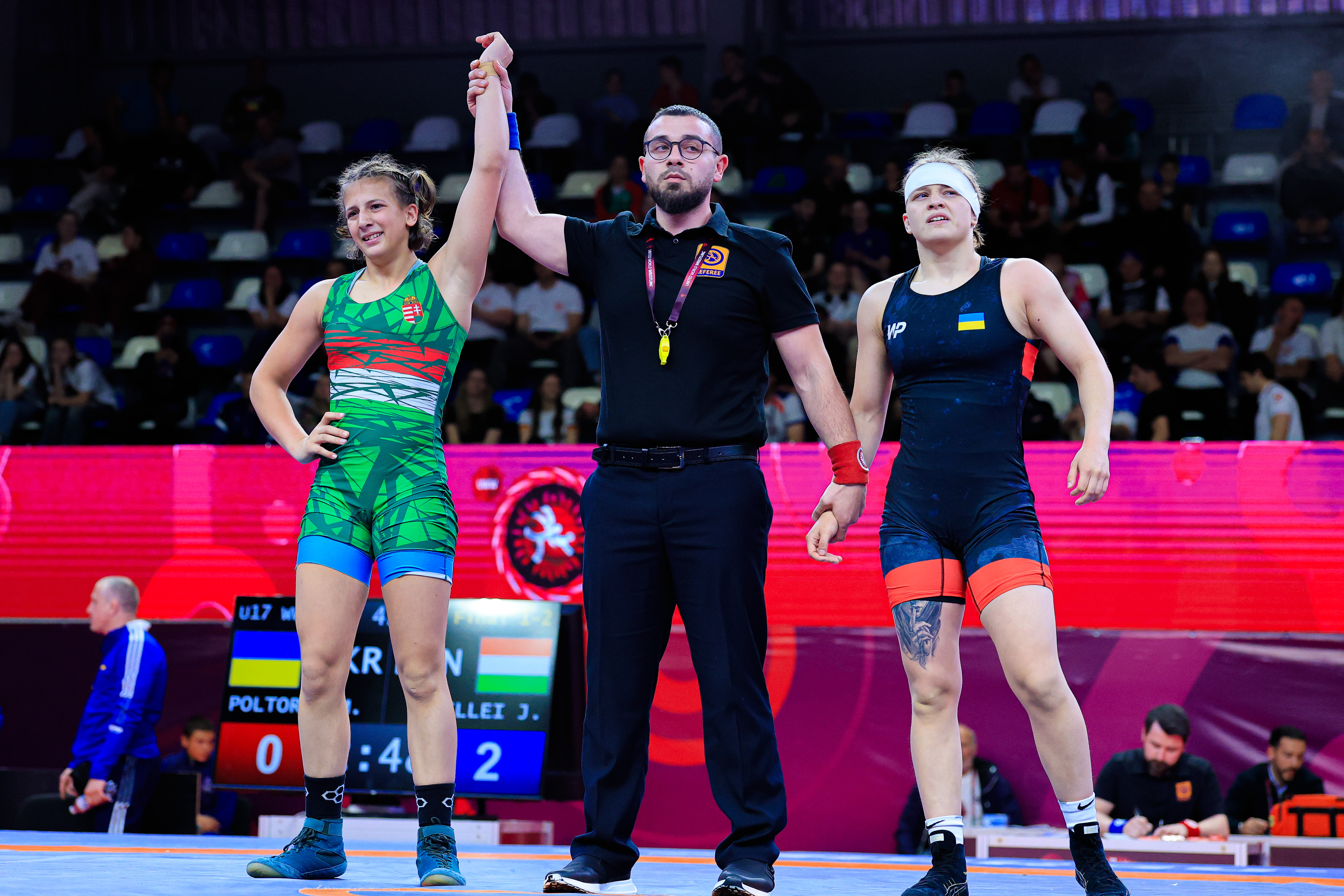
Wrestling Janka SILLEI (HUN)U17 European champion Janka SILLEI (HUN), left, is one of the favorites at 57kg in Baku. (Photo: United World Wrestling / Kostadin Andonov)
Stars Clash at 57kg

The deepest weight class appears to be 57kg, featuring several established names moving into the division.

Returning world silver medalists Janka SILLEI (HUN), who won silver at 46kg, and Epenesa ELISON (USA), last year's runner-up at 53kg, land on the same side of the bracket.

After moving up just one weight class, Elison has the tools to reach the final, but she opens against Rion SUZUKI (JPN), a difficult first-round opponent. Sillei, meanwhile, dominated the U17 European Championships at 57kg, outscoring every opponent.

Also in the field are U17 European silver medalist Mariia POLTORAK (UKR), bronze medalist Marharyta DANILEVICH (BLR) and U17 Pan-American silver medalist Gurleen DHILLON (CAN).

Despite lacking international medals, Suzuki, Nikita SEHRAWAT (IND) and Sofiia BELOVA (RUS) should not be overlooked.

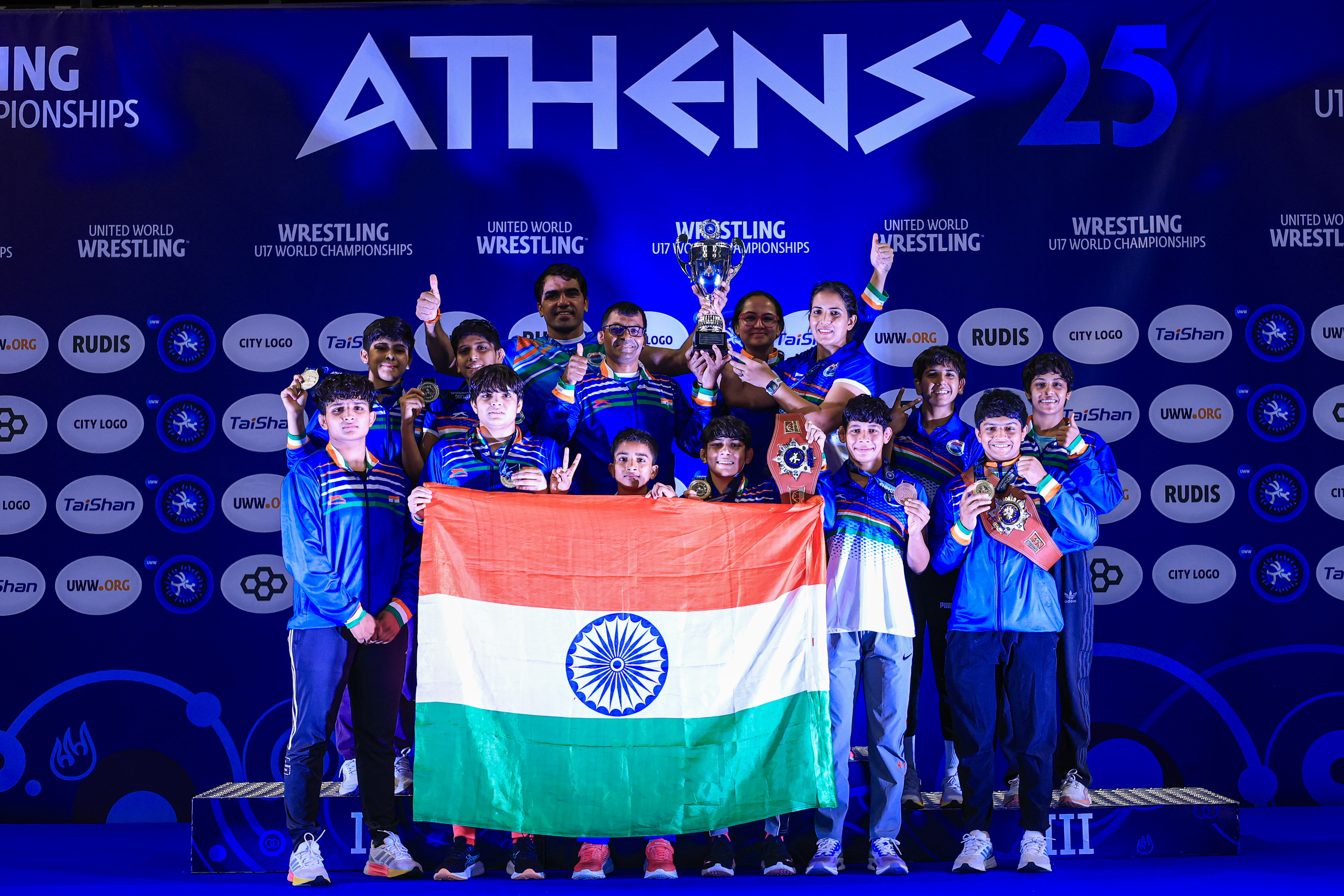
Wrestling IndiaIndia won the Women's Wrestling team title at the 2025 U17 World Championships. (Photo: United World Wrestling / Amirreza Aliasgari)

Team Title Race

Japan brings a formidable lineup that can make a run for the team gold. This is despite the country's inter-high school championships coincide with the U17 World Championships, forcing several wrestlers to prioritize the domestic event and leaving Japan short of full strength.

The U.S. squad is headlined by Fernandez but also includes two returning world medalists and three U17 Pan-American champions. Elison will look to improve on last year's silver medal, while returning bronze medalist Madison HEALEY (USA) competes at 46kg.

The U17 Pan-American champions on the U.S. roster are Sophia VALDEZ (USA) at 40kg, Landri VON GONTEN (USA) at 61kg and Eve SKROCKI (USA) at 69kg.

Last year, it fell just four points short of India, which claimed its second U17 Women's Wrestling team title. This year's Indian squad, however, does not appear to have the same depth as last year's championship-winning team, making the race more open.

With Russia and Belarus eligible to score team points, and Ukraine also fielding a strong squad, the race for the team title promises to be considerably more competitive than it was a year ago.