ATHENS, Greece (July 18) -- Eight years after it last hosted a World U17 Championships, Athens is gearing up for the next.
From July 28 to August 2, the Greek capital will be home to almost 700 wrestlers who try to win world title at the U17 weight class.
Greco-Roman will kick-off proceedings of the tournament which will be held in two-day format. Women's Wrestling will be next before Freestyle closes the competition.
For the detailed schedule, refer to U17 World Championships 2025, Athens Schedule.
Note: The entries are subject to change 72 hours before the draw of respective weight classes. For latest entries and brackets, refer to UWW Arena
Freestyle
45kg
Youcef BOUKHALFA (ALG)
Levik AVETISYAN (ARM)
Sadig ISMAYILOV (AZE)
Stanimir SLAVOV (BUL)
Yongqiang HUANG (CHN)
Saba MINDIASHVILI (GEO)
Alexandros SERETIDIS (GRE)
SHIVAM (IND)
Parsa TAHMASBI (IRI)
Tamir SHIRMAMEDOV (ISR)
Riku FURUSAWA (JPN)
Bakdaulet AGABEK (KAZ)
Arnur NURSAIDOV (KGZ)
Eyup CEYLAN (TUR)
Volodymyr YATEL (UKR)
Keegan BASSETT (USA)
Ibragim VELIULLOV (UWW)
Mirjalol MUKAMMILOV (UZB)
48kg
Anis BOUGUERRA (ALG)
Davit BALEYAN (ARM)
Ravan HASANZADE (AZE)
Grozdan PETKOV (BUL)
Yuzheng HE (CHN)
Giorgi NARIMANIDZE (GEO)
Angelos KAMAGIANNIS (GRE)
SHIVAM (IND)
Sina BOUSTANI (IRI)
Masamune USHIMADO (JPN)
Sabyrzhan RAKHATOV (KAZ)
Dovudbek BAKHADIROV (KGZ)
Daniel NEGRU (MDA)
Attila HEGEDUS (SVK)
Sadik ATESOGULLARI (TUR)
Nazar KAPLUN (UKR)
Ariah MILLS (USA)
Islam RABADANOV (UWW)
Makar MARKOVICH (UWW)
Jakhongir TULKUNOV (UZB)
51kg
Makaya KATENDI (ANG)
Mher HAKOBYAN (ARM)
Ramal MIRHUSEYNOV (AZE)
Georgi SPASOV (BUL)
Jonrex CASA (CAN)
Xiyi LIANG (CHN)
Samvel ABRAHAMYAN (ESP)
Temuri TUTARASHVILI (GEO)
Michail KOKOLOGIANNIS (GRE)
Dhanraj JAMNIK (IND)
Sina ORDOU (IRI)
Haruku SHIINA (JPN)
Danael ABDYKASSYM (KAZ)
Sadyr KAIYPBEKOV (KGZ)
Serghei CAMBUR (MDA)
Cruz LITTLE (PUR)
Laurentiu FLOREA (ROU)
Bugra KAVAK (TUR)
Robert ALOIEV (UKR)
Samuel SANCHEZ (USA)
Dzhamal BAKAEV (UWW)
Dzianis SHPARTAU (UWW)
Ulugbek RASHIDOV (UZB)
55kg
Abderrezak CHENINI (ALG)
Armen PAPIKYAN (ARM)
Ruslan ALIZADA (AZE)
Aleksandar DELCHEV (BUL)
Aaharen PIRANAVAN (CAN)
Chengzhuang MA (CHN)
Jovanni TOVAR (COL)
Gabriel GAMARNIK (GEO)
Ioannis KESIDIS (GRE)
Jaiveer SINGH (IND)
Reza BARARI (IRI)
Jinnosuke OKONOGI (JPN)
Ibrahim YSKAKBEK (KAZ)
Zhakshylyk BOROBAEV (KGZ)
Dan BULGARU (MDA)
Pavlo ILNYTSKYI (POL)
Nathaniel LYTTLE (PUR)
David MILITARU (ROU)
Jyun JHONG (TPE)
Kamil GOKCE (TUR)
Ivan BEZUHLYI (UKR)
Greyton BURNETT (USA)
Chingis SARYGLAR (UWW)
Hleb PIATROU (UWW)
Abdumalik JALOLDINOV (UZB)
60kg
Hamlet ANTONYAN (ARM)
Hasan HASANOV (AZE)
Kaloyan STAEV (BUL)
Nathan NASH (CAN)
Ao LI (CHN)
Iakovos SOURAILOV (CYP)
Mate TSINADZE (GEO)
Pavlos NTIANTIADIS (GRE)
SITENDER (IND)
Arian MEHRALIZADEH (IRI)
Denis KODZHAK (ISR)
Rihito HIURA (JPN)
Bekassyl ASSAMBEK (KAZ)
Ulukman ZHEKSHENKULOV (KGZ)
Leonid STARSELSCHI (MDA)
Sufjan SINANI (MKD)
Witold PAWLIK (POL)
Frederick BACHMANN (PUR)
Stefan PUSCAS (ROU)
Juan GROENEWALD (RSA)
Emre BARAN (TUR)
Zorab ALOIEV (UKR)
Ashton BESMER (USA)
Yahor DAROSHKA (UWW)
Tundzhai VERDIEV (UWW)
Fakhriddin NASRIDDINOV (UZB)
65kg
Avet BOYMUSHAKYAN (ARM)
Huseyn ISMAYILOV (AZE)
Seyko KALINOV (BUL)
Liam GORTON (CAN)
Changxin WU (CHN)
Nikos SOURAILOV (CYP)
Arshavir DARAKHSHANI (FIN)
Rati REVAZASHVILI (GEO)
Dario FISCHIETTI (GER)
Konstantinos MICHAILIDIS (GRE)
Gourav PUNIA (IND)
Morteza HAJ (IRI)
Nikita KOZICH (ISR)
Kodai IWASAKI (JPN)
Yeraly ASKERBEK (KAZ)
Adisbek ALTYNBEKOV (KGZ)
Maxim DIMOV (MDA)
Erdenedalai LKHAGVA OCHIR (MGL)
Michal Antoni MICHNIEWICZ (POL)
Yandro SOTO (PUR)
Istvan NAGY (ROU)
Ismail MERTKOLLU (TUR)
Ivan ZALISKO (UKR)
Arseni KIKINIOU (USA)
Kiryl PAULIUCHENKA (UWW)
Magomed IBRAGIMOV (UWW)
Shokhiddin ALIEV (UZB)
71kg
Yeghishe MOSESYAN (ARM)
Rashad VEYSALOV (AZE)
Aleks GROZDANOV (BUL)
Junfeng QU (CHN)
Kayden HANLON (GBR)
Koba GOGUADZE (GEO)
Jason KEIL (GER)
Ektoras SIZO (GRE)
Zeteny TUGYI (HUN)
Kapil DAHIYA (IND)
Arsham VAHABIAN (IRI)
Satoya KOBAYASHI (JPN)
Nurtay NAROV (KAZ)
Aibek ERALIEV (KGZ)
Chirill PODSEVALNICOV (MDA)
Ismail ERZANUKAEV (POL)
Catalin MINEA (ROU)
Ayubjon BOZORZODA (TJK)
Ali ESENOV (TKM)
Omer GUL (TUR)
Ihor OLIINYK (UKR)
Jayden JAMES (USA)
Artsiom BOLSUN (UWW)
Zubair BAGILOV (UWW)
Farrukhbek JUMANAZAROV (UZB)
80kg
Vache ASLANYAN (ARM)
Nihad SULEYMANLI (AZE)
Valentin ILIEV (BUL)
Beau CHARTRAND (CAN)
Enqin ZENG (CHN)
Levan CHERTKOEV (FRA)
Marshall EVERETT (GBR)
Nuradin MUSTAFAEV (GEO)
Abdurrahim SEKMEN (GER)
Konstantinos MOURTZILAKIS (GRE)
Noel SZECSENYI (HUN)
Saurabh YADAV (IND)
Parsa KARAMI (IRI)
Haruta SHIOTSUKA (JPN)
Dinmukhammed KASSYMBEK (KAZ)
Ruslan ASANOV (KGZ)
Ivan PASLARI (MDA)
Buyantogtokh BYAMBADORJ (MGL)
Mateusz ZAWADZKI (POL)
Arslan AZYMBERDIYEV (TKM)
Berat ERTURK (TUR)
Artur KOSTIUK (UKR)
Aaron STEWART (USA)
Issa ZANGIEV (UWW)
Yahor DASHKEVICH (UWW)
Bunyod RUFATOV (UZB)
92kg
Abderrahmane MEZITI (ALG)
Avet ENGOIAN (ARM)
Said PASHAYEV (AZE)
Georgi GEORGIEV (BUL)
Harjot SHERGILL (CAN)
Jiyu WANG (CHN)
Jose PEREZ (COL)
Elguja LOMIDZE (GEO)
Charilaos CHAITIDIS (GRE)
Levente SZIKSZAI (HUN)
Arjun RUHIL (IND)
Amirali ALIZADEH (IRI)
Sota YAMANAKA (JPN)
Beibarys YERGALI (KAZ)
Arnas JOKIMCIUS (LTU)
Eugen DOHOTER (MDA)
Saruul Erdene ERDENETSOGT (MGL)
Franco LATORRE (PUR)
Magor LORINCZ (ROU)
Said RIZA (TUR)
Samir IBISHOV (UKR)
Tanner HODGINS (USA)
David DZEBISOV (UWW)
110kg
Laert MOVSESYAN (ARM)
Hakim TAGHIYEV (AZE)
Stefan STEFANOV (BUL)
Udaypartap BILLEN (CAN)
Ruijie LI (CHN)
Murtaz BAGDAVADZE (GEO)
Georgios MANAGKANTZE (GRE)
Gyoergy JUHASZ (HUN)
LACKY (IND)
Amirhossein NAGHDALIPOUR (IRI)
Hanto HAYASHI (JPN)
Riza IZAKHAR (KAZ)
Akzhol BARPYBEKOV (KGZ)
Carlos CABRALES (MEX)
Piotr GRELA (POL)
Yu CHUANG (TPE)
Zekeriya DOGAN (TUR)
Mykyta KRASNOKUTSKYI (UKR)
Alexander TAYLOR (USA)
Magomedrasul OMAROV (UWW)
Mikita TKACHYK (UWW)
Bakhrombek RASHIDOV (UZB)
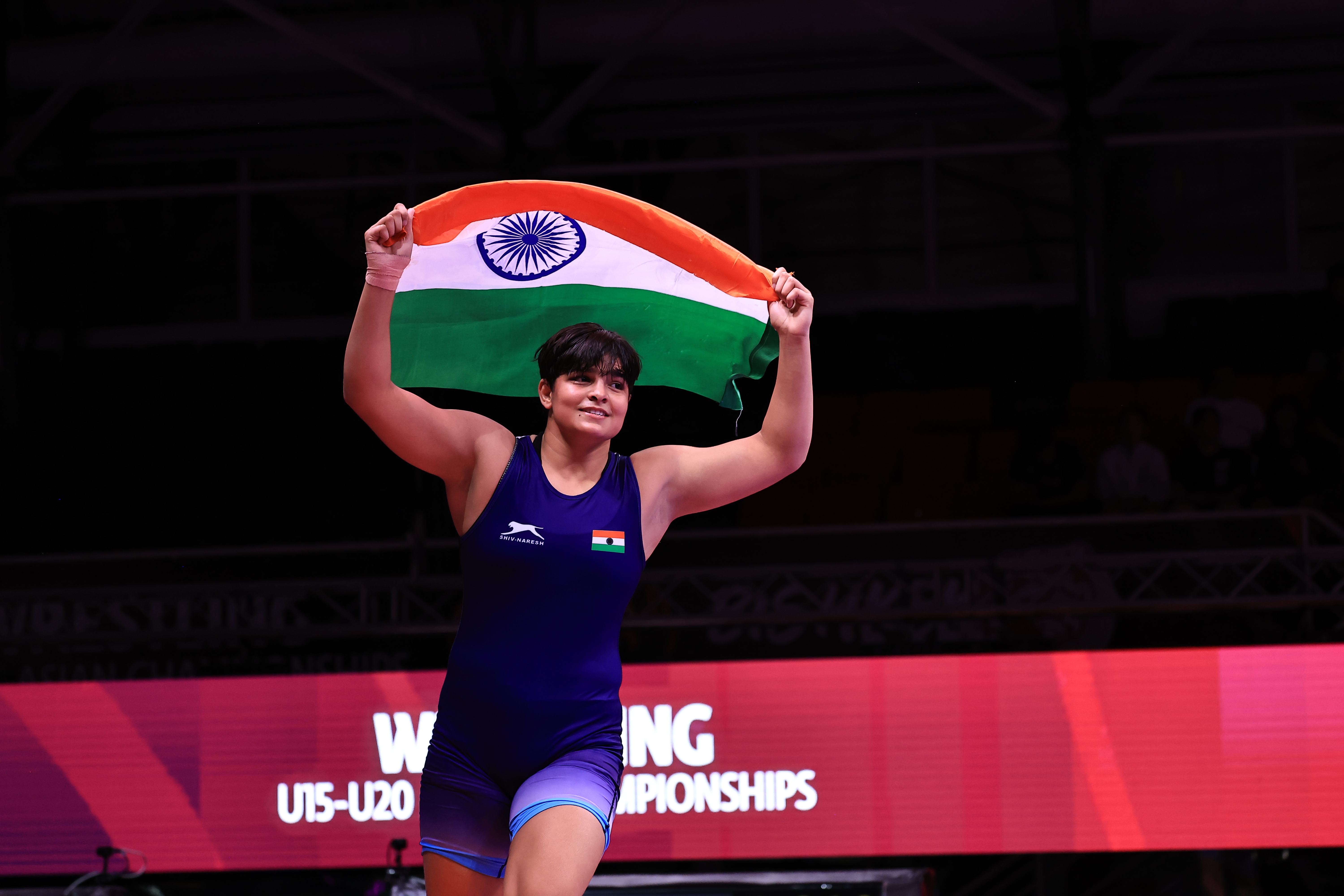 KAJAL (IND), a world champ at 69kg, will be at 73kg in Athens. (Photo: United World Wrestling / Kadir Caliskan)
Women's Wrestling
40kg
Polina TIMSINA (EST)
Finja STRAUCH (GER)
Preeti YADAV (IND)
An NAKANISHI (JPN)
Asema ASANGARYEVA (KGZ)
Valia HARSAN (ROU)
Zehra OZDEMIR (TUR)
Emma TALPA (UKR)
Maisie ELLIOTT (USA)
Daria MASLENNIKOVA (UWW)
Shokhista SHONAZAROVA (UZB)
43kg
Mariza NASU (CAN)
Xin HUANG (CHN)
Isabela GARNICA (COL)
Mareim ABDELAAL (EGY)
Aikaterini KATIFORI (GRE)
Reka TELEKI (HUN)
RACHANA (IND)
Sayuki HIBARINO (JPN)
Inzhu BAKKOZHA (KAZ)
Aiza TAALAIBEKOVA (KGZ)
Natalia TERZI (MDA)
Liva CELIK (TUR)
Martina MODNA (UKR)
Madison HEALEY (USA)
Nurana ASADLI (UWW)
Raniia RAKHMANOVA (UWW)
Mukhlisa MASHARIPOVA (UZB)
46kg
Nazrin AHMADLI (AZE)
Dayana STOYCHEVA (BUL)
Yuting YUAN (CHN)
Lara BLAZEKOVIC (CRO)
Maria GKIKA (GRE)
Janka SILLEI (HUN)
Kasish GURJAR (IND)
Hanano OYA (JPN)
Shynaiy MAKEN (KAZ)
Aiana NIIAZBEKOVA (KGZ)
Emilia STRACHOTA (POL)
Elanur BERBER (TUR)
Kamila KUCHMA (UKR)
Jaclyn BOUZAKIS (USA)
Anastasiya BIALUHA (UWW)
Irina TSYDEEVA (UWW)
49kg
Kamryn MASON (CAN)
Xiaoqing MO (CHN)
Sheila MONDRAGO (ESP)
Dimitra SKOUVAKI (GRE)
Komal VERMA (IND)
Yu KATAOKA (JPN)
Saniya SOLTANGALI (KAZ)
Azema KALIDINOVA (KGZ)
Elsa NIKOCI (KOS)
Ruslana CARAPETIANT (MDA)
Kinga JANUSZEK (POL)
Electra GARAIACU (ROU)
Yu Hsi CHENG (TPE)
Melike KOPARAN (TUR)
Olena KOLUBAI (UKR)
Morgan TURNER (USA)
Anhelina BURKINA (UWW)
Polina BOCHKAREVA (UWW)
Mashkhura ABDUMUSAEVA (UZB)
53kg
Dounia ZITOUNI (ALG)
Fatima BAYRAMOVA (AZE)
Vasilena ILIEVA (BUL)
Jiaqing JIANG (CHN)
Mia KOVAC (CRO)
Nadiia ZHOLTIKOVA (ESP)
Josefine WIDMANN (GER)
Maria VANDOULAKI VANDOULA (GRE)
Mariia ZHYTOVOZ (HUN)
SAARIKA (IND)
Naomi LIUZZI (ITA)
Rion OGAWA (JPN)
Farida ABDRAKHMANOVA (KAZ)
Baktygul ZHUMANAZAROVA (KGZ)
Kanita SPAHIJA (KOS)
Julia GIBALSKA (POL)
Emma A PEAKE (PUR)
Miriam MISAKOVA (SVK)
Fatma YILMAZ (TUR)
Yuliia HOLHOVSKA (UKR)
Epenesa ELISON (USA)
Margarita IARYGINA (UWW)
Kseniya KRYSHTOFIK (UWW)
57kg
Esra MAMMADLI (AZE)
Yasmim NEPER OLIVEIRA (BRA)
Stefani LAZAROVA (BUL)
Xiaohan XU (CHN)
Oona PEKKARINEN (FIN)
Nini TSITSVIDZE (GEO)
Zoi KAIDOPOULOU (GRE)
MONI (IND)
Sophie RITTER (ITA)
Sayuki TANADA (JPN)
Madkhiya USMANOVA (KAZ)
Albina SALYMBEKOVA (KGZ)
Marta MANKOWSKA (POL)
Aneishka SANTOS (PUR)
Oana DUMITRU (ROU)
Ivana GAJIC (SRB)
Ling En LI (TPE)
Delal KADIR (TUR)
Ivanna LUKIANENKO (UKR)
Emma BACON (USA)
Alina BAROEVA (UWW)
Sofiya ZUYEVA (UWW)
61kg
Sophia MERANER (AUT)
Andrea NISEVA (BUL)
Natalie WOJCIECHOWSKI (CAN)
Zichen DONG (CHN)
Lana PEZIC (CRO)
Graciela ENINGO (ESP)
Miranda KAPANADZE (GEO)
Ioanna XENIDOU (GRE)
Barbara BAGER (HUN)
YASHITA (IND)
Waka AWANO (JPN)
Zhaidar MUKAT (KAZ)
Akylai CHYNYBAEVA (KGZ)
Sara ROBLES (MEX)
Nadia KOCIA (POL)
Paola RAMIREZ (PUR)
Sophia PAIUS (ROU)
Yu Ting LIU (TPE)
Ozdenur OZMEZ (TUR)
Oleksandra MALKOVA (UKR)
Taina FERNANDEZ (USA)
Varvara ALISEYENKA (UWW)
Zalina TOTROVA (UWW)
65kg
Selsabil ROUABAH (ALG)
Luoji WANG (CHN)
Feenja HERMANN (GER)
Vasiliki KARAVANOU (GRE)
Emese CZEGLEDI (HUN)
Ashvini VISHNOI (IND)
Mitsuki OKAWA (JPN)
Nuraiym SAIAKHMET (KAZ)
Manzura ZHUSUEVA (KGZ)
Alexandra MOISEI (MDA)
Anujin ERKHEMBAATAR (MGL)
Zuzanna HORBIK (POL)
Sophia ANASTASE (ROU)
Kiymet TEZCAN (TUR)
Sofiia ALFOROVA (UKR)
Violette LASURE (USA)
Anastasiya KOMANAVA (UWW)
Lilia ERMOKHINA (UWW)
Mukhayyo RAKHIMJONOVA (UZB)
69kg
Mayara NEPER OLIVEIRA (BRA)
Min ZHAO (CHN)
Ayla SAHIN (GER)
Elli SEITARIDOU (GRE)
Reka BERECZKI (HUN)
MANISHA (IND)
Mao TERAOKA (JPN)
Shakhizada DAULETZHAN (KAZ)
Aiana ASAMALIKOVA (KGZ)
Linda MARTINEZ (MEX)
Gereltuya AMARSAIKHAN (MGL)
Aurelia GODZINSKA (POL)
Zeynep SUCU (TUR)
Solomiia PETRIV (UKR)
Cassandra GONZALES (USA)
Ulyana LAPANIK (UWW)
Zukhra KAZULAEVA (UWW)
Dilrabo DULLIEVA (UZB)
73kg
Jolina HEALEY (CAN)
Wenjin QIU (CHN)
Anna GODELASHVILI (GEO)
Polyxeni CHRYSIKAKI (GRE)
Bianka BARANY (HUN)
KAJAL (IND)
Ichine TATESHITA (JPN)
Gulnur MAKSATKYZY (KAZ)
Meruert OKTIABREVA (KGZ)
Greta TVERSKYTE (LTU)
Malak SABRY (MAR)
Deborah GARCIA (MEX)
Uranzaya TSERENNYAM (MGL)
Claudia MANTOG (ROU)
Eylem ENGIN (TUR)
Khrystyna DEMCHUK (UKR)
Ella Jo POALILLO (USA)
Amina MUSAEVA (UWW)
Sofiya AUCHAROVA (UWW)
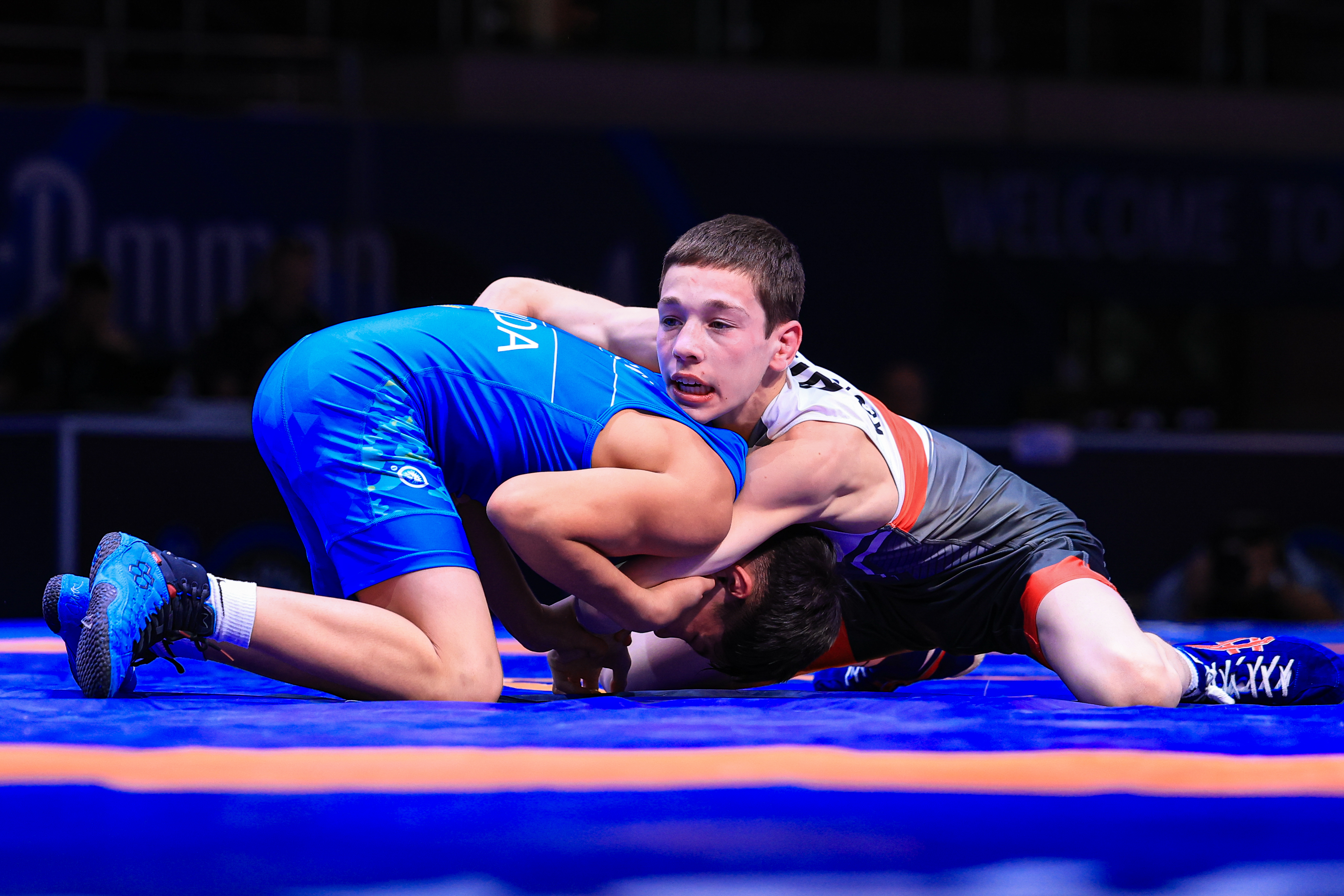 Aslanbek KOSTOEV (UWW), world champion at 45kg, will be at 51kg in Athens. (Photo: United World Wrestling / Amirreza Aliasgari)
Greco-Roman
45kg
Ararat AVETISYAN (ARM)
Abdurrahman HUSEYNLI (AZE)
Danimir YORDANOV (BUL)
Juntao LUO (CHN)
Saba ABASHIDZE (GEO)
Stefanos MEMTSAS (GRE)
Yash KAMANNA (IND)
Benyamin KHEZLI (IRI)
Yuta MIYAGAWA (JPN)
Kuanyshbek ZHANGAZHOL (KAZ)
Nurkerim KUMARBEKOV (KGZ)
Vadim TARELUNGA (MDA)
Mustafa GUVEN (TUR)
Tymur MAHARRAMOV (UKR)
Thales SILVA (USA)
Ismail BALBEK (UWW)
Javokhir SHARIFBOEV (UZB)
48kg
Martin MANJIKYAN (ARM)
Gurban MAJNUNOV (AZE)
Stanislav IVANOV (BUL)
Fuhua KANG (CHN)
Giorgi MUNTCHAVA (GEO)
Nikolaos ZINISA (GRE)
Aditya JADHAV (IND)
Amirmohammad HAJI (IRI)
Kaisei YAMAMOTO (JPN)
Nurdaulet KUMARULY (KAZ)
Zhanarbek SEIITOV (KGZ)
Baris SOYLU (TUR)
Artem KOLOS (UKR)
Michael RUNDELL (USA)
Tsimafei SEMIANENKA (UWW)
Turpal SAIDULAEV (UWW)
Bunyod HASANOV (UZB)
51kg
Marat ATSHEMYAN (ARM)
Hikmat HAGVERDIYEV (AZE)
Kaloyan BORISOV (BUL)
Zihao ZHANG (CHN)
Mohamed ELTAYEB (EGY)
Giorgi AZNAURISHVILI (GEO)
Pavlos TSENTIDIS (GRE)
Keve KOVACS (HUN)
Yuvraj KAMANNA (IND)
Amir HAJIVAND (IRI)
Nikko ADACHI (JPN)
Daniyar BAZARBEK (KAZ)
Islam KURBANOV (KGZ)
Abu SAGA (NOR)
Andrei PELEAN (ROU)
Polat KARADENIZ (TUR)
Herman BASARAB (UKR)
Carter SHIN (USA)
Aslanbek KOSTOEV (UWW)
Otabek TURSUNOV (UZB)
55kg
Kheireddine GHAOUAR (ALG)
Meruzhan MKHITARYAN (ARM)
Nihat BAHMANOV (AZE)
Lavozier WADIK (BRA)
Antoan TSVETANOV (BUL)
Zongyao WU (CHN)
Mohamed SHAABAN (EGY)
Magomed VARAEV (FRA)
Giorgi CHACHUA (GEO)
Ivan SEIBEL (GER)
Grigorios EFTHYMIADIS (GRE)
Balint KAZINCZY (HUN)
Aditya GUPTA (IND)
Amirreza TAHMASBPOUR (IRI)
Emanuel ISRAILOV (ISR)
Naru SEMBA (JPN)
Nurali ASKAR (KAZ)
Alkham ABDIRASULOV (KGZ)
Patrick MOCAN CROITORU (ROU)
Makhdi BAROTOV (TJK)
Osman OZDEMIR (TUR)
Rakhman GAMIDOV (UKR)
Alexander PIERCE (USA)
Danil LOZHKIN (UWW)
Ivan KALENKA (UWW)
Sadriddin TULKINBOEV (UZB)
60kg
Wail BEN AISSA (ALG)
Zaven MEZHLUMYAN (ARM)
Ali NAZAROV (AZE)
Zhivko HINKOV (BUL)
Aoyu HAO (CHN)
Roko CURIC (CRO)
Raimond PROUS (EST)
Lazare GOGOTISHVILI (GEO)
Mika LABES (GER)
Vasileios TSAROUCHAS (GRE)
Imre JUHASZ (HUN)
RITESH (IND)
Abolfazl ZARE (IRI)
Riccardo DELLE CAVE (ITA)
Kodai HIHARA (JPN)
Damir AKAN (KAZ)
Amangeldi YSAKBAEV (KGZ)
Emilis NEVERAUSKAS (LTU)
Vlad DUMINICA (MDA)
Zeus GONZALEZ (MEX)
Raffaele HIGHT (NED)
Przemyslaw ANDRYCHOWSKI (POL)
Alexandru LUNGU (ROU)
Joel GAECHTER (SUI)
Amirjon OBIDOV (TJK)
Abdul ARSLANTAS (TUR)
Denys SEREDIN (UKR)
William DETAR (USA)
Ivan KOZLOV (UWW)
Kiryl VASKO (UWW)
Humoyun ERKINOV (UZB)
65kg
Janes NAZARYAN (ARM)
Huseyn ISGANDAROV (AZE)
Kristiyan PETKOV (BUL)
GAMAWANGDUI (CHN)
Luka SEVEREC (CRO)
Kyliane EDDOUH (FRA)
Erekle TAVBERIDZE (GEO)
Iason MARGARITIDIS (GRE)
ANUJ (IND)
Abolfazl Ali SHIRI (IRI)
Yehonatan NEMSADZE (ISR)
Alessio ARANCIO (ITA)
Yutaro OMORI (JPN)
Dosbol SHAMIL (KAZ)
Adilet OMURBEKOV (KGZ)
Kernius KURMILEVICIUS (LTU)
Maxim DAMASCHIN (MDA)
Mate VAN OS (NED)
Andreas FJELDSTAD (NOR)
Julian IWASZKO (POL)
Luka ZELIC (SRB)
Tim SCHREIBER (SUI)
Shohijahon BOBOEV (TJK)
Mesut SOGUT (TUR)
Yehor TARASENKO (UKR)
Arseni KIKINIOU (USA)
Marat MARGIEV (UWW)
Xusan GIEZIDINOV (UZB)
71kg
Firas HAMATA (ALG)
Roman USOYAN (ARM)
David SCHOBER (AUT)
Yusif AHMADLI (AZE)
Fernando BENCKE BRANDAO (BRA)
Radoslav PERYANSKI (BUL)
Yingjie JIAN (CHN)
Miscael NKUNGA (COD)
Bozidar GRBINICEK (CRO)
Vaclav SATRAPA (CZE)
Mardo AERMUS (EST)
Matias ONNENLEHTO (FIN)
Giorgi GOGELASHVILI (GEO)
Dimitrios SOULIS (GRE)
Imre KOLOMPAR (HUN)
VINIT (IND)
Hossein KAZEMI (IRI)
Edgar DAVIDOV (ISR)
Edoardo VITALE (ITA)
Shu SAKAMOTO (JPN)
Marlen MEIRBEKULY (KAZ)
Aktilek SADIROV (KGZ)
Ignat MEICO (MDA)
Heder SALDANA (MEX)
Kacper GOLONKA (POL)
Adrian SEICA (ROU)
Balaz UJHELJI (SRB)
Alisher RUZIMADOV (TJK)
Emirhan CAKIR (TUR)
Serhii YARCHENKO (UKR)
Dominic WILSON (USA)
Kaimaraz ARBAKHANOV (UWW)
Zakhar TSERASHKOU (UWW)
Behruzbek VALIEV (UZB)
80kg
Hayk MEKHRIYAN (ARM)
Christopher SZENTKIRALYI (AUT)
Nijat YEYLAGALIYEV (AZE)
Miguel XAVIER (BRA)
Valentin VALENTINOV (BUL)
Yuxiang TENG (CHN)
David VILK (CRO)
Stepan DANHEL (CZE)
Robert KOVALKOV (EST)
Luka MARTIASHVILI (GEO)
Stefanos VASDEKIS (GRE)
John SAENZ (GUA)
Dominik KERTESZ (HUN)
Samarth GOVEKAR (IND)
Taha Javid NOURI (IRI)
Koan VALENTINI (ITA)
Sora TAHARA (JPN)
Mardanbek MAKHKAMBAYEV (KAZ)
Nurislam OSKONBAEV (KGZ)
Benediktas BUBELEVICIUS (LTU)
Szymon TREDER (POL)
Dominik HERVAI (SVK)
Muhammad SULTONZODA (TJK)
Ismail BEREKET (TUR)
Nestor BARAN (UKR)
Isai FERNANDEZ (USA)
Hleb DRAZHNIK (UWW)
Senik VARDANIAN (UWW)
Abdulaziz KHOLMIRZAEV (UZB)
92kg
Petros BAGHRAMYAN (ARM)
Niklas OEHLERER (AUT)
Said PASHAYEV (AZE)
Raphael RODRIGUES (BRA)
Yanko DELCHEV (BUL)
Yang JIN (CHN)
Jose PEREZ (COL)
Andrija MIKULIC (CRO)
Vitezslav ZAK (CZE)
Youssef RAYA (EGY)
Mamuka BIDZINASHVILI (GEO)
Ioannis MOUTOUSIDIS (GRE)
Zsombor KORODI (HUN)
NITIN (IND)
Amirsam MOHAMMADI (IRI)
Haruto KITO (JPN)
Adilet TOISHY (KAZ)
Nurbek ABDAMITOV (KGZ)
Julius GIKARAS (LTU)
Vladislav VASYLEVSKYI (MDA)
Jose ESPARZA (MEX)
Tomasz MITAL (POL)
Ionut Erick PATRU (ROU)
Todor AKSENTIJEVIC (SRB)
Zong Han WU (TPE)
Ahmet UZUN (TUR)
Tymur LARIN (UKR)
David CALKINS (USA)
Kanstantsin KASYAN (UWW)
Vadim DRAGUSHAN (UWW)
Fakhrikamol KOMILJONOV (UZB)
110kg
Khachik KHACHATRYAN (ARM)
Rihad IBRAHIMLI (AZE)
Denis LAZAROV (BUL)
Hu Anshi NUERLEBIEKE (CHN)
Petr GRUBER (CZE)
Essam HUSSEIN (EGY)
Temuri SIMSIVE (GEO)
Maximilian LEO (GER)
Vasileios BOUNTOULIS (GRE)
HARDEEP (IND)
Yazdan Reza DELROUZ (IRI)
Taichi SATO (JPN)
Baktur SOVETKHAN (KAZ)
Umar ORMANOV (KGZ)
Angel GARCIA (MEX)
Mateusz TOMELKA (POL)
Vlad PETREAN (ROU)
Andrej SIMIC (SRB)
Aslan AGADADAYEV (TKM)
Emrullah CAPKAN (TUR)
Anatolii NOVACHENKO (UKR)
Alexander TAYLOR (USA)
Daniil MASLAKOU (UWW)
Dmitrii KOCHUROV (UWW)
Sayidamir NEMATOV (UZB)


Share your thoughts.
Comments