#development

Afghanistan Coaches Build Skills at UWW Level 1 Coaching Course

By United World Wrestling Press

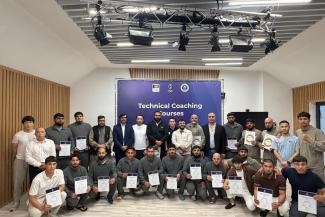
ALMATY, Kazakhstan (June 30) -- Eleven coaches from Afghanistan were among 21 participants who completed a United World Wrestling Level 1 Coaching Course in Almaty, strengthening the country's coaching capacity while building closer ties with neighboring Kazakhstan.

Organized through a partnership between Olympic Solidarity, the Kazakhstan National Olympic Committee, the Afghanistan National Olympic Committee, the Kazakhstan Wrestling Federation, and United World Wrestling, the course focused on developing internationally recognized coaching competencies while fostering collaboration between the two wrestling nations.

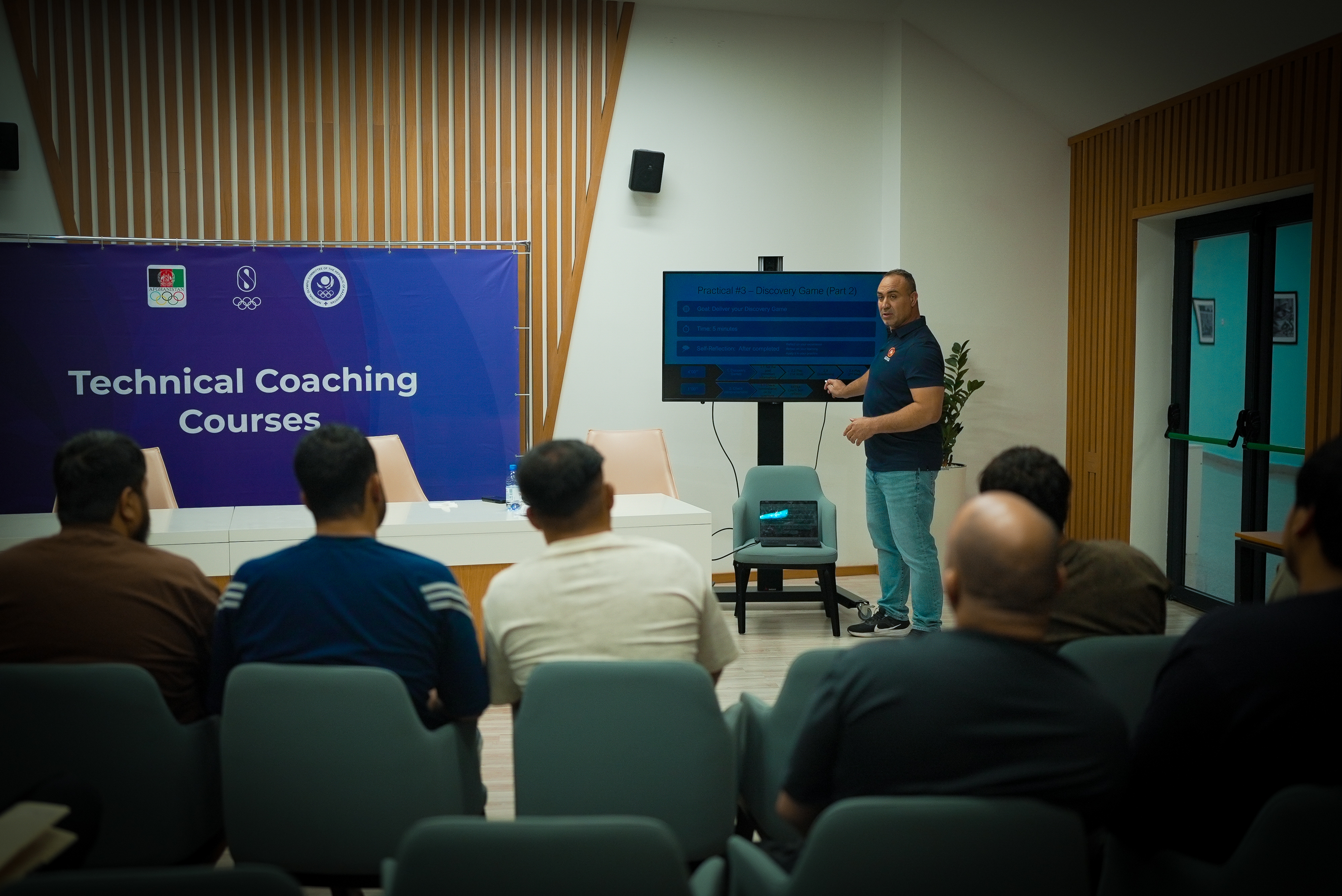
Apart from the 11 coaches from Afghanistan, coaches from Kazakhstan also joined for a comprehensive program. The curriculum covered coaching responsibilities, skill development using UWW's Key Factors teaching methodology, athlete-centered learning through discovery games, coaching self-reflection, risk management, and practical coaching assessment.
Afghanistan

UWW Educator and former world champion Mohammed ABDELFATTAH praised the participants for their commitment throughout the program.

"I was very impressed with the overall level of the participants," Abdelfattah said. "The coaches were highly motivated, actively participated in every session, and continuously asked thoughtful questions throughout the course."

Abdelfattah was particularly encouraged by the technical level demonstrated by the Afghan coaches.

"The Afghan coaches demonstrated a strong technical understanding of wrestling." he said. "After speaking with several participants, I learned that traditional wrestling is extremely popular in Afghanistan and shares many technical similarities with Olympic wrestling. This provides coaches with an excellent technical foundation for further development."

The practical sessions proved to be a particular highlight, with coaches working through technical demonstrations, problem-solving exercises, and athlete-centered coaching activities designed to strengthen both technical instruction and coaching methodology.

The Afghanistan Wrestling Federation views the course as an important step in its long-term development strategy. Dr. Yonus POPALZY, an Afghan NOC and Olympic Council of Asia member, was instrumental in the development, organization, and success of the course.

Participants highlighted the practical nature of the course and the opportunity to exchange ideas with coaches from different backgrounds.

"The course exceeded our expectations. The practical sessions and interactive teaching methods gave us new ideas that we can immediately apply in our daily coaching."

#development

Qatar hosts Regional Coaching and Referee course

By United World Wrestling Press

DOHA, Qatar (June 29) -- Qatar Wrestling Federation hosted its first-ever Regional Coaching Course and an Introduction to Refereeing Course. The courses were conducted between May 29 and June 3 in Doha and had participants from seven different countries namely Qatar, Tunisia, Algeria, Morocco, Brazil, Egypt, and Saudi Arabia.

These courses were conducted in conjunction with United World Wrestling, Olympic Solidarity, Qatar NOC and the Qatar Wrestling Federation.

The coaching course was led by Mohamed ADBELFATTAH. The referee course was led by Kamel BOUAZIZ who is the vice-president of the Referee Commission and President of the Arab Wrestling Federation.

Arsen JULFALAKYAN, President of the Athletes Commission and former world champion and Olympic medalist, assisted in the delivery of the courses.

The Regional Coaching Course was conducted over a five-day period with 20 coaches -- 18 men and two women. They participated in a Level 2 Course [Introduction to Practice Planning].

The course focused on basic video analysis, the development of effective training sessions, the mental development of wrestlers, and coaching the seven basic skills of wrestling. 

ARSParticipants go through a practical training session with Greco-Roman legend and world champion Arsen JULFALAKYAN (ARM) (Photo: United World Wrestling)

During the course, the coaches actively practiced and developed their skills through practical evaluations. The coaches also had the chance to work with Julfalakyan. The participants were able to learn valuable Greco-Roman techniques from both educators.

"The course in Qatar was interesting and eventful. Coaches and referees from the region participated in it," Julfalakyan said. "We carried out productive work both in theory and in practice. You could notice that the Qatar federation is determined to develop wrestling in the country."

“The course went very well. We had representatives from many countries," Abdelfattah said. "It is clear that Qatar is committed to growing the sport.” 

The Introduction to Refereeing Course, led by Bouaziz, was conducted for five days and had five participants who learned the foundations of being a referee.

The areas covered during the course included: the safety of the athletes, evaluation of holds, referee mechanics, positioning, and controlling the bout. The participants also worked directly with the coaches during a session to learn common areas of mistakes from referees and coaches. 

TUn
Kamel BOUAZIZ (TUN) leads the five-day Introduction to Refereeing Course in Qatar. (Photo: United World Wrestling)

"During the theoretical courses, most of the participants eagerly received the information, asked the questions, and wanted to know the latest changes to the rules. They are passionate about refereeing," Bouaziz said.

"We express our deep gratitude and appreciation to UWW Bureau Member, Head of Athletes Commission Arsen Julfalakyan, Vice-president of UWW Referee Commission-Educator Kamal Bouaziz, UWW Educator Coach Mohammed Abdelfattah, and UWW Development Department for invaluable support in helping us achieve this remarkable growth," Sheikh Fahad bin Hamad Al Thani, President of Qatar Wrestling Federation and Member of Qatar Olympic Committee, said.

"The wealth of knowledge and impactful teaching style of the UWW experts empowered coaches and referees with insight and experience that resonated profoundly."