SAMOKOV, Bulgaria (August 18) -- The U20 World Championships enter the second day with four more Freestyle weight classes -- 57kg, 65kg, 79kg and 92kg. The competition began Sunday, read the recap here.
WATCH LIVE | LIVE MATCH ORDER | DAY 1 RESULTS
The semifinals will begin at 17:00 hours
14:18: Anar JAFARLI (AZE) with a huge four-pointer to trip SACHIN (IND) and then uses a high gut to finish the 92kg quarterfinal 10-0.
14:15: Sumit MALIK (IND) denies Vasif BAGHIROV (AZE) a semifinal place at 57kg. Malik with a four-pointer in his 9-2 win as Baghirov could not match the pace.
14:06: Another Yamanashi Gaikun University wrestler Reiji UCHIDA (JPN) on the rise! Uchida locks Sanjarbek RUSTAMBEKOV (UZB) in a leg lace and finishes the match 11-0 to reach the 65kg semifinals.
14:02: Luke STANICH (USA) is into the semifinals at 65kg! He hangs on for a 3-3 criteria win over Alessandro NINI (ITA) after scoring a takedown which was latest action in the match. Incidentally, both Stanich and Nini were born in New Jersey and train 100 kilometres from each other -- Stanich at Lehigh and Nini at Rutgers
13:55: European U20 champion Davit TCHETCHELASHVILI (GEO) built a 3-0 lead but William HENCKEL (USA) bounces back with two takedowns to lead 4-3 at the break in their 79kg quarterfinal. Henckel gets a stepout in the second period to extend his lead to 5-3 while defending those attempted duckunders. Tchetchelashvili hits a takedown to lead 5-5 on criteria with 1:50 left in the match. Henckel hits a takedown to reclaim the lead 7-5 with a minute left in the match. A double-leg from Henckel as he gets two and a turn for a fall gives two more points to make his lead 11-5. Henchkel downs Tchetchelashvili 11-5.
13:40: Mahdi YOUSEFI (IRI) downs defending 79kg champion Alp Arsalan BEGENJOV (TKM) 6-4, avenging his 10-0 loss to the Turkmenistan wrestler from last year. Begenjov had a 1-1 criteria lead after a stepout but Yousefi scored a stepout and Begenjov called for a medical timeout. With a 2-1 lead for Yousefi, the bout restarted in par terre and the Iranian managed to turn Begenjov for two points to lead 4-1 with 1:53 left in the match. Yousefi then stopped a duckunder and scored a takedown but Begenjov managed a takedown to make it 6-3. Yousefi was fleeing during that attack for which he was cautioned and bout restarted in par terre with 6-4 lead for Yousefi. Begenjov failed to turn Yousefi from par terre, ending his title defense.
13:25: World U17 champion Vasif BAGHIROV (AZE) has reached the quarterfinal at 57kg as he looks to add a U20 world title to his name. He will face Sumit MALIK (IND).
13:15: Kamil KURUGLIYEV (KAZ) launched Connor MIRASOLA (USA) for a counter chest wrap four-pointer and then adds couple of stepouts to lead 6-1. Mirasola comes out on top in one of the scrambles to make it 6-3 with a minute left in the bout. Kurugliyev with a stepout and Mirasola with a takedown but the Kazakh returning bronze medalist wins 7-5 and advances to the 92kg quarterfinals.
13:00: Nurdanat AITANOV (KAZ), Asian U20 silver medalist, runs off to a 14-3 technical superiority win over Anthony KNOX (USA) at 57kg to enter the quarterfinals.
12:55: Sumit MALIK (IND) pulls off a last-second victory over Rin SAKAMOTO (JPN), who will be at 57kg for the senior World Championships as well for Japan. Malik was down 10-1 but somehow mounted a comeback in the second period with a four-pointer and a takedown to make it 10-7. He scored another takedown to score 10-9 with 7 seconds left. Sakamoto wins but India challenge for a singlet-foul which on review is confirmed and a 10-10 win for Malik.
12:40: Aliasghar TATHASHTIKEH (IRI) managed to come within one point distance of Amal DZHANDUBAEV (UWW) in the 65kg bout but goes down 10-9. Dzhandubaev, the European U20 champion, led comfortably before his conditioning struggles became evident. Three takedowns for Tathashtikeh to make it 10-8 with 20 seconds left on the clock but the Iranian managed only a stepout.
12:20: Mahdi YOUSEFI (IRI) with a fall over Narek NIKOGHOSYAN (ARM) at 79kg after building an 8-0 lead. On Mat C, defending champion at 79kg Alp Arsalan BEGENJOV (TKM) with two big moves to win 11-0 against Gan Erdene BAATARKHUU (MGL)
12:10: Yerkhan ABIL (KAZ) is too much for returning bronze medalist at 79kg Leandro ARAUJO (BRA) as the Kazakh wrestler wins 6-0. Totally shut down Araujo in that bout.
12:05: European U20 champion Davit TCHETCHELASHVILI (GEO) pins Antoni MAJCHRZAK (POL) on the mat after a four-pointer and gets the victory via fall.
12:00: In a thrilling repechage bout, returning silver medalist Ladarion LOCKETT (USA) scores a takedown with 3 seconds left to beat European U20 champion Manuel WAGIN (GER) at 74kg. Wagin hit a front headlock four-point throw to lead 5-4 but Lockett somehow managed to overturn the result of a heated bout.
11:40: Anthony KNOX (USA), wrestling internationally for the first time, doesn't waste much time and beats Mykola BRATOV (UKR) via technical superiority at 57kg.
11:30: Anar JAFARLI (AZE) hangs on for a 3-2 win against Orazmuhammet HOJALYYEV (TKM) at 92kg. Tough match for Jafarli, a returning bronze medalist.
11:25: Magomed OZDAMIROV (UWW) with a beautiful arm-throw against Arshia HADDADI (IRI) for four points. Haddadi could never recover and loses his first bout at 57kg 6-1.
11:15: Viktor BOROHAN (UKR) with a four-pointer to take the lead 4-4 on criteria against ASHWANI (IND) and win at 65kg. The European U20 silver medalist over Asian U20 silver medalist
11:10: Leg lace is what Amal DZHANDUBAEV (UWW) gets to win his first bout at 65kg against Agha GASIMOV (AZE). Dzhandubaev is the European U20 and U23 champion this year.
11:05: Returning 79kg bronze medalist Mohammad YOUSEFI (IRI) warms up with a 10-0 win over Ion MARCU (MDA). Yousefi is a senior Asian champion this year.
11:00: Abdullah TOPRAK (TUR) comes out blazing with a takedown and then gut-wrenches Luke STANICH (USA) for an 8-0 lead. Toprak has some conditioning trouble and slowly feels the pressure of Stanich, who now has three takedowns to cut the lead to 8-6 with more than 2 minutes left in the bout. Stanich takedonw takedown to make it 8-8 and take the criteria lead. Toprak keeps going for Stanich's legs but the U.S. wrestler is quick to counter and score. He turns using a lace and now leads 16-8. He finishes with another takedown wins 18-8.
10:55: Muradkhan OMAROV (AZE), who won a silver medal at the European U20 Championships, had a slow start against David KODAKOV GIL (ESP) at 79kg but then jumps to a 9-2 lead as Kodakov Gil was seemingly passive. Omarov wins 9-2 and advances at 79kg
10:40: Defending 79kg champion Alp Arsalan BEGENJOV (TKM) starts off with a technical superiority win over Ivan ANDONOV (BUL). Begenjov gets on the scored with an activity point and then scores a takedown and turn to lead 5-0 at the break. He then counters with two chest wrap throws for four points to win 11-0.
10:35: Pan-Am U20 champion William HENCKEL (USA) raced to 5-0 lead against Maksat TABYLDYEV (KGZ) gets a few points back. Henckel, however, manages to hang on for a 8-5 win at 79kg.
10:30: European U20 champion Davit TCHETCHELASHVILI (GEO) and Keyvan GHAREHDAGHI (JPN) in a back-and-forth bout at 79kg. But Tchetchelashvili manages to score every time Gharehdaghi scores. Eventually, the Georgian manages to win 12-8.
10:00: The day will start with the repechage from Sunday's weight classes and then move to qualifications of today's weights beginning with 79kg.



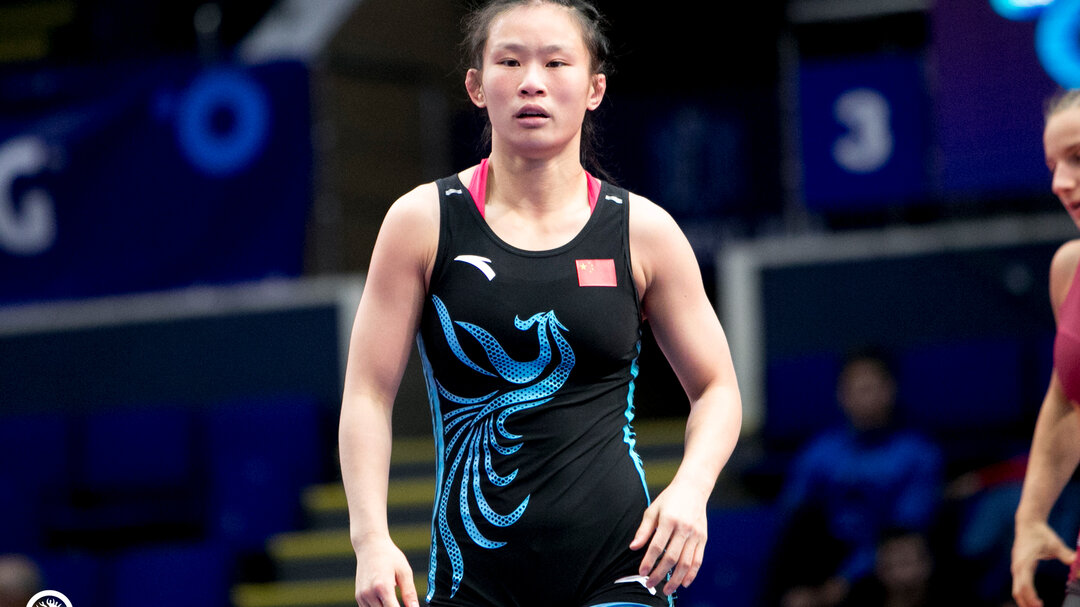 df. Ramona GALAMBOS (HUN) -1.jpg) Photo of Junling OUYANG (CHN) by Martin Gabor.
Photo of Junling OUYANG (CHN) by Martin Gabor. 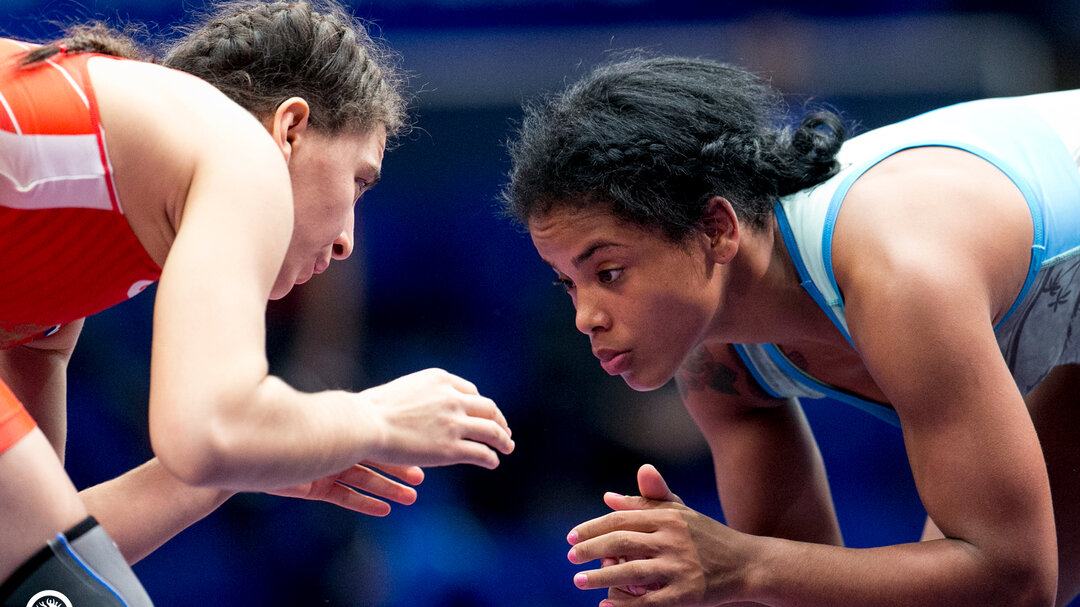 df. Khanum VELIEVA (RUS) -1.jpg) Photo of Yudari SANCHEZ RODRIGUEZ (CUB) by Martin Gabor.
Photo of Yudari SANCHEZ RODRIGUEZ (CUB) by Martin Gabor.
Share your thoughts.
Comments