

Four Coaches Graduate in Hungary Under Olympic Solidarity Programme
Monday, June 1, 2026 - 15:57 By United World Wrestling Press
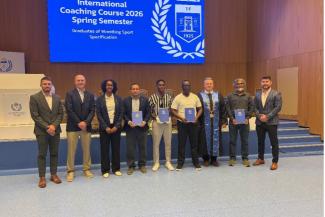
BUDAPEST, Hungary (June 1) -- Four wrestling coaches graduate from the University of Sport Science in Budapest and enrolled in the first-ever wrestling mentorship programme at KIMBA in collaboration with the Hungarian Wrestling Federation.
Carlos BARAHONA (ESA), Gilbert KABOCHE (KEN), Anuja MALLAWAAARACHCHI (SRI) and Raphael MULENGA (ZAM) gathered in Hungary for the Olympic Solidarity Coaches Scholarship Programme, focused on strengthening wrestling through education, mentorship, and scientific coaching methods.
The programme introduced a new mentorship initiative for scholarship participants and emphasized the importance of scientific coaching methods, youth development, and structured education systems. Organizers highlighted that coaches are central to building sustainable wrestling cultures in their countries.
A key programme that the coaches will be using, when they return to their countries, will be the UWW Academy’s “Wrestle4Fun," an initiative that provides accessible training resources for PE teachers and beginner coaches, including activities that require little or no equipment.
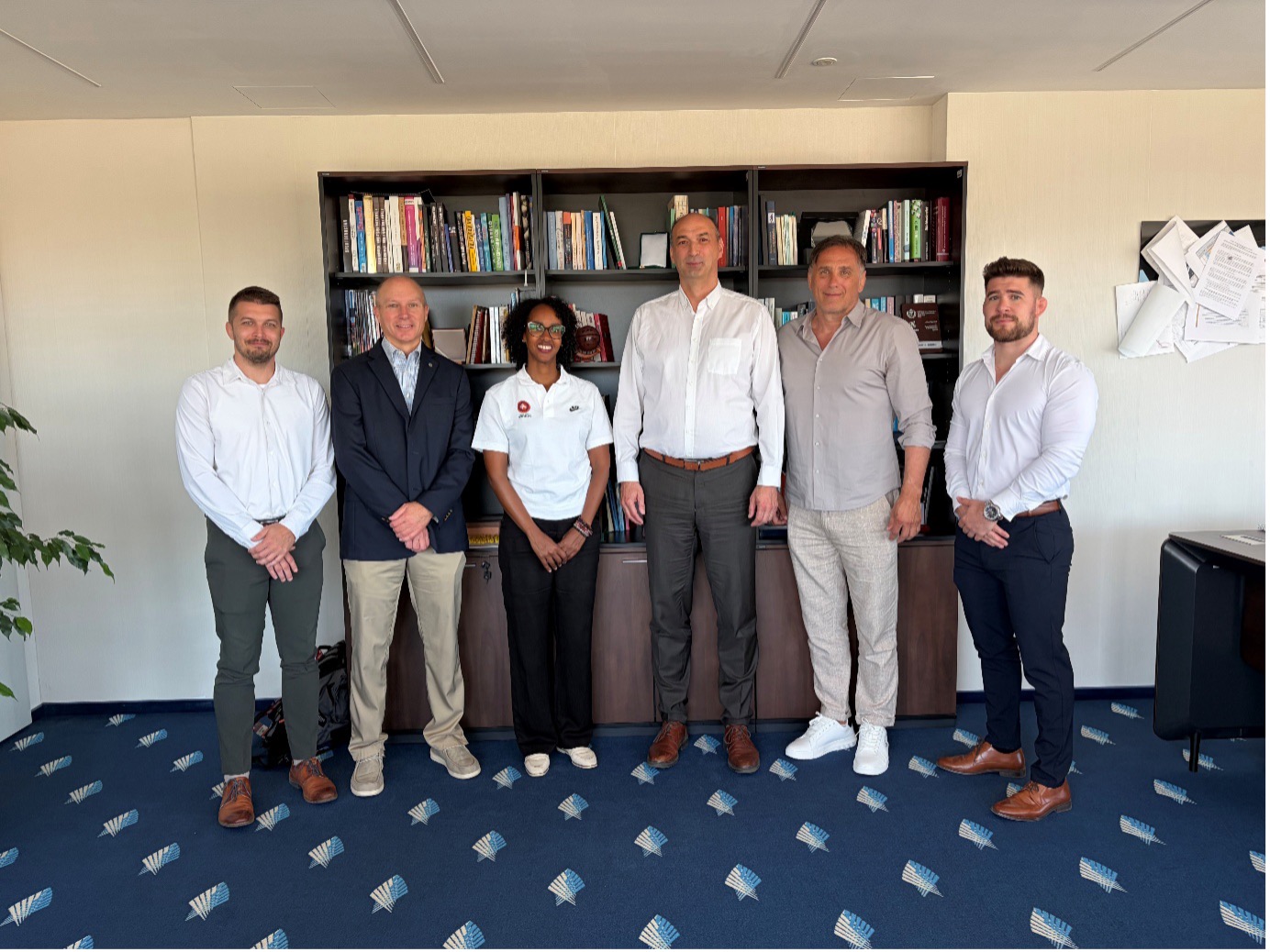 From left to right: Gabor FARKAS (HUN), Zach ERRETT, Deqa NIAMKEY, Tamas STERBENZ (HUN), Peter BACSA and Gergely BABSZKY (HUN).
UWW Development Director Deqa NIAMKEY and Education Manager Zach ERRETT met with the rector of the University of Sport Science of Budapest, Professor Dr. Tamás STERBENZ along with UWW Bureau Member Peter BACSA, Gabor FARKAS and Gergely BABSZKY, Hungary National Coaches and professors at the University in charge of the wrestling programme.
The discussion focused on the expansion of partnerships in sports science and wrestling education. The message from discussions showed that the future growth of wrestling depends on education, grassroots participation, scientific coaching, and international cooperation.
Following the meeting, the UWW Development Department agreed to continue the programme and to share the next intakes which will provide further educational opportunities for UWW community worldwide.
UWW thanks Olympic Solidarity for their unwavering support to the development of wrestling worldwide.
Share your thoughts.
Comments