

#UnitedWorldWrestling

Good governance at UWW: most women ITOs at Paris 2024, reserved seats in Bureau

By United World Wrestling Press

CORSIER-SUR-VEVEY, Switzerland (July 11) -- United World Wrestling will send its highest number of female International Technical Officers (ITOs) to Paris 2024. This marks a significant jump with 22 percent of the total wrestling ITOs for Paris 2024 begin women.

Continuing its efforts towards gender balance, UWW will send 11 ITOs to Paris, the most in wrestling history at the Olympic Games. The first female ITO in wrestling at the Olympics was back in 1988 at the Seoul Olympics.

In another significant move, UWW amended its constitution to reserve two more seats for women in the Bureau, thereby bringing the minimum number of women Bureau members to five. The number of vice presidents was also increased from the current number of five to six, including a minimum of two women vice presidents.

These steps were in line with the good governance that UWW strives for in its work. The results of the past efforts are reflected in the fifth governance report of the Association of Summer Olympic International Federations published last month.

UWW moved from Group B to Group A2 in the ASOIF report, scoring 188 points out of a maximum of 240 points and progressed since the last review, moving up one group.

The ASOIF also used UWW's example to demonstrate good ways to showcase organizational structure, allowances and benefits in finance, the conduct of elections, announcing of open positions, competition law compliance, appeal process and data protection and IT security.

UWW was one of the 32 International Federations that participated in the study which includes five sections -- transparency, integrity, democracy, development and sustainability and control mechanisms.

Each of these sections is further divided into 12 indicators and the ASOIF scores each IF based on these indicators.

The first review of IFs was conducted in 2016-17. In the latest review, all 32 IFs exceeded the target of 150 out of 240, and most saw their score on the 50 retained indicators increase by a meaningful amount.
#development

Bulgaria hosts OLYMP to increase media literacy

By United World Wrestling Press

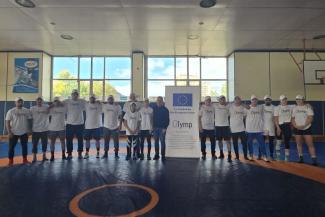
BULGARIA (October 15) -- Bulgaria hosted a seminar on the OLYMP project, funded by the European Union's Citizens, Equality, Rights and Values (CERV) Programme, at Diana National Wrestling Hall on October 9. The project aims to improve the media literacy of athletes, coaches, and sports managers.

The seminar was led by Georgi BANOV, one of the doyens of Bulgarian sports journalism, who has covered 14 Olympic Games in winter and summer sports, as well as a number of world and European Championships in wrestling, weightlifting, athletics, biathlon, and more.

The seminar was organized for the athletes of the national wrestling teams. The event was hosted by Belcho GORANOV, Chairman of the Ethics and Legal Commission of the United World Wrestling (UWW) and project manager on behalf of the Bulgarian Olympic Committee (BOC).


A post shared by bgolympic (@bgolympic)

The team emphasized that the seminar is part of a six-month cycle of informal training under the OLYMP project, which covers a total of 110 young athletes. The program includes weekly sessions in small groups focusing on media and information literacy, critical thinking and analytical skills, as well as developing the participants' confidence and ability to defend their positions with reasoned arguments.

The weekly classes will include readings and discussions on biographies, novels, sports magazines, as well as topics related to sports management and economics. Additional informal activities -- meetings with prominent athletes and film screenings -- will be held twice a month, with each event featuring moderated debates and practical challenges for “fact checking” and ethical behavior on social media.

Banov drew the athletes' attention to how to verify the information they receive through social media and other sources, how to recognize fake news, how to search for reliable information, and how to use social networks correctly, avoiding hate speech.

At the end of the media literacy program, a combined (formal and informal) assessment is planned – short tests and case studies, observation of group work, participant portfolios, and satisfaction surveys—to report on the specific results of the training and its impact on the engagement of young athletes in public life.

Read more on BOC website